Smyrna: To Hurting People
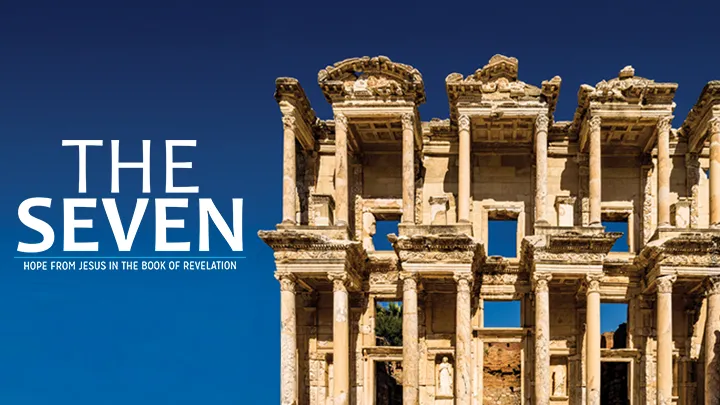
Jesus offers hope and strength to those facing suffering and trials.
Transcripción
This transcript was generated automatically. There may be errors. Refer to the video and/or audio for accuracy.
Well my name is René, I'm one of the pastors here at Twin Lakes Church and I bring you greetings from these characters up on the screen. There's a whole bunch of guys up at Man Camp at Camp Hammer right now and I love the fact that they're up there. Don't you guys love that they are up there right now learning how to be Christian men and committing their lives to that. I got to speak there earlier this weekend it was just wonderful.
And also another thing that happened this week that was pretty cool, we kicked off our small groups for this fall. They met all over the county. This was mine, I was up at Mount Herman and we had a big group about 150 people and then we broke out into round tables for our discussion groups. 150 there, another 300 or so here on Wednesday night and in addition to Wednesday nights here and at Mount Herman we have over 125 small groups all over the county meeting more people than we've ever had in small group Bible studies. Isn't that awesome? I love that.
And they are all studying the book of Revelation chapters 2 and 3 through this book that we wrote called The Seven and if this intrigues you you can get the book, you can get the audiobook and you can check out the small group signups at the table outside today. Now I'm gonna start this morning with a newspaper story. This is a story from a while back in the LA Times true story about a hiker named Jay Rathman. Jay was hiking in the wild country around Red Bluff California when he had an unusual encounter.
He was going up a steep cliff and pulling himself up over the ledge when he came face to face with a rattlesnake and here is what happened next according to the article. As he raises head he came eye to eye with his coiled rattlesnake. It struck instantly but thank goodness it was an uncoordinated snake because it says it just missed his right ear. Alright so you got that picture so far? But listen to this. The four-foot snake's fangs then got snagged in the neck of Rathman's wool turtleneck sweater and while attempting desperately to pull itself loose the snake accidentally pulled itself onto Rathman's left shoulder.
Alright? Then panicking, this isn't Rathman who's panicking, it's the snake that's panicking. It coiled around its neck while it around his neck while still trying desperately to free itself. Rathman grabbed it behind the head and could feel the warm venom soaking through his sweater running down his neck and chest. The rattles making a furious racket and if the person next to you right now is passing out put your hand up and Usher will take care of them. But get this, it gets worse.
Then remember he's up on a ledge when this happens now he's grabbing the snake so what happens? Yes, Rathman then fell backward and he slid on his back and head first down the steep slope through sharp brush lava rock with the snake stuck onto his sweater the entire time. As he said later, as luck would have it, I ended up wedged between some rocks down the slope with my feet caught uphill from my head. I could barely move.
So while hanging there he disengaged the snakes fangs from his sweater and then it struck again. Quote from the article, "Yeah, it made about eight attempts to bite me but in that constricted space it couldn't get real good leverage and it couldn't open its mouth wide enough to bite me. He did manage to hit me with his nose just below my eye about four times." Continuing the quote, "It was real close quarters." Listen to this, "This chap and I were eyeballed to eyeball and I found out snakes don't blink. So I had to choke him to death." What kind of a guy is this? If it were honestly, honestly, if it would have been me, the article would have said, "So I had to wet my pants."
Because seriously, he says, "It was the only way out. Plus I was afraid that with all the blood rushing to my head I might pass out." When he tried to toss the now dead snake aside he found he couldn't let it go. He said, "I had to pry my fingers one at a time from his neck." Rathman 45 works for the Defense Department over in San Jose and estimates his encounter with the snake lasted 20 minutes. How many of you are pretty sure you would have died of a heart attack in 20 minutes, right? Unbelievable.
State Park warden Dave Smith says, "He walked toward me holding this rattlesnake and said, with sort of a grin on his face, 'I'd like to register a complaint about your wildlife here.'" Well I start with that article because maybe you feel something like that right now. Your life you feel like there's a snake coiled around my neck and I'm hanging upside down on a steep cliff and I would like God to register a complaint about my life here. Well if you feel like that, we got a message for you today from God's Word.
Grab the message notes that look like this or you can look at the message notes in the TLC app on your smartphone today. We are in a series called "The Seven." We started it last weekend. It's a series through Revelation chapters 2 and 3. You find a vision of Jesus dictating seven letters to the Apostle John to be brought to seven ancient churches. And today we're in the second of the seven letters, the one written to hurting people, to Christians in the first century who must have felt like the serpent of the Roman Empire was coiled around their neck and they were hanging upside down on the side of a cliff.
And here is why you have to understand these words today. As a pastor I'm so burdened by this because every single one of us are going to encounter suffering in life. Would you agree with that by the way? How many of you would agree that we're all going to go through tough times in life? Would you agree with that? This is just the truth. Now I've noticed something. Often when I talk to people who have lost their faith, which happens, you know, especially if I'm traveling on a plane or something, "Oh you're a pastor, well let me just tell you I was raised in church but I completely threw it all away."
I would say most of the time the conversation goes something like this, "Really? Why did you toss your faith all away?" And eventually they'll say, "For me the turning point was when my brother got cancer and died when he was just a little kid." Or some other tragedy. And they say, "I couldn't understand how all this about God could be true when that happened." And so I threw it all away. So a suffering happened to them and they walked this direction away from faith. But you know what else? Sometimes when I meet people who are just giants in faith, and you know the kind I'm talking about, who just have incredible faith, incredible serenity, and I'll tell them, "How did you get that kind of serenity and that kind of powerful faith?"
They'll tell me something like this, "You know it all started when my dad died when I was a little kid. It all started when my little sister was killed in a car crash. And man at that point of suffering God met me and it totally changed my life and brought me closer to God. It's the same exact event! And for some people it's, "No, made me bag the whole thing." For other people it's, "Man, that brought me closer to him." What's the difference in the responses? Suffering can make you bitter or it can make you better.
And in my observation the difference is when people are somewhat equipped to have a biblical perspective on the experience of suffering. If they have some sort of training and know, "Here's how God looks at your suffering. Here's what God has to say about the times when you're hanging upside down on a cliff with a snake wrapped around your neck." And that's why you've got to hear what Jesus says to the church at Smyrna this morning because these people were suffering. And it starts like this in Revelation 2:8. He says, "To the angel of the church in Smyrna write, 'These are the words of him who was the first and the last, who died and came to life again.'
Now this was not just written to any random church. This was written specifically to the church where does it say? Where was it? The church in Smyrna. And he says specific things related to them. So very quickly let's look at the Smyrna city profile so you can appreciate what he says. Archaeologists are still excavating the ruins of the amazing ancient three-story Agora or shopping mall in Smyrna. It was several blocks wide. We were there last fall. We filmed a video inside of it that goes into a little bit more depth. The small groups are gonna see that video this week.
But this shopping mall was three stories high as I said in its day and they found amazing things in the ruins of the old shops there like this beautiful glass mug from Bible times. And so we know that Smyrna was an amazing vibrant commercial center for the Roman Empire. The bottom floor of this three-story mall had these beautiful archways. It has fountains which still work today. Two thousand years later. I mean this would have been an amazing building in our day. It was considered almost a wonder of the world then.
The people of Smyrna in fact were so proud of their many quite beautiful civic buildings in their day. Why? Well Smyrna was known as the city that died and came to life again. You see around 600 BC Smyrna was wiped off the map. And for 300 years it didn't exist anymore. And then some followers of Alexander the Great resuscitated the city and it became revived and a spectacular city. And from that point on it never fell into ruin again. To this day there there's been a vibrant city on this spot. There have been earthquakes, there have been wars, there have been battles, there have been fires. But Smyrna's also just popped right back to life again.
So it gained this reputation. In fact a famous Greek writer named Aristides said this in a speech. Check this out. Destruction may be final for men or for other cities but this is not true of Smyrna. Smyrna rises back to life like the phoenix. So when Jesus says to this church these are the words of him who was the first and the last who died and came to life again. Can you see how he's plugging into their local terminology? How he's using their city slogan in his letter to them? He's saying you call yourself the city that died and came back to life again. Well I really did die and come back to life again.
Now if you go there today as I said it's still a bustling city called Izmir but as recently as the late 1800s Smyrna still looked a lot like it did in the first century. This is a rare old postcard I found from those days. Smyrna used to have a road running from the harbor to the top of that hill. The road was called the Golden Street and on the top of the hill there's a fortress. Inside the fortress were all of the temples to their various pagan gods. But doesn't that fortress look a little bit like a crown? Like a diadem on top of somebody's head, right? Well that's in fact what it was called. It was called the Crown of Smyrna and on all of the coins related to Smyrna the image most often associated with it is this crown.
You see how it looks like the fortress walls on a beautiful woman's head. On coin after coin after coin after coin you see this imagery. The crown of Smyrna was the crown of Asia and they were so proud of that it became kind of their brand, their logo. Kind of like the honey bee was the brand of Ephesus as we saw last weekend. Now other kinds of crowns were also given to the victors in the ancient games. These are also on coins from Smyrna like this crown of laurel leaves and so when Jesus says at the end of the letter I will give you life as your victors... what? Crown. Again he's plugging into their local terminology. You are proud of your city as a crown? I'll show you a real crown. A crown that truly will last forever and you see this again and again in these seven letters where Jesus specifically in his verbiage plugs into local terminology.
I love this because this shows me that Jesus does not see all cities as the same. Doesn't see all churches as the same. Doesn't see all people as the same. He knows your history and he knows what you need to hear and how you need to hear it to make a change in your life. I just love that. Now to understand why the Christians had it tough here you have to know this. Smyrna was the first city in the world to build a temple to a new god that they invented. It was a goddess named Roma and I want to show you a picture of her on this coin. That's her image and you see how it says Roma on this coin. Well this was minted there in Smyrna and they had a temple to worship Roma and Roma was a goddess meant to personify the Roman Empire.
They wanted to show Rome which was across the ocean from where Smyrna was a port city. They wanted to show Rome here is how loyal we are. Here is how patriotic we are. Not only will you will we pledge you our loyalty as Roman citizens we will literally worship the Roman Empire. I mean I'm a patriotic guy. I love patriotism and we always fly our flag at our house on the 4th of July and I love all that but you ever come across somebody where you feel a little bit uncomfortable with their patriotism like it's going so far you kind of go like they're like practically worshiping the stars and stripes you know what I mean? Well the Sperns would have said that's right. That's right. We are literally worshiping our country. That's how loyal we are and they were the first city in the Roman Empire to build a temple to Tiberius Caesar.
These are the ruins of it now up in the crown of Smyrna. You can go visit it today and what they would do is once a year they would do a procession up the hill. The whole city would be in like a parade and then one by one all the owners of property and the patriarchs of the city would come before the altar and they would put some money on the altar and worship Caesar as Lord and God and then that money would be given as tribute to the Roman Empire. So the Romans loved Smyrna. This is probably why Smyrna always came back from the dead. They always got the biggest subsidies from Rome. Every time there was an earthquake, a fire, a battle room, always refinanced Smyrna's rebuilding because they were like Smyrna's, they're just the best people in the world because they literally worship us.
There was only one group of people who wouldn't do it and who do you think they were? Yeah the Christians. The Christians said we cannot worship Caesar as Lord and God and so they were burned at the stake. They were fed to wild animals and it's to the people to whom this is about to happen that Jesus says these words in Revelation 2. He says to you and to me, "I'm not just saying these words to Smyrna. I'm saying these to whoever has an ear to hear. Whoever can relate to these words, these three encouragements from Jesus to suffering people that you see there on page 2 of your notes.
These are really super simple. They're three two-word statements so you can remember them easily but they're really powerful and if you don't need to hear these right now, you will probably sooner than you expect. So the first thing Jesus says to these Christians in Smyrna is this, "I know." He says, "I know." Jesus knows every single thing you are going through. Look at verse 9, there's like an ascending scale of troubles. The first thing he says is, "I know your afflictions." And the Greek word there means "distresses." It means being pressed down, feeling this enormous weight, this enormous pressure on your shoulders and probably every single person in this room can relate to that feeling.
Whether you're taking care of a loved one who's dying, whether you're anticipating midterms at UCSC, whether you're looking at some financial difficulties, everybody understands what it's like to have distresses but these people are experiencing them because their faith is under fire. And then he says, "I know your poverty." The Christians there were poor because nobody wanted to do business with them for fear of being associated with the Christians. And then he says, "I know the slander." There was a Smyr campaign against the Christians and we know from other ancient writings exactly what it was.
Christians when they got together, they celebrated communion. Right? We still do it today. We do it on the first weekend of every month here at Twin Lakes Church. And when they celebrated communion, they talked about communion as the blood and the body of their Savior. And so the rumor started going around that the Christians are cannibals. That they literally eat flesh and drink blood when they get together. And because they were a mysterious minority, everybody was eager to believe all this about the Christians. And so people mob mentality kind of went against the Christians. "We got to get the cannibals out of our city!" Right? The weird, the weirdo, stranger, unknown people. They're strange. They're horrible. We got to push them out.
And so there was the slander but then it says something that is probably troubling you if you've read ahead. "The slander of those who say they are Jews but are not, but are a synagogue of Satan." Man, that sounds like some kind of crazy anti-Semitic verse. What is this all about? Well, here's the deal. The only people in Smyrna who had a legal right to not go up to the temple and worship Caesar as Lord and God were the Jewish people in this part of the Roman Empire, an Asia Minor. They'd worked out a compromise, actually worked it out like in a contract with the Roman government because their leaders had said, "Look, we're monotheists. We can't worship Caesar as Lord and God. It's against our religion. But how about if we just bring the tribute and we make it a donation to the city? Would that be okay?"
And the Romans said, "Yeah, we'll sign off on that." As long as the Jews were a small minority, they were fine with that. But what happened when the teachings of Jesus became more and more popular in the first century was that people who were not from Jewish ethnic heritage, Greeks, Romans, started saying, "Man, I love Jesus. I want to be a follower of Jesus." And since they couldn't relate any more to the pagan festivals up at those temples, they started hanging around with the synagogue people because they were fellow monotheists.
In those days, there was no distinction between Jew and Christian in people's mind. And so when the time came around to do these parades annually up to the city, there were fewer and fewer and fewer people in the parades because more and more of the Greeks and the Romans were becoming followers of Christ. So after two or three years, they kind of looked around and went, "What is happening to our parade? This is embarrassing. Where's Fred? Where's Carl? What happened to their families? Oh, they're down at the synagogue. They say they don't have to do this parade thing because they're Jews. But they're not Jews. They were born right here in Smyrna. Yeah, but they followed the Jewish Messiah.
And so that caused a lot of trouble because the Smyrna and city fathers went, "Oh no. Rome is going to look at us and go, 'Nobody's in that parade anymore. Nobody's worshiping Caesar as Lord and we're not going to get our subsidies from Rome anymore.'" And so they went to the Jewish synagogues and said, "You got to give up those Greeks who claim to be Jews." And some of the synagogue rulers, you can see the tension in the book of Acts because you see some people in the synagogue sympathizing with the Christians and some not. But the people in leadership in Smyrna apparently were like, "Yeah, you can have these Greeks because they're not Jews. They don't get circumcised. They don't keep kosher laws. We don't consider themselves Jewish either."
And so they gave up these Greek and Roman Christians to the Smyrna and city fathers and now these Christians are exposed. They're no longer under the synagogue exemption from temple worship. And the full weight of the boot of the Roman Empire comes down on their heads. That's what this verse is about. That's that first century situation. And it's to them and to you and me that Jesus says, "I know." And when Jesus says, "I know," he does not just mean he's been informed of the facts. He means, "I know. I get it. I understand." Because when Jesus says, "I know," it means he understands what it's like to be mocked by family members because he was mocked by family members.
He understands what it's like to be falsely accused because he was falsely accused. He understands what it's like to be ridiculed, to be rejected, to be beaten, to be ostracized because he was all of those things. So when you're going through a tough time and some of you are right now, a really tough time. Like you just barely dragged yourselves in. I believe I can say that God brought you here to remind you that though you may feel like no one understands and no one even knows what you're going through, Jesus knows and Jesus understands. And he's with you now and he's empathizing because he's been there and he says, "I know."
And then the second thing he says is this, "Fear not." Fear not. Did you know that this is one of the most common phrases in the Bible? 83 times we're told in Scripture, "Fear not." It's amazing, but I want you to see this. Jesus tells the Christians at Smyrna who it would seem had every reason to fear, "Do not be afraid," or as some of the translations put it, "Fear not what you are about to suffer." Now I want to stop right there. I'm gonna get to the rest of the verse, but let's just stop and say, "How do we pull that off?" I'll be honest with you, it is hard for me not to fear. I am afraid of stuff. I'm afraid of needles, you know? Sometimes I get afraid of public speaking and my heart's just racing a thousand times a minute right before I get up here. So how do I fear not?
Well first I want you to notice what Jesus does not say. He says, "Do not fear." He does not say, "Do not feel." And a lot of people get this mixed up. A lot of people think being unafraid means being stoic and having no feelings. As that eminent theologian, Yoda, once said in one of the Star Wars movies, "Attachment is the path to the dark side." Yes, I'm trying that. "Let go of all you fear to lose." You know? And he's like, "No, no, if you're afraid of something you got to detach." And you know what? Yoda might have said that in a Star Wars movie, but that's actually a common way that many religions say that we need to work on our fears is get rid of our attachment and get rid of our passionate feelings for things that we're afraid to lose. But that is not Jesus' way.
Jesus himself felt things deeply. Jesus himself wept. Being unafraid is not about the absence of feeling. It's about the presence of peace. And he does not say, "Fear not for you will not suffer." This is so important. You know that crossroads I talked about earlier? Suffering makes you better or better. This is what some of it, so much of that comes down to. Some Christians believe that you should look at things like cancer and terrorists and car accidents and say confidently, "I claim in the name of God that none of those things are ever going to happen to me, his beloved child." That's not in the Bible. In fact, Jesus says, "I tell you the devil will put some of you in prison to test you and you will suffer persecution for ten days."
And by the way, remember in the book of Revelation it uses numbers in a symbolic way. So he's not saying here, "You're only going to be in persecution for a week and a half." It's symbolic for a limited time. He's saying, "It's not infinity days. It's not even 11 days. It's 10 days." In other words, that's going to be a season. Seasons of suffering and seasons of well-being come. Life is cyclical. So Jesus is warning them, "I got to tell you, your biggest season of suffering is ahead." And Jesus tells you and me, not just the church at Smyrna, that life will have suffering. He says in the Gospel of John, "In this world you will have what? Yeah, trouble. That's a promise that you will never find in one of those pocket promise books ever. Nobody wants to know. This is a promise.
But if you expect that God owes you a life with no problems, you are in for a big surprise. And when that surprise happens, a lot of Christians go, "God, you didn't keep your part of the bargain. I thought if I accept Jesus, my life goes perfect. And so I'm bailing." But you won't do that if you hear what Jesus is saying. Do not be afraid of what you are about to suffer. You are going to be in affliction. A fake world Jesus, as I say in the book, would say, "Everything speaks in cream once you accept Christ." But a real world Jesus says, "No, life has seasons of pain. Life's not going to go perfectly according to what you want, but don't be afraid of what you are about to suffer. Don't be afraid of it." How can I not do that? How can I not be afraid?
Before I go to our final point, I just want to add just one verse to your notes. Are you okay with me doing this? And let me give you this verse. Jot it down somewhere and then we're going to read it together. It's 2 Corinthians 10:5. And I want us all to read this portion of this verse out loud. I'm going to put it on the screen here. See it? Let's read it together. "We take captive every thought to make it obedient to Christ." On a podcast I heard that the Greek word Paul uses there is the same word used in similar-era Greek literature for a prisoner of war. We take captive our thoughts. And like a prisoner of war we interrogate them because they might be terrorists. Did you know that there are terrorist thoughts? Thoughts that are designed to wreak havoc in your life. That are designed to make you feel terror and make you feel fear.
And the problem is that we most often in our society we don't think about what we're thinking about. Does that make sense to you? We don't think about what we're thinking about. And thoughts come into our minds and we just let them enter into our lives. And you say to somebody, "How are you doing today?" "I just feel angry today. I'm just angry because of all these thoughts of anger." "How are you doing today?" "I'm depressed." I just keep having all these discouraging thoughts. Like your brain is like a house with no walls and you can just let any thought just wander in. No, Paul's saying, "Take captive every thought." I mean I gotta be honest with you. Sometimes when I pray here in church in front of you the craziest thoughts enter my head.
And I don't mean like, "I wonder if the Niners will ever win another game this season." I mean crazy thoughts. I mean thoughts that if you saw them on the screen you would find another church instantly. Does anybody ever here ever have that experience? Am I the only one? I'm the only one. But this is why you have to make captive. Here's a picture that I got. You have to set up like TSA in your brain. You know the Transportation Safety Administration, the security line you go through before you board a plane. You have to make your thoughts go through a filter. You have to make your thoughts empty their pockets and take off their belt and remove their shoes and get their bags x-rayed because if the thoughts that want to come with you on life's journey are carrying seeds of greed and fear and malice and lust, unless you want to go that direction, unless you want a terrorist on board, you don't let them board your flight. Is that making sense to anybody here today?
You take captive every thought. Listen, Jesus says, "Don't be afraid. Do not fear. Fear not." He would never command that if that wasn't possible. It's possible if you're proactive and in the power of the Holy Spirit you put your thoughts through some screening. So Jesus says to people who are suffering, "I know. I sympathize." Then He gives some direction. He's saying, "Fear not. You got to watch what you think about when you're going through suffering." And by the way, the grid that you can put things through, this is extra for this service because I just thought of it. Philippians 4:8. You know what service true, what service noble, what service right, excellent, praiseworthy. That's the kind of the grid, the x-ray aisle that you make your thoughts walk through. And if it comports with that and comports with the gospel of grace and who Jesus is in your life today, then you let those thoughts board the plane, all right? And that's how you fear not.
And then the third thing He says is, "Trust me. Trust me. Trust me." The rest of verse 10 and verse 11, "Be faithful even to the point of death, and I will give you life as your victor's crown." Whoever has ears, let them hear what the Spirit says to the churches. The one who is victorious will not be heard at all by the second death. You know what He's saying? He's saying the best is yet to come. He's saying, "Men, you're going to go through some tough times, but the best is yet to come. There is a life after this one, and it'll be glorious, and there will be rewards, and this is what's true for every Christian."
I want to introduce you to somebody who had to practice these words. His name is Polycarp, and he was the pastor of this church in Smyrna. Very likely, he was a member of the church, a young man, when this letter was first read to the church for the very first time. And Polycarp becomes head pastor of this church, and on 22nd of February, 8156, Polycarp, the senior pastor of this same church, is arrested, and he's put on trial before the representative of the Roman government at Smyrna. And this person, the proconsul of Rome, says to him, Polycarp's 86 years old, and he says to him, "Listen, deny your faith, worship Caesar as Lord and God, and pay the tribute money, or we are going to persecute the whole church for the sake of saving all those lives. Deny Christ." Polycarp says, "No."
And the guy says, "For the sake of avoiding unnecessary pain, deny Christ." Polycarp says, "No." He says, "Deny Christ." Polycarp says, "I will not." And he says words that have rebounded throughout church history and given inspiration to so many people, and we have them not only from Christian witnesses, but also from secular witnesses. Polycarp said this, "80 and 6 years have I served him, and he has done me no wrong. How can I now blaspheme my king who saved me?" And they burned him at the stake. And it was a complete misfire for the Romans, because what they did to Polycarp ended up just stealing the will of the Christians who were inspired by Polycarp.
And when the Romans in the theater saw what Polycarp was like, their opinions of Christians began to change, and sympathy for the Christians started to arise in the Roman Empire as well. But if you look at this and you think, "Man, I don't know if I could do that." Did you see why Polycarp remained faithful? He says, "I have served him, and he has done me no wrong. How can I blaspheme my king who saved me?" Polycarp did not trust in his own power or confidence or courage or mettle. Polycarp trusted in his faithful God. He said, "For 86 years he has been so faithful to me, and that's why I'm gonna be faithful to him." When Jesus says, "Trust me," he's not asking you to be faithful in yourself or to be trusting in your own power. He's saying, "Trust me because of my faithfulness to you."
You can find an echo of that in your own soul and you can be faithful to me. In fact, look at this little chart on page 3 of your notes. Look at what you can learn about Jesus just in these few verses, how he's eternal and victorious and all-knowing and generous. And that means you can trust in him throughout all of your trials. That's the bottom line right there. Just focus on Jesus, not yourself. Focus on Christ and his faithfulness to you, his salvation of you, his promise of reunion with you, his promise at the end of Revelation that one day all death and disease and suffering and injustice will be wiped out. You focus on that and that's how you remain faithful in the inevitable suffering that will come in its various forms.
Now I want to show you something. Of all the seven, the seven churches Jesus wrote to in Revelation 2 and 3, Smyrna had it worst by far. But of all the churches, which one do you think did the best in the long run? Smyrna by far. In fact, to this day, Smyrna, modern Izmir, is the most Christianized area in all of Turkey. Isn't that interesting? The church that was getting hammered the most turned out the best. My point is right at this moment you may have it tougher than most people you know. But don't give up. Not for a day. Because God's not through with you yet. And he's making you also into one of his crown jewels.
Now I want to close with this. I can't do a message about the first persecuted church without talking about the current persecuted Christians. Sadly, there has never been a time in church history when there's been more persecuted Christians than right now. Google persecuted Christians, you'll get thousands of news stories. These are the first three that popped up when I googled this a couple of days ago. Number three was this. Eight members of a Baptist Church in Kazakhstan have been arrested. Their crime? Holding a children's summer Bible camp. That's their crime. And they'll probably spend years in prison because of that. Something we take for granted every summer at Camp Hammer and at Cruise Kits.
Another story. This man, Pastor Dixon, during worship services at his church in Tanzania recently, a mob attacked the church, pulled out all 700 chairs and the PA system piled them all on his car and set the whole pile on fire. Yet there he is standing next to his car this week and what's he doing? He's smiling. He says, "Well, Paul was in prison in Philippians when he told us to rejoice in the Lord." And he said, "I've discovered the joy of the Lord as my strength through all this." It's amazing. But of course the top story right now are the millions of refugees, at least 700,000 of whom are Christians being driven out by ISIS from Syria and Iraq. If they stay, ISIS has threatened to behead them or crucify them. In fact, in the Syrian city of Homs, every single church, every one, has been destroyed or desecrated.
But the people who stay in Homs are still in those churches worshiping. Look at this picture. Absolutely at risk to life and limb. What we've been talking about for these people, your brothers and sisters today, it's not theoretical. It's not philosophical. It's not historical. It's current. It's right now. They're being asked to deny Christ, but they won't. So my question is, how do these brothers and sisters of ours deal with these situations? Well, I'll show you. It's exactly the way Jesus tells the Smyrna and Christians to deal with it. I want to show you an amazing video that's gone viral. A little girl in Iraq who's now a refugee, her family was forced to flee Iraq because ISIS literally threatened them with death. She lives in a refugee camp now, and at her young age, she has already taken these words of Jesus to heart. It's about four minutes long. She speaks Arabic, but I want you to read the English subtitles and I know you will be inspired. Watch this.
Únase a nosotros este domingo en Twin Lakes Church para una comunidad auténtica, un culto poderoso y un lugar al que pertenecer.