When Your World is Shaken

God is our refuge and strength in troubled times. Trust Him.
Transcripción
This transcript was generated automatically. There may be errors. Refer to the video and/or audio for accuracy.
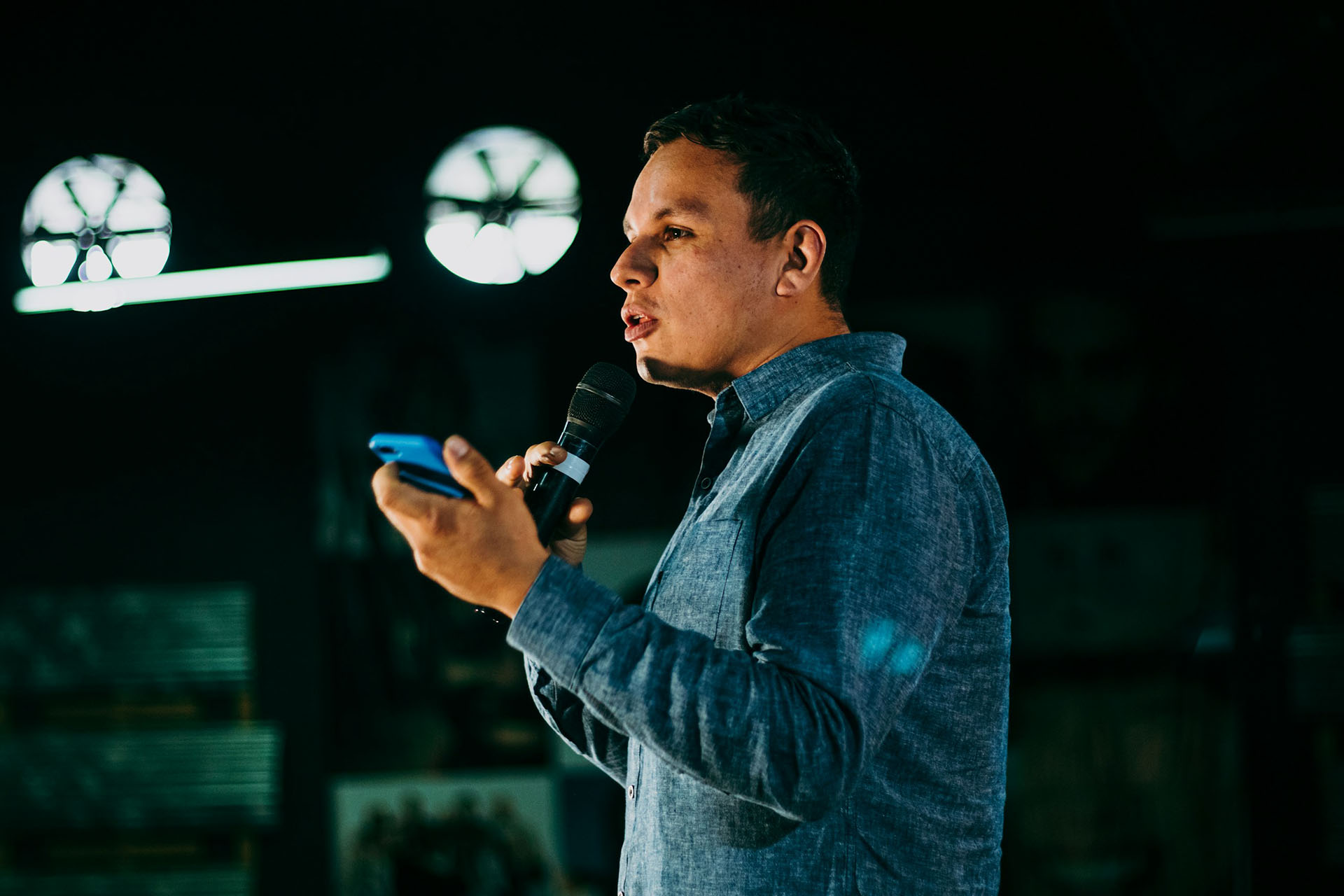
Well hello and good morning. My name is Mark, one of your pastors coming to you from the Twin Lakes Church Auditorium. And the way forward has been our focus navigating life in these troubled times. And along these lines I want to share with you some profound words from that great theologian Dr. Seuss. Because in one of his books, "Oh the Places You Will Go," he talks about how our high hopes are sometimes dashed by troubled times. Listen as I read, "Oh the places you will go, you'll be on your way up, you'll be seeing great sights, you'll join the high flyers who soar to high heights. You won't lag behind because you'll have the speed, you'll pass the whole gang, and you'll soon take the lead. Wherever you fly, you'll be best of the best. Wherever you go, you will top all the rest, except when you don't, because sometimes you won't. I'm sorry to say so, but sadly it's true that bang-ups and hang-ups can happen to you. You can get all hung up in a prickly perch and your gang will fly on. You'll be left in a lurch. You'll come down from the lurch with an unpleasant bump, and the chances are then that you'll be in a slump. And when you're in a slump, you're not in for much fun. Unslumping yourself is not easily done." No, it's not.
And maybe that's where you find yourself today struggling to un-slump yourself because your world has been shaken. I mean, remember when it was just about COVID, and yet the bang-ups and the hang-ups, they just keep stacking up. How do you respond? Well, today I want to take you to a passage in Scripture, Psalm 46, that deals with this directly. And I know that as we watch these services in our homes, at times the environment can be noisy or distracting, so I'm just going to invite you right now to quiet your heart and your mind, to listen, and to lean in as these words of holy inspired Scripture just wash over you. Listen as I read Psalm 46. "God is our refuge and strength, an ever-present help in trouble. Therefore we will not fear, though the earth give way and the mountains fall into the heart of the sea, though its waters roar and foam and the mountains quake with their surging. There is a river whose streams may glad the city of God, the holy place where the Most High dwells. God is within her, she will not fall. God will help her at break of day. Nations are an uproar, kingdoms fall, he lifts his voice, the earth melts. The Lord Almighty is with us. The God of Jacob is our fortress. Come and see the works of the Lord, the desolations he has brought on the earth. He makes wars cease to the ends of the earth. He breaks the bow and shatters the spear. He burns the shields with fire. He says, "Be still and know that I am God. I will be exalted among the nations. I will be exalted in the earth. The Lord Almighty is with us. The God of Jacob is our fortress." Amen.
Well, you know, I can't summarize this psalm any better than it does for itself in verse 1. You notice it begins with God, and it's about his response to trouble. And in the middle of it all, God offers to be our refuge, strength, and ever-present help in the midst of our troubles. In other words, God is with us. God is for us. And God will do what we cannot. Well, therefore, we will not fear, right? Okay, time out. I mean, is that really even possible? I mean, can people really do this? Or is this just some kind of, you know, religious propaganda, a popular, you know, slogan? But is it really true?
Well, I'm reminded of summer of 2001, a little while ago. But we invited Dave Dravecki to speak here at Twin Lakes Church. And we love Dave, so we've had him back a couple more times. But I still remember that very first time he visited us. And he shared about, of course, the loss of his pitching arm and how that led to essentially the end of his career and, in large part, his sense of identity and purpose. I mean, after all he ever wanted from boyhood was to be a major league pitcher, and then it was all taken away. His world was shattered.
And I remember thinking, you know, what if something dreadful like that were to happen to me or to my wife, Laura? What if we were to suffer some kind of great loss? I mean, would I still respond like Dave, you know, still so hopeful, so full of love and encouragement for other people? I mean, what if my worst fears were to come true? And maybe you've had similar thoughts. I bet you probably have. You know, you might even be thinking of a specific fear right now.
Well, in our case, we didn't have to wait very long to experience the "what if," because later in that same summer, when my wife was just a couple weeks, maybe two, three weeks away from delivering our second son Joseph, he suddenly died in her womb. And it's been almost 19 years to the day that I stood in this very spot sharing with this church about that experience. In fact, many of you watching right now, you were in the room on that day. And of course, we experienced pain and grief and longing that the outcome would have been different. But I can honestly tell you the one thing we did not experience was fear. And not because our faith was so great. No, it's because God is so great.
And in very real ways, He was our refuge, our strength, our ever-present help. And as we experienced with Joseph and as we've experienced with other griefs since, we learned this very important truth. And you can just take this to the bank. And it's that God will give you what you need when you need it. God will give you what you need when you need it. And the greater the need, the greater God's response. I mean, look, if you break a fingernail, you're probably not in need of a lot of supernatural help. But if your heart's broken, if your world is shattered, God will show up in ways that will astound you in ways that you never imagined to give you what you need when you need it.
And you know, this is different, by the way, from the popular saying that, you know, God will never give you more than you can handle. You know, that's not even in the Bible. The Bible says that in 1 Corinthians 10:13, that God will never allow us to be tempted more than we can endure. And when that happens, He will provide a way out of it. But the same Apostle Paul who wrote 1 Corinthians says this in 2 Corinthians, right at the beginning of his letter. He says, "We do not want you to be uninformed brothers and sisters about the troubles we experienced in the province of Asia. We were under great pressure, far beyond our ability to endure so that we despaired of life itself." Sounds like Paul is dealing with far more than he can handle.
And yet he goes on, he says, "Indeed, we felt we had received the sentence of death. But this happened that we might not rely on ourselves, but on God, who raises the dead." It's about God's power and relying on Him to do for us what we simply cannot do for ourselves. And by the way, along this theme, as Adrienne said, René is going to be kicking off a brand new message series based in 2 Corinthians called "Undaunted." Be sure to join us next weekend. You will not want to miss a single weekend.
But in the time that we have remaining this morning, and then we're going to receive communion together after the message, I just want to give you a few keys to making Psalm 46 a reality in your life. And it really comes down to two ways to live your life. Two very different mindsets. And the first one is to go through life with a "what if" mentality. You know, what if? The medical test. Don't come back the way that I hope. What if I lose my job? What if, how about you just fill in the blank, that thing that that keeps you awake at night, what if that were actually to happen? But here's the thing. What if thinking always leads to fear? It's inevitable.
And you might be thinking, well yeah, but what if the world is busting apart at the seams? And yeah, it feels that way these past couple months. But here's the thing. That's exactly the picture that Psalm 46 is painting. I mean, don't miss this. "Therefore we will not fear," what? "though the earth give way, and the mountains fall into the heart of the sea, though its waters roar and foam and quake with their surging." I mean, though all hell is breaking loose, we will not fear. And again, this is not about being glib or Pollyanna or less than human, because let's face it, some of the "what ifs" are terrifying. They are troubling.
But again, a much better way to live, one that leads to peace and security, is to focus on "though." You know, "though" we're hit with hard news, "though" we're disappointed. God is with us. God is present. God will be faithful. I mean, right now at last count, there's nearly 1,500 structures that have been destroyed through the CZU lightning complex fire in our area, including at least 17 in our beloved Camp Hammer, our Christian Conference Center, right next to Big Basin. And are we terribly sad about that? You better believe it. I mean, I wept as I related the news to René and to Val. I was just overcome with grief.
And then this past Friday, our County Sheriff Jim Hart was kind enough to drive me and René and Eric up to Camp Hammer. The road is closed, but he put us in his squad car and brought us through. And you know, I was thinking at the time, just to kind of distract myself, it's too bad that the windows are tinted on the squad cars and we were wearing masks because we really missed an opportunity to turn some heads as we drove through Scotts Valley and up towards Camp Hammer, like people seeing us going by in the squad car like, "Wait, wait, who is that? Is that him? Is that him?" But anyway, that wasn't really the purpose.
And when we got there, all I can say is that the pictures do not do justice because of the scope of the damage both at our camp and in the surrounding area. It's pretty hard to see. It's devastating. And we have a long road ahead of us. But even though we will not fear, in fact, I'm convinced the story is not over for Camp Hammer. Now I'm not presuming I know what God has in store for us in the future. I'm just trusting that the story is not over. And the same is true for you. No matter how much your world has been shaken, your story is not over.
In fact, while I was there, this picture of the cross, I walked by and all of this is burned and yet this cross was just untouched, not a char on it. And God reminded me in that moment that the promise of the cross is essentially stories not over. You know, when they looked at Jesus hanging on the cross, story was not over. God is still in the resurrection business. And let's not forget that there's so much more going on that God is doing than we can ever see. I mean beyond our personal troubles, beyond the riots and the racial wounds and wrongs, beyond the smoke that's still hanging in our air this morning.
Verses four and five remind us to look up because there's a river whose streams may glad the city of God, the holy place where the most high dwells and that God will help her. She will not fall. He will help her at break at day. In other words, God is still in control. Now some scholars think that this reference to the city here is a reference to Jerusalem and it's written in reflection after some great deliverance, the psalm. And that may be because certainly Israel can point to those moments in its past. But there is no river running through Jerusalem. It gets its water from a spring and the water travels through underground fissures and caves and it reaches the city where it's collected in pools. At least that's the way it was when the psalm was written.
And if that's the case, it's still a cool image, you know, that God provides for us in ways that we can't even see. Just kind of shows up where we need it. But there's another way of looking at this because at the very end of the Bible there's a description of the heavenly city, the new Jerusalem, and a river runs right through the middle of it. It's an image of God's Spirit filling us with the water of life, giving us eternal life. And listen, this life of gladness and the joy that it brings, it doesn't just come from Him, it comes in Him. It's not just a promise, it's a person. It's Jesus, our God who is with us, who became one of us, to do for us what we could never do, to live the life we could never live and to bear the guilt and punishment for our sin. Another thing we just cannot do.
And as that day approached and Jesus knew that His crucifixion was at hand, He turned to His disciples and in John 12:27 it says this, Jesus said, "Now my soul is troubled and what shall I say? Father, save me from this hour?" No, it was for this very reason I came to this hour. And I want you to watch this, okay, put your thinking caps on, because the word for troubled here that Jesus uses here in the in the Greek that this was written, it means to be stirred up, agitated, shaken. And while the Old Testament was first written in Hebrew, our oldest copies are actually the Greek translations. And so in the ancient Greek translation of Psalm 46, it uses the same word in Greek for troubled four times when it describes the earth giving way. There it is. The water's foaming, the mountains quaking, the nations up roaring, stirred up, agitated, shaken.
And of course, Jesus endured the ultimate trouble, faced the greatest fear. And because of that, we don't have to fear the lesser ones. I mean, I want you to think about this. Without Jesus, we would have much bigger troubles than, you know, quaking mountains and roaring seas. I mean, we would have bigger fears than disease, than social disruption, than civil division. Without Jesus, let's face it, we would have everything to fear. But with Jesus, in Jesus? No. He's our living proof that God is with us, God is for us, and God will do what we cannot.
I mean, does God, you know, wring his hands and worry over the troubles here on earth? No. He lifts his voice and the earth melts. And the day is coming when he will make all wars cease, wars between nations and wars between people groups, between families and neighbors and estranged friends. And yes, you know, we're called to play a role as peacemakers, as reconcilers. But as Jesus said, apart from him, we can do nothing. It is because of him and his power that all trouble will someday cease. Now, let me ask you church, do you believe this? Do you believe that Jesus has a glorious future in store for us? And yes, for the time being, as Jesus promised in this world, you know, you will have trouble. But because of what he's going to do, we can take heart because he has overcome the world.
So for now, evil still raises its ugly head. But the war has been won. Do you believe this? Because this is the difference between living with gladness or living with fear. Reminds me of a fascinating story I read about a Japanese soldier named Hiru Onata. This is Hiru right here. It's a young soldier. He was an intelligence officer in the Japanese Army during World War II. And he was assigned to an island in the Philippines where he would carry out covert missions. And when the war ended, he was so tucked away in this jungle, the news never reached him.
And so Hiru and a couple of his fellow soldiers just continued to do what they were commanded to do. They would continue to carry out missions and they'd get little shootouts with local police and with locals. And then near the end of 1945, a couple months after the war, a leaflet was left out for them that said, "The war is over. You can come out." And eventually one of those soldiers did, but Hiru and two others refused to believe it. Then several years later in 1952, a plane flew over and dropped pictures of Hiru and the other soldiers' families with messages saying, "The war is over. You can come home to us." But Hiru and the others, or Hiru I should say, and the others, they thought it was a trick.
And then in 1954, one of Hiru's comrades was shot and killed. And then in 1972, quite some time later, the other soldier suffered the same fate, leaving Hiru all by himself. It wasn't until 1974, almost 30 years after World War II ended, that the Japanese government decided to send Hiru's commanding officer to the jungle to retrieve him. And can you imagine living 30 years in a miserable jungle full of fear and scratching and clawing through every single day, but they knew that Hiru was not going to leave until he heard from the one voice that he trusted.
And after a four-day search, Hiru's commander found him and told him in so many words, "The war is over. I'm here to bring you home." And that was when Hiru laid down his arms, walked out of the jungle, and into freedom. Now there's a parallel for each of us in this story, because in Jesus Christ, the war has been won. But we can still choose to live in the jungle. We can live in fear, afraid that God will never forgive me, or if I really trust him, I'm just going to be disappointed, or maybe you wonder, can God really redeem my past? Can he really redeem my losses? Can he really restore my hope and to all of us, he says today, "Be still and know that I am God." Be still and know that he's God.
You know, this is the only thing that God tells us to do in the Psalm, to be still and know he's God. And you can translate, "Be still." Cease striving, you know, let go. Lay down your arms. You're not in control. You never were. And when your world has been rocked and it just leaves you shaken and agitated and troubled, you know, the last thing you need in that moment is just to be stirred up even more, to just keep spinning faster and faster and faster. That's why God says, "Be still." "Let me do and be what only I can do," he says. And yes, he tells us he's got things for us to do. But in his timing, his strength and his way forward.
Can you rest in that this morning? Because the truth is, as the great theologian and great preacher, Dr. Martin Lloyd Jones put it, "We are in the hands of God whether we like it or not." I love that. That pretty much sums it up right there. And listen, whatever you're going through, you're in the hands of the God who loves you, who cherishes you, who sent his son for you. And it's that same God that just says, "Be still and know that I am God, that I am your God, and especially when your world is shaken." And if you don't yet know him, you can because God still calls out to any who will listen, saying, you know, "You can lay down your arms. I've come to bring you home."
And in faith, you can simply say, "Lord Jesus, count me in. Help me to step out of the jungle I've been living in and into the city of God." Wherever you're at today in this journey, I want to pray for you right now. Will you join me as we pray? Heavenly Father, I thank you that you are with us and that you are our fortress. We come before you now in these troubled times, claiming the refuge you offer us. Be our strength. Help us today and in the days to come.
And Lord, I pray especially for those who have lost their homes in the fire or for those who are grieving, the loss of a loved one, and even their grief has been interrupted by the troubles and the challenges we're facing. People who may very much feel like their personal loss and grief that they've just forgotten buried under all the other troubles. But Lord, I pray that they would sense your strong presence and tender care right now. And for those who long to know you as Lord and Savior, may they in their hearts right now simply say, "I admit my need for you, Jesus. I know my sins are great, but I believe your forgiveness is infinitely greater. Thank you for dying on the cross for me. Thank you for the new life that you offer me. Lead me this day forward until the day I see you face to face." We pray all these things in the name of Jesus Christ, all God's people said. Amen.
Únase a nosotros este domingo en Twin Lakes Church para una comunidad auténtica, un culto poderoso y un lugar al que pertenecer.