Handling Tough Times

Sarah shares how to navigate faith during challenging times.
Transcripción
This transcript was generated automatically. There may be errors. Refer to the video and/or audio for accuracy.
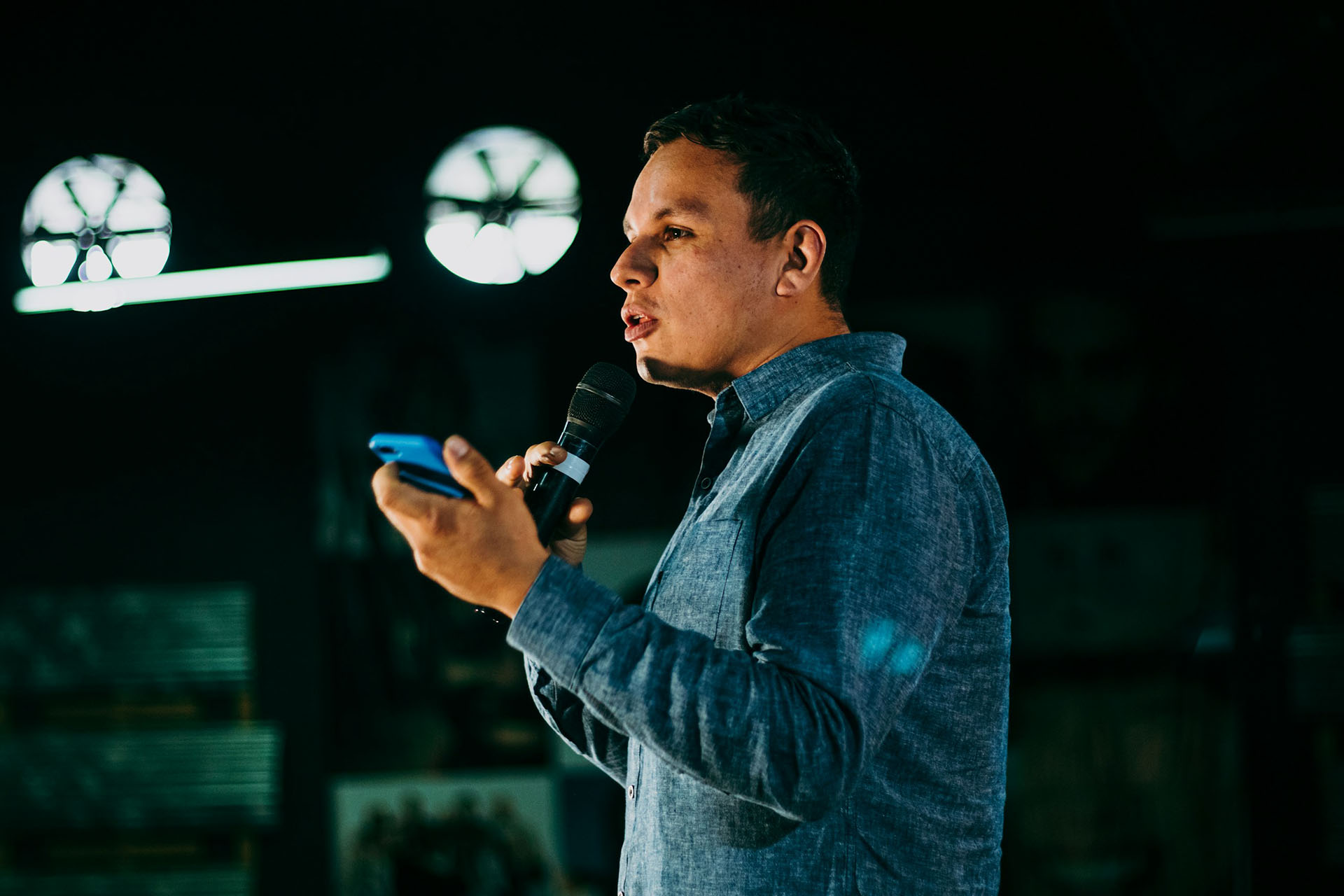
I'm really glad to see you here this morning. My name is Sarah Bentley and I'm one of the pastors on staff, and it's especially fun for me to be up here this morning because this is the church that I grew up in. And so to be back here now on staff for my family, my husband, and our two boys to be here is such a gift.
Well, last week if you were here, you might remember that we are in this series that we're calling Hope Agent as we walk through the book of First Thessalonians. And Mark did a great job walking us through the first half of chapter 3, but we didn't forget about the last half of chapter 2. So this morning we're gonna backtrack a bit to look at First Thessalonians 2 beginning in verse 13. So if you have your Bible with you, go ahead and open there. We'll meet there in just a minute but you can get set. Or if you didn't bring a Bible with you and you'd like to look at it, there are Bibles in the row, back of the row in front of you, and you can meet me on page 836.
But as you're turning there, I want to ask you a question. And the question is this: When was the last time that your commitment to follow Jesus cost you something? Years ago I met a 15-year-old girl at a summer camp who said that after her recent decision to choose to follow Christ and to start attending church, her parents said, "You're no longer welcome to live in this home. There will be no Christians under this roof." Or maybe you've experienced something like the businessman I read about not long ago who, after refusing to participate in a dishonest business deal because of his belief in the values of the Bible, was told by his boss, "There will never be any place for you to move up in this organization unless you are willing to sell out to get the deal."
Or maybe you've had an experience like mine during my senior year of college. As I sat in a lecture hall with 400 other students, I heard a professor up front say, "If anyone here today believes that God is the creator, the mastermind behind how the human body works, then you're deluded and there will never be any place for you in the intellectual community." And I knew at that moment that I had to go talk with them after class. When was the last time your faith in Jesus cost you something? Maybe it was family ties, maybe job security, maybe intellectual clout or reputation, or something else altogether.
Well, this morning as we continue the series, I want to explore First Thessalonians chapter 2, verses 13 through 18 with you because these verses provide practical wisdom and encouragement to help anchor us in those moments when our faith is put to the test, when we encounter opposition because we are choosing to follow Jesus Christ. So if you're a note-taker, grab the notes that are inside the bulletin you received when you walked in and let's get prepared to look at First Thessalonians chapter 2.
But before we get there, let me offer a very brief background of what's going on in the lives of these new Thessalonian believers. We know that Acts chapter 17 provides the context for what's happening in First Thessalonians. In Acts 17, we learned that Paul comes to Thessalonica and he's only there for about three weeks. But in those three weeks, amazing things happen. Jews and Gentiles begin to worship Jesus together, men and women begin to worship Jesus together, and yet there are people who do not like the message that Paul is speaking about. They don't like this Jesus that he's teaching about, and so they begin a riot, and Paul is forced out of town after only three weeks. He is kicked out and he flees for his life and he ends up down in the city of Corinth.
But while he's in Corinth, he is desperate to know how these new Christians back in Thessalonica are doing, and so he sends Timothy back to check on them. Timothy brings the report that the church is still growing; people are still wanting to know more about Jesus. And yet they are facing significant opposition. They are running into roadblock after roadblock, wall after wall. They're getting fired, they're being threatened, they're being thrown in jail, they're even being killed because they are choosing to follow Jesus. It's safe to say that the newfound faith of these Thessalonian believers is already costing them dearly.
In fact, Paul uses some really strong language here in chapter 2 to describe what the believers in Thessalonica are going through. He says in verse 14 that they suffered. That word in the Greek is the same word used to describe the suffering that Jesus himself endured in the days leading up to his death on the cross. It literally means to be acted upon in unpleasant ways. Or how about the word persecuted that Paul uses in verse 15, which literally means to be driven out or expelled, to be rejected. Then Paul will go on to describe these persecutors in verse 15 with the words hostile or contrary, and those words were also used to describe a wind that is blowing against a boat so severely that it can't move anywhere.
Then in verse 18, Paul uses the word hindered, or your translation may say blocked or prevented, as he tries to describe his own efforts to get back to these believers in Thessalonica to encourage them. That word literally means a road that's so broken up and potholed you can't even travel on it. Blow after blow, setback after setback, these new believers are struggling, and so Paul sees fit to write this letter to encourage them, to instruct them about how to respond in the face of this relentless opposition. And you and I need to hear this just as much today because if you choose to follow Jesus, I promise at some point you will encounter opposition. You will be sidelined, you will be rejected, you will be questioned, you will be called crazy because the world doesn't understand.
So meet me in First Thessalonians chapter 2 beginning in verse 13 to see how Paul answers the big question: How do agents of hope respond when our faith is put to the test? Here's what he writes: "And we also thank God continually because when you received the Word of God, which you heard from us, you accepted it not as human word but as it actually is, the Word of God, which is indeed at work in you who believe. For you brothers and sisters became imitators of God's churches in Judea, which are in Christ Jesus. You suffered from your own people the same things those churches suffered from the Jews who killed the Lord Jesus and the prophets and also drove us out. They displeased God and are hostile to everyone in their effort to keep us from speaking to the Gentiles so that they may be saved. In this way they always heap up their sins to the limit; the wrath of God has come upon them at last."
But brothers and sisters, when we were orphaned by being separated from you for a short time in person, not in thought, out of our intense longing, we made every effort to see you. For we wanted to come to you; certainly I, Paul, did again and again, but Satan blocked our way.
Well, according to Paul here in verse 13, the first thing that agents of hope do when their faith is put to the test is they focus on God's Word. The year I was graduating from college, I got this crazy idea that it would be really fun to run a marathon. Now, I don't know why that sounded so appealing at the time, but it was kind of one of those bucket list items. And so I started training for six months. I trained to run this race, and when the day of the race came, I was pumped. I mean, I was ready. At mile five, I was feeling on top of the world. By mile 12, I was still going strong. But by mile 24, just 2.2 miles from the finish line, I hit what runners call "the wall."
And I'm not kidding; I literally thought my life was over. My feet were swelling, my head was aching, my heart felt like it was beating out of my chest, my arms might have well been cement blocks that I was trying to push alongside of me. I literally thought I was gonna die. And in that moment, I had the choice of what I was gonna focus on. Would I focus on the physical pain that I was enduring, which basically was gonna lead me to want to sit down on the side of the road and be done, which lots of other people were doing, by the way? Or would I focus on the truth that the finish line was only a little over two miles ahead? Would I focus on the truth that I had in fact trained for this for the last six months? Would I focus on the truth that my body was in fact equipped to finish this race despite how I was feeling?
You see, when it comes to distance running, coaches will tell you that what a runner chooses to focus on and how well they're able to focus will make all the difference in their performance when it actually comes time to race. And the Bible likens our journey with Jesus to a long-distance race, a race where at points you are sure to hit stretches where our faith proves costly; stretches where we will be rejected or hindered or sidelined because we're choosing to make decisions that honor Jesus instead of go along with the ways of the world. And in those moments when we hit the wall, what you and I choose to focus on will make all the difference in the world. Will we focus on the opposition or will we focus on the truth that God offers to us in Scripture?
Let me share just a few examples of the truths that we have out of God's Word this morning when we feel like we're running into wall after wall. Deuteronomy 31:8: "The Lord himself goes before you; he will be with you; he will never leave you nor forsake you. Do not be afraid; do not be discouraged." Or Isaiah 40:29, which says this: "God gives strength to the weary and he increases the power of the weak." Or Philippians 4:6–7: "Don't be anxious about anything, but in everything, with prayer and petition, with thanksgiving, present your requests to God. And the peace of God, which transcends all understanding, will guard your hearts and your minds in Christ Jesus." God's Word is full of promises that God promises to stick with us, to guide us, to strengthen us, to give us peace, and much, much more.
The Thessalonian believers got this. They were only a lap or two into their journey of faith, and already Paul is cheering them on, saying way to go because they are choosing to focus on the truth about who God is. They don't know much, but they're focusing on the truth about God that they do know. In fact, look back at the way in which Paul describes their focus in verse 13. He says, first of all, "You received the Word of God which you heard from us." Second, "You accepted it not as human word but as it actually is, the Word of God." If you've got your own Bible with you, I want to encourage you to circle the word received and the word accepted. In fact, don't ever be afraid to write in your Bible, by the way. Circle it, make notes. These are two words that are worth paying attention to because that word receive literally in the original language means a hearing of the ear. It's the process that happens when we hear a word spoken; it goes into our ears and seeps up into our brain and we begin to make sense of it.
But that word accept takes things a step deeper. The word accept literally means a hearing of the heart. That's where we move beyond just taking in information to actually allowing it to seep down inside of us in such a way that we internalize it and it begins to change us from the inside out. But Paul's not done yet. He then goes on to remind them that this Word of God, God's truth that they have received and accepted, is indeed at work in them. Circle that word work. That word work is like our English word for energy. So what Paul is saying here is when you take in the Word of God, it's powerful; it transforms you on the inside, but ultimately it energizes you to go out and to face any kind of opposition you might run into. And you know what? God's Word still works the same way today. Hebrews 4:12 reminds us of this: "The Word of God is alive and it's powerful."
What do you tend to focus on when opposition comes your way? When your faith is put to the test, do you focus on the opposition, on the frustration you're experiencing, or do you choose to focus on God's Word? The Thessalonians could face their persecution, their opposition first and foremost because they focused on God's Word. But maybe you're here this morning and you're saying, "That sounds great, Sarah, but honestly I don't know a lot about God's Word. Where would I even begin?" Well, if you're asking that question today, a few resources for you. First of all, on the back of your notes or at the bottom of your notes, we've included a list of references from the Psalms. These are verses that specifically talk about God's promises to us in the highs and the lows of life.
But also, you heard earlier that we have women's and men's Bible studies happening this summer. Come and get involved, immerse yourself in God's Word, learn what he has to say to you. We also have this Bible reading plan we're encouraging you to do throughout the summer. Those bookmarks that you've seen in your bulletin in the last couple of weeks are also available at the info desk. Grab one of those, immerse yourself in God's Word this summer.
Well, the first thing the agents of hope do when they hit the wall is they focus on God's Word, but they also do something else: they recognize that struggles are normal. Paul offers this reminder in verse 14: "You became imitators of God's churches in Judea; you suffered from your own people the same thing that those churches suffered." And a few chapters later in chapter 3, verses 3 and 4, Paul would write this: "So that no one would be unsettled by these trials. You know quite well that you were destined for them. In fact, when we were with you, we kept telling you that you would be persecuted." Now, I realize that the idea of telling you that persecution and struggle, that opposition is a part of our walk with Jesus is not a real popular thing to talk about.
You know, it doesn't make for a great motivational poster. You don't often see it on bumper stickers of cars driving around Santa Cruz. It doesn't make for great hashtags on Facebook. It just doesn't. But the reality is that Jesus has told us that this would be a part of our journey. In fact, Jesus himself says in John 15:18: "If the world hates you, keep in mind it hated me first. If they persecuted me, they will persecute you also." And these new Christians in Thessalonica were experiencing this persecution in extreme ways. We know from historians like Josephus, who himself was a Jewish first-century historian, that it was a radical faction of Jews who was behind the persecution of this new church in Thessalonica. They were so dead set on tradition and guarding religious purity that they couldn't hear or understand what Paul was talking about, and they were kind of like ringleaders. They brought in Gentiles to also do persecuting with them against the church.
But what I want to be clear on is this: this radical faction of Jews did not and does not represent what the Jewish nation as a whole believes or how they have acted or responded in the past. This was a radical terrorist group, you can say, who was enacting this persecution against this new church. And I say that because this passage has been misunderstood as being anti-Jewish in the past, and yet that's not at all what Paul is getting at. Paul himself was Jewish. But rather, I think Paul's intent in offering us this historical context and offering it to the Thessalonians was to help remind them that facing opposition, even from your own family, even from your own people, those closest to you, is in fact normal and that we're not alone.
In fact, if your decision to follow Christ has proved costly, you're in good company. Think back to some of the other characters in the Bible. Think about David, who followed God's lead to become Israel's next king and found himself on the run from King Saul, who was trying to take David's life. Or think about Esther, who followed God's lead to help save her people and found herself having to risk her life to appear before the king uninvited. Or Paul himself, who followed God's lead to help spread the gospel and found himself arrested, shipwrecked, beaten, stoned. Eugene Peterson puts it this way: "Wherever there are people of God, there are enemies of God." Agents of hope, we will encounter struggle, and yet hear this: even in the middle of that struggle, we are never without hope.
This leads me to the third point this morning: when our faith is put to the test, agents of hope rest in God's sovereignty. We can rest in God's sovereignty. Paul says this in the second half of verse 16: "In this way they," meaning those who are doing the persecuting, "always heap up their sins to the limit; the wrath of God has come upon them at last." You know, Scripture uses a lot of different words to describe who God is, God's character, and one of those words is the word sovereign. In fact, over and over again in the Old Testament, the title sovereign Lord is used to refer to God, and that word sovereign simply means this: God rules. You see, Paul wants these believers in Thessalonica to know, and we need to be reminded here today, that God rules; he is still in charge. God has got this.
In 1978, a book called "The Overcomers" was published, and it was a book written by a man named Russell Chandler. Chandler was a religion writer at the time for the LA Times, and in this book, he tells 12 stories of Christians who faced major persecution and setback because of their faith. One of those was a woman by the name of Elizabeth Elliot. You might be familiar with her story. In 1952, after finishing college, Elizabeth moved to South America to do translation work with a small group of Indians known as the Colorado's. But things very quickly got rough for her. In the first year of her time with them, she experienced three major setbacks. First, her assistant, who was helping her do all the translation work and providing a lot of cultural and language information she needed, was murdered, and there was no one to replace him. Second, all of her tapes and files and notebooks were stolen; she had no backup. Everything she had done in that first year was gone. Third, at that same time, her soon-to-be husband, Jim Elliot, was working to build a church at another location when a flood ran through and wiped away every building that he had worked so tirelessly to construct.
In the face of those events, she wrote this: "I had to face up to the fact that in those stunning losses, God was indeed sovereign; therefore, he was my Lord, my master, the one in charge of my life, the one who deserved my worship and my service." Well, four years later, disaster would strike again for Elizabeth when her husband, Jim Elliot, was murdered by a tribe that he was attempting to take the message of Jesus to. And when a reporter asked her, "How in the world are you going on after all of these things?" she said, "You know, a Christian doesn't plug into God; a Christian surrenders to God." That word surrender is like the word rest. What a beautiful example of saying, "Yeah, life is hard, and yet I am resting in God's sovereignty, surrendering, believing that he has still got this."
At the end of verse 16, Paul affirms the truth that God is still in charge by reminding the Thessalonians that God sees the evil deeds that these persecutors are doing, and he will in fact bring justice. You know, I love the fact that you and I have the book of Revelation to turn to because Revelation is like a giant spoiler alert letting you know how the story ends. And you know the story ends like this: God wipes every tear from our eyes; death is gone, crying is gone, pain is gone, the first order of things is gone, and God will say, "Look, I am making everything new." No matter what kind of opposition we are facing today, the truth is that God rules, and we can rest knowing, believing, trusting that he is at work making everything right.
But that brings us to the fourth thing that I believe agents of hope do when their faith is put to the test: they welcome support. Now, let me share a few basic observations that I've made about the human race. My first observation is this, and these are pretty important, so you might want to write them down: number one, we all need support. I know that's revolutionary. We all need support. But here's my second one: most of us, I could probably say all of us, are actually pretty horrible at letting people support us. We're not good at letting people help us. In fact, recently my two-and-a-half-year-old son, Luke, has taken up this saying: "I do it myself." Try to help him down the stairs; he pulls his arms in, "I do it myself." Try to help him get dressed; he can't get a shirt on, but he says, "I do it myself." We're changing his diaper; he says, "Oh no, I do it myself," to which I say, "This one you don't do yourself." But the thing is, it's cute when it's a toddler, right? And yet that "I do it myself" mentality has followed many of us into adulthood. In fact, we brought it with us in here today.
We may be facing significant opposition in our lives, and yet we're thinking, "I can do it myself. If I just pray more, if I just read the Bible more, if I just trust God more, I can face this myself." And there is nothing wrong with praying more, and there is nothing wrong with reading the Bible more. I hope you do that. But God has also wired us to need the support of others as we walk through this life, specifically when we face opposition to our faith. Paul knew this to be true as well, and he says to the church in verses 17 and 18: "Brothers and sisters, when we were orphaned by being separated from you for a short time, out of our intense longing, we made every effort to see you. We wanted to come to you; certainly I, Paul, did again and again, but Satan blocked our way." And when Paul can't get there, he sends Timothy. Now, why does he send Timothy? Well, in chapter 3, verse 2, we read this: "We sent Timothy to strengthen and encourage you in your faith so that no one would be unsettled by these trials."
We need to learn to welcome help so that we too would be strengthened and encouraged as opposed to unsettled by the trials that we're facing. You know, in a room this size this morning, I know that many of you are facing significant opposition specifically because you're choosing to follow Christ. Maybe you have a spouse who doesn't understand why you want to come to these services on Saturday or Sunday, and when you open your Bible up at home, they look at you and say, "Why are you wasting your time on that?" Or maybe you have a friend who doesn't understand why you won't do the same things you used to do, why you won't go along with the crowd. They've started calling you self-righteous and they've pushed you to the side. Or maybe you have a child who wants nothing to do with Jesus, and they mock you endlessly for your choice to follow Christ. And that opposition you are experiencing is real and it's painful and at times even debilitating.
Well, if that's where you find yourself today, can I encourage you to follow the instruction that Paul gives us here in his letter to the Thessalonian church? To focus on God's Word, to recognize that there will be struggle, to rest in God's sovereignty, and to welcome support. Let's pray together.
God, we thank you for the wisdom and the truth that you offer to us in your Word. And I know, Lord, that many who are here today are weary. They are facing significant opposition because they are choosing to follow you. Would you encourage and strengthen us today? Thank you for the reminder that you rule, that you've got this. And Lord, there also may be people here today who want to know more about you. They realize that there's so much more to life than just living for themselves. They want to be a part of your bigger story. Lord, if there are those here today who are feeling drawn to you, I pray that you would enable them to say, "Yes, Jesus, I don't get it all, but I believe that you love me. I believe that you died for me, and I want to begin to do life with you. I need you." And we pray all of this in the strong name of Jesus. Amen.
Sermones
Únase a nosotros este domingo en Twin Lakes Church para una comunidad auténtica, un culto poderoso y un lugar al que pertenecer.