Surviving the Storm
Mark shares how to navigate life's storms with faith and hope.
Transcripción
This transcript was generated automatically. There may be errors. Refer to the video and/or audio for accuracy.
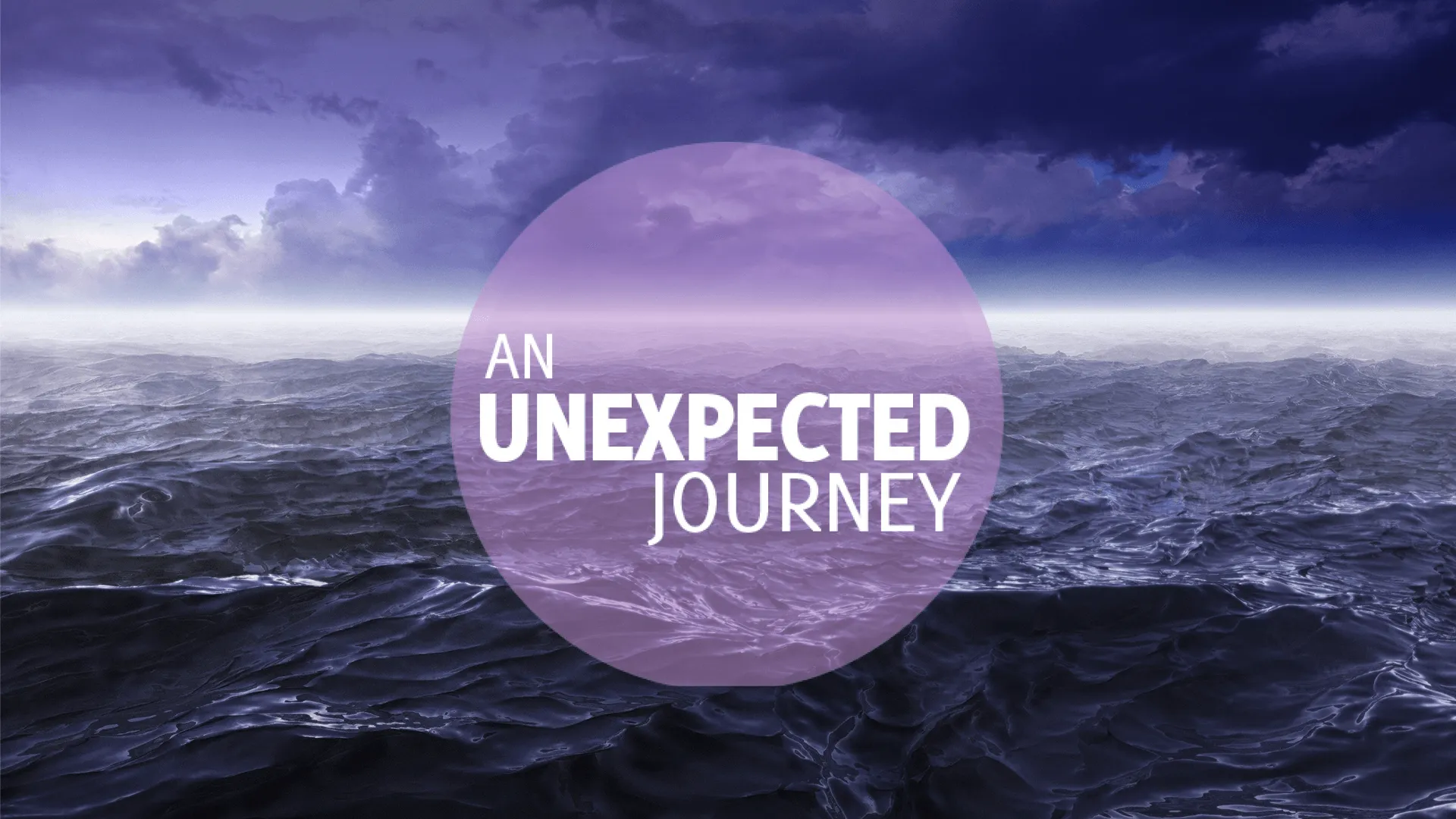
Good morning. I'm so glad that you're part of church here today. And why don't you grab your message notes that are in the bulletin you received on your way in and open your Bibles to Acts 27 as we continue with our series, "An Unexpected Journey." And if you don't have your own Bible with you here today, you can use one of those Bibles in the seat rack in front of you. In some instances, they're underneath. But in this series, we're following the Apostle Paul's epic "Ocean Voyage," and today we're going to see what we can learn about surviving the storm.
I was thinking this week, you know, we live next to the largest ocean in the world. We see some pretty impressive storms. It can be tempting to think of the Mediterranean Sea as something like a big lake. I mean, like, how bad can the storms there actually be? Well, here's a news story from December of 2011, where a cruise ship called "Brittans of the Seas" gets caught in a storm on the Mediterranean in the very place that Paul and his companions do. How nasty are those storms? Check this out.
There's late work tonight about foul weather causing havoc at another part of the world, the eastern Mediterranean, where the Royal Caribbean cruise ship "Brillians of the Seas" is feeling the wrath of the sea, tossed by storms, and have turned a vacation into a nightmare for all aboard, including some 1,600 Americans. Tazene Ahmaud is following the story for us tonight from London. Tazene?
Lester, a dream vacation turned into a nightmare for the passengers aboard Royal Caribbean's "Brillians of the Seas." The cruise ship got into real trouble when it had bad weather off the coast of Egypt. These photos taken by passengers show a ship wrecked after getting caught in a storm. The high winds and heavy rains in the Mediterranean were terrifying enough in land. At sea, it must have felt far worse.
We spoke by phone to some passengers on board. We thought it was the end of the world for us. I mean, everything was flying. The bed, the bed was flying, the night tables were flying. And the boat pitched back and threw everybody backwards and heard, I mean, the whole boat screaming. Anybody that was on their bed was riding back and forth, being smashed into walls. There's a lot of injuries, you know, a lot of mad people.
Not exactly a happy camper there, but look at the map there on screen because that island there in the center at the bottom, that's the island of Crete. That's right where the ship sails from when they get caught in the storm in Acts 27. Now the storm that this cruise ship was caught in, they clocked winds at over 80 miles per hour and waves hit 50 to 60 feet high. Those are some rough seas.
Ever wonder what it would be like to be on a ship, even a big one in seas like that? Ever wonder that? Well, I'm glad you asked, even if you didn't, because one of the crew members shot some video with his phone in the diving room of that cruise ship during the storm. Check this out.
Yeah, good times, huh? Table for four? Never mind. You come to think of it, that's what my daughter's bedroom looks like most days of the week. Okay, don't tell her I said that. But think about it, the brilliance of the sea is longer than three football fields. It's almost a thousand feet long. It's obviously constructed out of steel, big enough to hold over 2,500 people, but when it got caught in the storm, over a hundred passengers required medical attention.
Now imagine Paul and his friends on their boat. This is the hull from a Roman vessel from the first century. There's several of these, by the way, that have been discovered. They tend to litter the floor of the Mediterranean. And Paul's ship, the grain ship that he was on, it's estimated is about 180 feet long. It's obviously constructed out of wooden planks. And as to how many people it can carry, well, we're gonna find out later in this story.
But all said, this is one gnarly experience that we're reading about for Paul and his friends. So let's pick up where we left off last week, Acts 27, starting at verse 14. Before very long, a wind of hurricane force called the Northeastern swept down from the island. The ship was caught by the storm and could not head into the wind, so we gave way to it and were driven along.
I want you to notice those words swept down and caught. Often there's a suddenness to storms. Even when there's some prior indication, we have some warning, we're never quite prepared for when the storm hits. The phone rings, or you click open an email, or someone pulls you aside and says, "May I have a word for you?" And however they come, more often than not, storms blow into our lives so quickly that before you know it, you're swept up.
Reminds me of this actual news story about an innocent little parakeet named Chippy. Talk about an unexpected adventure. According to the news article, the problems began for Chippy when his owner decided to clean Chippy's cage with a vacuum cleaner. You're getting ahead of me here. She removed the attachment from the end of the hose and stuck it in the cage. Makes sense. When the phone rang and she turned to pick it up, she barely said hello when Chippy got sucked in.
Chippy's owner gasped, put down the phone, turned off the vacuum, and opened the bag. There was Chippy still alive but stunned. And since the bird was covered with dust and soot, his owner grabbed him, raced to the bathroom, turned on the faucet, and held Chippy under running water. Then, realizing that Chippy was soaked and shivering, she did what any compassionate bird owner would do. She reached for the hairdryer and blasted the bird with hot air.
Poor Chippy never knew what hit him. A few days after the trauma, the reporter who'd initially written about the event contacted Chippy's owner to see how the bird was recovering. "Well," she replied, "Chippy doesn't sing much anymore. He just sits there and stares." I'm betting that there are some of us, even as recently this week, you feel exactly like Chippy. I know there's times I just want to sit there and stare.
And there's no doubt that Paul and his companions, when this storm sweeps them up, they feel pretty much the same way. So as we follow their ordeal, let's see what we can gain from their pain, lessons that will help us survive our own storms. And we're gonna do this today by asking ourselves four questions. Four questions to ask in the storm. Could be a financial storm, health-related storm, relational storm, whatever kind of storm you face, these four questions are really key.
But before we get to them, let's jump back into the story, picking up at verse 16. "As we passed to the lee of a small island called Kauda, we were hardly able to make the lifeboat secure, so the men hoisted it aboard. Then they passed ropes under the ship itself to hold it together. Because they were afraid they would run aground on the sandbars of Surtis, they lowered the sea anchor and let the ship be driven along."
The first question to ask ourselves in the storm is this, "What can I do? What can I do?" Now I don't mean this in the sense of, "What can I do? I'm totally helpless." If you get struck by a bolt of lightning, there's probably not a whole lot you can do. But in most storms of life, we have some opportunity to respond. There are practical steps that we can take and that's exactly what these guys aboard the ship do.
As they get blown southwest and away from Crete, they're able to duck behind this little island called Kauda. And they're on the downwind side and that gives them the opportunity to reel in the lifeboat. They would tow these from behind the ship because there wasn't enough room on the deck, but by now it's probably full of water and that's why they're having such a hard time getting it on board.
And I have to think that if they had some sort of emergency response manual for such occasions, one of the first things that you'd want to check off is secure the lifeboat. That's a great place to start. And then they protect the ship. And they do this by wrapping these thick ropes around the hull, much like the way you would tie a roast or something. Because bear in mind, again, this ship is made out of wood planks and they're afraid it's just gonna come apart.
And they're also afraid, Luke says, of being blown into the sandbars of Sardis. These sandbars are off the coast of modern-day Libya. That's a ways away, but it gives some indication of how quickly this trip, the ship is traveling. And there's good reason to be afraid of these sandbars because they stretch over a hundred miles into that Gulf. Many of them are just under the surface. Some are above surface and they're like quicksand. And this is a ship's graveyard.
The last thing you want to happen is to run aground on a sandbar a hundred miles off the coast of nowhere. And so what do they do? Well, in response, they deploy a sea anchor. And this is an ingenious contraption. It's just a big plank or beam. And on one end it's got to wait, on the other end it's got to float. And so they pull it through the water and it has a parachute effect. It's slowing them down.
Now, do you see what's happening? In rapid succession, these men, they snap to action and they do whatever they can do in response to the storm. And the point is this. Sometimes we get caught in a storm and we're tempted. Our first instinct is to ask, "Why? Why me? Why is this happening to me?" But you know, you may never get the answer to that question. And even if you do, you're still in the storm. Much better question to ask is, "What?" As in, "What can I do?"
I read an amazing statement by a Christian man. He has multiple sclerosis, but he's writing to another man who shares his disease but doesn't share his faith. Listen to what he says. This is really good. He says, "I'm not saying life is always fair, but I believe in a God that cares about me personally. When I get into the 'why me' stage," which is perfectly natural reaction we all face with MS, "I try to stop myself and ask, 'Would I wish it on someone else?' And if so, who? I'm guessing that you would much rather be in your shoes than your wife have to try them on for a day.
When I think about all the people in my life, it is much easier to say, 'Why not me?' We've been given this monster burden to carry, but it doesn't mean that we have to like it. It means that our perspective has changed, our dreams have changed, not the important dreams. MS has taught me that joy, laughter, pain, sorrow, love, caring are still with me, still part of me. Walking my daughter down the aisle at her future wedding may not be possible when that day arrives, but it doesn't mean that I will not be celebrating her marriage. It will mean I'm glad it's me and not her. I pray I can keep this attitude going, not just for me, but the people I care about. We have an impact on people around us every day. Sometimes it puts us outside our comfort zone, but people are worth the risk every time."
Now that's a perspective. What can I do in a storm? Well among taking advantage of whatever options I have, I can be reminded I can make an impact. I can make an impact on those around me, not in my own strength. I mean you hear the words of this man so honest and authentic and strong. That's the work of God in his heart, enabling him to do what he wouldn't be able to do in his own strength. And when we're able to do that, it's not like you like the storm anymore, but it allows you to bear it so much more easier.
But after we've done all that we can do, there's an inevitable next step, and that's the second question. What can I do without? The men of the ship, they've secured the lifeboat, they reinforced the ship, they've deployed the sea anchor, but then the ship begins to take on water. Verses 18 and 19. We took such a violent battering from the storm that the next day they began to throw the cargo overboard. I mean why else would you do this if you weren't taking on water and beginning to sink?
On the third day they threw the ship's tackle overboard with their own hands. I want you to note the progression here because this is the way I think it happens so often. Storm hits, we do the things we can do, but there's only so many things we can do without making sacrifices. And that's when we're forced, reluctantly, to think about the things that we can do without. I mean putting yourself on a diet or on a budget, joining a 12-step recovery group.
There are some points in life that we have to give up before we can go on, and it's never easy, it's never fun. Like if you have to make changes in your diet, you know. Doctors not going to say, "Okay, no more carrots for you. Carrots are out." That's not gonna happen. What's the doctor gonna say? "You gotta cut back on salt. You gotta cut back on red meat, you know, you love your steak, sorry." Or, "You gotta cut out gravy and bacon all together. It's gone." I mean why can't bacon be good for you? I mean how wonderful would that be? I mean imagine if bacon was the cure for anything that ailed you. Would that be awesome?
You go to the doctor and the doctor says, "Hmm, looks like your blood pressure is starting to creep up. Have you been getting enough bacon? So cool." Now you laugh, but the exact same thing happened with coffee, didn't it? When I was a kid, I was told, "Don't drink coffee, it will what? You stunt your growth." Well, I didn't want it to stunt my growth, so I didn't touch coffee until I was sure I had reached my peak height. It was kind of a late bloomer, so it was about 25 when that happened. I didn't want it to stunt my growth, and then what happened? Well, now coffee's good for you now. It's good for your heart and chocolate too. It's crazy. I'm holding out hope for bacon.
Now kidding aside, there's always this tension between what we can do and what we must do without. Maybe you're struggling financially. You've tried various ways to boost your income. That's good. That's great, but it's only half the equation. Probably going to have to lighten the load on your ship too. Or maybe with your most precious resource, your time, you find yourself thinking often about the amount of time you wish you had with your friends or your family versus the amount of time you actually have. And when you think about it, there's this sinking feeling. Well, you might have to throw some things overboard. Some things might have to go.
On the ship with Paul, it doesn't say what kind of cargo other than the tackle that they throw overboard, but I think it's a pretty safe bet they threw over the things they thought they knew that they could do without. Wasn't the most essential things. And so a clear sense of priority obviously factors heavily into how we answer this question, what can I do without.
The third question to ask in the storm, what am I counting on? What makes life work for you? What keeps you hopeful? Because what we expect in life has a huge impact on how we interpret our circumstances. For example, check this out. These Olympic athletes that you see on screen, they all have one thing in common. You know what it is? They all just received the silver medal. Can you see how happy they are about that? Now I get it, you know, you compete for the gold and that's why they're as good as they are. They're very competitive.
But how many times have you seen this where the silver medalists, they are the most bummed person on the platform. You know, the award ceremony is going on. Yeah, gold medalists, they're happy. They got their prize. The bronze medalists, they're like sometimes they're the most stoked because they never expected to be there, right? It's like, whoa, it's the guy from Slovenia. He's like, whoa, this is cool. I didn't expect this. Play my song. Meanwhile, the silver medalist is going, can we just get this over with? It's horrible. All about expectations.
Well, what are you counting on? What are you counting on? I invite you to think about that as we read this next verse, verse 20. When neither sun nor stars appeared for many days and the storm continued raging, we finally gave up all hope of being saved. This was the moment they hit bottom, right here. And note what Luke says here because he doesn't say when neither sun nor stars appeared for many days, those pagan Roman soldiers gave up hope or those superstitious sailors, they gave up hope. No, what does he say? He said, we finally gave up all hope.
And why? Because they lost their means of navigation, the sun and the stars. And they're continuing to take a beating. They have no idea where they are. I mean, those sandbars, they could be 200 miles away. They could be 200 feet away. There's nowhere to know. And so when the suffering continues and you feel disoriented and lost, it is a despairing combination. We talked about this last week, the nature of uncertainty in our lives. There's probably nothing then we detest more than uncertainty.
The devil I know, that's one thing. The devil I don't know, that's another thing altogether. In Shakespeare's Hamlet, the famous to be or not to be speech, Hamlet says this, "To grunt and sweat under a weary life, but that the dread of something after death, the undiscovered country from whose born no traveler returns, puzzles the will and makes us rather bear those ills we have than to fly to others we know not of. Thus conscious, death make cowards of us all." Now if I understand what Hamlet is saying here, what he calls conscience is what we would call uncertainty. And uncertainty can make cowards of us all.
And we'd much rather bear the ills we have than the ones that we don't know of. And if you're like me, the things that keep you awake at night are the unanswered questions. They're the problems that you see no solution for or where you go, "How are we going to get from point A to point B? I have no idea." And so you take away those little data points, the lights that give us assurance and a sense of well-being or security and you start to worry, throw in the wind and the waves and with no end in sight, well you better have your hope pinned to something really strong. Stronger than the storm, unshakable.
And it all goes back to what we are counting on. Because you know what? We don't really need to know the answer to everything. We just need to know the God who does. You know what I'm saying? It's like in my own family, most summers will go up to Lake Tahoe for vacation. We've been doing this for years. My kids have no idea how to get there. And they recognize some sights along the way, but there's no way they're in a position to navigate. They don't need to because I know how to get there. That's what they're counting on.
We have a flat tire. They don't freak out and go, "Oh we got a flat tower. How in the world are we going to fix this?" They don't have to worry about that. They got their mom for that. No, I'm just kidding. Dad knows. Dad has. Dad can. There are times I believe in all of our journeys where God in His mercy will bring us to the place where we say, "I can't, but my dad can. I don't know, but my father does, and that's enough for me." That's exactly where God brings these guys on the ship. Total dependency.
It's like what author Dallas Willard wrote when he said, "God's address is at the end of your rope." I like that. God's address is at the end of your rope, but that's when God, as He so often does, steps in, and in that time of brokenness, that's really when we're willing to grapple with this last question, which is this, "What can I actually count on?"
What do we have in this life that can withstand any storm no matter what? Well, let's read on. Starting at verse 21, "After they had gone a long time without food, Paul stood up before them and said, 'Men, you should have taken my advice not to sail from Crete.' Then you would have spared yourself this damage and loss." Well, thank you very much, Paul. It had to be a real popular moment for Paul. "I'm right, you're wrong."
Now, it could be that Paul, in his humanity, succumbed to the urge to just say, "I told you so." It's possible. I tend to think there's a little bit more going on here. I think that Paul really wants these guys to hear what he's about to say, and so essentially saying, "Okay, let's face it. You blew me off last time. Listen carefully this time, because what I'm about to tell you, you can take to the bank." And here it is, verse 22, "But now I urge you to keep up your courage, because not one of you will be lost. Only the ship will be destroyed.
Last night an angel of the God to whom I belong and whom I serve stood beside me and said, 'Do not be afraid, Paul. You must end trial before Caesar. And God has graciously given you the lives of all who sail with you. So keep up your courage, men." You're gonna hear that phrase over and over in this story. "For I have faith in God that it will happen just as He told me. Nevertheless, we must run aground on some island."
When it looks like all is lost, this angel shows up and says, "Well, Paul, contrary to all appearances, you still have an appointment with Caesar. You are going to Rome." And you gotta love the timing here, because I'm sure we can all relate. A time in your life where you've given up on yourself or you've given up on something or someone else, and then God intervenes and reminds you, "I'm still here. I'm still in control.
I can think of times in my life where what I was initially expecting and hoping for, it didn't go that way. It didn't turn out the way that I'd hoped, and yet still, I was comforted by the knowledge God's in control. God will carry me through no matter what. Now, let me show you something really cool. I want you to circle those three words "has graciously given." I know we've outlined more than that, but just circle those three words "has graciously given," because those three words in our text, in the original language Greek this was written in, is one word. It's the word "keros," "grace," and in this instance, it's turned into a verb.
And the cool thing about this is the verb tense here indicates that God's action is completed. It's completed, it's finished, and these men, they stand now in a state of having their lives given back to them. They have already been spared from God's point of view. Now, hang on here because think about this. From the point of view of Paul and everyone on the ship, nothing has changed, but from God's point of view, they're saved. It's a done deal.
And so the message that the angel brings is not God's in the process of saving you someday, or God's even in the process of saving you right now. You are saved. You may as well be in Rome right now as far as God is concerned. Now why does this matter? It matters because with God, what stands promised stays promised. What stands promised stays promised. These guys aren't even close to being at the end of their voyage. They're still stormy seas ahead of them. Like Paul tells them, "We're saved." However, we still got to run aground on some island. When? Well, I don't know. Where? Don't know. Angel didn't tell me.
But back to the good news, guys. I'm going to Rome and on account of that, my God has graciously given you your lives. What a beautiful insight into the heart of God right here. Because God is not stingy with his grace. God didn't have to do it this way. God could have orchestrated the events so only Paul and his companions survived. He didn't need the other guys in Rome. God could have beamed them off the ship, let the soldiers and the sailors perish. But he didn't. Why? Because God loves to bless and to save and it's always been that way.
One of the earliest conversations recorded between God and a human being is the one between God and a guy named Abraham. And what does God say to Abraham if you're familiar with this? Genesis 12, I believe, "I'm going to bless you Abraham and through you I will bless all the peoples of the earth." And from Abraham comes the people of Israel and from the people of Israel comes Jesus Christ, the Savior of the world. And that was promised many, many centuries before it ever came to pass. But with God, what stands promised stays promised.
And this is why Paul can affirm with complete confidence it will happen just as he told me. No question guys, it's gonna happen just the way he told me. So back to the question at hand. What can I actually count on? Well I can count on God's promises for one. Promises like Hebrews 13:5 God has said, "Never will I leave you, never will I forsake you." Isaiah 41:10, "So do not fear for I am with you, do not be dismayed for I am your God. I will strengthen and help you. I will uphold you with my righteous right hand." In John 16:33 Jesus promises, "In this world you will have trouble." You're never gonna see that cross stitched you know at grandma's house, okay. It's not gonna be on a refrigerator magnet but Jesus promises, "You will have trouble but take heart, I have overcome the world." Not someday I'm gonna overcome it. I have overcome the world.
And there are hundreds of promises like this in the Bible and so like we do every so often we try to encourage you to become familiar with these and once again we've made this just a dozen promises from Scripture. We've made these available they're out at the information desk, at a table, throughout the lobby. I invite you if you've never done this before to grab one of these sheets or if you've lost the ones you've got before you can cut them into little cards you can put them in your pocket, your wallet, your car but have them available so when you start to worry you feel uncertain you can be reminded of the things that you can count on because like it says in Psalm 119:50, "My comfort in suffering is this, your promise preserves my life both now and whenever he takes you home."
So when you find yourself in a storm I hope you will remember these four very simple questions. What can I do? There's probably some positive steps you can take. What can I do without? You're likely gonna have to make some sacrifices. What am I counting on? Are my expectations really founded on the things that are enduring and what can I actually count on? You can count on God's promises, you can count on his person, you can count on his love.
And to tie all this up I just want to leave you with this final story. Russell Carter was the kind of guy who could accomplish anything he set his mind out to do. In school he was a star multi-sport athlete, he was also an excellent student, excelled academically. After graduating from a military academy where he earned the rank of captain they liked him so much they invited him to join their faculty as a professor of chemistry and science.
After that Carter spent several years as a licensed minister and while he was doing that he also went to medical school and earned his doctorate. On top of all of this Carter was also a talented musician and songwriter. I mean if there was ever a guy who seemed equipped to sail through life it was Russell Carter. Then around the age 30 doctors diagnosed a serious problem with his heart. This was all taking place in the late 1800s so you can imagine there was not a whole lot they could do, not a lot of hope they could offer him. It's a pretty grim diagnosis in fact.
And at that stage in his life Carter believed that if you just had enough faith, if you just prayed hard enough, you believed hard enough, God would surely heal you every time. He even preached this kind of absolute faith healing as a pastor. But then with each decade his expectations began to change. I think they became more biblical after he suffered a mental breakdown, then malaria, then divorce, I mean one storm after another, so much for a charmed life.
But what I mean is his perspective changed. It changed because he continued to believe in God's healing power. He wrote about evidences of it but he came to realize that such healings are occasional gifts of God, extensions of his grace into our lives, but that the ultimate healing that's guaranteed all of us is something that God reserves for heaven.
And in the mix of all of this one of the songs, a hymn in fact, that Russell Carter wrote as a young man, it began to re-emerge in his life. It became somewhat of a theme for him as he reached even into his seventh decade of life. It's a promise that not everything in life, or it doesn't promise, God doesn't promise that everything in life will come up roses, but the song affirms that no matter what, whether God heals you or not, you can still stand on his promises.
It's a hymn that many of you are familiar with. It goes like this, "Standing on the promises of Christ my King, through eternal ages let his praises ring. Glory in the highest I will shout and sing, standing on the promises of God, standing on the promises that cannot fail when the howling storms of doubt and fear assail. By the living Word of God I shall prevail, standing on the promises of God. Standing on the promises I cannot fall, listening every moment to the Spirit's call, resting in my Savior as my all-in-all, standing on the promises of God."
You can stand on those promises because they are stronger than any storm you will ever face. And with that in mind, brothers and sisters, let us hold unswervingly to the hope that we profess for he who promised is faithful. Amen? Amen. Let's pray together.
Heavenly Father, we thank you for inviting us to build our lives on the foundation of your Son Jesus Christ. The promise that Jesus said is that whoever builds their life on me will be like a man who built his house on a rock and when the storms came and they will come, that house was secure because the foundation underneath it supported it well.
And so Lord, wherever we are in our lives today, there are some here that that's their foundation. You, Lord Jesus, are their foundation but they are being buffeted by the winds and beat by the waves. And so Father, I pray that you would give them their assurance and that their foundation still stands and that there would be a joy, a sweetness to that knowledge even in the midst of the pain that I have built my life on the rock.
And for those who are maybe yet to do that, Lord, I pray that by your Spirit they would hear your call this morning. Thank you for the promise in Romans 10 that says whoever calls upon the name of the Lord shall be saved. And so Lord, there may be some here today in the quietness of their heart. They simply need to admit that they need you, that they are a sinner, that they have rebelled against you, they have violated things they know to be wrong and turn their back from the God who created them and yet now they want to return and they say, "Lord, I admit these things. I believe that you sent your son Jesus to die on the cross for me, to take upon himself my sins and because of that, because of the fact that he is a risen Lord, I have life in him."
And so Father, as we admit this and believe this, we trust ourselves to you because it is with our hearts that we believe and our mouths that we confess and when we do that we shall be saved. That's your promise and so we thank you Lord that that promise continues and is extended even into this moment. Lord, thank you for this time. We ask that you continue to bless it to our hearts. I pray this in the strong name of Jesus Christ. Amen.
Únase a nosotros este domingo en Twin Lakes Church para una comunidad auténtica, un culto poderoso y un lugar al que pertenecer.