The Hope Factor (2020)
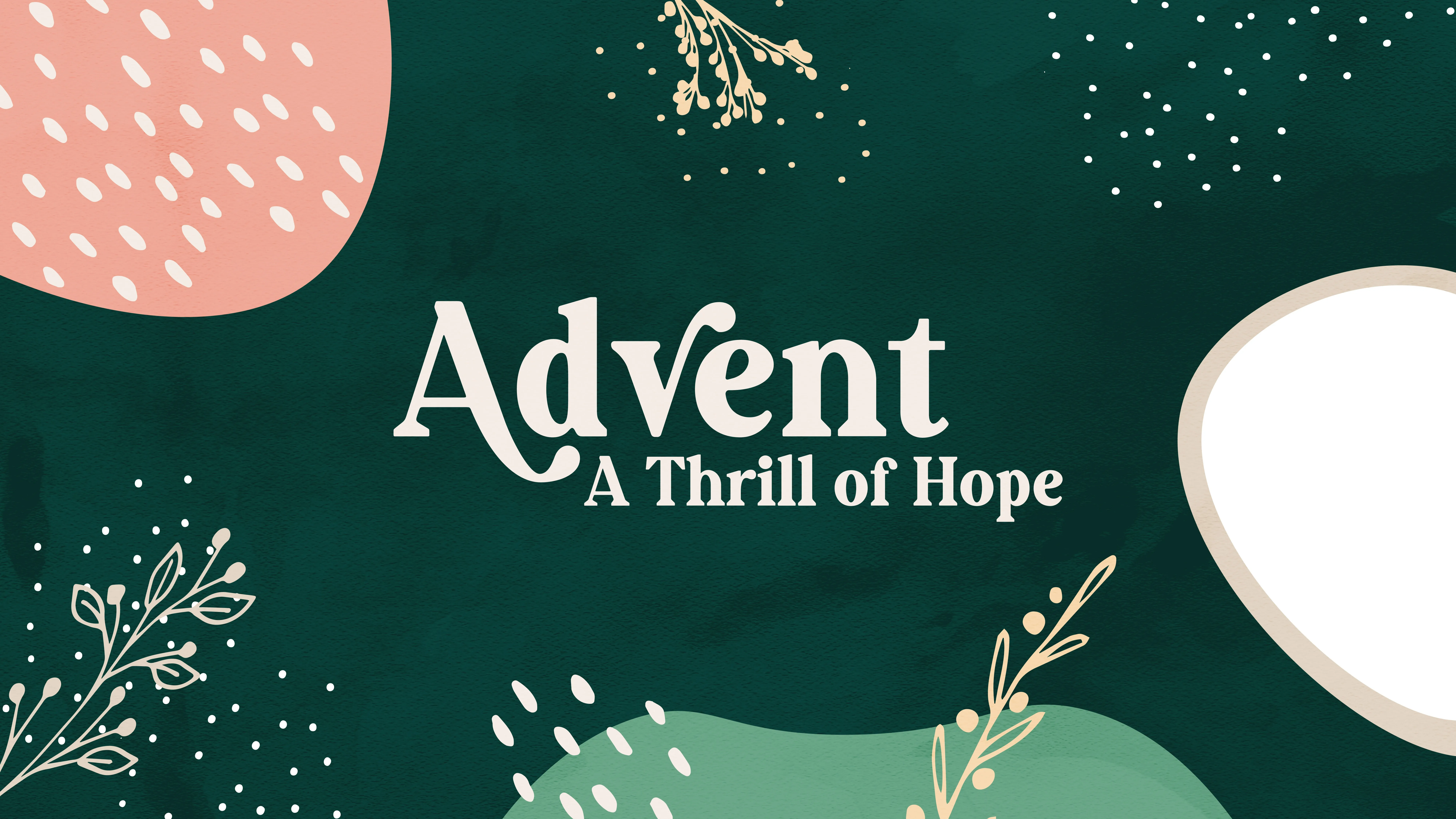
Hope is essential, especially during dark times like these.
Transcripción
This transcript was generated automatically. There may be errors. Refer to the video and/or audio for accuracy.
I love the family time at Advent, and here at Twin Lakes Church, we are starting a new tradition this year. New for us, and that is every single week, a different family in our church—young families, older families—are going to light that week's Advent candle and then read that week's Advent scripture. With the scripture this week, would you please welcome Greg and Hilary Nettles.
A shoot will come up from the stump of Jesse; from his roots a branch will bear fruit. The Spirit of the Lord will rest on him—the Spirit of wisdom and of understanding, the Spirit of counsel and of might, the Spirit of the knowledge and fear of the Lord. With righteousness, he will judge the needy; with justice, he will give decisions for the poor of the earth. The wolf will live with the lamb, the leopard will lie down with the goat, the calf and the lion and the yearling together, and a little child will lead them. The whole earth will be filled with the knowledge of the Lord as the waters cover the sea. Amen, this is the word of the Lord.
Well, it is Advent, and I always look forward to it. Incidentally, if you knew, my name is René; I'm one of the pastors here. To understand why Advent, why what we're doing at Advent is so important, I want to start out with a story that involves this baseball bat that I've got in my hands here. My friend Kurt Harlow, who is a pastor at Bayside Church in Sacramento, does something with his wife and with his little kids that I think is awesome. Every year in December, they have a Christmas party for kids in the neighborhood. They invite them all over to their house just so that their moms and dads can go shopping and have a little bit of a break. It's a great party, and they always feature a Christmas piñata at the party—hence the bat.
How many of you just love piñatas? You love hitting, but let's be honest: whoever invented piñatas—was he a genius or was he a criminal mastermind? Because what you're basically doing is behaviorally conditioning children to be violent when you think about it. You know, the harder you hit that thing, you get candy. But anyway, he has this piñata party, and he invites kids over. All the kids are having a great time coming over, running into his house with enthusiasm, except for one little kid who is like a barnacle on his mom's thigh. You know, you've seen little kids like that. He's just hugging to his mom; she's trying to leave, and he keeps screaming out loud, "I don't want to go in there! Something bad is gonna happen! I know something bad is gonna happen, Mommy! I don't want to go!"
She says, "Sweetheart, I would never ever take you to someplace where something bad is going to happen. Now, please come on, just go." "No! Something bad is gonna happen!" Kurt says he just kept repeating this over and over and over again. Finally, his mom says, "Listen, buddy, you are going in there." She pries him off, and she bolts. Anybody ever been there with your kids? Were you there this morning leaving them in Sunday school? Right? So he very reluctantly goes in. Kurt tries to tell him, "Come on, man, we're gonna do a piñata! It's gonna be really fun!" He sits cross-legged in the living room and says, "I don't want to have fun! I know something bad is gonna happen!"
Well, the piñata happens. Kurt puts it up in the backyard and says, "Kids, time to break the piñata!" All the kids come running toward the piñata, and as is typical with kids, they all stand way too close. You know, this close to the piñata, so they're all gonna get hit by the bat, except for this one kid who is sitting 20 yards away on the back porch. Now he's just sitting there glum, and he's literally shouting out, "Something bad is gonna happen! Something bad is gonna happen!"
So Kurt goes, "Alright, well, whatever. Who wants to be the first to break the piñata?" Of course, it's always the most ADHD kid who wants to do it, right? Kurt says this kid is a legend in the neighborhood, and he's literally standing on his toes like, "I'm gonna be the first to do it! I want to hit something, then I want to eat candy!" So Kurt goes, "Okay," and he gives the kid the bat very gingerly. He puts a bandana around this kid and spins him around like crazy because he doesn't want this kid to just decimate the piñata with one swipe, which he's capable of. So he spins him and spins him and spins him, but this kid has some sort of internal GPS or something. No matter how hard he spins him, the kid goes right back to the piñata.
He rears back, barely missing Kurt, and he just gives it this mighty swing and goes just under the piñata. You know, he was anticipating feeling kind of the resistance of the piñata, and when he doesn't feel it, he lets the bat fly through the air just over the heads of all the other kids who gathered close to the piñata. It sails exactly 20 yards through the sky and hits the kid who was sitting there on the back porch—kapow!—right in the forehead. This kid stands up, and he does this thing that little kids do when they get hurt. They kind of have that frozen pain moment where they just... and he says all the kids had swivel toward him, and he goes, "I knew something bad was gonna happen!"
But the truth is, we all have those moments, don't we? Where we go through life, and we just have this foreboding of doom, and we feel like something bad is going to happen right now. Anybody ever had that feeling in your life? Maybe you're going through it right now. Maybe you have a spouse who's going through it right now. Don't look at them; look straight ahead if you do. But the thing is, if you feel that way, there is a way to change that internal narrative and get a different expectation about your immediate and your ultimate future. I want you to grab your message notes that look like this because changing that internal narrative is really what Advent is all about.
Last week, we talked about how Advent is all about waiting for something great. There are two Advents in the Bible: there's the first Advent—that's when Jesus came at Christmas time—and then there's the second Advent, and that's when Jesus is going to come again and restore the whole earth. Those are two things wonderful; they're worth waiting for. Advent is a way for us to get prepared for Christmas and for a way for us to remember what's in store for us as believers. As a church, we put together this little Advent booklet with daily Advent readings in it. It talks a lot more about Advent; it is free and it's available at the info desk in the lobby if you'd like to pick it up.
The point of Advent is this: we light candles, as you saw Greg and Hillary do this morning, because the theme is this: darkness will not last. Say that again with me: this darkness will not last. There is hope, and this morning I specifically want to talk about the hope factor. Look up here for just a second. I believe this to be true: the degree of hope in your life determines your effectiveness, determines your professional future, your relational future, your eternal future, your emotional well-being, the amount that you impact your local community. It is all tied into your level of hope. Hope is the difference between whether or not you're expecting the best or expecting the worst. Hope is the difference between whether a situation vanquishes you or whether you triumph over that situation.
I just want to give you three quick examples from my good friend Ray Johnston's brand-new book. It is so good about hope, called The Hope Quotient. First example: Louie Zamperini. This is an amazing life story. In fact, on December 25th, a movie directed by Angelina Jolie about his life is coming out; it's called Unbroken. What a life he had! I was privileged to meet him actually when Louie spoke here at Twin Lakes Church years ago. He was an Olympic runner; he was drafted, he was shot down in World War II, he was adrift for weeks on the open sea, attacked by sharks, tortured in a prison camp. Many men simply gave up hope, but Louie never lost hope. He returned to the States and for decades inspired millions, including me, and that shows me that hope liberates.
Example two: Glenn Cunningham, a terrible burn victim. The doctors told him he would never walk again; the doctors even considered amputation. But he had hope, and he ended up setting a world record running the mile, and that shows me that hope motivates. Or what about the Apostle Paul? In prison, beaten, shipwrecked, but he had firm hope, and he ended up writing most of the New Testament and inspiring billions. Hope activates my potential. Hope has amazing power to liberate, to motivate, to activate.
Here's the problem: I see an epidemic of discouragement and of hopelessness today, and not just sort of out there in the dark world or something—right here among Christians in Christian churches. Personally, I trace it all back to the fact that we don't really know the message of hope that is in the pages of God's Word, and that's what we're gonna look at here today. Hope is the whole point of today's verses in Isaiah 11. If you are discouraged, if you are down, if you're disheartened, if you just got some really bad news, today's verses in Isaiah are just what you need.
I want to start with a little Discovery Channel moment to give you the context here. These verses were written about 600 years before the birth of Christ to the Jewish people in the northern part of Israel. They were being attacked by the Assyrian Empire, which was famed for its brutality, and soon the southern part of Israel would be attacked too by the Babylonians, its people dragged into exile, totally discouraged, ready to give up. The prophets like Isaiah are writing to encourage the Jewish people: don't give up. And it must have worked, right? Because the Jewish people survived; they didn't give up. From them, Christianity emerged. So what was it that gave them hope? What was it that kept them going when everything was dark?
Well, historians will tell you it was an idea—an idea took hold of the Jewish imagination while they were in exile. It's an idea that's all through the writings of Paul and the other prophets and Isaiah and all the other writings of the Old Testament as well. It's an idea that set the stage for Jesus, and it's still a very fertile idea today. People have been inspired for centuries by this idea, and if you're wondering how do I move from being cynical and hopeless to optimistic and expectant, this is how they did it: one idea, one truth, one belief. You see three facets of this here in Isaiah 11. So jot these things down.
Number one: they believed God still has a plan. God still has a plan, and specifically, his plan involves a man who's going to come onto the scene. Isaiah 11:1: A shoot will come up from the stump of Jesse; from his roots a branch will bear fruit. What's that about? Well, about 400 years before this was written, the kingdom of Israel was united, and it had gone through a period it would look back on kind of like how Brits look back on maybe Camelot. They had their own King Arthur—King David, a legendary king, a good king—and his father was Jesse; he was from the house of Jesse. That was the royal line. But by the time Isaiah is written, that lineage is apparently over; it's broken, it's cut down, it's a stump. There's no more good kings emerging. Israel's shattered; it's in exile; it's gone through civil war. Isaiah's saying the good news is there is going to be another wonderful ruler who comes out of the lineage of David, from the house of Jesse. Now guess what? Guess who was from the line of Jesse? Jesus! That was his family tree fulfilling this prophecy.
Now, there's a lot we could say about this, but here's what this idea meant to the Jews at the time this was written: God will not forget us. We are not at the mercy of these powerful Assyrian or Babylonian governments; they will not have the last word. No matter what it looks like, God will have the last word. And I want to tell you, your sorrows, your tragedies, the tragedies of your family, your illnesses—they are not the last word. No matter what it looks like, God will have the last word. How? What will this Messiah who emerges do? Well, the picture develops.
Point two: I can totally trust him. I can totally trust him. The Messiah will be a great ruler. Look at verse 3: The Spirit of the Lord will rest on him—the Spirit of wisdom and of understanding, the Spirit of counsel and of might, the Spirit of the knowledge and fear of the Lord. He will delight in the fear of the Lord. Now, the phrase "fear of the Lord" sounds weird in English; it's hard to translate, but it means an awe-filled reverence for God, worship of God. In other words, after all those generations of terrible rulers, there's going to be one who's totally God-honoring, one who's totally fair, one who's totally just. Verse 3: He will not judge by what he sees with his eyes or decide by what he hears with his ears. In other words, he doesn't judge a book by its cover. He's not prejudiced; he doesn't judge by all the things that humans judge by: skin color, bank account, haircut, reputation, accomplishments. He makes fair decisions a hundred percent of the time, and the people hearing this were like, "At last! It's the kind of ruler that the whole world is still starving for."
So here's the idea that captured their imagination: when times were tough, God still has a plan, and he's going to send a Messiah, and I'm gonna be able to totally trust him. He's not gonna do anything wrong; he's gonna be righteous, he's gonna be wise. And then—and I'm gonna spend the majority of my time on this last point—the third and final point of this section is the best part: he will make all things right. He'll make everything right. I love this famous part of scripture because Isaiah just goes on this poetic riff like some kind of modern urban spoken word artist, and he says this, and you gotta feel this building. He says the Messiah will first end in justice. He's gonna end all injustice. The phrase "that's not fair" will disappear from our vocabularies because look at this: verse 4: With righteousness, he will judge the needy. Now, again, the way that comes out in English here—he will judge the needy—it sounds like he's judging them. It means he will get justice for them. With justice, he will give decisions for the poor of the earth. That means he will be their advocate; he will use his power for their benefit.
It says he will strike the earth with the rod of his mouth; with the breath of his lips, he will slay the wicked. Listen, there is injustice, and this means he will bring justice to the earth; he will bring justice to the evildoers. Righteousness will be his belt and faithfulness the sash around his waist. What that means is he's incorruptible—no corruption at last in a ruler. Now, press pause here because at this point you might be thinking, "Oh, it sounds like the Messiah is some kind of an enlightened civil servant, right? He's gonna show up; he's gonna do good things for the poor; he's gonna be a good ruler, create more social justice. That's great." But watch this: as somebody once said, this passage now sort of bursts its banks like a river in flood stage, and its imagery just starts to flood all over the place because it says next he will end conflict and all war—any kind of conflict.
Look at the way Isaiah puts it—very famous verses. Verse 6: The wolf will live with the lamb, the leopard will lie down with the goat, the calf and the lion and the yearling together, and a little child will lead them. Such an amazing image! Wouldn't you love to see this happen? Well, check this out: somebody here in the church sent me a great book called Unlikely Friendships, and it is filled with images that look like they're right out of this prophecy in the book of Isaiah. These are true stories. Like this: in a village in India, this leopard shows up most nights to be cleaned and groomed by one particular cow that he has apparently adopted as his mama, and she licks the leopard's fur and cleans him. Now, I don't know if this is like his version of some kind of protection racket, you know, like, "You will be my personal spa masseuse, and I will not eat your tribe," or something, but there you go.
But here's another one: look at this wolf and this goat. Can you believe this? Best buds! They hang out together at a zoo in Europe. Now look at this picture; doesn't it look to you like actually the wolf is a little bit scared of that goat? How many of you, when it comes down to it, if you're honest, you are actually pretty scared of goats? Can I see a show of hands? Because I am! What are they doing in petting zoos? I don't know! My wife actually had her purse eaten by a goat in a petting zoo before she realized what was happening—that's a true story!
Or look at this: this stray cat who drops into the pen of this carnivorous Asiatic black bear. This is at the Berlin Zoo. Every day, this stray just jumps in, and they just kind of hang out together. Isn't that amazing? But my favorite in this book is Sharky the pit bull, his friend Max the cat, and the constant stream of little chickens that they are both raising together. Isn't that awesome? It's hilarious! There's just something about these unlikely friendships that we love, and that reminds us of these verses. But this verse is not just about animals. Look at a parallel passage later in Isaiah 19:23: In that day, there will be a highway from Egypt to Assyria. The Assyrians will go to Egypt, and the Egyptians to Assyria, and the Egyptians and Assyrians will worship together. How relevant is this? You know that bumper sticker you see around Santa Cruz: "Visualize world peace"? Well, God already has, and these are some of his descriptions of it.
And it gets better because it says this Messiah will end pain because the nature of nature is changed. It says in verse 8: The infant will play near the cobra's den; the young child will put its hand into the viper's nest. They will neither harm nor destroy on all my holy mountain. It's this poetic picture of pain-free perfection. As Max Lucado puts it: no more aspirin, no more chemo, no more wheelchairs, no more divorce or jail or broken hearts. You see, this is a picture of the world post-resurrection, of the new heaven and the new earth. And what else happens there? Finally, I think this might shock some of you, especially to hear this in church, but it says he will actually end religion. There will be no religion. You're saying, "What are you talking about?" Following here after the second Advent, when Christ returns, there's no more need for it. Verse 9: For the earth will be filled with the knowledge of the Lord as the waters cover the sea.
Now, there are a lot of other times the Bible talks about this. Check this out: Jeremiah 31 paints the same picture: No longer will they teach their neighbor or say to one another, "Know the Lord." No more Sunday school because they will all know me, from the least of them to the greatest, declares the Lord, and I will forgive their wickedness and remember their sins no more. And even in the book of Revelation, John says, "I didn't see a temple in that city in the new heavens and the new earth because the Lord God Almighty and the Lamb are its temple." No more need for a middleman. You see, that is God's endgame; that's always been God's goal—not religion, but a relationship. And that's why when God came to earth at the first Advent, he didn't come to give you a list of do's and don'ts; he came to give you himself. And that was shown in the ultimate way when Jesus gave his life for us to pay for our sins on the cross, and then in his resurrected body, he shows us what this new world will be like: no more people will be there, no more pain, no more death, no more sickness, illness, and corruption, and death do not have the final word.
This is not just like some intellectual thing; it's deeply emotional. Let me show you what I'm talking about. I have always—I'll admit it—I’ve always been a sucker for those extreme makeover home edition type shows. Does anybody admit that they love those things? I know they're kind of cheesy, but I love them! At the end, when they give the people the new house, I always cry every time. And so last year, when they wrapped up the series—I don't know if you saw this—but this is the end of the whole nine years of the show. They actually wrapped it up by not just making over a house, but making over an entire neighborhood. They went to Joplin, Missouri, after it had been devastated by those tornadoes, and they picked seven people from this one neighborhood who didn't even know each other—seven different kinds of families—and they built a whole street—seven houses with all the landscaping for them. And this was the reveal at the end of this TV series. Watch the screen.
This is for my family; it gets to be our family. Easy! This house that wasn't there just seven days ago, next to six others that weren't there seven days ago, especially when you're there with so many of the people that made it happen, it's indescribable. Oh my God, I don't believe it! We're very beautiful! And about the house, you know that my friend, I've seen the house, and I've seen how beautiful it was, and I was so happy. And then I thought, "Is that?" And I thought, "I just wish he could be here with me." But they've given me the stable home for my son, and I'm just really thankful for everybody. I felt so thankful! That's our house! Before, that was just a bare block; we have trees there now and grass. And you start looking at the different homes; this is what I was noticing, and you could almost, after getting to know everybody, we can almost point out whose house was whose right away. You know, you took different parts of Joplin, got us to know each other, and built a neighborhood for us. I've never been as happy as I was! Right? Isn't that awesome?
And what Isaiah is saying is good news: God's gonna do an extreme makeover, world edition, and all sickness and all pain and all war is all going to end. And you know, listen, most people miss this, but if you listen carefully to the Christmas carols, so many of them are actually not about the first Advent only; they're also about the second Advent. Three quick illustrations: of course, the Hallelujah Chorus—for the Lord God omnipotent reigneth! Hallelujah! Hallelujah! The kingdoms of this world have become the kingdom of our Lord and of his Christ, and of his Christ, and he shall reign forever and ever—second Advent hope. Another example: the famous poet Henry Wadsworth Longfellow—you know he wrote, "I heard the bells on Christmas Day" after his son was severely wounded in the Civil War, the same year his wife died tragically in an accidental house fire. He was grieving on Christmas and started writing this poem, and who can't relate to this feeling?
I heard the bells on Christmas Day; they're old familiar carols play, and wild and sweet the words repeat, "Peace on earth, goodwill toward men." And in despair, I bowed my head; there is no peace on earth, I said, for hate is strong and mocks the song of peace on earth, goodwill toward men. Ever feel like that when you just watch the news? Then peeled the bells more loud and deep: God is not dead, nor doth he sleep. The wrong shall fail, the right prevail, with peace on earth, goodwill toward men. That's the hope of what the second Advent! Or what about the song we sang today, "Joy to the World"? Listen to the lyrics: "No more let sins and sorrows grow, nor thorns infest the ground. He comes to make his blessings flow far as the curses found, far as the curses found, far as far as the curses found." The hope of the second Advent!
So you think back on Isaiah 11: what's the point of all these prophecies? You matter! And it gets better! You matter to God, and it gets better! In fact, it gets perfect! Now, so you might be going, "Great, but what am I supposed to do with all this today?" So there's all these things in the Bible about the future; you know it's gonna be great, but so what for now? Do I just kind of wait for Jesus to come and make it all right? Here's the way I think it works: imagine a great company started building a big store in a devastated neighborhood somewhere, and it was gonna do great things for the economy. And when their site is still all muddy and barely begun with construction, they put up a picture of their finished building like this. And then a few weeks later, they add a little sign that says, "Now hiring!"
This store, with no walls, no roof, no plumbing, no floor, no electricity, has the audacity to say, "Now hiring!" They're saying, "If you could only see what we see!" They're saying, "Apply now; we need to get ready now!" We serve the God of future perfection, and he is hiring! He started building at the first Advent, and in his word, he gives a picture of what it'll be like at the second Advent—the completed building. And if I love that finished picture, then I am going to want to live that way right now! That's the whole point. The point is this: if hope is trying to make yourself feel hopeful, you're gonna fail. Right? If your hope is just emotional and shallow, there's gonna be times you just can't conjure it up. But if your hope is a forward-facing confidence rooted in faith in God's promises, not only will hope remain constant, but you'll be inspired to go out and change the world.
And when you have this feeling like, "I just know something bad's gonna happen," you'll hear the whisper of God saying, "No, something great's gonna happen!" Yes, bad things are happening now because we live between the first and the second Advent, but something beyond your wildest dreams great is going to happen. And so you can get motivated today. Let me be very personal here: I have not talked a lot about this because until today, she's been here every week, but my wife and I, for about the last year and a half, have been taking care of my mother at our house. She has severe Alzheimer's now; her symptoms are she just really can't do anything for herself anymore. Much of the time, we're spoon-feeding her; she's in diapers. If she has one articulate word a day, that's a triumph. She's going backwards, and I look at this woman who raised me and my little sister after our dad died when we were four of cancer, and I see her power and her strength just withering away. I could degenerate into hopelessness, but the promise of the second Advent tells me that Alzheimer's does not have the last word, and cancer does not have the last word, and death does not have the last word. Because one day, on that beautiful restored heaven and earth, I'll speak with my mother again and hear her answer me, and I'll hug my father again, and we'll dance together in a place where the lion lies down with the lamb and the wolf is buddies with the goat because that's the way the Messiah is going to restore it at the second Advent.
The point is to be captured—let my imagination, my heart, my life be captured by this vision and by this Messiah. And when it is, my hope level skyrockets into the stratosphere, and that's the hope of Advent. Let's pray together. Would you bow your heads with me? Let's just pray. Praise God! Lord, thank you for this promise. Help us to live in this hope today. And God, I just want to pray for all those who came in with the needle on their hope meter just kind of pointing to empty. I pray that you would fill them up today with the hope of the gospel. They matter; it gets better, and that was proven when Jesus died on the cross for our sins to bring us to him and then was resurrected. And we remember that now in Jesus' name. Amen.
Sermones
Únase a nosotros este domingo en Twin Lakes Church para una comunidad auténtica, un culto poderoso y un lugar al que pertenecer.