When God Calls You to the Impossible
God can work in our impossible situations with grace and hope.
Transcripción
This transcript was generated automatically. There may be errors. Refer to the video and/or audio for accuracy.
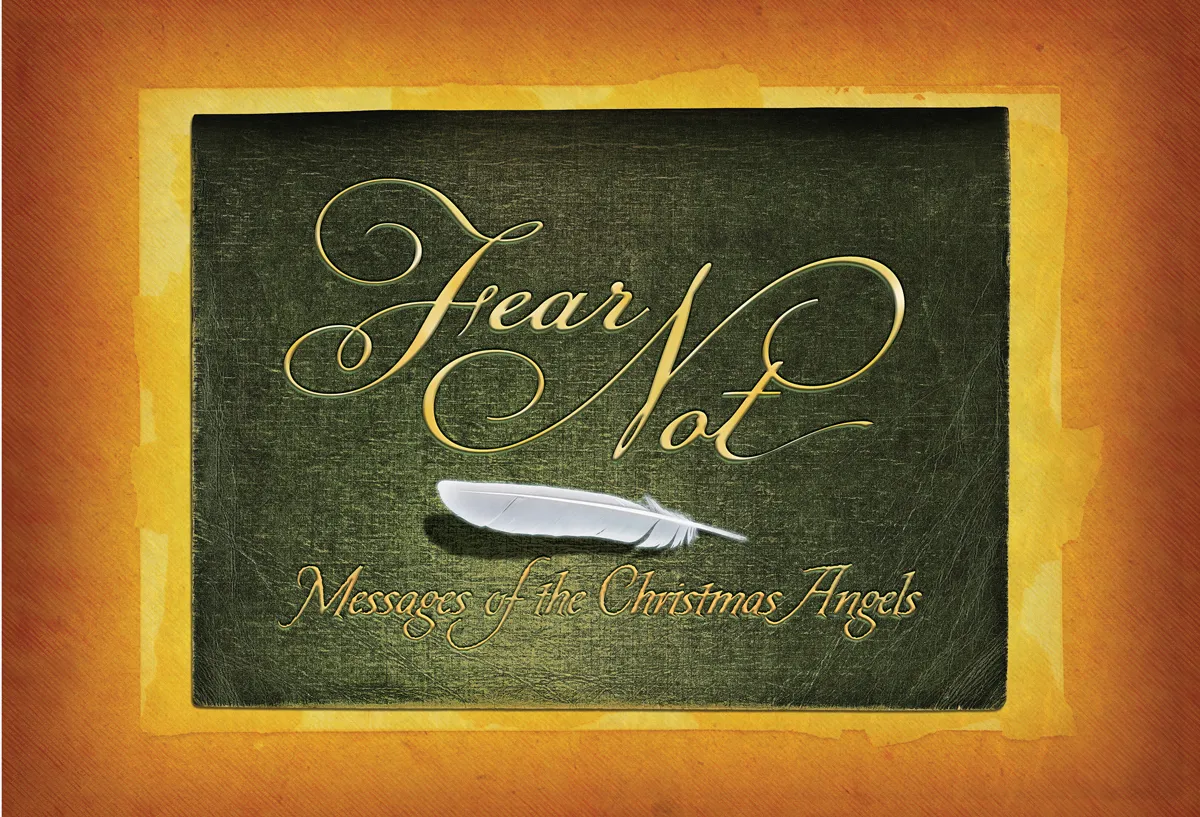
Good morning everybody. I'm glad to be here with you in church. I hope you had a great week, but you know since we've been talking about Fear Not and the messages of the Christmas angels, can we talk just a moment about the freaky windstorm we had this last week? Wow! I mean that was incredible. How many of you lost your power at some point? Most of us. Yeah, it was really wild and it almost feels apocalyptic, you know, not only when there's leaves and branches raining down, but in some cases trees. I mean it's crazy. I talked to a guy at Mount Hermon who was here last night and he said they lost about 10 trees up there. It was just in his words, "total carnage." So it was just... How many of you find the wind like that just a little bit unsettling? Yeah, well you know what? You're not alone because Wednesday night when I was leaving the church, wind was just howling and I get right out here on this street here and I see this little black shape scurry across the street and it's a gopher and I'm thinking to myself, you know, you don't see that every day. In fact, I'm pretty sure there's no jokes that begin, "why did the gopher cross the road?" I mean it's that rare, but his little gopher brain must have been telling him, "World coming to end! Must get out of den! Run, run, run!"
And the funny thing is he gets over to the other side of the road, funny to me, and he runs into the curb and his little paws are like this and he's like, "Uh-oh, now what?" And the curb may have well been 10 feet tall, there's no way he was going to get up over it and so do you know what I did? Yeah, I ran him over. I didn't... Valerie gets mad at me every time I say that. Like, what was I supposed to do? Like, dial 911, you know, call out the gopher rescue squad or something like that? It was a gopher! Anyway, we all have our moments. What's that? You know what? I figured we're all on our own. You asked me what I did. Anyway, we all have our moments like that where we are just kind of flushed out of our den, so to speak, in fear and you know, no sooner than we just kind of panic, we run into some impossibly high obstacle. At least it seems that way to us, right?
Well, grab your notes because would you agree that there are times when we all need to hear the words "fear not"? As we begin, I want to do just a little informal poll here. Raise your hand if you have never flown on an airplane. Okay, we got a couple. Yeah, I think more in this service. Yeah, like, how old are you, sir? He's five years old, but you know what? It's gonna happen. You know, for most of us, air travel is simply a way of life, right? It's just, we take it for granted and because of this, it's hard for us to imagine what it was like just a century ago where the thought of going somewhere in a plane was like impossible. It was inconceivable. In fact, smart people, educated people, sophisticated people, they said things like this. Here's Thomas Edison, a visionary in his own right and yet he says, "It's apparent to me that the possibilities of the aeroplane, which two or three years ago were thought to hold the solution to the flying machine problem, have been exhausted and that we must turn elsewhere."
Thomas Edison, you know, you'd think he'd be a little bit more optimistic, but as far as he's concerned, you know, airplane, total bust, you know, scrap it, move on to something else. Here's another expert opinion from Simon Newcomb. He was the director of the U.S. Naval Observatory at the turn of the century, in the 20th century, and he says, "This flight by machines heavier than air is impractical and insignificant, if not utterly impossible." He said that at 1902, a year later, the Wright brothers made history at Kitty Hawk. But despite that, very few people saw the promise of flight. Here's another, again, highly educated person, William Henry Pickering of Harvard College. Now, this guy was a brilliant astronomer and yet he said, "It is clear that with our present devices, there is no hope of aircraft competing for racing speed with either our locomotives or automobiles."
I know, and I love that because, you know, sometimes when I'm just crawling down Highway 1, I know that I could at least, you know, look up into the sky and go, "Well, man, good thing I'm not stuck in one of those slow airplanes up there, you know. Good thing, I got that going for me." And the list just goes on and on. It's fascinating because the collective wisdom at the time was that air travel in any kind of feasible sense was just totally impossible. In fact, I'll share just one more quote because this one is my favorite. It's from a guy named Sir Sam Hughes who was the Canadian Minister of Defence in 1914. He kind of looks the part. And he, in fact, put together their very first air division. Unfortunately, their one and only plane never made it off the ground, which presumably led to this statement, "The airplane is the invention of the devil and will never play part in any such a serious business as the defense of a nation." I mean, wow, you probably didn't know that the airplane was invented by the devil. There you have it, right there.
Now think about it. These guys represent the typical expectations of their day and what they thought was impossible. You and I, we regard as routine, right? Now here's the point. If we're so prone to underestimating the possibilities for, you know, mere human beings, how much more do we underestimate what's possible for God? Ever thought about that? Some of you right now are in a situation that seems impossible. It's in your finances. It's perhaps your health or the health of someone you love. It's a relationship that seems beyond hope, perhaps a habit that you haven't been able to shake. Or perhaps it's a deep hurt and it seems impossible to you that you will ever feel whole again. Now I'm not here today to tell you that God is just waiting to give you whatever you want. He's not a genie, but I am here this morning to remind you that we have a God who works in impossible situations. And because of that, we can have joy, we can have peace, we can have hope, even when God calls us to the impossible. And that's what we're going to be talking about this morning.
You know, last weekend if you were with us, we saw how the angel Gabriel dropped a bombshell into the life of a guy named Zechariah, if you recall, if you were with us. Well this week we're going to see Gabriel lob an even bigger one into the life of a young girl named Mary. You might have heard of her, but I'm hoping today that we will all be able to see her with fresh eyes. And before we dive into her story, there's a key verse that comes right out of today's passage, kind of our theme verse today. It's Luke 1:37. It's at the top of your notes and it'll be on the screen. I'm going to ask you to read this with me. Let me hear you. "For nothing is impossible with God." Do you believe that? Nothing is impossible with God. But sometimes people take that to mean that if you just have enough faith, God's going to give you whatever you want. But there are people who have amazing, mountain-moving faith, yet they still get cancer. They still have their hearts broken. They still suffer any number of griefs. So what does this mean?
Because, you know, let's be honest. We're surrounded all the time by things that seem impossible to us. And how do you and I know when it's appropriate, you know, wise to look at an impossible situation and say, "Nonetheless, I'm going to cling to the fact that nothing is impossible with God." Well, I want to show you three examples today when what was thought utterly impossible was in fact quite possible with God. And the first one is this. Write this down. God's grace seems impossible, but nothing is impossible with God. In order to really appreciate what happens to Mary, we've got to peel away, I think, some of the gauzy glow that surrounds her. She was an anonymous Christian girl, likely in her early teens, living in a town that no one really cared about. And her story begins in chapter 1, starting in 18. Starting at verse 26. "In the sixth month, God sent the angel Gabriel to Nazareth, a town in Galilee to a virgin pledge to be married to a man named Joseph, a descendant of David. The virgin's name was Mary. The angel went to her and said, 'Greetings, you who are highly favored. The Lord is with you.'"
Now to get an idea of what people thought about Nazareth, you know, note that Luke has to tell his, you know, first century Palestinian readers where Nazareth is, somewhere out in Galilee. But to really get to the heart of it, if you look in John's gospel, in the first chapter, you read about a guy named Philip, who goes to his brother one day, his brother Nathaniel, and he says, "Hey, Nathaniel, we found the Messiah, the Christ, he's Jesus of Nazareth." And I love Nathaniel's response. "Nazareth, can any good thing come from there?" I mean, total curmudgeon, right? I love this guy. "Nazareth, forget it." The point is that Mary didn't live in some cool place, okay? If she was, you know, to emerge in our day and age, you know, she wouldn't come from Santa Cruz or wouldn't come from, you know, San Francisco or Malibu. No, Mary would come from some place like, oh, I don't know. No, no, no, I'm not gonna say it. I've got people in a certain town in the Central Valley and I'm loyal to them. So, suffice it to say, Mary would come from some place that wouldn't top your list of places to live, whatever it might be called.
And when the Gabriel, and when the angel Gabriel appears to her, the first thing he says to her is this, "Greetings, you who is highly favored, the Lord is with you." And I guess, you know, if you're an angel and you're about to rock someone's world, you may as well be polite about it. But actually, these words are very significant. Over the centuries, a tradition has grown around Mary to such an extent that she is seen as having kind of special grace. And I want to be respectful and sensitive as I say this, but it's linked to this passage that she has kind of a special, unique grace. And again, in due respect to the various traditions that we might come from, I think at the very least, we ought to be able to separate Scripture from tradition. So, why did Gabriel call her highly favored? What does that mean? Well, I put a little section in your notes for your reference because when Luke wrote this, he used the Greek word karitah-o. Karitah-o. Say that with me. Karitah-o. One more time. Karitah-o. Good. That you did a great job. I just want to make sure you don't walk out today saying we learned about this word, "cheratou." Okay, that wouldn't be good. But it means to show kindness or grace or in Mary's case, to be on the receiving end of God's grace and favor. And if this was the only instance of this word being used in the Bible, then I guess it would be fair to say that it was, you know, indicative of a special grace reserved just for Mary. But the same word is used one other time in the New Testament, in Ephesians 1:6, referring to all Christians. The Apostle Paul writes in Ephesians 1:6, "To the praise of his glorious grace which he has freely given us in the one he loves." Same word, karitah-o, is translated freely given here. And God's grace is freely given to all of us in Christ.
Now, clearly, Mary had a unique and special role and we ought to honor her in that regard. But at the same time, the biblical picture is that she received the same grace that you and I receive. You are highly favored. Now, why is this important? It's important because Mary rightly understands how impossible it is for her to be the object of God's grace. I mean, far from being the obvious choice. Mary's like, "Wait a minute! Wait, hold on, Gabriel! I'm a nobody! Now, I come from some podunk town out in the sticks! I don't matter at all!" In fact, look at her response in verse 29, "Mary was greatly troubled at his words and wondered what kind of greeting this might be." So again, if we imagine Mary with some kind of halo around her head or a perfect person, we really, I guess we could say if that were the case, then, you know, she would be the most likely person on earth to be the mother of Jesus, but that's not the way she sees it at all. She's stunned, troubled, in fact, that Gabriel would greet her in this way. To her, it's almost inappropriate that he would regard her this way with so much favor.
There's a painting by Dante Rossetti that does a great job, I think, capturing how greatly troubled Mary is at Gabriel's greeting, because if you notice, look at her face there. She's conflicted. She's unsettled. There's almost a sense of dread over where this conversation may be heading. And here's where I think this relates to our lives, because I think that some of us, in fact, most spend our lives struggling over God's call on us. Or maybe you wonder, you know, yeah, God uses some people, but he's not going to use me. I mean, come on. But listen, God doesn't just forgive you in his grace. He claims you in his grace for his purposes. And so maybe you look at people and you see they're in some place of prominent Christian leadership, or they're a pastor, or they write books, or whatever. Maybe they, like this missionary Val was telling us about who's feeding people in this horrible situation in Somalia. And you think, well, surely, you know, God is using them, but me? I mean, come on. It seems impossible that God would use you, choose you, in fact, affect his power and plans through you. But that's the message of the story. Nothing is impossible with God.
Now, before we leave this point, I want to underscore that Mary was just as surprised by God's grace as we are. She didn't feel like she had it coming. She didn't feel like she was born for the role. She didn't feel like she was the most likely candidate. Far from it. In fact, look what she says a little bit later in Luke's gospel after she's had a chance to really reflect on what God is doing in her and through her. In verses 46 through 48, "And Mary said, 'My soul glorifies the Lord, and my spirit rejoices in God my Savior.'" I mean, she clearly recognizes her own need for a Savior. "For he has been mindful of the humble state of his servant. From now on, all generations will call me blessed." I mean, Mary is completely surprised by God's grace. But if you think of your own life, I mean, it seems impossible that God could transform any of us. I mean, I take myself as an example. I'm a pretty hard-headed guy. But just as sure as God had a role and a purpose and a plan for Mary, He's got one for you, and He's got one for me.
Well, as the story continues, it really becomes even more surprising, and that's because of this, number two, the identity of Jesus seems impossible. But again, nothing is impossible with God. I want you to try to imagine that you don't know a single thing about Jesus and His story. Now, I know that might sound a little bit odd coming from a pastor, but I want you to try to put yourself in Mary's sandals, hearing this for the very first time. Let me pick up the story at verse 30. "But the angel said to her, 'Do not be afraid, Mary. You have found favor with God. You will be with child and give birth to a son, and you are to give him the name Jesus. He will be great and will be called the son of the Most High. The Lord God will give him the throne of his father or his ancestor David, and he will reign over the house of Jacob forever. His kingdom will never end.' 'How will this be?' Mary asked the angel, 'Since I'm a virgin.' The angel answered, 'The Holy Spirit will come upon you, and the power of the Most High will overshadow you. So the Holy One, to be born, will be called the Son of God. Even Elizabeth, your relative, is going to have a child in her old age, and she who was said to be barren is in her sixth month, for nothing is impossible with God.'
Wow! Wow! I mean, imagine what it was like for Mary to hear these words coming out of Gabriel's mouth. Again, it's just stunning. And if you were here with us last week, you no doubt noticed some parallels between this announcement to Mary and the one that came to Zechariah. Both of them, you know, at their core, involve the announcement of a miraculous birth. But where Zechariah tips towards doubt and even disbelief, do you recall what he said to Gabriel? 'How can I be sure of this?' Give me a little bit more proof here. Whereas that was his response, Mary really tips towards faith. Well, how will this be since I'm a virgin? I mean, she just has this tiny mustard seed of faith, and yet unlike Zechariah, she's not questioning if it will happen. She just wants to know, well, how will it happen? I mean, she just, it's like, give me some more details, because this seemingly impossible thing looming over her, I mean, it's quite mind-blowing. Somehow, she's going to conceive by the power of the Holy Spirit, and growing in her womb will be a baby who is both fully human and fully God.
Now, I doubt she put this all together in her mind in the moment, but this mystery is touched on in the words of Gabriel. 'So the Holy One to be born will be called the Son of God,' Gabriel says. And no, Jesus doesn't become the Holy One. He is the Holy One, born in human flesh. And I hope that we won't let our familiarity with this story kind of keep us from seeing just how incredible, seemingly impossible the nature of this announcement is to marry. I mean, this is the ultimate game changer of all history right here. This means that God knows exactly what it's like to be human, the highs, the lows, the hardships. God knows what it's like to be despised, to be forsaken, to be abused, to be denied of justice. Jesus knows what it's like to be tempted in every respect. And even though he never sinned by taking our sins upon himself, he knows the weight and the shame of sin in ways that you and I will never be able to fully understand. He even knows what it's like to die. I mean, talk about something that seems impossible. God the Son hanging on a cross. But the story didn't end there, did it? By the power of the same Holy Spirit, he rose from the grave defeating death and sin. And because of that, we will live with him forever, no matter what happens to us in this brief life we have here on earth. His kingdom will never end in all of this promise. Get this. All of this promise, all of this hope is wrapped up in the identity of Jesus Christ. All of it. And if you just step back and you think about that, it seems impossible. Not impossible in the sense you have to check your brain out to believe it. Because in fact, the story of Jesus and the significance of who he is, that stands up under rigorous scrutiny. What I mean by that is that it seems impossibly too good to be true. Like, God would love us so much that he would give himself to us in Jesus Christ. But again, nothing is impossible with God.
And when the reality of that starts to sink in, you feel like you have to respond to that in some way. And that really leads to this last point. Trusting God seems impossible, but nothing is impossible with God. When you think about it from just a purely human perspective, you know, what we can see or hear or touch, sometimes trusting God seems crazy. I mean, here's Gabriel telling Mary, "Okay, here's the deal. God has chosen you in his grace and because of that, God the Son is going to enter the world through your womb." Okay, you down with that, Mary? I mean, wow. Going back to the fact when Gabriel first greets her, I have to think that perhaps the other reason she was greatly troubled is that maybe she was already kind of intuiting that her life was about to be hijacked here. But now she has to respond to what God's revealed to her, doesn't she? Just like you and I have to respond to what God has revealed to us.
And from her perspective, Mary had every reason to believe that what Gabriel has told her is going to ruin her life. I mean, her pregnancy is going to be, you know, seen by other people as the product of adultery. And in those days, she could be killed for that. At the very least, her engagement to Joseph, which was totally binding, as binding as marriage, breaking it off would amount to divorce, something Joseph will seriously consider as we pick up the narrative next week. But not only all that, how many people do you think are really going to buy Mary's story? Yeah, God caused that pregnancy. Yeah, sure, right. It's an impossible situation for her. And trusting God in that moment must have looked like and felt like just stepping off of a cliff. And even so, verse 38, "I am the Lord's servant," Mary answered. "May it be to me as you have said." What a moment. I don't know if you could ever find a more beautiful expression of trust, of surrender, and obedience to God than right here when she says, "I'm the Lord's servant. May it be to me as you have said."
And if you've ever handed the keys consciously of your life over to God, you know, it's not an easy thing to do. Not if you really mean it. And you say, "God, here's my life. I don't know where you're going to take it. I don't know what you're going to do, but I'm all yours." You've seen this video clip before that I'm about to show you, but it's one of the best illustrations I've ever seen of trusting God. And it comes from the third Indiana Jones movie. Let me remind you of it by asking you to watch this. It's impossible. Nobody can jump this. It's a leap of faith. I love that. It's a great picture of what it must have felt like for Mary to say, "May it be done to me as you have said." And as soon as she said those words, the heavens opened up and Gabriel called together this angelic chorus and then Mary knew that everything was going to be okay. Or not exactly. Simply says, "Then the angel left her." He left her. Now Mary's going to get some encouragement later on and you're free to read ahead, but don't miss this moment right here. There she is all alone. Gabriel leaves as suddenly as he appeared and all Mary can do is this. She's got to trust that if God has called her out onto a limb, then he's not going to saw it off behind her.
You know a few days ago Valerie was telling, René telling me about this plaque that her parents have had hanging on the wall since she was a child from her earliest memory and it's strategically located right at the door. So it's the last thing you see when you walk out of their house. It's there to this day and it says this, "The will of God will never lead you where the grace of God cannot keep you." That's a good thing to remember when God calls you to the impossible. The will of God will never lead you where the grace of God cannot keep you. That's what Mary was depending on. That's what we all are called to depend on in this journey of faith.
I'd like to close with this story. Last week I was with my family up at Mount Hermon and we got back to the room on the first evening. Lori was telling me about this woman that she had met, a young mom and she had a son that was the same age as our sixth grader Jack and she said that the mom had lost her husband during her first pregnancy. I think, "Oh my goodness, what a tragedy, what a sad story." And in fact the next evening we were walking with our boys talking with this gal as we were taking them to where their group met. And even though during the small talk we were just chit chatting, I'm thinking to myself how sad this loss was for her and how hard that her life must be this widow and her son. Well on the last night, Saturday night a week ago, I finished the message here and went up to Mount Hermon and did the very same message about when life doesn't turn out the way we plan. And if you recall, I share the story of how my wife Laura was just 20 minutes away from marrying someone else, which means that our kids were just 20 minutes away from never existing, right?
Well after that message up there, guess who's the first person to walk up to talk to me? This mom, this young widow and I'm thinking to myself, "I don't know if she's going to say great message or you know what mister, you're full of baloney. Really have no idea." And she smiles and she says, "You know what Mark?" She goes, "When you were talking about how your kids just, it's like almost never existed because I was thinking the very same thing about my kids." Now here I go, kids, what's going on? And on the outside I'm smiling, I'm listening like I'm just tracking along, but inside I'm going, "I seriously have my facts messed up on this whole story here." It's talking about all four of her children. Now I'm sure that Lori told me the story correctly, but I guess I wasn't listening, which I know seems impossible, but it's not as rare as I'd like to think. So here's the straight story as it got pieced together in that moment and with my wife's help. Yes indeed, she lost her husband during her first pregnancy, which was horrific grief and so sad. But unlike my expectations of what I thought of her all through the weekend, her story didn't end there. Sometime later she married another man and they had three children together that indeed never would have existed. And she says, "You know it's weird for me to think of that way. I honor my first husband, but at the same time I look at my kids and it just kind of fills me with a sense of awe and wonder and not to minimize her grief, but hearing like the full story, it kind of changed my perspective on the whole thing. It made a big difference, you know what I mean?
Well guess what? The same thing is true about everything in life. You can look at any situation and say the story is not over yet, including that impossible situation you're looking at right now. On the day that Gabriel dropped into Mary's life, the story was far from over. In the situation you're facing, in fact, ask yourself this, in what impossible situation is God calling me to trust Him right now? I don't know what that situation is, but I know this story is not over. Now again, you may have no idea how this story is going to end. And I'm not going to suggest at all that we all live happily ever after in this life, but this life is not the end of the story. You know, I think we're almost, you know, this might sound corny, but we're like the little gopher I mentioned at the beginning. You know, we see the curb and that's all we can see. And yet God, He looks past that curb and every other curb and every dead end and every heartache and He sees it all. And He says someday we're going to all gather around our Lord Jesus Christ in unimaginable glory and splendor and joy and praise. And there'll be no more heartache, no pain, no tears, no death. And even in that moment, our story will have just begun. It will have just begun. So with that perspective in mind, may you be strengthened and encouraged to your core, even in the midst of an impossible situation, because you know what? Nothing is impossible with God.
Let's pray. Heavenly Father, we thank You for the wonder of who You are. We thank You, Lord, that You know not just the beginning of the story, but Lord, You know how it continues all the way on into eternity. And so, Father, I pray that for every person here in this room or hearing my voice, Father, You would fill us with a sense of renewed hope. I know, Lord, there are difficult situations represented in this room, deep griefs and hurts and concerns. We don't mean to minimize those things, but at the same time, we want to come before a God for whom all things are possible and simply entrust ourselves to You, surrender to You, knowing that You've promised never to leave nor forsake us, and that You have this amazing way of working in our lives. Even if our circumstances don't change, there's a sweetness to Your presence. There's an assurance and a hope that You give us as Your Spirit indwells us and intercedes for us with groans too deep for words. Thank You, God, that You are with us today. And I pray that You would comfort those who need Your comfort, strengthen those who need Your strength, provide for those who need Your provision, Lord, whatever it is, Lord. We just want to surrender, offer ourselves up to You, Lord anew. We pray this in the matchless name of Jesus Christ. Amen.
Sermones
Únase a nosotros este domingo en Twin Lakes Church para una comunidad auténtica, un culto poderoso y un lugar al que pertenecer.