When Jesus Moves into the Neighborhood

Jesus moved into our lives to show us how to love others.
Transcripción
This transcript was generated automatically. There may be errors. Refer to the video and/or audio for accuracy.
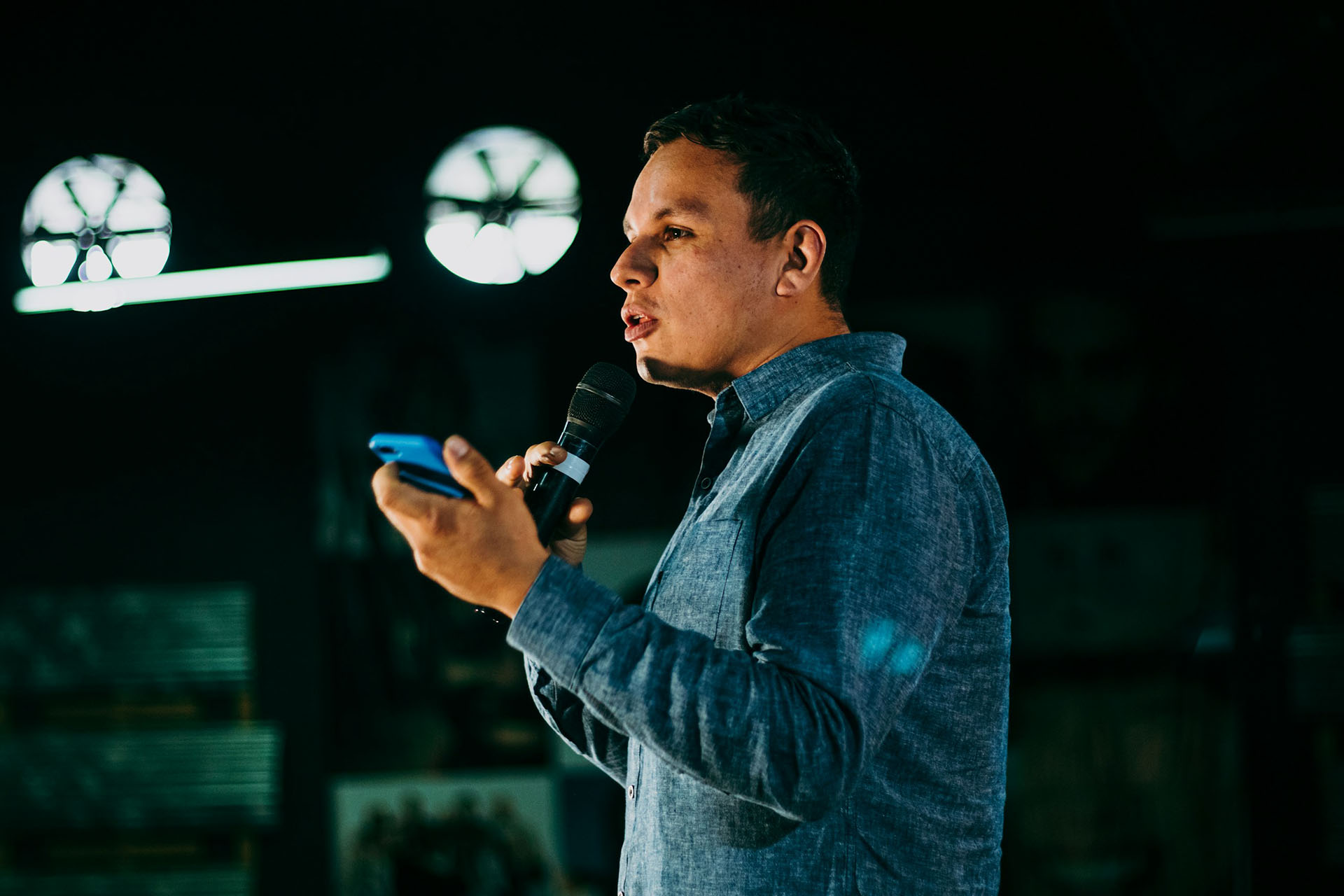
Well, to tell us more about what God is doing in the world today, we have a very amazing guest speaker. This gentleman travels and speaks all over the planet, often to audiences of tens of thousands at once. His wife, Christy, is also amazing. She's a microbiologist at the Beth Israel Deaconess Medical Center in Boston and a private practice Christian counselor. He's a professor at Gordon College in Boston and a best-selling author of books like Simplify and Feeding Your Forgotten Soul and How to Be a World-Class Christian, and he is here live. He will inspire you. So please join me in welcoming Paul Borthwick this morning.
Well, good morning everyone and good morning venue folks. It's good to be back here at Twin Lakes. I loved coming to this church just to simply encourage what you're doing because I walked through the lobby here and I learned about ministries I'd never even heard of before. You're the first church I've ever been to that supports Wickliffe Bible Translators working in Easter Island. Now, I dare you to find that on a map. And then also I learned that you're involved with a ministry. I think it's in India, you said, right? And this is why Paul was holding this. It wasn't sort of like some sort of rosary thing he was doing. It was a necklace made by ladies who have been rescued from sex trafficking. And this is the skill that they are given and Twin Lakes partners with them to help market the product so that the women have an income so that they don't need to go back to their former lives. So let me encourage you to stop at that table out there.
Now, I'm bringing you greetings from the East Coast where it has been cold old. And someone told me that Santa Cruz hasn't been getting much of a winter. So we can share. We have plenty of winter and similar to yourselves. We're going through our own grief counseling in the NFL. But actually it's been an amazing week personally because last Sunday at this time I was finishing up two weeks with my wife of winter camping. Now, do you know what winter camping, when you dig like the snow hot and you're boiling down the snow to make water and everything? No, we weren't doing that. We were actually at a campground in the US Virgin Islands. So if you see me doing this, it's because of mosquito bites residual. But it actually portrays, it actually has something to do with the sermon this morning.
Because at this campsite there are three venues, if you will. You can stay in what they call a cottage, which is pretty modest. There's two screen walls, two cement walls, but a cement floor and it's pretty dry. Or you can stay on a platform tent, which is the platform and the tent is already made for you. Or you can do it the real campers way, you can bear sight it. And that means you backpack in everything. Now it's interesting because of the fact that I've noticed when I've gone there that if I'm staying in a cabin, which I was, and I meet someone and they say, "Where are you staying?" I say, "I'm in a cabin." They say, "Oh, we're bear sighting." And what they're saying is, "You're a wimp. You're not really a camper." But more likely they're saying, "You don't know what it's like. You don't know what it's like because you don't live with us. You don't understand the world that we live in." And that's what I'm here to talk about this morning.
A Lord Jesus Christ who became flesh, incarnation is what we call it, in the flesh, that the word became flesh and moved in to tent with us so that we can say to him, "You know what it's like to be tempted. You know what it's like to be lonely. You know what it's like to be rejected." We don't have an almighty God who doesn't identify at all with our sufferings, but rather one who came, lived, and suffered for us. The theme verse reminds us of that. The word, the Gospel of John calls Jesus the word because when we usually think of the word, we think of the Bible. But Jesus is the ultimate communication of God. We love the Bible because we love Jesus, not the other way around. And Jesus is the ultimate communication.
The message of the Gospel is that our God communicates. But he not only communicates, he comes to live with us. In one translation, and actually along the lines of my own camping experience, it says, "Jesus came and pitched his tent in our neighborhood." Or Eugene Peterson says it this way, "The word became flesh and moved into the neighborhood." Just this year I became aware of a ministry of young people. Most of them I think they're working in Canadian big cities. And in many of the Canadian big cities, there are huge towers, you know, like apartment towers, of people of other ethnicities who have come from other countries, and they're living, because Canada has, you know, quite a few immigrants coming in. They're living in these places where you could go to a tower, and everybody in the tower is from Iraq, or everybody's from Jordan, or everybody's from another place where refugees have come.
And this young people's ministry is simply called "Move In." Move in. And the theme verse is our theme verse, that the word became flesh and dwelt among us. He moved into the neighborhood. In John 1, it reminds us of the fact that God communicates through his son Jesus, and that when God communicates, he communicates through Jesus, who comes as a human, to push out the darkness and to bring in light. And when we see this Jesus, we see God in the flesh, as it says, "full of grace and truth." Full of grace and truth. When it says that the word became flesh, it's a reminder that our God speaks our language. Our God will speak in terms that you will understand.
There's a famous story that comes out of the Wycliffe Bible Translators. Back in 1917, there was a young man named Cameron Townsend, and Cameron Townsend dropped out of college for a while to go down to Mexico and eventually to Guatemala to preach the gospel. And to fund himself, he would sell Spanish Bibles. And the story goes that he went to this one particular ethnic group called the Cachacal people. And when he came to the Cachacal, eventually one of them said to him in broken Spanish, "If your God is so great, why doesn't he speak my language?" And Cameron Townsend took that as a challenge because he knew that the God of the heavens does speak every language on earth. But these people didn't know it because they didn't have the written word of God in their language.
And so to help them come to know the living word of God, Jesus, Cameron Townsend moved into their neighborhood and took the next, I think it was 12 or maybe 17 years, learning their language, reducing it to writing, and translating the Bible. And that ministry with the Cachacal people gave him the burden for the ministry that you support today in places with indigenous peoples up in Alaska or with people working on Easter Island, the Wycliffe Bible translators. They exist to remind the 2,000 or more languages of the world that yes, God speaks their language. When I say 2,000, that's the 2,000 that don't yet have the Bible in their own language because God communicates.
And let me just pause and say to you, if you are not yet a follower of Jesus, the Almighty God of the universe wants to know you. He wants to not only speak to you but have you speak to him. He wants you to come into a relationship with him, and he invites you into that relationship. The word became flesh to communicate the message of God, to live it out in front of people. Last year, last February, I was invited by the World Relief Group to go into the Kibera slums of Nairobi, Kenya to do some training for pastors before their elections. You might remember back in 2007, 2008, they had some elections that resulted in more than almost 1,300 people killed, 250,000 people displaced because of inter-ethnic violence after the elections. And the church, sad to say, was complicit in the violence.
But immediately after, the pastors came together and began the process of repentance and peace-building, and they asked us to come to continue that to prepare for the March elections, 2013. Now, the folks with the organization I was working with, they said, "Well, what we'll do is we'll have it at a nice church that's on the edge of the slums, a church with a facility not unlike yours, a nice, beautiful sanctuary and nice facility." And the pastors from the slums, Kibera is the worst slum in Africa, the pastors from the slums said, "If you want to have an impact, you have to come be with us." So we decided, even though we were told it was unsafe and dangerous, that we would just move in to the neighborhood. And we spent a week with them.
And they loved the fact, I don't know if they got anything out of our teaching. What they said was, "You came. You walked." We did a walk on a Saturday for three hours encompassing the entire slum, something that had never been done before by a mixed group of ethnic people in Kenya. And as we're walking through, we're basically taking that ground for Jesus. The Word became flesh and moved into the neighborhood. You have a brochure that's going to encourage you to go on short-term mission trips. Now let me tell you something funny. René and I were talking about this last night. Neither of us have any particular handyman skills. Fair to say? You know, I don't know if you know him, but my wife told me one time, she goes, "Paul, we're never going to become Wickliffe Bible Translators." And I said, "Why?" She goes, "You can't fix anything." And if you ever talk to Wickliffe Bible Translators, it's kind of like, "Yeah, well, you know, I was building my building out of palm hut, out of palm branches, and then the airplane broke, so I fixed it with an elastic band and a paperclip."
And, you know, and they're kind of, if you remember this TV show, they're kind of MacGyver-ish, you know, and I can't really, I think I can change the oil, but sometimes I think I put it in the windshield washer fluid. But anyhow, I lost my train of thought. Why did I tell you that story? Because many of times we don't want to go on short-term mission trips, because you say, "I can't build a building in Mexico. I don't know how to do this stuff. I don't know how to set corners on a, you know, pouring cement or anything like that." The number one thing that the brothers and sisters I've met around the world will tell you when you come is that we don't really care what you do. We just want you.
They love the fact that you come and leave your comfort zone and move into their place. I was teaching in Nigeria, and I asked some of my students what they had learned from my teaching, and I was hoping to hear some really great things, kind of like, you know, "Give me some evaluation," which is basically, "Come on, praise," you know? And they said, "You came and you sat at table with us, and you ate our food." You know, a lot of us Americans, we don't want to go on cross-cultural missions, because, "What am I going to eat?" Trust me, I've never had anything to eat that would come back and eat me. All right? So, you know, and you can do it, and you know what the missionary prayer is, right? "Lord, I'll take it down if you keep it down," you know? And so, you know, you just trust God with that.
Because Jesus came into our place and ate our food. Jesus came and lived in his community, became a carpenter, grew up with his friends, and he did all of that so that we would know that the God of the universe cares about us personally. And that's why we go, and we move in. We move in. We go to incarnate, to live out the Gospel. Now, where I live is very similar to here in Santa Cruz, in some respects, in the sense of being a rather free-thinking. Is that a fair way to say it? Free-thinking? You know, I don't know if you're aware of this, but the Boston area is actually kind of liberal. Maybe you've heard that before. But the reality is, I believe in my community, people need to see the Gospel before they hear the Gospel.
Do you understand what I mean by that? They want to see me helping the elderly person. They want to see me working with HIV people in maybe a hospice care situation. They want to see the tangible effects. I have some friends that I know from a local pool where we swim together, and they don't ever ask what I preach. They ask where I go and what I do. And one of them told me, he says, "I'll never come to church with you, but take me on a Habitat for Humanity project. I'll do that." Because people want to see the outflow, the outflow. That's why sometimes knowing about some of these ministries is a tremendous way to talk to your friends, because they think all we do is go preach, preach, preach.
And you say, "Well, at church, I actually learned about this group that's helping ladies rescued from sex trafficking. I learned about this group that's working with people in Mexico to help them break the cycle of poverty." And you have an evangelistic tool because Christians like you and your missionary team are moving into the neighborhoods and touching those neighborhoods for Jesus' sake. You move in. You let people see your life. I have a friend who is actually, by nationality, Egyptian, but he has actually lived almost his entire life in Libya. His email address is "Libya Lover." And he loves the people of Libya. He's an English teacher. He was in Libya. He only left Libya. He grew up there as a child because his parents were medical doctors to actually Qaddafi.
And he grew up there as a Christian and one who wanted to influence his friends to know Jesus. And he only left Egypt twice. Sorry, only left Libya twice. Once was to go to Egypt to get his master's degree. And the other time was after the Libyan government told him it would be at his advantage to leave or disappear. So he left. But he was telling me about some of his students, an English teacher, he was telling me about some of his students who eventually would become followers of Jesus. And he told me, he said, I was speaking to this one guy especially, and I asked him how he became a follower of Jesus. He said, "Professor Nabil, I watched your life." "I watched your life," he said. "I watched your life." "I watched how you treated the women in our classes." "I watched how you treated all of us students." "I watched how you fed us food in the evenings of Ramadan during the high fast of Islam."
He says, "I watched how you treated us with respect." He says, "I watched how you drank your coffee." I never know. How do Christians drink their coffee? Is it different? But he says, "When I saw you, I wanted what you had." "And I watched you for four years." It reminded me of something, brothers and sisters. The only way to be able to be used by God to move into some other neighborhood is to move into your own neighborhood right now. Because sometimes it's easiest for us just to hang out with people who are like us. Sometimes it's easier to cross a culture than it is to cross the street. Because I can love somebody in a faraway place for a two-week short-term mission trip, but what about my neighbor whose dog messes on my lawn? It's a little bit more difficult, but the call of God is to move into your neighborhood, starting right where you are, your workplace, your community, your social network.
Because Jesus says, "I came to move into the neighborhood, and I asked you to move into the neighborhood." The other thing about moving into the neighborhood, though, is when Jesus moves into the neighborhood, he doesn't just live. He also speaks. We go out to share the gospel. And one of the messages of World Outreach Week is that there are still places in the world where none of the followers of Jesus have moved into the neighborhood yet. That might be something God might call you to. Some place in the world where they don't yet know this message that the Almighty God of the universe wants a relationship with them. And God's calling us to move into those communities.
He's calling us, and you might say, "Well, it's dangerous." Remember the phrase, "Jesus, the word became flesh and dwelt among us." He moved into our place and eventually would be crucified. There are people that will say to me, "I don't know if I want to go into cross-cultural mission work, whether it's locally or into the cities, Oakland or San Francisco or San Jose. I don't know if I want to move it." These places are so dangerous. One guy was talking about it this way. He said, "Students come to me and they said, 'I don't know if I want to move into the neighborhoods of the world, because what if I go to Calcutta and I die of dehydration caused by cholera? What if I go to the Amazon and I get eaten by piranha? What if I go to the North Country and work with those Bible translators up in Alaska and I freeze to death?' He says, 'What if we go to an inner city and we get killed in a drive-by shooting?'"
And they come up with these, the guy says to the students, he says, "Students, let me give you this word of encouragement. You cannot possibly die in all those ways." So basically, choose one thing, obsess about that, but don't... Because if our first concern is where it's safe, we're never going to move into the neighborhood. Because it's difficult. It's challenging. You'll face questions. Invite international students into your home. Now that's a little different venue because in a sense, it's not you're moving into their neighborhood, they're moving into yours. But you invite students from another world, religion from another part of the world into your home, they're going to ask you a question you don't know the answer to. You're going to have an awkward moment where you don't know exactly what's right or wrong, socially and culturally. But that's about what Jesus did.
He came and lived among us. That's why I want to encourage you to get to know some of these other ministries. Because through them, you move into communities through your prayers, your finances, your short-term mission trips that you could never move into on your own. And for us personally to realize that the call of God is lifelong. If you're a follower of Jesus, you, according to the scriptures, you are sent. In John's gospel at the end, Jesus, after calling himself sent by God more than 40 times, you know, for this reason I was sent, the Father has sent the Son, Jesus refers to himself that way. After more than 40 times of being called sent, Jesus on Easter night after raising from the dead, he then says to his disciples and therefore to us, as the Father has sent me, now I'm sending you.
Now if you're a follower of Jesus, you don't have to ask if you are sent. You only have to ask where you are sent. And for right now it's maybe where you're living. But God might change your direction. God might use a conversation in the hallway or something you learn during this World Outreach Week to make you realize, well, maybe that's where I should go. A woman from our church, one of my favorite stories, she came to me and she, she came to me when I was a missions pastor at this church, so along the same lines as Paul. And she said to me, "Paul, I'm a widow, I'm self-supporting and I'm going to be retiring in five months, five weeks. I don't want to sit in a rocket chair until I have to. Can you give me something to do?"
So I said, "Okay, Mary, what have you been doing?" She said, "I'm a nutritionist. I prepare food for large groups of people." So I said, "I'll look into it." Five weeks later, Mary, at age 67, was sent off for her first ever trip to Haiti, the poorest country in the Western Hemisphere. Using her skills as a nutritionist, she moved into the neighborhood, into an orphanage, where she was feeding, using her skills, nutritional food, for 600 kids. Not orphans, but actually just disadvantaged children coming in to get the feeding. Using her skills, she raised money for like an industrial-sized Cuisinart type of thing, and they moved from 600 kids a week to 2,000 kids a week they were feeding.
After four months, she came home having delegated her work and trained Haitians to do what she was doing. A couple of years ago, I had the privilege of performing Marian's funeral service. She died at age 86. Between age 67 and 86, she went to Haiti 44 times. She would do this. She would recruit people. She recruited my mom, who was also a widow at that time, to go on the mission trip with her. And my mom says, "She took away my only excuse." I said, "What's your only excuse? I'm too old." She goes, "Marian's two years older than me. What am I going to do?" I said, "You better go. You better go." Marian was great. When she was 82, she was speaking to our seniors group. I'll never forget this, because I was the host. She was speaking to our seniors group, and she said to them, "Some of you in this audience are nervous to go with me to Haiti." Because Haiti had been a lot in the news in those days. "You're scared because if you go to Haiti, you say, 'I might die.'
Now, when you're 82, you can say this. She looked over at the audience. She said, "Let me tell you this." Looking over at this audience, "You're going to die whether you go to Haiti or not." And she says, "And it's so much cheaper to be buried in Haiti." Now, she's making a joke about it, but the reality is, the reality is, the people there, the worst grief in all of my experience after she died were the Haitians calling me and just weeping because she became their mother. Literally. They named the school after her. They named the church after her. Why? Because she wasn't afraid to move in. She didn't let her fears dictate it.
So Jesus, the living word, calls us to action, to cross a cultural barrier for an international student, to cross a cultural barrier to move into the life of a refugee or an immigrant. Maybe you want to start up or get involved in a teaching English as a second language to people who are new to the region. Maybe you want to get involved in learning world religion so you can converse intelligently with people who say they're Muslim, Hindu or Buddhist. Maybe you want to cross a barrier and go on a short-term mission trip locally in the United States or to the ends of the earth. Maybe you have certain skills and you say, "How could I use those?" and you find out that nutritionists can have a great impact on an orphanage in Haiti.
The issue is, are you willing to understand that Jesus, the living word, became a human being so that he could let us know that the everlasting God, the creator of the ends of the earth, wants to move into our communities, wants to know us by name, wants to bring about change, not just for eternity, but for this life as well. Moving in, moving in, following Jesus' example. After World War II, there's a story that came out of a school in England about this Christian school it was, and they had an affront of the school, a statue of Jesus, a full-like six-foot statue of Jesus.
The story goes that some of the impact of the bombing, the statue fell over and the hands and the feet of Jesus came off. The statue was just left with him, Jesus' handless and footless. When they were debating about putting up the statue, they were going to raise the money to repair it. But one of the people, maybe it was the headmaster, I don't know, he decided, "No, let's use it as a reminder." In post-World War II Europe, where there were so many people suffering, let's remind the church of our calling. And under the statue it says, "Jesus has no hands but your hands. Jesus has no feet but your feet." Now, I don't know if I theologically agree with every point about that, but it makes this point.
Jesus moves into the neighborhood through you and through me. He moves across cultures, into other neighborhoods, through you, through me, through our partners. And my challenge to you this morning, my invitation to you, is be part of what Jesus wants to do to move into our world for impact, for Jesus' sake. Let's pray. It is an amazing privilege you've given us, Lord, first to know you. The everlasting Word of God, the revelation, the dispeller of darkness, the savior from our sins. And it's our privilege, Lord, to be called to join you in moving into communities and touching lives where only you can touch them through us.
Lord, help us to see the opportunities in front of us and to take advantage and be obedient. By your grace we go forth. In Jesus' name, amen.
Sermones
No More Sermons in Series
Únase a nosotros este domingo en Twin Lakes Church para una comunidad auténtica, un culto poderoso y un lugar al que pertenecer.