World Outreach Week 2024
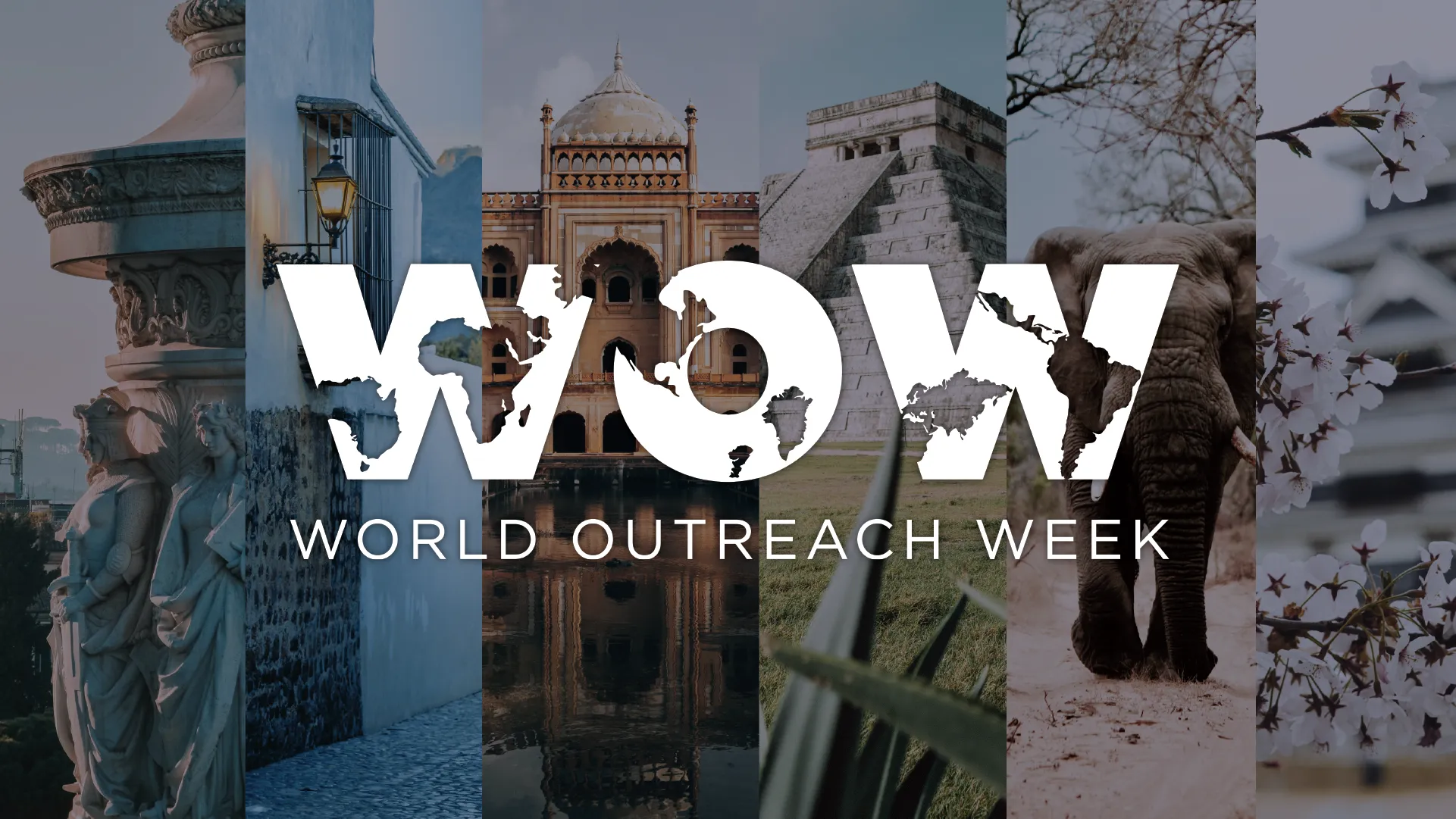
World Outreach Week highlights our global mission partners and impact.
Transcripción
This transcript was generated automatically. There may be errors. Refer to the video and/or audio for accuracy.
Everybody just say, "Wow!" out loud. Wow! Now you can see why I love world outreach every single weekend. Hey, I didn't introduce myself. My name's René, another one of the pastors here at Twin Lakes Church. If you are a guest today and you are going, "What is happening in this church?" You picked a great weekend to kind of hear our heartbeat. And let me tell you why in a minute.
But before I get into the wow message for this morning, when most of that is gonna be an amazing, brand new film that we created for you, I just wanna give you a quick preview about next weekend we all know what is happening. Now you may not know that right here, we're gonna do something different because in church we are going to have in services the Super Bowl of preaching. I'm just telling you right now. Yes. I'm gonna be kicking off a new series, Jesus' final instructions to his disciples. We call it Stay Strong and Carry On, the Upper Room Discourse. I'm really looking forward to this.
Plus, we announce a new project here at the church that's gonna be very exciting. Plus, we're going to have super snacks, red and gold themed of course. Plus, some surprises. And that is all in one super week from now. And you know what, I just wanna invite you, if you are into it, dress for the day. Wear red and gold and team colors. You can't have fun at church, it is allowed.
And this just in from the Niners in fact, from Brock Purdy himself, he just revealed the game does not start until 3:30. I want you to say this out loud with me. Let's say it. The game does not start until 3:30. And that means if you come to church you won't miss one single Taylor Swift reaction shot. It's gonna be fantastic. So that is all in one week. But first, World Outreach Week. One of my favorite weeks of the year.
Why do we do this? Well, you may not know that 10% of everything that comes into the church, all the tithes and offerings goes right off the top to our global ministry partners. So if you've ever given a dime to Twin Lakes Church, you have a share in these amazing global ministries like refugee assistance in places like Jordan, Mercy Ships Mobile, Hospital off of Africa, schools like Prakash, children's homes like Little Flock in India, pastor training in Africa, the Middle East, Italy, Bible translation all over the planet, new churches starting, you have that apart and all of that already. Say wow, wow.
And so during our World Outreach Week what we wanna do is kind of introduce you to some of these partners that you already are supporting. You know, I was thinking about this. Our culture tends to make celebrities out of people who do the oddest things, right? You can become a cultural superstar just for your unboxing videos on YouTube or for catching a ball or in the case of the Kardashians I still have not the slightest idea why they are famous. But in my book these are the true superstars. These are my celebrities. Do you agree with me on that?
And so meet 'em in the lobby today, grab some Mary Ann's ice cream, we got it for free for you out there in the lobby and stroll around and encourage these amazing people today. And all week long, again the schedule is in your notes, TLC.org/wow has all the details too. Now today I'm going to very briefly look at one Bible verse and then the world premiere of this brand new short film.
So last weekend we looked at the very first phrase that Jesus says as recorded in the Gospel of Mark. It says he went into Galilee proclaiming the good news of God, say good news out loud with me, good news. The time has come he said, the kingdom of God has come near. Repent which is a word of hope, a word of possibility. Repent and believe the what? The good news. That's the first sentence he said.
Then today what I want to look at is one of the last sentences he ever says in the Gospel of Mark. Watch what he does with that mission that he had. He told them go into all the world and preach the what? The good news to everyone. His mission he now gives to us. That was the case from day one of the Jesus movement. And today I just want to look at just a few words out of that one verse that are so important.
First, this is over, easy to overlook, the word them. He didn't say this just to him or to her. He said it to them. Gospel sharing is always a group activity. And I love this, here's why. You can look at the needs of the world and go it's too much, I can't do a thing and then not do anything. And that's true, how many individual people could afford to find hospitals and clinics and classrooms and vocational institute trains all over the world? Very few individuals could afford to do that. But almost any healthy church can. And this church does. That's what we do.
How many individuals could ever hope to fund church planting and pastoral training all over the planet? Very few people have those resources. But a church does. And that is what this church is a part of. How many individual people can afford to send hundreds of special needs and at risk and low income students to summer camps every single weekend? Very few individuals. But a church can and this church does. And that's why he told them, that's one of the beautiful things about a healthy church. And by the way, them also includes you.
You can do this in your home, in your neighborhood. But I just wanna suggest that maybe you have felt kind of a tug on your sleeve could be from God to consider full time ministry to one of these far flung corners of the world. And before you laugh, every single one of our missions partners probably laughed at some point when they started feeling that call. We have people out there who are. We have two ex-cops. We've got two ex-scuba instructors. We've got all kinds of people from all kinds of different backgrounds, but they heard God's call. So talk to them about how they came to that decision. And maybe God wants to move you forward on that. Them includes you.
And then good news. We talked about this extensively last weekend. But as Christians, we bear the good news. That Jesus was sent into the world not to condemn the world but to save the world from sin. That's John 3:17. And in a world where there's so much bad news, in a world where people try to change the narrative for Christians and get us off message and get us to start to proclaim their gospel or their bad news, we need to make sure we stay on mission and on message and proclaim the good news of Jesus Christ, amen?
To who? To all the world, Jesus said. Now let me show you the incredible truth of how that happened. When Jesus spoke these words, check this out. There were a grand total of 120 Christians in the entire world. They all lived in one city. They all spoke one language. They were all from one ethnic group. They were all Jewish. And in the century since what has happened, there are now 2.56 billion Christians across the planet. And it's happened very organically for the most part. Christians just as they go spreading the seed of the good news and it finds a response. It's a cross-cultural message.
Now let me show you just how cross-cultural. Something amazing's happened in the last century or so. In 1982% of the Jesus followers, the Christians in the world were of European descent. Only 18% were from what is now known as the global South, South Africa, Africa, Southeast Asia, South America. But in the last 100 years, 125 years, that's completely flipped around. As I speak to you, only 33% of the world's Christians are from North America and Northern Europe. 67% fully two thirds are from the global South. And all the while Christianity is growing. It's exploding on a global scale.
So watch this. What's happening is this. We Christians are beginning to resemble our own family photos. I've shown some of you this before. These are all different images of Christians from before 1000 AD, when it started to be characterized more by Europeans. This is how we Christians drew pictures of ourselves. This is how we thought of ourselves. What do you see here? You see a black man, a white man, a brown man, a white woman, a brown man. You see pictures of Christians. We thought of ourselves as completely diverse, as all colors of the rainbow. Why? Because we were fulfilling that vision of heaven in Revelation 7:9. From every tongue, every tribe, every nation, every people, every language.
What's happening now is we're beginning to resemble this again. And what we do at WOW every year is we love to show you how that is happening. We wanna zero in, in the short film you're about to see, on one region of the world, Asia, where these little seeds that are being planted are starting to just organically grow and sprout because of Jesus followers going into all the world, as Jesus told us to do. I know you're going to love this. Meet three of the global partners you support.
Leilani and I, we love adventure, we love travel. We're both dive instructors and so we felt like eco-tourism or cultural tourism would be an awesome way to get into homes and be able to plant the gospel and disciple the nations like Jesus asked us to do.
I grew up as a missionary kid in the Philippines with my parents being with Wickliffe and I met Kevin at Faith Academy in Manila, Philippines. Originally I started astring actually in Hollywood and just Leilani and I did a trip back originally to visit where I had grown up and on the trip back I realized all of the unreached and unengaged nations who had never gotten a worker, probably wouldn't get a worker if I didn't go.
We started out actually teaching in a seminary, a church planning seminary and we were pretty much all about church planting which was very effective in seeing people from the major religion come to Christ but it wasn't very effective in terms of reaching unreached or unengaged nations and it actually started with a neighbor who threw him and his testimony and discipling him and then him discipling his larger household. We saw 40 house churches in about a year's time going into two different unreached people groups.
We moved from the idea of wanting to gather people into say a church building to planting the gospel and seeing that multiply from household to household. We said well if God could do that in Java then maybe he could do that somewhere else so we looked for the most unreached, unengaged province that we could find and that's this particular province.
There are 20 unreached people groups which means that they are less than 1% believers, believers in Jesus Christ. We realized at one point we gotta focus on a few of them. We chose three, the Bajo, the Tolaki and the Munna. Some of the hardest trips are going out to the Bajo. You gotta have a boat that works and you have a captain that is able to go and then the weather has to be friendly.
Right now we're in what they call Saponda Lao. It's a Bajo village and when we first came to this province there were no known Bajo believers and today we have over 50. It was told at least that they used to live on the water 24/7 and mostly what they talk about is how hard it is. So they would stay out in the water and they would fish and then they would just come in to trade areas, trade towns and cities to give their fish and get their sugar and their coffee and those kind of things.
This is Tamara and Tamara Clasprepa. She's in fourth grade and we met her on an island called Masadian and when we came to this island she remembered us and she remembered what we had played and talked about. The Bajo families have lots of children. They often have five to 12 kids. They have so many, so many who don't make it which is really sad 'cause they'll say, you know, I have eight kids and five living. I think they're just lovely people that got created. I think that if more and more of them came to Isa that they'd be good missionaries.
Last night we watched the Jesus film with some young men. Some of them got a little bit tired and left but the ones that stayed there were very interested. God uses the films, our testimonies, our stories, everything he uses at all and just to make the kingdom of his kingdom grow and even grow when we're not even there. There's like a farmer who plants. He's not sitting there watching to see what's gonna grow, right? So we plant, we sow the gospel and then we leave 'cause we can't live everywhere and then the kingdom of God just grows and it's just amazing.
My dad just passed away a few months ago. His call was so simple when he actually went to Biola. He said, "I didn't go to become a missionary. I didn't go to become a pastor. I just went to find God's will." It just didn't seem right to me that some people should hear the gospel over and over again and reject and others would never have a chance to hear. You can see that with Paul's heart even in Acts and through the New Testament to continue to go where that gospel hasn't been and it's an incredible privilege that God is involving us in something that is eternal and that we get to be a part of that and really him using us and using you, come and join us to finish the task. We'll see Jesus come again.
Hi, my name is Jonathan.
And I'm Jocelyn. We've been living overseas in East Asia since 2004 but we've been here in Thailand since 2014. We had a wonderful experience as short-term workers but we realized that sometimes there's a gap between the church in the West and the ministry that's happening cross-culturally. We got this vision and hope where we wanna be bridges for people.
Back in 2018, there was a team of colleagues that got together and said, "What would it be like for us to start a program here in Thailand where people can come and get trained prior to being placed in some city or town in Asia?" Right now, we're in our sixth training course. They run twice a year. They're a month long and we gather people from around the world who will be serving in different places to come together to learn about intercultural studies, to learn about biblical integration.
Most of the people who come to the training program, they are in their 20s, early 30s, they're looking for what the Lord might be calling them to on the field and this training platform is a really, really good way of doing that because it helps them learn more about themselves, helps them learn more about the field in general, helps them learn cultural dynamics of working in an international group.
It really helps us think about how to recontextualize the gospel for the audience that we have to help them understand rather than just presenting the gospel exactly as we know it. It's the time where people are trying to work out their priorities. What am I going to invest my life in? What am I going to do? And it can be so self-centered. You know, what are my gifts? What can I do for God? When we really want to know, God, what do you want to do? What are you doing in this world?
I remember I was a quarry manager at one point, didn't think I would have any part in God's mission in the world. What can a quarry manager or somebody with an engineering qualification do? And then I heard, well, actually, it's a matter of consecration. It's a matter of being invested in what God's invested in this world that matters.
I think that learning is a really powerful opportunity when you come to serve a people. It's really your number one job is to learn from the people that you're working with and that you're surrounded by.
Yeah, we don't want to drop people in the deep end, but we do want to challenge them. So when they come to our organization, they get paired up with kind of like a coach that will help them, not just with the logistics, but also things like cultural challenges that may come their way in to help them as well prepare their hearts spiritually for being in a place where there will be a lot of isolation and maybe challenges that they're not used to when they're in their own passport country. Some come from North America, others from Europe, and a very high percentage of our organization is actually East Asians reaching out to other East Asians.
God has put this longing in me to serve people from multicultural and international mission that is.
It's exciting to see that it's not just a lot of Westerners coming to Asia, but a lot of Asians and people from, say, South America, even in Eastern Europe joining when local people who are not Christians see a diversity among Christians. It just provides a very good testimony for people that, hey, you're so different, but you can work together, and it's Jesus.
What aspects of who you are, of the training that you've already received academically, educationally, in the job place, in their families of origin, how does that relate to real life service overseas for the gospel? We can sometimes think that missions is for people who have gone to 20 years of theological training, when the reality is the rest of the world will never have that privilege. They need to see what it's like to live as a human being transformed by the gospel in their local context. We're looking to see how can Jesus be lived out in everyday life, in every community in the world, and that is going to look different.
When people feel like, I don't know if I can do that, I'm an IT guy, I'm a doctor, I'm a photographer, I'm a big business person, I'm a florist. We've been surprised that these individual skills are needed in East Asia. Sometimes it's organizationally to help organizations run, but it's also using those skills to connect with others locally, where they have a shared passion or a shared interest.
When you look at the needs of the world, it can feel extremely overwhelming. One person, okay, we're two people, what do we have to offer? Honestly, it feels some days like we don't really have anything to offer, but with God, there's something. Japan is the second most unreached people group in the world, and we kind of don't think of it that way. There is less than 1% evangelical Christians. Japan is the nation of contradictions. It's an open country, but it's closed people. They need the Lord and Savior in their hearts. And so we're always trying to find innovative, creative ways to reach the Japanese and to meet their needs, where they're at.
My wife and I, Bola, were professional entertainers before we met the Lord in our mid-20s. In 1997, when we first arrived to Japan, we already knew that we were going to be involved in some sort of creative ministry, innovative ways. Black gospel music is a phenomena here in Japan because it started with a movie, "Sister Act." In the mid-90s, when it came out, Japanese started watching the movie and they saw Whoopi Goldberg singing like songs of "Oh Happy Day" or turning the hymns into gospel music. And suddenly, all these Japanese non-Christians saying, "Wow, kakui." Kakui is a Japanese word for cool.
And what happened was community centers and music schools offered black gospel lessons, not churches. I was hired by a music school to teach a black gospel lesson. There were 30 students that showed up, only to find out there was a hundred in the waiting list. Japanese who were coming and paying $20 per lesson, per person to come and learn about Jesus and sing about Jesus, I said, "Unbelievable. This is a God thing. I never planned for this since then." What was just one choir 20 years ago has now become 50 plus choirs in 50 plus churches all over Japan. And it's just a phenomenal ministry where the churches now are leveraged to reach their own people in their own communities where we've got thousands of non-Christians, not yet Christians, who are singing gospel, learning about Jesus, and spiritual transformation is happening in their hearts.
So I'm always asked this question about how many people get saved. And people do get saved, but it's really how many are in spiritual transformation. And I'd like you to hear some of those stories.
My name is Haru, and I've been in this HGF choir for four years. After three years of my gospel life, Ken asked me to sing on a big HGF concert. And I was hesitant to say, "Yes, I will do that," because I knew that I'm not a Christian, and I wasn't sure I was able to sing that song, which is "We Love You, Jesus." One day, three weeks before the concert, Ken asked me one question. "Why did you join the gospel choir?" And I started sharing why, and also I kept on talking nonstop. I started talking about how Jesus was really real to me, and he was always there for me. He was always real, and he was always protecting me and the choir. And that's how I believed in receiving Jesus.
For years, I was having doubts. But right now, right here, I know that Jesus is real. This song is for you. We love you, Jesus!
All Japanese have to have something to survive in this stressful world. Probably all the students here are not religious, but when they sing the gospel, they can feel the God. I hope this is gonna be the start. The gospel class is gonna be the start for everyone, every Japanese, so that they're stressless.
One of my favorite song is "Turning Around," and in that song, there's weeks that says, Whenever I hear that there's weeks, I just feel like there's nothing that I should be afraid of, 'cause God has planned for me, and I started to feel that he's real.
We have a God that's just so amazing, and so humorous sometimes, that God would take a Filipino ex-nightclub entertainer, bring them to America, send them to Japan to teach black gospel music to Japanese non-Christians. Only God can do that.
Many of you may know that Bola, in 2015, got advanced ovarian cancer. She, soon after that, graduated to glory. It's been a hard time of losing Bola, yet God sustains. God is good all the time, and what keeps me staying in Japan is again, God who is faithful, and my calling equally is to remain faithful to God.
You might be asking if God could be using you in a certain way. The answer is yes. The question there is, would you be available? Not if you're able, but would you be available for him? Because God has given your purpose a plan, uniquely that's yours. If you make yourself available to him, you will be the most fulfilled person in this life, because you're not gonna please man, you're gonna please God, who has given you that purpose, and you will just give it back to him, and give him all the glory. It's gonna be exciting times, hard times maybe, but exciting times in your life.
Amen, let's praise God for everything he's doing all over the world. God is so good. Would you stand with me as we close in prayer, and as you get some time to go out there and browse with our mission partners, and our Japan team's having a bake sale out there, free Marianne's ice cream, we just got a lot of fun. And of course, if you'd like to contribute to any of this, you can always do so by just giving to TLC, at TLC.org/give.
But I would love for us to read our theme verse out loud together, from the Gospel of Mark, chapter 16, verse 15, let me hear you say this. Jesus told them, go into all the world, and preach the good news to everyone. Look at that one last word, everyone. Everyone includes you. Maybe you came in with a heavy heart, maybe you've been running from God for years, maybe you are kind of a veteran Christian, but you've forgotten the goodness of the good news. The good news is for you today. You are loved and chosen more than you could ask, hope, or imagine. That's the good news of Jesus Christ, and you can receive it today.
Let's pray together, Heavenly Father, thank you for the good news. Thank you that we get to share it, and thank you that we get to receive it today. And God, I pray for anybody who needs to receive it, that right now they would just open their hearts to the abundant life that you have to offer. And God, I pray for our global partners, that you would bless them and nourish them this week. And God, we pray for the whole world. God, bring your peace to this planet, and we pray this confidently and hopefully in the name of Jesus Christ, our Lord and Savior. And all God's people said, amen. God bless you, enjoy World Outreach Week. We'll see you next weekend.
Sermones
Únase a nosotros este domingo en Twin Lakes Church para una comunidad auténtica, un culto poderoso y un lugar al que pertenecer.