How Faith Thinks
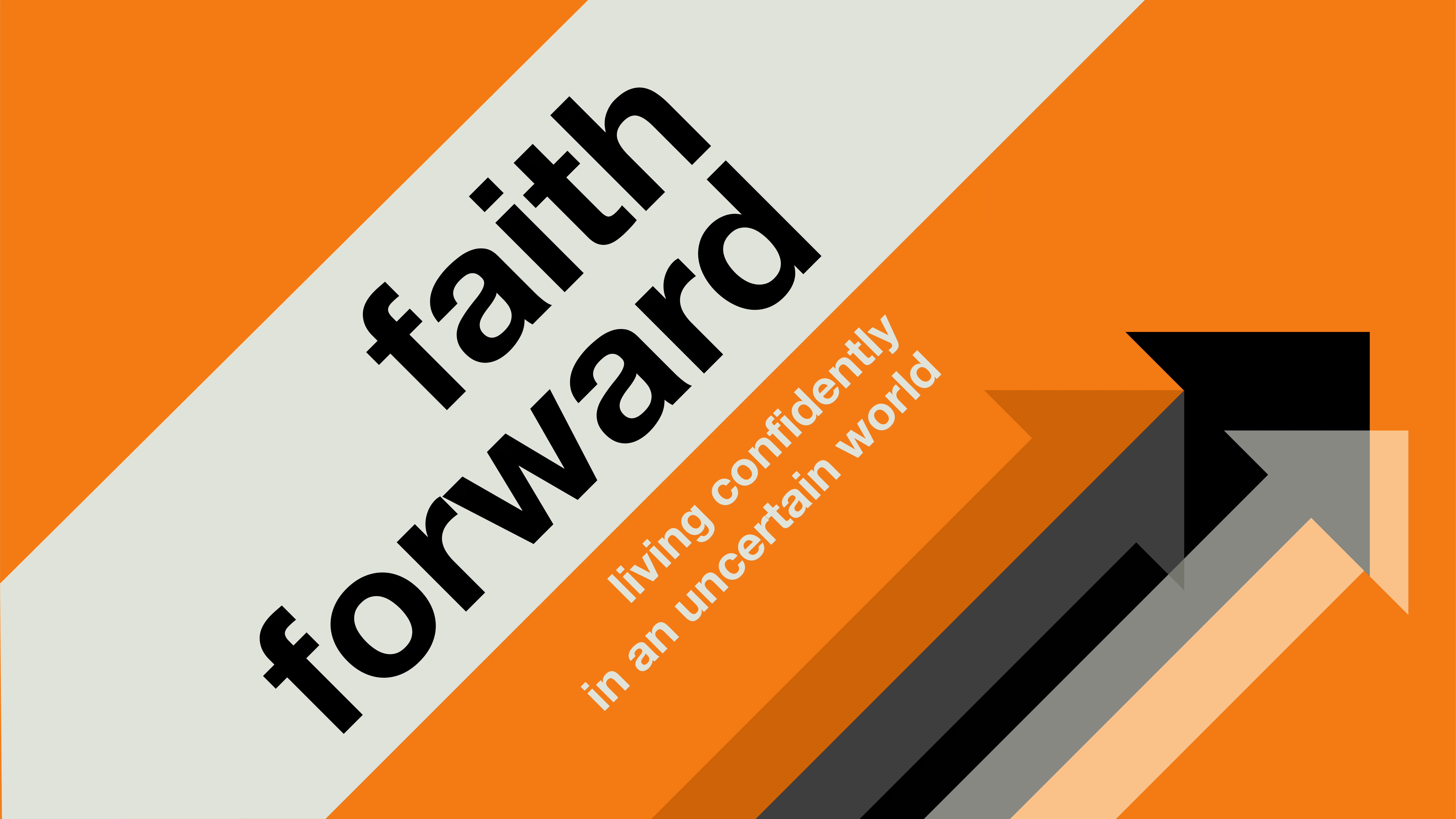
Faith moves us forward into the unseen and unknown with trust in God.
Transcripción
This transcript was generated automatically. There may be errors. Refer to the video and/or audio for accuracy.
We choose to go to the moon. We choose to go to the moon. We choose to go to the moon in this decade and do the other things, not because they are easy, but because they are hard. Yes, because they are hard. He got that right. When John F. Kennedy said those words in 1961, here's how hard it was. They did not have any of the technology necessary to get to the moon by the end of the decade. I mean, they did not have the rockets. They didn't have the astronauts. They didn't have the space suits. They didn't have the spacecraft. They didn't have the public support. 58% of Americans were against the space program. They didn't have the staff. They didn't have the engineers.
Do you know what the average age was of NASA frontline employees? I'm talking about engineers, mission control people, astronauts in 1969, the year that we finally got to the moon. Average age, 26. 26 years old. That means when President Kennedy said, hey, let's go to the moon in 1961, do the math, most of the people who eventually got us to the moon were still seniors in high school. So there was no evidence. They weren't like, oh, we've got all the pieces of the puzzle. Let's just put them together and go to the moon. There was evidence they could not go to the moon, but they moved forward. And by 1969, a bunch of 26-year-olds, most of whom were working their first jobs, landed men on the moon.
What a great parable that is for us about what it's like to live faith forward. Forward into the unknown. Forward into the unproven. Forward into the seemingly impossible. Forward into the unseen. Forward into the invisible. And that is what this series is all about. Grab your message notes. If you came in today, they look like this. And if you're watching us online, I'm so glad you're with us. My name's Rene, one of the pastors here at Twin Lakes Church. I'm excited about, as Mark said earlier, launching week one of this series, Faith Forward. You can download these notes at tlc.org/notes.
Now, to be clear, of course, the moon missions are not quite an example of biblical faith, but they are a parable of how nothing gets done unless you are willing to take a step forward with faith into an unknown and unproven future. And would you agree with me? We need to learn this skill today more than ever. What I'm sensing, as I prayed about what to preach on this fall, what I'm sensing in our community, in our country, in our world is that people's forward momentum is stalled out. People are drained. They're discouraged, almost paralyzed by the last 19 months of seemingly constant bad news.
I was looking at the website Stat this week. It's designed for doctors. And they had a story just recently. They said, COVID-19 has become like a chronic stressor, one that has ebbed and flowed but hasn't disappeared for over a year. And look at this quote. "At what point do we get to breathe?" asked Theresa Wynne, the chief program officer at Mental Health America. And if a medical professional is asking, "When do we get to breathe?" we're all feeling it to some degree.
In fact, I got an email this week that I think expressed how we're feeling so well. Last week, you started out the Faith Forward preview by saying exactly what I've been feeling. I'm tired of hoping. Say that three-word phrase with me out loud. Tired of hoping. To me, that expresses so well the emotional temperature of so many people right now. Maybe you're tired of hoping. Well, this fall, we're studying a chapter in the Bible that was written to people feeling exactly the same way, Hebrews 11. This is one of the most beautiful, colorful, epic, poetic chapters of the Bible, the 11th chapter of a book of the Bible called the Book of Hebrews.
And for the next eight weeks, we're going to be doing kind of an immersive dive into this. And I like the word immersive because that's how we designed this to be. Here's some of the components of this. Daily video devos that you can get texted to you on your phone, you can watch on YouTube. Daily readings in the Faith Forward book that we wrote. Small group meetings that meet weekly, or you can do the small group material. It's in the back of the book with your family. You can watch small group videos we filmed specifically for this. You can find them on YouTube, on the TLC app. Also, of course, these weekend services, which I'm challenging you to commit to for the next eight weeks straight.
You can get involved. We're encouraging you to get involved with one of our acts of kindness. You can find out more at TLC.org/AOK. And more details on all of this at TLC.org/Faith. But do you understand that to get the full benefit, I urge you to immerse yourself in all of these components daily and weekly. You're going to hear the same concepts, the same passages reiterated daily. You're going to be steeped in positive, hopeful teaching about biblical faith as an antidote to the discouraging, depressing, distracting mess that the rest of the mass media feeds you every single day.
And I think if you-- I know if you immerse yourself in what we've made available to you, you are going to come out of the next eight weeks with more faith, more hope, more confidence. So are you ready for this? Say amen if you are. Type amen in your comments if you are ready for this. Here we go. Here's the historical context of the book of Hebrews in the Bible. And if you're new to all this, when we talk about the Bible, the Bible isn't really a book. The Bible's a library. There's 66 different books in the Bible. And they were written over a period of about 1,500 years, several centuries. And each one of those 66 books has its own occasion, its own historical context.
And the book of Hebrews is kind of a challenge because the author of Hebrews is not identified in the book. And the recipients are not identified in the book. But we know it was written about 20 centuries ago in the first century because other writers talk about it. And if you read between the lines, this context becomes clear. Now, track with me here to understand all the rest of what we're going to be talking about for the six weeks. It was written to first century Christians from a Jewish background, like most Christians were then. They believed Jesus was their Messiah, who would return to establish the perfect, blissful, peaceful, powerful kingdom of God on Earth. But it is taking so long. And in fact, things just seem to be getting worse.
And now they're apparently considering a return to the temple system, the kind of Judaism that was based in Jerusalem. Now, why would they be considering that? I want you to imagine something right now. Imagine the most beautiful, inspiring building you have ever seen in your life. Maybe you've just seen a picture of it. What is it for you? Maybe it's like the Taj Mahal. Or maybe it's the Sydney Opera House or the castle at Disneyland. Well, for any first century Jewish person, that would have been the temple in Jerusalem. This is just a model of it that you can go to see in Jerusalem today. Even the model's impressive. But we know from the way historians describe it that it was made of gleaming, polished, white marble. And it was covered in gold leaf.
And it was not only a beautiful sight. It smelled great. There was incense burning practically day and night. There were almost always choirs singing. Can you imagine that? And trumpeters trumpeting, just echoing in this plaza. It was a beautiful sight and sound spectacle. And it wasn't just a religious building. It was a combination religious pilgrimage site and a tourist attraction and a national capital. In fact, imagine the Vatican, the Eiffel Tower, and the US Capitol all wrapped up into one building. That was the temple. And these first century early Jesus followers had left all of that to follow Jesus, kind of the invisible Messiah who's promising a kingdom that's still invisible.
And they don't have any buildings. They're meeting in homes like the equivalent of their living rooms in these tiny little house churches. And at first, it's all so beautiful and loving and everybody's sharing. But about 40 years into all this, they look around and they got nothing. You got to realize that the first generation of Christians, they thought Jesus was going to return like next Tuesday. And it's 40 years later. And if anything, it's just getting worse. And persecution for the Romans is intensifying. And division and strife within the churches is getting worse. And they're thinking, maybe we got it wrong. Maybe it's time to go back to what they could see and smell and touch and feel and hear, the temple.
Now, we know from history that the Romans obliterated the temple in 70 AD, not long after the book of Hebrews was written. And it was never rebuilt. In fact, if you go to Jerusalem today, you can see stones from the temple that the Romans threw down onto the Roman streets. And you can walk around down there as these tourists are doing. And the Romans threw the stones down and never removed them. They left them there as proof of like, that's right. You mess with us. We will destroy you. And so in 70 AD, all that beautiful spectacle was gone. And ironically, from that era, what survived-- not the temple system, not the Roman Empire. What survived? What lasted? That little movement with no buildings, no temple, and no spectacle. But it sure didn't look very promising then.
And so the writer to the Hebrews is telling them, hang in there. Don't give up. Keep moving forward into the invisible and the unknown. I know it looks like it's all going wrong. But let me share with you some invisible building blocks that are going to last far longer than the physical, visible building blocks of the temple, basic building blocks of faith. This is how the author starts out Hebrews 11. Now, this is not a comprehensive definition of faith. This is a description of how faith thinks, how faith acts. Christian faith has more content than this, more doctrine than this. But these are the essential building blocks to get you there or to revitalize your faith.
In fact, if you're struggling right now with despair, discouragement, you're just feeling drained, maybe even your faith is at a low ebb, lean into these next three points because these are the three embers that can fan your faith into flame again. Jot these down. Number one, faith trusts beyond what is visible. Faith trusts beyond what is visible. Can you simply believe that there is more to life than what your eyes can see? Look at verse 1. Here's how this great chapter starts. Now, faith is confidence in what we hope for and assurance about what we do not see.
The Reverend Dr. Martin Luther King Jr. put it this way. He said, "Faith is taking the first step even if you can't see the whole staircase." Now, when you think about it, this attitude is necessary to progress, right? In any field, in any relationship, in any human endeavor, you've got to do this. I mentioned the moon landing earlier. Another example, anybody ever watch those home remodel shows on TV? My wife's like addicted to these. Can I see a show of hands? Anybody ever watch these? Like Fixer Upper or Flip or Flop, right? On these shows, the hosts buy properties that I think, you know, what a dump. I would never buy-- I would not touch that thing with a 10-foot pole. And they buy it for next to nothing because they see past what is visible.
And they fix it and flip it and make a fortune. You know, I love this because what a parable for faith. But in faith, that before picture, that's your life. And God's the fixer upper. And in fact, I wish-- sometimes I wish that you all would know what I know about our congregation. Because I know-- you know, people come up to me and they share some confidential things and some of their struggles. And it wouldn't be appropriate to share them. But how inspiring it would be if we could see everybody's before and after picture without any judgment. Because I'm privileged to be able to look out on our congregation and see people-- you know, I've seen the before picture. And I see people who are struggling with addiction, alcoholism, people who've come out of abusive relationships, people who seemed hopeless and bereft after a loss struck them down, people who were in relationships that seemed broken. And then I get to see what the fixer upper did.
Because he-- you know, like that song we sang. When all I see is the battle, you see the victory, God. When all I see are the ashes, you see the glory. And faith has confidence in God can see things that I cannot say. I mean, think of the central symbol of our faith, the cross. Apparently, a dead end, literally. But the crucifixion led to a resurrection. And what seemed like the end of hope was actually the beginning of hope. Here's another way to put it. Faith has hope beyond the horizon. Faith has hope past the horizon. I can't see past the horizon, but I know the sun will peak up over it in just a few hours.
Maybe right now in your life, it feels like midnight. Can you have hope past the horizon? Maybe it feels like what you see is discouraging. And you're either depressed by what is visible, or you're overly impressed by some other spectacle somewhere. But faith has hope past that. If what you see around you is discouraging, you know what that means? That means this is the perfect time for faith. Because it's easy to have faith when you can see what's next, right? You can pay your bills. You have good health. Society shares all your Christian values. But do you believe because you can see blessings all around you or because you trust God?
Verse 2 says, "This is what the ancients were commended for." Now, follow me here. The argument of the author of the book of Hebrews is before the temple ever existed, before the tabernacle in the wilderness, before the 10 commandments, before the Torah, this was the kind of just simple faith that pleased God. He's saying you don't need all of that spectacle. You just need faith. How did the ancients even know about God if they didn't have all of that? Verse 3, "By faith we understand that the universe was formed at God's command so that what is seen was not made out of what is visible." He's saying God created everything we see out of things that were not yet visible.
Every single thing-- have you ever thought about that? Every tree that you see every day, every road you drive on, every building you go into, every business you patronize, every person you talk to once did not exist. Everything once did not exist. And so you follow the argument, when the readers of Hebrews are struggling because they see little instant payoff, few visible results, his point here, the author's point, is, well, that's how everything started. That's how the universe started. God created it all out of zero. And so it follows that if all of this was created out of nothing, then nothing is impossible with God. Then if you feel like what you got in your life right now is nothing, that's not impossible for God.
Faith sees beyond what is visible to what is possible because of what God sees. That's the first building block. Second building block, faith simply trusts God is real, that there is a God, just very basic, not complicated theology, just choosing to believe there is a God, there's a higher power. That's a building block. You know, I'm going to circle back to verses 4 and 5 in a minute, but for now skip to verse 6 where the author says, "And without faith, it is impossible to please God, because anyone who approaches him," of course, if you approach God, "you must believe that he exists." Now in the Faith Forward book, I go into much more detail, but you know, you don't need to throw out your brain to trust that God is real.
There's a lot more quotes in the book, but here's one, John Polkinghorne, who was professor at Cambridge, he just passed away last year. He was one of the world's leading pioneers in quantum physics. And he said, "The more I examine the universe, the more evidence I find that it is the expression of the purposive design of a creator." And not just John Polkinghorne, I go back to famed mathematical genius Blaise Pascal. He argued, "Belief is what he called a wise wager. What harm will come to you if you gamble on its truth and it proves false? If you gain, you gain all. If you lose, you lose nothing. Wager then without hesitation that he exists." Do you want the power to make it through this crisis and through any crisis while faith trusts beyond what is visible, that there's more than my eyes can see and my ears can hear?
And faith trusts God is real, God exists, God created everything out of nothing. And then number three, faith trusts God rewards. Specifically, God rewards those who seek Him. The rest of verse 6 goes on, "Those who believe He exists and that He," what? Rewards, say that word, "rewards those who earnestly," what? Say it out loud with me, "seek Him." Say it again, "seek Him, seek Him." This is a promise all throughout the Bible. If you are a seeker of God, you will find God. I mean, I could have shown you a hundred verses, but look at 1 Chronicles 28:9, "If you seek God, He will be found by you." Proverbs 8:17, "Those who seek Me find Me." Jesus said, "Everyone who seeks finds everyone." And so what this means is you have a choice. You can be a seeker or a cynic.
If you're a seeker, the promise of Jesus is you will find. But if you're sort of a professional cynic, guess what? You will find what you're looking for. You will find reasons to not have faith. You will find reasons to just write it off. And by the way, that holds true for the effect of cynicism on anything in life. If you are a cynic, you will always find reasons to lose faith and to bail on a relationship, a marriage, a job, a country, a church, whatever. But if you're seeking reasons to have hope and have faith, you will find them. So are you a seeker or a cynic? There are rich rewards to seeking God.
So this is how faith thinks. These are the building blocks. Faith trusts beyond what is visible. There's more out there than what I can see. Faith trusts that God is real. I don't understand it all. I don't know a lot of complicated theology, but I believe that there's someone greater, that there is a higher power, and that he's not just some distant deity. He wants to respond to me. All I have to do is take one step forward seeking earnestly, and God will reward that and will respond to me by his grace. But here's the thing. Faith is not just believing this is true. Faith is living like all of that is true.
In other words, faith is trusting God enough to take the next step, whatever it is for you, and to keep taking the next step every day. I like this. And this is a concept we're going to be talking about all throughout the series because it's illustrated 27 times all through Hebrews 11 with stories of different people from the Bible. What I like about this is sometimes people confuse faith with feelings. Sometimes people confuse faith with knowledge and not doubting. But guess what? There are times, there are days, I'm not feeling the feelings, but I still can trust God enough to take the next step. There are times, there are days, I don't have the answers to all my questions, but I can still trust God enough to just take the next step. Even when times are dark, even when times are hard, you can take the next step.
Now, I want to circle back to verses 4 and 5 because the author gives two examples of how the ancients, as the author puts it, lived like this, Abel and Enoch. And this is important because these are two people, they're mentioned in the Bible, but they're practically prehistoric. This is way, way before the Jewish faith arose, way before Moses, way before the Ten Commandments, everything else, way before people knew the name of God was Yahweh and so on. And so he's making a point here. First, verse 4, "By faith, Abel brought God a better offering than Cain did." They were brothers, Abel and Cain. "By faith, he was committed as righteous when God spoke well of his offerings. And by faith, Abel still speaks as an example to us, even though he's dead." What's all that about?
Again, this is deep. I have a whole chapter about this in my book. But the point the author is making, he drives home by repeating it. What saved Abel? Well, he mentions it three times. What are the two words he repeats three times in this verse? "By faith." Abel didn't have the temple. Abel didn't have the tabernacle. Abel didn't have the Ten Commandments. Abel didn't have the Torah. Abel didn't know much. Abel didn't know a lot of complicated theology. But he apparently believed, there's more than what I can see. God is real. God rewards earnest seekers. And so by faith, he presented his offering to God. And God, by his grace, accepted that offering. What made Abel's offering acceptable was his faith, not some ritualistic system, not his works. Abel had simple faith, and God rewarded that faith.
The point of the author is the way to God has always been through faith. This is not some Christian innovation that contradicts their Jewish background. This has been in the Bible from the very first person we see in the Bible who ever had religion or presented an offering to God. It was by faith and not by works. Second example, another ancient, Enoch. Verse 5 says, "By faith. Enoch was taken from this life so that he didn't experience death. He just kind of was beamed to heaven by God when he died. He could not be found because God had taken him away. For before he was taken, he was commended as one who pleased God." Now again, a whole chapter about this in the book, but how did Enoch please God so much? By a bunch of ritual, because he built some temple built of white marble and gold? No.
We'll hint way back in his story as it's originally told in Genesis. Interesting little detail. It says Enoch was 65 years old when his wife has a baby for the first time. You become a dad when you're 65? That's probably going to have an impact on you. And it says, "After he became the father of Methuselah, Enoch walked faithfully with God." After the baby was the implication being before that, not so much. But after he had a baby, 65, we kind of like came to his senses, shaped up. And he walked faithfully with God. What does it mean to walk faithfully? Now this is huge. What is a walk? I want you to picture a walk. A walk, whatever kind of a walk you're picturing, a glide, a shuffle, kind of a bounce, all walks have something in common. They're just slow, steady progress, one step at a time, like two and a half feet at a time, and you're going in the same direction and it's getting you somewhere.
Right? Example, in the book I talk about how this summer I picked up my friend Bill Butterworth at the airport. He was at baggage claim and he had texted me that he was at baggage claim, so I knew he was there. In fact, he texted me the sign he was near. So I knew where he was at baggage claim. So I'm staring at maybe 20 people and I can't find Bill. And we're texting back and forth, so I know he's literally right in front of me. But I can't see him, I can't recognize him. Why? Because he only turns around and he looks like a completely different person than the person I knew before. I had not seen Bill during the 19 months or so of the COVID quarantine, and he's completely changed. He's lost so much weight, he's put on so much muscle. He looks 10 years younger.
And I said, what happened? Well, he lives in Texas and he moved to a new little town and he got a new doctor. And he said, my doctor's great, but my doctor's very direct. And a couple of years ago, the doctor met with Bill for the first time and said, Bill, I gotta be honest with you, you're overweight and out of shape. And you're going to die if you don't shape up. He said, you doing anything to exercise? Bill goes, well, yeah, I walk. The doctor goes, how often? Bill goes, well, I try to walk 45 minutes a couple of times a week. And the doctor says, poking him in the chest with each syllable, no, no, no. He says, you only need to walk eight minutes a day, but do it every single day. And so guess what Bill did? Every day, without fail, gets up to walk eight minutes. Guess what? Most of the time that eight minutes expands and turns into 30 minutes or an hour. But his goal is just eight minutes a day. Two years later, Bill's got a different body. That's the power of a faithful walk, incremental progress that changes you.
And the author is saying, that's what Enoch did. He didn't have to go back to some spectacular temple ritual. He just walked faithfully, taking the next step forward every day. And do you see how he's saying, that's the kind of example of the kind of faith that God wants you to have. Keep walking. What do you do when you aren't seeing results? You keep walking. What do you do when your heart is broken? You keep walking. What do you do when you've got a broken relationship with one of your children and you're tempted to despair and just never talk to them again? No, you keep walking. What do you do when you're just tired of hoping? You keep walking. You take the next step for that day. Even though you can't see past the horizon, even though it's dark, even though what's in front of you is invisible, that is living faith forward.
And this is not just something from the pages of the Bible. Each week during this series, I'm asking different people here in the Santa Cruz area about their own walk of faith. Today, I want you to meet Dick Garwood. Many of you know Dick. He and his wife, Heidi, attend here at TLC. But just a few years ago, Dick was not a Christian. So let's hear how he got there one step at a time.
I had literally been to a church for almost 50 years from the time I was in high school until I was 65 or so. And then I happened to come to Twin Lakes to hear Heidi give a presentation. She asked me, she said, "Well, are you going to come and hear me talk?" And I said, "Absolutely." "Well, which service are you going to come to?" "Well, I'll come to all three." Those three services were life changing for me because the people around there were from the singers on the stage to all the pastors, just everyone we ran into, the ushers and the communion servers. Everybody was, they just had a joy about them. And it was the first time in all that I'd ever been to church that I really understood the sermon and got the message.
There was a lot about grace. I hadn't understood what grace was. And then the other thing that was so amazing to me at the Twin Lakes service was the music. I had never been to a church where there was a worship band with electric guitars and drums and just amazing songs. And one of the interesting things was after those three services that I attended, having never heard those songs before, but I heard them those three times and I found myself humming and singing those songs to myself the whole following week.
So after that first service, how long did it take before you would say you actually trusted in Jesus? Well, as I said, I didn't really know who Jesus was. I knew that God was a creator and I always felt amazed at looking up at the stars at night that the universe was created from something and something out of nothing, which is just kind of a mind blowing kind of a thing. And so I took at that time what was called the 101 class, I think it's called First Steps Now. And I remember I came up to you afterwards and I said, you know, I don't really understand. I don't understand the virgin birth. I don't know that I believe in all these healing, you know, miraculous healings that Jesus did. You suggested reading a couple of books by Lee Strobel.
And one of the people at least Strobel interviewed was a professor who said that, you know, he didn't really understand or quite get the virgin birth, for example. And then he said, you know, it occurred to me that if God could create the universe out of nothing, which I identified with, for him to add a Y chromosome into Mary's body would be child's play. And that just rang true to me. I understood that as kind of a science, having a scientific background that I do. You know, it's interesting that in Hebrews, it says one of the basic building blocks of faith is believing that God created the universe out of nothing. He talks about that as being like an essential basic building block for Christian faith. And you found that to be exactly the truth for you. Exactly.
And then I came and talked to you and I met you in your office and you said, so, Dick, do you think you are going to you know, you are a Christian. And before you even got the final word out of your mouth, I said, yes, the quickness and the strength with which I answered that kind of surprised even me. What would you say to somebody who is now where you were then? Faith is a choice. And I chose to believe I wanted to believe. And so I, you know, I was I was looking for reasons to believe the importance of just seeking, just reading and coming to church and learning that there are so many things that are evidence. So don't be afraid to do your research. Check out some of the books that we've got in the book card, for example.
Yes. What difference has your faith made for you? Oh, gosh. Like night and day. I used to be I've always been a pretty happy, easygoing person, but I was angry a lot of the time. Since then, I'm I'm not angry anymore. I'm even more easygoing than I was then. And I just have more joy in my life. So with that in mind, I want to ask you to ask yourself. What's my next step of faith? Because everybody has one every day. I mean, maybe right now for you, it's deciding I will be an earnest seeker after God, or maybe, frankly, it's starting to attend church regularly again in person. Or maybe it's joining a small group. You've never done it before or calling that friend or going to that first recovery meeting or getting baptized. As Mark mentioned, our beach baptism is coming up next weekend.
Or maybe it's taking that step into a new life by trusting Jesus Christ as your Lord and Savior. Whatever it is for you, I just want to challenge you. Take the next step. Faith forward. Because who knows where you could land? Let's pray together.
Heavenly Father, we come to you this fall, many of us feeling drained and tired and traumatized, and we ask that you revitalize our faith, not just our doctrine, but our momentum. May we live faith forward. And in fact, I just want to give everybody a moment right now to say to you, "God, I will take my next step of faith forward into whatever you have for me." And just take a moment of quiet right now to ask God what that step might be for you, and ask Him for the strength by His grace to take that step. I'll just give you a moment of personal prayer time.
Lord, we don't want to shrink back. We want to take the next step forward into the life you have for us. We will live faith forward by your strength. And in Jesus' name, amen.
Sermones
Únase a nosotros este domingo en Twin Lakes Church para una comunidad auténtica, un culto poderoso y un lugar al que pertenecer.