How to Deal with the End of the World
God offers hope and strength for facing the future without fear.
Transcripción
This transcript was generated automatically. There may be errors. Refer to the video and/or audio for accuracy.
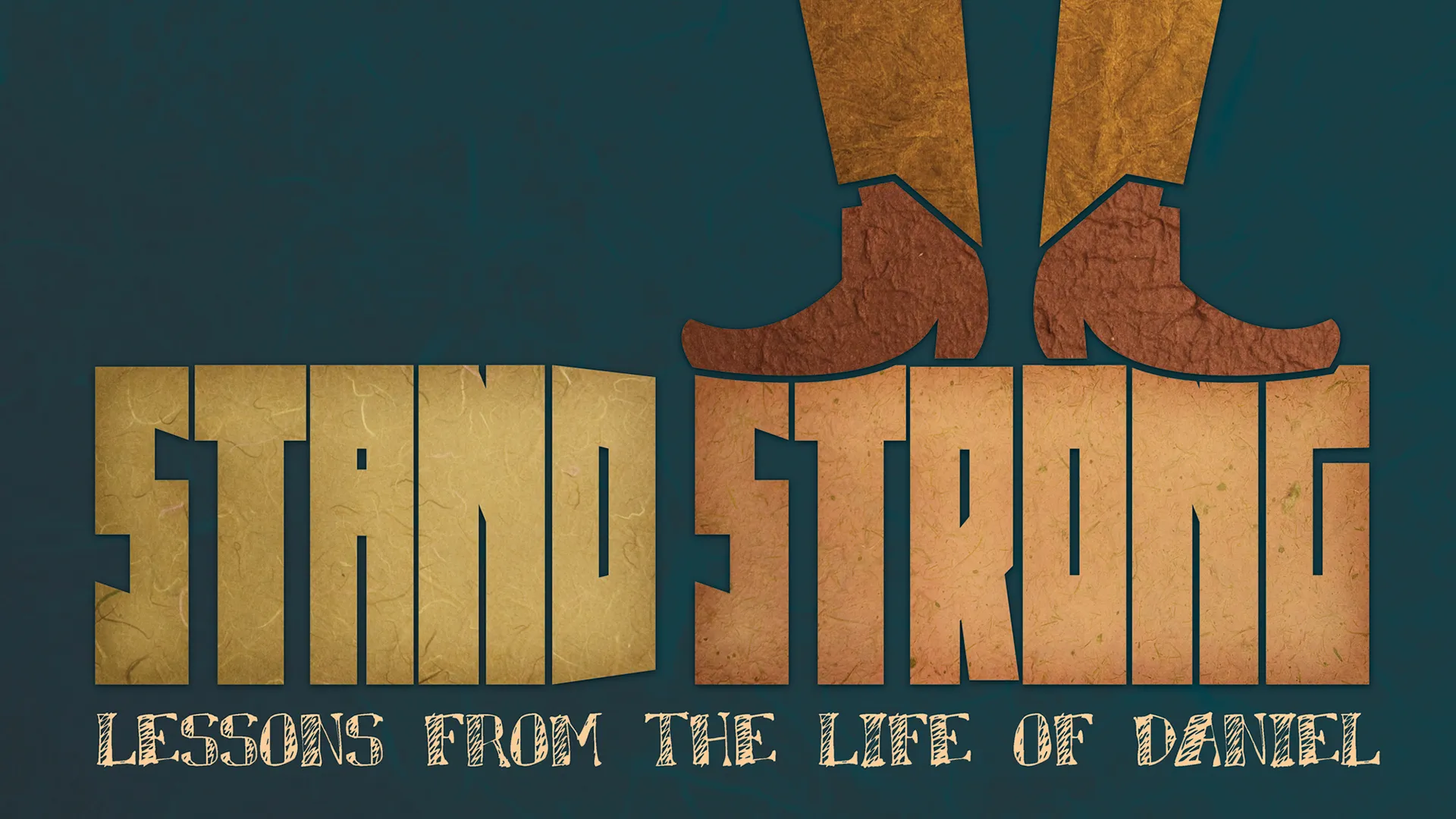
And now take out your message notes that look like this in the bulletin that you guys got when you came in. These will help you follow along with the sermon this morning. Stand strong has been our seven-week series in the book of Daniel as we go through the Bible, and this morning we are in the end of the book of Daniel, and the topic is how to deal with the end of the world. Because that is what the end of the book of Daniel is about.
I was kind of thinking about this. This is a question I posed to myself: when the end of the world arrives, how will the media report it? It kind of depends probably on the media outlets. Some possibilities: USA Today—We're dead, right? Just blunt like that. The Wall Street Journal—Dow Jones plummets as world ends. People Magazine—J. Lo and Mark Anthony together again. PC World—Apple loses market share. Macy's ad—Our final one-day sale, best prices of the millennium. Rolling Stone—Grateful Dead reunite. Self Magazine—Lose 10 pounds by Judgment Day with our new Armageddon diets. San Jose Mercury News—New Niner Stadium plans on hold pending Earth reboot. Fresno Bee—New city motto: Gateway to Heaven. Santa Cruz Sentinel—World slated for redevelopment. Local activists plan protest. City council declares Santa Cruz an Armageddon-free zone.
So, you gotta love Santa Cruz. Here's a question for you: how do people usually think of the end of the world? I mean, think of it—movies like The Terminator, Mad Max, 2012. It's all bad, it's all grim, it's all bad news. In fact, in this movie 2012, the only person who really knows the truth about how bad it's going to get is a blogger with an apocalyptic podcast. Watch this. I was listening to the broadcast, and I was wondering what exactly is it that's going to start in Hollywood. It's the apocalypse in a few days. The Judgment Day, the end of the world, my friend. Christians call it the rapture, but the Mayans knew about it. The hope is the eye chain, the Bible kind of beer. Yeah, why don't you download my blog free course? We do appreciate donations.
In ancient times, the Mayan people were the first civilization to discover that this planet had an expiration date. According to their calendar, in the year 2012, a cataclysmic event will unfold caused by an alignment of the planets in our solar system that only happens every 640,000 years. Oh, not again. Free meat, huh? I did all the animation myself. The core of the earth will melt—that's the inside part of the orange—leaving the crust of our planet free to shift. In 1958, Professor Charles Hapgood named it Earth Crust Displacement. Albert Einstein did support it. The people will get it—all the forces of Mother Nature will be so devastating they will bring an end to this world on winter solstice, 12/21/12.
All right, is that really what's going to happen in the future? What does the Bible really say about that? Unfortunately, you don't always get clear answers from Christians. Harold Camping's followers preached Judgment Day this last May, and apparently it's been postponed to October now. But you know what? A lot of people laughed outwardly at these characters, but inside, I, as a pastor, noticed a lot of anxiety going on—a lot of what if they're right?
In fact, just a few weeks ago, right at the end of May, an 11-year-old boy at the end of the nine o'clock service and a 40-something mom at the end of the 10:45 service came up right here to talk to me afterwards, and both of them were practically on the verge of tears. They both said the same words independent of one another: "All of this end times talk has got me to the point where I can't even sleep. I'm experiencing so much anxiety." And I thought to myself, they're just the ones who are willing to admit it, because they're not alone when it comes to people freaked out about the future.
But I pose this question to you: is that how God wants you to feel about the future, or does He want you to feel something other than fear? Well, let's find out, because in Daniel chapters 7 through 12, each chapter is a vision about the future, about wars and devastation in the future, and then about the end of the world. It's sort of like the Old Testament version of the Book of Revelation.
Now, there's so much interesting stuff in these visions. In Daniel's visions, he sees nightmare stuff—winged beasts with multiple heads, glowing angels, the Ancient of Days, powerful kings, and spiritual battles between heavenly beings. In his visions of the future, one human kingdom defeats another, one after another, until finally one last terrible empire rules the planet. And then God sends His Messiah to raise the dead, judge the world, and establish a new kingdom of love and justice. Real Book of Revelation stuff about the future.
Now, we could do a whole new series just unraveling Daniel's strange visions. Who do all these beasts stand for? What do all these prophecies mean? And there's something worthwhile to be said about doing that kind of deciphering because there's fascinating stuff in the Book of Daniel about the future. For example, one of the most fascinating things to me: Daniel predicts the precise year that the Messiah will come into Jerusalem. He says it's going to be 483 years after Jerusalem is rebuilt. And if you work it out on the calendar, that is exactly the year that Jesus Christ rode into Jerusalem on a donkey at what we remember as Palm Sunday.
And so you understand, and the rest of Israel knew of that prophecy, and that is why there was such messianic fever surrounding Christ's entrance into Jerusalem. So there's fascinating stuff in here, and I recommend to you sort of an investigation of the details of these visions. But you know what? When I grew up, I grew up in a church where the pastor did do a whole series on deciphering all of these strange coded messages in the Book of Daniel. And looking back on it now, I think that unwittingly we missed the whole point.
And so this morning, I want to ask you a very big picture question, and it's this: why is all this stuff even in the Bible? What's the purpose of what God is trying to say or what God does say that we're trying to comprehend here? Is it only in there to freak you out? Because if it is, it's doing a pretty good job. Let me ask you, ever crack open these parts of the Bible and get a little scared and get a little confused? Hey, forget about the Bible. Ever pick up the daily headlines and get a little scared and confused about the future?
I opened up the paper yesterday morning not knowing what had happened in Oslo, Norway, and I was talking to some people this morning in church who said they still hadn't heard that there were people killed in twin terror attacks there in Norway. You open up the paper, having breakfast, looking forward to a good day, and suddenly, boom, something like this faces you. And you too might feel a little scared and a little confused about what the future holds.
Well, if that's the way you feel, you're in good company. Because note how Daniel responds to the visions he receives about the future. After every single vision, he says something like this. After the first vision, he says, "I, Daniel, was worried because the visions that went through my mind frightened me." And then after an angel explains the vision in another vision, he says, "I, Daniel, was very afraid. My face became wiped from fear, but I kept everything to myself, right? So nobody thinks I'm crazy. I kept it all to myself." Then after another vision, he says, "I, Daniel, became very weak and was sick, sick to his stomach for several days after that vision. Then I got up and went back to work for the king, but I was still very upset about the vision. I didn't understand what it meant."
Now let me ask you this: would you describe Daniel as somebody who was easily upset? Think of the six weeks that we spent on this book so far. You describe him as a man of courage, right? This is a guy who stood up against kings. This is a guy who went with dignity to his presumed death in a den of lions. And yet he has these visions about the future apocalypse, and he's very upset. So if you get weirded out by a Left Behind book, it's perfectly understandable, okay?
Well, in Daniel chapter 10, God does something interesting. He sees that Daniel is very upset, and so He sends a messenger from heaven purposely to calm him down. So let me describe what happens in Daniel chapter 10. Daniel sees this messenger from heaven, and he describes him. He says his body was shining, and his face was bright like lightning, and his eyes were like fire. And listen to this description: his voice sounded like the roar of a crowd. You ever been to, like, a Giants game or a Niners game, and you hear the roar of the crowd? And that's how this guy's voice sounded when this one person spoke. And this does not have the intended calming effect on Daniel. In fact, the Bible says he passes out.
Now, who was this? Some think this was an angel. The text does not identify who this is. Some think it must have been an angel. Others think it was actually a pre-incarnate appearance of Christ. Because later in the Bible, check this out for yourself this week, in Revelation chapter 1, the Apostle John sees a vision of Christ in heaven, and it looks very much like Daniel's description in Daniel 10. But, again, let's not get lost in the details. The important thing is what's the message, all right? Well, after Daniel faints, this being touches him and says, "Daniel, stand up. God loves you very much." And then he says, "I want you to focus on what I'm about to tell you, because I've been sent to you with a message from heaven."
And I love Daniel's response because basically he says, "Oh, no. Not another vision. I said to the one standing in front of me, 'Master, I'm upset and afraid because of what I saw in the vision. I feel helpless.'" Now, stop right there. Look at the way he describes himself: upset, afraid, helpless. Let me ask you, do you ever feel like that when you look at the future? Maybe when you read the Bible, you feel like this. Maybe when you read the headlines in the newspaper, you feel like this. Or maybe not even the Bible, the headlines in the newspaper, when you look at your own life. You don't know what's going to go on in your—maybe you're unemployed. Maybe you're looking for love. Maybe you're worried about your kids, and you are upset and afraid, and you feel helpless when you look at the future.
Well, I want you to focus on what this man says to Daniel, because this is God's message to Daniel, and it's God's message to you and to me today, too. This was so important for God to make clear to Daniel that He sends a messenger from heaven to make this clear, because Daniel's not getting it. Daniel's freaking out. And so this angel says this. Daniel says, "The one who looked like a man touched me again, gave me strength, and then he said, 'Daniel, don't be afraid. God loves you very much. Peace be with you. Be strong now. Be courageous.'" And that is the one verse, Daniel 10:19, that I want to drill down and focus in on this morning, because this is God's message for you, too.
You say, "How do you know, René? That's God's message for Daniel, not me." Every single one of these truths is repeated in the Bible over and over again for every believer. There are four words of encouragement here for you and for me. Jot these down in your notes. Number one, refuse to fear. You can refuse, refuse to fear, because it is a choice. Otherwise, the messenger from heaven wouldn't have told Daniel, "Do not be afraid." Check this out. Did you know a form of the phrase, "Don't be afraid," is in every book of the Bible? Every single book of the Bible. You think this is an important message for God to get across?
Now, why would God want you to hear, "Don't be afraid" this much? Jot this down somewhere in your notes in the margin or something: the worst thing about fear—three words—fear is limiting. Would you agree with that? Fear is limiting. Fear makes you lock doors and not take opportunities and not start conversations and stay away from people. And would you agree with this? Fearful people cannot easily give love, and fearful people cannot easily take love. This is why, repeated for all of us, Jesus says, "Do not let your hearts be troubled and do not be afraid." And I think Christians really need to take this more seriously because we have a bad reputation that we're fearful people.
You know, my wife, I got to tell you a story. My wife was at the post office one day, and she's in line. You got to picture this here, and the woman in front of her is talking to the clerk at the window, and Laurie's just waiting to mail her package. And this woman starts chatting with the clerk. And she says, "You know," the clerk says, "How are you?" And she says, "Well, I'm not doing too good because every single time I turn on the news, it's another disaster." And Laurie thinks the clerk's going to go, "Uh-huh, here's your stamps, right?" And instead, the clerk, inspired, says, "Yes, a disaster! One disaster after another! And I just heard there's going to be solar flares this week, and that's going to ruin all our TV transmissions." And then this clerk turns to the clerk working next to her and says, "Oh, I'm sorry, we're probably depressing you." And then the second postal clerk says, "Not any more depressed than I already am! I'm so depressed already, I could not go any lower. I'm as low as low can go!"
And Laurie's starting to think, "Okay, these are postal workers." And she's kind of starting to go, "Where are the exits?" And then she thinks, "No, no, I need to just invite them to church for a good dose of hope." And at that moment, the woman says, "What does the Bible say about all this?" And Laurie's kind of stunned. And before she can say a word, the second postal clerk goes, "The Bible? Hey, the Christians all said the world was coming to an end. They're even worse than postal workers!" I quote, kind of like in the self-evaluation of postal workers, they know they're not always known for being the most optimistic people on the planet, but Christians are one notch lower, right?
Well, I heard that story and I thought, some of us really are. Sometimes Christians, of all people, are known for being fearful and negative when we have everything to hope for. Do not fear. You might be thinking, "Well, René, it's so easy to say do not fear, but how do I live like that?" Well, research has shown that fighting fear—listen—fighting fear is all about right thinking. And some of you are negative thinking addicts. You are addicted to negative thinking. You are always anticipating the worst. And I know because I am a recovering negative thinking addict myself. Even if things are going well for you, you're going, "I might have a job now, but it'll probably disappear." Just like you are. You got to change your focus from what you might lose to what you have and to God's promises.
And to help you do that, we made these Bible verse cards for you. Do you see these in your bulletin, these gray cards that look like this? We did this once in a while for folks just to give them a tool. Some of you know that one of my big aspects of recovery from my own anxiety attacks was making Bible verses, putting them on 3x5 cards, and reading them to myself over and over throughout the day—the positive promises of God about the future. So I would be replacing those negative thoughts that tend to run like a hamster on a wheel in my head, over and over and over and over again, deliberately replacing those negative thoughts with something positive.
Look at these verses. Look at the verses over there on the right side, reading down. Imagine the effect it would have on you if you kind of did some positive brainwashing, you know, where it says, "I have loved you with an everlasting love." Or, "The Lord himself goes before you and will be with you. He'll never leave you nor forsake you. Don't be afraid. Don't be discouraged." Or how about the third one down? "God is our protection and our strength. He always helps in times of trouble, so we will not be afraid, even if the earth shakes or the mountains fall into the sea." Replacing some of that talk show or CNN diet, you know, with verses like this, it really does make a difference.
I got to tell you, I got an email a while back. Anybody here kind of afraid of flying? Anybody kind of experience that once in a while? Well, I got an email from a woman who told me she's deathly afraid of flying, even though she has an important position with a big local firm, and that means she has to fly around a lot. She was on her way to Denver, and she emailed me, "I don't like to fly. I'm afraid of it." She said, "I had myself really worked up about our trip to Denver. I even got a prescription for anti-anxiety meds, but even with them, I started to tense and panic when we hit turbulence." She says, "Guess what finally calmed me down? Those Bible verses you recommended in church last weekend. I kept repeating them, really thinking about them, and it was so comforting." That is the key to not fearing—replacing negative thinking with positive truths from God's words.
So back to page one of your notes. Let's get back to the story. This messenger from heaven appears to Daniel and says, "Daniel, don't be afraid because it is his choice to be afraid or not." Then the second part of the message for Daniel and for you and me is this: "Realize I'm beloved of God." "Realize that I am God's beloved." The next thing this heavenly being says to Daniel: "God loves you very much." In fact, this is the second time he says this to Daniel before Daniel faints. He also said this. So we know for sure how God felt about Daniel, but how do you think God feels about you?
This isn't in your notes, but look on the screen of the Bible in Zephaniah 3:17. It says this: "This is about you and this is about me. For the Lord your God has arrived to live among you. He is a mighty Savior. He will rejoice over you with great gladness. With His love, He will calm all your fears. He will exalt over you by singing a happy song." That's how God feels about you. You know, we get this picture of a God that looks like Zeus throwing down thunderbolts. But you know the picture that this verse paints? I picture a new dad so proud and so happy and so in love, calming his baby, exulting that his baby exists, singing a happy song, and that is God, your Heavenly Father, to you.
You say, "I don't think so. I don't see how God could feel that way about me." Did you know that the word "beloved" is used nearly 70 times in the New Testament to refer to believers? Do you think God's trying to get a point across? Think of what it would do to your freak-out level if you really believed that God loves you. Don't turn the notes over to page 2 yet because I want you to notice that quote down there from Henri Nouwen. He says, "We forget so quickly that we are God's beloved children and allow the many curses of our world to darken our hearts. Therefore, we have to be reminded of our belovedness and remind others of theirs."
I was reading the biography of Arthur Miller. He's the famous playwright who was married for a while to Marilyn Monroe. When Marilyn Monroe, the famous movie star, was really going on a downward spiral, I thought of this reading the news about Katy Perry's death—kind of a similar thing. When Marilyn Monroe was sleeping, thanks to a lot of sleeping pills one night, Arthur Miller was looking at her, realizing that she was struggling with all kinds of demons. He wrote in his journal how I wish I could wake you up, look you in the eyes, and tell you, "God loves you, my darling." He says, "How that would change your life." Then he wrote something very tragic. He wrote, "How I wish I still had my religion and you had yours." How tragic for him to know the key to his wife's heart, to know what would have unlocked her, to know what would have set her free from all of her fears and stresses, but he couldn't bring himself to say, "Marilyn, you are God's beloved."
The author Trevor Hudson has a great question: "Does the truth of your belovedness reverberate throughout your being?" I love that question. You say, "All right, what does it look like for the truth of my belovedness to reverberate throughout my being?" It looks like this. It looks like the Apostle Paul in prison, you know, knowing that one day he's going to be executed, saying, "I'm sure that neither death nor life nor angels nor ruling spirits, nothing now, nothing in the future, no powers, nothing above us, nothing below, nor anything else in the whole world will ever be able to separate us from the love of God that is in Christ Jesus our Lord." That was not a cliché thought to the Apostle Paul because he had a very scary life, but he wasn't scared because he knew God loves him.
And when you really believe that, then you can, number three, rest in God's hand. Rest in the hand of your beloved father like a trusting child. The messenger from heaven says, "Peace be with you." And again, this is something that is not just for Daniel. It's repeated all through the Bible for you and me. Jesus says it to His disciples. The night He was betrayed, "Peace I leave with you, my peace I give you." And then after He's raised from the dead, "Peace be with you." God wants you to feel peace. You say, "Well, then why don't I feel peace then?" Right? I mean, I don't feel peaceful all the time. Why don't I feel peace?
Well, I'm going to show you one of the most well-known parts of the Bible, yet one of the least practiced. Do not worry about anything, but pray and ask God for everything you need, always giving thanks. And stop there for just a second. I'm going to tell you something that may shock you. I have actually been practicing this verse the last few weeks very deliberately. Imagine a pastor actually practicing what he preaches. Yes, it's happened in my life! I've been trying to very simply ask God specifically what I need. I have been deliberately doing this, literally, just because it helps to not just rocket off sometimes. I've been kneeling by my bed, and I've been saying, "God, today, here's three things that I need to get done, or here's four things that I need you to work in that I'm afraid about. I'm very, very specific." And then it says, "Always giving thanks." And God, thanks for the way you gave us a great trip. Thanks for the beautiful sunset. Thanks for that wonderful meal. And what's been happening in my life, exactly what's promised here: "And God's peace, which is so great we cannot understand it, keeps your hearts and minds in Christ Jesus." Again, get those thoughts off the hamster wheel and give them to God.
Now, where are we so far? Remember, Daniel's been having these visions of the future, and he's very upset about it. He's watching future CNN, and he's very upset about what he's seeing. And so far, this heavenly messenger is telling Daniel, and telling you, "Don't be afraid. God loves you very much. Be at peace." And then finally, number four, "Receive His strength." Daniel is told, "Be strong now. Be courageous." And I want you to notice something here. This is different than you might be reading this. This isn't a command like, "Hey, be strong. Buck up, you idiot. Be a man. Strengthen yourself." No, this means, "Receive this strength from me. Be relaxed and be strengthened." And we know that's the intent because at the end of verse 19, Daniel says, "When he spoke to me, I became stronger and said, 'Master, speak, since you have given me strength.'" Don't miss this. The strength did not come because Daniel tried hard to be strong. It came because God gave him the strength.
Daniel felt helpless. He was in despair. He was, he was, it said, at one point, he says, "I was in my bed for three weeks and couldn't get out of bed," because the visions—they left him with a sense of hopelessness. There's going to be all these wars in the future. And God appears to say, "Daniel, Daniel, I want you to be, receive my strength, and have courage about the future, because the best is yet to come." And that's His message for you, too.
You know, I read this story about Daniel, and it reminded me of something I just heard from some friends of mine. Many of you remember Dick and Ivy Otto. How many of you remember them? Kind of a quick show of hands. Some of you guys down here, Dick and Ivy Otto were members of Twin Lakes Church, and then they became missionaries to Uganda, Africa. And then they retired just a couple of years back, but they still take short-term trips back to Uganda, and they just got back with a short-term trip. And Dick sent me an email on Thursday that had a powerful story in it on the trip that they just got back from.
They had a team that was doing a vacation Bible school, and one of the team members was an occupational therapist, and she noticed a young boy of about 12 who was just sitting on the ground after all the other children had scampered off to their classes. It was this young boy, in this picture, Richard. She said he had a glassy stare, looked like he hadn't smiled in years, and Janet, the physical therapist who's here in this picture from San Jose, she thought that he must have cerebral palsy because he never walked; he only scooted on the ground and took himself out of every class because he didn't think he could do anything.
Well, immediately, Janet went to him and picked him up and carried him to his classes, and she began to work with him during the two weeks that they were there, and she discovered that with help, he could stand, and he had not stood up in years. And after just two days, he was standing and even walking. You can see him here playing a balloon game to help him learn balance and to help him learn how to walk. He was walking and playing with the other kids. When they left, she left some pictures explaining how to continue helping Richard exercise, but Richard's life has been changed forever. They said that, yeah, praise God, and major thanks to this team.
But you look at his face now. Look at his face now. They said at first he had a glassy stare, he didn't smile, but look at this. It turns out, listen, it turns out Richard didn't have a vitamin deficiency, he didn't have a physical deficiency. You know what he had? He had a hope deficiency. He had a hope deficiency. He thought, "There's no hope for me. I have no future, so why even try?" And this is Daniel when he's receiving these visions about wars and all of this thing, and remember, he was in the government, and he's thinking, "It's all pointless. It's all purposeless." Daniel couldn't get out of bed; he had a hope deficiency, and God shows up to say, "No, stand up. Let's move into the future, because the best is yet to come for you and for the whole world." Maybe you have a hope deficiency, and God brought you here today to say, "Stand up, move forward into your future. There's great things ahead."
You know, I look at this boy's face, and one of the last times I saw that look on somebody's face—that look of somebody who's newly discovered a hope—was a woman who came up to me during our last fall food drive, of all places, and she was just beaming like this and crying, and she said, "Pastor René, thank you so much for giving me hope." I said, "What are you talking about?" She said, "I'm a single mom, and I've been through a lot, and I have three kids at home." And she said, "When we saw the church raising all this food, and then we came to the people's pantry and received our own bags of food," she said, "You didn't just give me food for my pantry. You gave me hope." Because she said, "I thought no one cared, and now I see there's thousands of people who've got my back. There's hope for my future."
You know, I was thinking about picking up the paper, you know, yesterday, thinking about terrorists. What can you and I do about terrorists? Honestly, not much. If somebody decides they want to do something crazy, there's not much you and I can do to anticipate it or prevent it. What you and I can do is not preventative as far as their concerns are, but you and I can do something positive instead of something negative. Instead of being a terrorist, be a hopest. Let's call it a new phrase. Instead of spreading terror by being a terrorist, be a hopest. Be somebody who's all about, "I want to infuse you with hope today in the name of Christ."
I was thinking about this in terms of the fall food drive. It's not going to even happen until the end of October or November, but I thought, "I want to make this year's drive the biggest ever because people really need hope, and I want to feed hope." These are some scenes from last year's, but I suggest start saving up for this year's now. Some of you are amazing couponers. Start using those coupons now. Set aside a space in your garage for food drive food because you are giving people not just food; you're giving people hope.
You see, look at that verse again. This is what you're strengthened for. You're not strengthened just so you feel better about the future. You're strengthened by God to lift up other people, to give other people strength. So the messenger says to Daniel and to you, "Be encouraged." Listen, this is very important. This is not just a positive thinking message that you'd hear Richard Simmons say while he's teaching you how to exercise. This is rooted in God's vision of the future.
As we close, I want to take you to the very last chapter of Daniel. This being gives Daniel one last vision. He says in Daniel 12—and I'm summarizing here—"At the end of human history, life will get really bad. One final world ruler will cause unprecedented war and suffering, but then God will put it all to rights, and the dead will be raised, and God will judge." And he says, "And those whose names are found in God's book will shine like stars and live forever." He's saying, "Daniel, that's why you can be encouraged, because the best is yet to come." And I love Daniel's response because again he goes, "What now?" He says, "I heard what he said, but I did not understand what he meant." And this is exactly what many of you feel after my sermons every single week, so you can possibly relate to Daniel.
So I ask, "How will all this finally end, my Lord?" And look at the final three things the angel says: "Go now, Daniel, for what I have said is kept secret and sealed until the time of the end." In other words, Daniel, you don't have to know any more details. You got the big picture here. And then the angel says, "Many will be purified, made spotless and refined, but the wicked will continue to be wicked." In other words, there will be pure and wicked until the end. Good and bad. They'll be good and bad until the end. Jesus said, "The wheat and the weeds will both grow up together in the same field until the harvest." It's a matter of what you choose to look at, what you choose to notice.
You could ride in an airplane. On one side, see a beautiful sunset. On the other side, see a storm and lightning. They're both reality. They're both taking place. You can choose which window you want to look through, but whatever window you look through, it doesn't change the fact that the plane is getting to its destination, right? And that's kind of like history here. There's good, there's bad; it depends on what you want to focus on. But God's the pilot. That plane's getting to its destination.
And then he wraps up the very last verse of the very last chapter of the book: "As for you, Daniel, go your way until the end. You will get your rest, and at the end, you will rise to receive your reward." He's basically saying one more time, "Daniel, don't worry about it. You'll be resurrected, and you'll get a reward in heaven. You are promised this." And you know the really good news is, so are you. So are you. If you place your trust not in the kingdoms and efforts of men, but in the Son of Man that Daniel anticipated was coming, the Messiah, Jesus Christ.
Here's what God intends through these prophecies at the end of Daniel. When I was still maybe 10 years ago, when my kids were very young, we took them to see a movie. It was a cartoon. And there were some pretty suspenseful scenes in this cartoon, but there was a little kid right behind us in the movie theater who had seen the movie just the day before. And he was determined not to make us suffer through the suspense of the film. Because through the whole movie, he said things very loudly like, "This is where you think that kid's dead, but he's not. He's not really dead. Oh, there's a guy behind that barn door. Here he comes. That mysterious package has a surprise. You know what it is? It's part of the robot." The whole movie he was saying this, "That deer's about to get it. That guy's about to get it." So finally, I leaned back and said, "Hey kid, guess what? You're about to get it." Because it was driving me crazy.
But in a good way, that's what God does for Daniel. He's saying, "Daniel, I can tell the suspense is killing you, but you know, it's going to turn out to be okay. You know, kind of like even when you think, 'Your dad, you're not.'" So when the Bible says, "The world is coming to an end," it means it as a good thing. It means the injustice and the suffering is coming to an end. The disease is coming to an end. The oppression is coming to an end. And there will be a new earth with none of that. We started with newspaper headlines. If heaven had a newspaper and was reporting on the end of the world, the headline would read, "God wins." There's a lot that's hard to understand in the book of Daniel, but there's one big thing that's easy to understand. The big idea of Daniel is this: whether over lions or kings or fiery furnaces or the future, God reigns. God wins. And that is a key to not freaking out about the future.
I want to do an experiment with all of you. Don't put your notes away yet. Because maybe you walked in feeling a little shaky today, maybe a lot shaky. Well, I want you to once again picture that heavenly being that Daniel describes—the being that was glowing that appeared to him to comfort him. Remember, what did he describe his voice as? Anybody shout it out. A crowd, right? What do we have here? A crowd. So I thought, wouldn't it be cool to really experience the voice of that heavenly being by having this crowd say this verse? And I want you to hear it as if you were hearing it from that heavenly being. And I want you to hear it as what it is—God's message to you. And I want you to say it as a heavenly messenger, because there are people all around you who walked in that door so in need of a hope infusion. And they need to hear these words too. So say it like a messenger of God. Let's all say it this out loud together. Let me hear it: Don't be afraid. God loves you very much. Peace be with you. Be strong now. Be courageous. God's words to you today.
Let's pray together. Would you bow your heads with me? As you hear that message, how does it motivate you? With everybody's head bowed, maybe it makes you so happy and so peaceful. Or maybe it draws you to God, and you want to get right with Him while He's waiting. Lord, there are many people here today who need hope. They need help to stand, help to walk forward into the future. They're scared. I pray that we would all hear this message from heaven as our message. That we would hear you say those words to us: Don't be afraid. God loves you so much. Peace be with you. Be strong and encouraged, because you have a hope, you have a future. The best is waiting for you. And if anybody needs to settle the issue of who they trust as Lord—men or God, which is really the question posed by Daniel—may they do so now. And I pray that there would be people all over this room who would say, "God, like Daniel, I don't understand all the details." But count me in. I place my trust firmly not in the kingdoms of man, but in the kingdom of God—the Son of Man that Daniel saw would reign forever—the Messiah, Jesus Christ. In His name we pray. Amen.
Sermones
Únase a nosotros este domingo en Twin Lakes Church para una comunidad auténtica, un culto poderoso y un lugar al que pertenecer.