Orientation
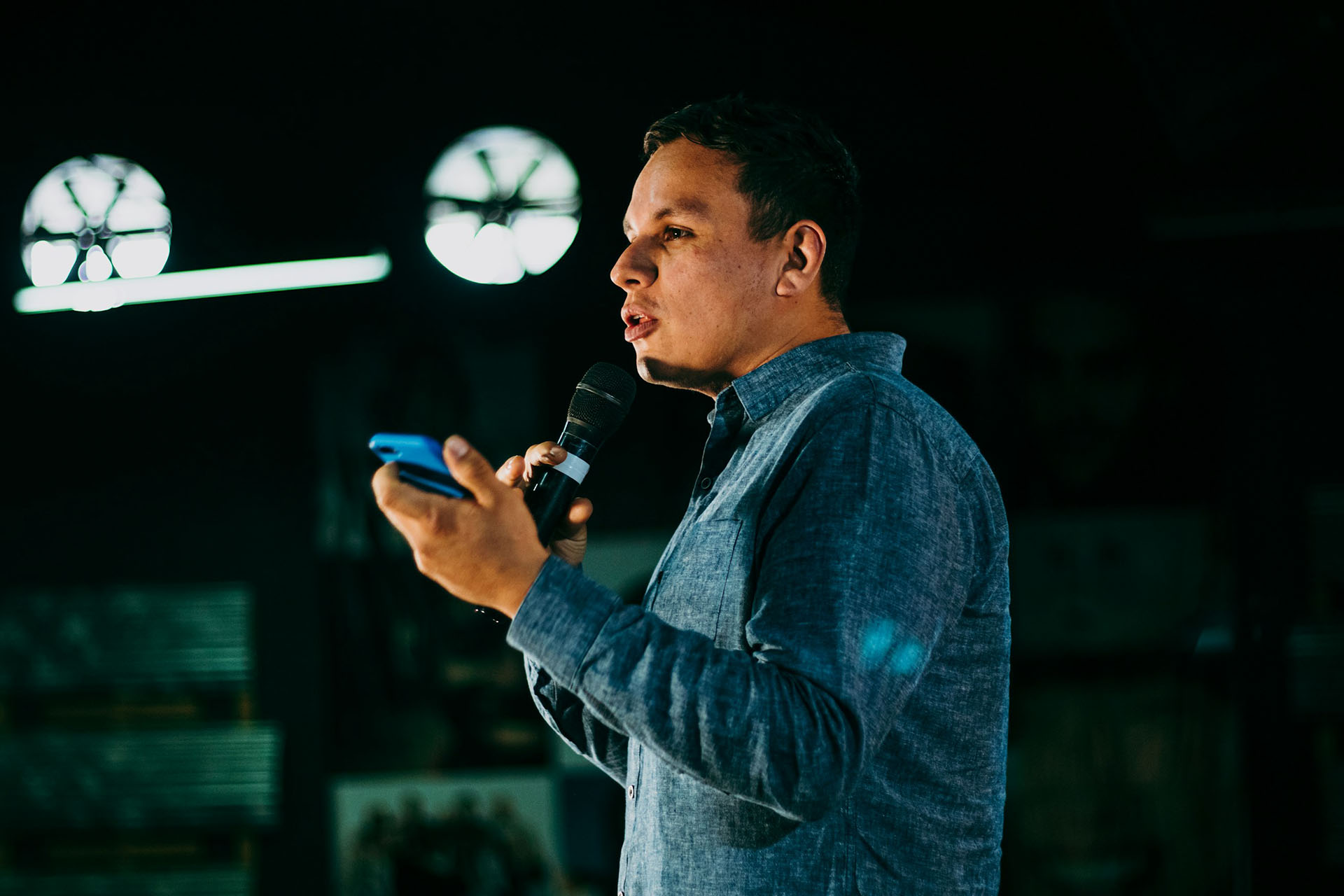
Mark shares how Josiah overcame a difficult legacy to lead with faith.
Transcripción
This transcript was generated automatically. There may be errors. Refer to the video and/or audio for accuracy.
Good morning everyone. Good morning. Thank you. My name is Mark, one of the pastors here. And I want to welcome you. So glad that you've joined us this morning. And if you're joining us online, on TV, over in venue, we also want to welcome you as well. We're so glad that you are with us here today.
And how many Giants fans do we have here today? Yeah, you're all in a good mood, aren't you? One game closer to the pennant. Picked up my daughter last night after church. She was in a very good mood. It had nothing to do with the Giants though. She had just gotten back from great America, where for the first time in her life, she got to go on every single ride, which was kind of a rite of passage. Because the last time we had been there earlier this year, she wasn't tall enough to go on some of the rides. And that's always deeply disappointing.
But last night, due in large part to the fact that she had stuffed some extra socks under her heels. And not only that contributed to her success, but her quick wits. Because she was so proud to tell me. She said, dad, we went and we got to ride flight deck, which is like the ultimate ride there. And the way this works, as you know, is everyone kind of rushes on and finds a seat. But then that's when the staff, they go on to make sure that everyone's tall enough.
Anna is sitting next to a girl who she knows is two grades ahead of her and a couple inches taller. And so when the guy comes up and says, OK, which one of you is the shortest? Without missing a beat, she tells me. She just goes, she is. And the guy pulls this other girl out of the car, and he measures her. And sure enough, she's tall enough. So everybody got to go, including Anna. She told me that story. And you know, I thought to myself, sweetheart, you are exactly like your mother. No, truth be told, she's pure Spurlock. There's no doubt about that. This kind of comes naturally. I was kind of proud of her, even though technically it was a lie.
But anyway, let me ask you something. Have you ever missed out on an opportunity in life that would have made some sort of difference for you? Maybe you aspired to go to a particular college, and you didn't get a go, and that ship has sailed. Or maybe there was a job that you thought, man, if I get that job, that's just going to be my ticket in life. But you didn't get that job. Or maybe it had to do with the family that you grew up in. You had a friend that they just had an awesome mom or an awesome dad. Your mom, your dad, maybe not so awesome. Maybe they weren't even around.
Or perhaps it wasn't so much circumstances that surrounded you, but you've always had some sort of health condition, something that's chronic, something that's perhaps not going to change. Maybe you struggle with a particular form of mental illness. Whatever it is, it's as if when it was your turn to begin the race of life, you didn't get a start at the starting line. You had to start five, 10 miles behind, so many others. In other words, you started out with a bona fide handicap.
And you might not think that someone born into royalty would actually be able to identify with you, but then again, you might be a little bit surprised, because he was only eight years old when they assassinated his father. They were members of his father's royal court, and he would have been next, except for the common folks. They figured out what was going on. They rose up, and they killed the king's killers. And that's when Josiah, at the ripe old age of eight, became king.
How in the world does a boy rule over a nation? And it's not exactly like he could follow his father's example. His father was a horrible king. And besides that, he'd only reigned two years prior to being assassinated. Grandpa, on the other hand, he held onto the throne for 55 years. His name was Manasseh. His influence, his impact could be seen anywhere, and everywhere, because there was not a pagan deity that Manasseh didn't embrace.
Not only did he borrow from the religions of his neighbors, he exceeded them when it came to wickedness. And so idols and altars, they just litter the land. And not only did he bring them into the nation, he actually brought these idols, these altars, right inside the temple in Jerusalem. And not only that, but one of these pagan deities, a goddess named Ashera, a goddess of fertility, worship of Ashera involved celebrating fertility and sex. And so Manasseh actually built apartments for the temple prostitutes inside the temple courts.
And not only that, but he actually sacrificed his own son to a pagan deity called Molech. And not only that, but he put the sword to anyone who opposed them. He shed no small amount of innocent blood. So Josiah was born into one of the most ungodly, wicked, dysfunctional families you can imagine. I mean, it would have been better for him to be born like the top mafia family than the family that he was born into. He was rotten to the core. And now it's his family. It's his kingdom to rule.
Amazingly, Josiah has no desire to fall in the footsteps of his father or his grandfather. But the fact is, he's inherited their world. The weight of their decisions, their choices, now rests firmly on his shoulders. So thank you very much. And maybe, maybe just a little in one way or another, you can relate to Josiah because somebody made a mess and left it for you to clean up.
And would you agree it's enough to have to deal with the consequences of your own mistakes, your own regrets? But then when you have to deal with the ramifications of other people's stupidity and other people's sins, that is not a recipe for good times. So what does Josiah do? Well, let's find out because we're in a series called 40 Days in the Word. So let's make today one of those days and put on your swimming cap because we're going to dive into the deep end of the Old Testament.
We're going to go into 2 Kings chapter 22. I invite you to try to find that in your Bible or one of the Pew Bibles or if you're in venue, the Bible's in the back of the room. I'll give you a little hint. 2 Kings is in that part of the Bible where the pages are still stuck together. That'll be your first hint. But truth be told, there's no shame in just turning to the table of contents and you'll find out where 2 Kings is located in your Bible.
And while you're doing that, let me just say that if for some reason you fall asleep today during the sermon, you can always go to our website, tlc.org, and watch it again for free and even fall asleep again if the case may be. It's all goodness. 2 Kings 22, starting at verse 3. Please follow along as I read. "In the 18th year of his reign, King Josiah sent the secretary, Shaphan, to the temple of the Lord. He said, 'Go up to Hilkiah the high priest and have him get ready the money that has been brought into the temple of the Lord, which the doorkeepers have collected from the people. Have them entrust it to men to supervise the work on the temple. And have these men pay the workers who repair the temple of the Lord, the carpenters, the builders, and the masons. Also have them purchase timber and dress stone to repair the temple.'"
Now obviously, the temple has fallen into ruin. And even before the construction crews can begin to cut stone or hoist the new beams, they've got to clear out all the clutter, all of the religious paraphernalia that just litters the inside of the temple area. It's kind of like, you know, if you go into certain business establishments, they have those pictures of the employee of the month. You've seen this before? Well, it means, well, I've had, you know, pagan deity of the month hanging in the temple courts. Because everywhere you look, there's these idols and these altars.
And stuffed into the corners in the cabinets are the artifacts of Israel's religious past. And Hilkiah's job is to go through and start to catalog an inventory. And it's somewhat dirty, dusty, dry work. And yet, there's a new spring in Hilkiah's step because it has been a long time since someone in authority has actually cared about this place. And days pass. We don't know how long, but at some point, Hilkiah is digging through some old crates. And he discovers this package wrapped in an old cloth, perhaps. And it's dusty, and it smells kind of moldy. And he starts just slowly unwrap the cloth. And when he sees it, it takes his breath away. And he has to steady himself. And then he tucks his discovery under his arm. And he runs to the palace to find Shaphan, who's like the Secretary of State.
Verse 8, "Hilkiah the high priest said to Shaphan, 'I have found the book of the law in the temple of the Lord.'" In other words, guess what? I found a Bible in the church. Wow. Imagine that. He hasn't seen this in a long time, and he's like the senior pastor. He gave it to Shaphan, who read it. "Then Shaphan went to the king and reported to him, 'Your officials have paid out the money and have entrusted it to the workers and supervisors at the temple.' Then Shaphan informed the king, 'Hilkiah the priest has given me a book.'" And Shaphan read it-- read from it in the presence of the king.
And I love how Shaphan delivers the news here, because you notice he starts with kind of the dry details, kind of the budget report and project update. It's like, yeah, you know, the workers are working on schedule, and everything's getting paid out on time. And I almost imagine him starting to kind of wander out the door. And then he has one of those Columbo, oh, by the way, moments. How many of you remember the show Columbo? OK, you've all just aged yourself right there. You remember the show Columbo? I do too. And if you know the show, Peter Falk, the character, he'd always have this, oh, by the way, moment. He was interrogating someone, or he's in a conversation. And you'd think the conversation was over, and then he'd go, oh, oh, oh, yeah. You know, and he'd have his little grimy old cigar. Just one more thing.
I imagine Shaphan doing this to Josiah. I'd say, oh, yeah, your highness. One more thing. You see, it seems he'll kind of found this book at the work site. He doesn't even say what book it is. It's just a book. Maybe you want me to read it? Yeah, read it. Verse 11, "When the king heard the words of the book of the law, he tore his robes." Now try to put yourself in Josiah's situation. Shaphan was reading from what many Bible scholars think was the Old Testament book of Deuteronomy. Others argue that it was actually all of the first five books of the law, sometimes called the book of Moses. Whatever the case was, Josiah had never heard these words in his life. This was completely new information. He's stunned. He's the king over God's people. He had never heard these words from God's book. And so he's just completely stunned.
And then he very likely hears Shaphan read these words from Deuteronomy 11, where it says, "See, I'm setting before you today a blessing and a curse. The blessing if you obey the commands of the Lord your God that I am giving you today, the curse if you disobey the commands of the Lord your God, and turn away from the way that I command you today by following other gods." It's like, uh-oh. This hits like a ton of bricks. So he calls his cabinet together. And starting at verse 12, it says, he gave these orders to Hilkiah, Aikama, Akbor, Shaphan, Asaiah, the king's attendant. "Go and inquire of the Lord for me and for the people and for all Judah about what is written in this book that has been found. Great is the Lord's anger that burns against us because those who have gone before us have not obeyed the words of this book. They have not acted in accordance with all that is written there concerning us."
And right about now, you've got to be thinking to yourself, well, that's a pretty uplifting passage, Mark. So glad I came to church. I mean, basically, they're all hosed. And it's because of people who are dead and gone. But they've got to deal with it. Well, before I tell you how this story actually ends, I just have to think that some of you can resonate with this on one level or another. Because maybe you grew up, and your mom, your dad, maybe both of them, they didn't have much use for faith. So they just told you, go out and find your own spiritual path. It sounded kind of cool, sounded kind of hip, kind of 70s or whatever. But as a result, you more than likely wandered in the wilderness for years trying to find out where the truth actually was.
Or perhaps for others, you grew up where-- the church was just kind of kooky or just kind of oppressive. And you just let yourself kind of ground down week after week after week. Because you can have a compass, and it can just be a couple of degrees off. But over time, it'll take you way off the path. Some people are just born into crazy. I have a friend who was raised in an actual satanic cult. She's got stories that will make your skin crawl. She's got stories that she can't really even afford to remember most of the time, because it's so traumatic. And even though she's been a Christian now for over 20 years, there's still a lot of healing going on in her heart.
And if you grew up in a home where you were brought to-- you know, a normal church that upheld Jesus and upheld His word. If you were told about the story of redemption, may you are blessed. Please don't take that for granted. And please don't take for granted that everyone else has that same experience. I have another friend. Joyfield Christian goes to this church, didn't discover that the Lord was pursuing him until he was 65 years old. That's when he became a believer. And again, now he's celebrating his fifth birthday, so to speak, as a Christian at 70. And he just told me two weeks ago, he says, man, I'm so-- I feel so blessed. And yet I sure wish I would have known the Lord so much earlier in my life.
And if you can relate to any of that, Josiah would say to you, guess what? I get it. Welcome to my world. And not only that, but it was his job to try to figure out what kind of course correction he and everyone else needed. And so the first thing he does, he calls together this cabinet, like I said. And he says, go inquire of the Lord. Why? Because those who have gone before us have not acted in accordance with all that is written there concerning who? Just them? No, us.
And again, people talk about-- it's very popular to say, well, I have my own personal faith. I have-- it's very private. And yet the reality is what we believe, it doesn't exist in a vacuum. It actually impacts other people for better and for worse. In fact, if you're looking for something like that, you can write down in that big blank area, also known as your notes. I hope you'll write down your own thoughts, but try this as well. Number one, where my faith goes, my feet will follow. Where my faith goes, my feet will follow. Manasseh led himself and most of the nation into just a ditch. And it started with his beliefs.
So there was nothing real innocent about that. And a great reality check when it comes to just our own faith is to say, well, where are my feet taking me? Because faith has lived out in real moments, in real decisions. And rejecting God and neglecting God's word is not a neutral act. It initiates a drift, and that drift is always to the South. Second thing you might want to write down is where my faith goes, my influence will follow. Now to be very clear, we don't ultimately determine the choices of others, but we certainly influence them.
And so it benefits not just us, but those who will follow us to ask ourselves, well, what's my influence? What kind of legacy will I leave for those who follow after me? And let me just honestly say, as a pastor who does a lot of memorial services, this issue of our legacy is immensely huge. Just yesterday, I had the privilege of participating in the memorial service for a long time Twin Laker, Neil Jern, has lived up in Northern California the last couple of years. But most of his second part of his life was here in Santa Cruz. And I thought I was going to go help with a funeral. What I ended up in was a worship service because his life is such a testimony to what Jesus does in a life when Jesus moves in and just takes over.
And it was just such an incredible opportunity to be a part of, to celebrate this legacy. I mean, it was all over this. I got to sit right down here with Pastor Paul Barton and Pastor Dick Jordal, who between the two of them have almost 100 years of experience pastoring at this church. I mean, talk about a privilege. Talk about a legacy. And then to hear story after story about Neil's life and his influence on others. And he didn't grow up in a Christian home. He was never brought to church, except maybe on a couple of holidays. And he was well into his mid 40s. He'd already built a successful career and a successful business. But there was this gaping hole in the center of his heart that he just couldn't ignore.
And so he becomes a Christian in his mid to late 40s. And the Lord just transforms his life, his marriage, his relationship with his kids, his neighbors, his coworkers. And that's his eternal legacy, a legacy of hope, of blessing. Now, Josiah has to deal with a very different legacy as far as he's concerned, as far as he can see. And when he hears these warnings in the book of the law, he puts two and two together. And he realizes that God can't turn a blind eye to what's going on in Judah at the time because it's not just some sort of philosophical, innocent type of thing where it's all good. It leads to actions that are gross and despicable and harmful and evil.
And he realizes that God is going to have to do something about this. So he says to his advisors, go, find the prophetess, Hulda. Because he didn't have a Bible that he could pull up on his smartphone. All he had was this book of the law that he didn't even know existed. And so they go to Hulda, the prophetess. Anyone name Hulda here today? No, I didn't think so. It's a great, strong biblical name. I've been making fun of it all weekend, except my mom comes to me after the last service. And this morning, he says, guess what? Your great grandmother's name, Hulda. Yeah. So now I'm in big trouble. I ratted out my daughter, and I've insulted my great grandmother. So pray for me.
But they go to Hulda, and she confirms, yeah, God is not pleased with what's been going on here for now three generations. And what in particular God says is at the top of the list of offenses is the innocent blood that Manasseh shed that he says has filled Jerusalem. And so judgment's going to come. However, he sees Josiah's heart and his humility. And so Josiah will not have to witness this judgment. It'll happen after he's dead and gone. And you'd think that if you were Josiah, you might just become a fatalist and go, well, there's nothing I can do. And yet, he gets motivated all the more.
And he initiates all these series of reforms. He goes out, and just canvases the entire nation. He pulls down every idol, every altar he can find. He burns them. He grinds them into dust. And then he pulls the nation around the newly remodeled temple. And he has this book of the law read publicly so they can all hear it for themselves. And then he leaves them in the renewal of their covenant to God. And then a little while later, he puts on the largest Passover celebration that any king had ever put on, as if to say, we're going to celebrate our deliverance all over again.
This was originally about our deliverance from Egypt, but we've been delivered from bondage yet again. And this time, it happened in our own home. No one came and carded us away. We did it ourselves. Because of his influence on the nation, his epitaph in 2 Kings 23 says, "Neither before nor after Josiah was there a king like him who turned to the Lord as he did with all his heart and with all his soul and with all his strength in accordance with all the law of Moses." And you know what this shows, among other things? It shows that you can be born into one of the worst situations imaginable, and that doesn't seal your fate. You're not doomed to follow in the failures of those who've gone before you, whether it be your parents or someone else. You're not doomed to follow in their footsteps. And that's great news.
But at the same time, you're not necessarily guaranteed to follow in their successes either. Manasseh, even old Manasseh, he actually had a very godly father. And Josiah's own son, despite the awesome example and legacy that his father left him, he plunges headlong right back into idolatry, first opportunity he gets. So if you're looking for some sort of formula here, some kind of ironclad guarantee for God's extended blessing, you're not going to find it. God's not a genie who, if we just do this, that, and the other thing, he guarantees to grant all of our wishes.
But at the same time, we can certainly invest ourselves in the things that God blesses, can't we? God blesses obedience. Obedience is blessable. God blesses devotion to his word. And maybe like in the days of Josiah, maybe if we're honest, somewhere along the way, our Bible kind of went missing too. And it would be a great thing to dust it off and rediscover it. Maybe if you haven't already, I strongly invite you to plunge into this series. You will be blessed to rediscover or discover God's word like Josiah did for the very first time.
Because would you agree with me, in order to have a big-- excuse me, easy for me to-- you know what, sometimes words is hard. In order to have a biblically informed faith, it helps if we are biblically informed. And that's a lot harder to say in this service than any of the other ones. But you get my point. And I understand we are all busy. I'm paid to read and study the Bible. And sometimes I can get so busy in other things, my Bible study gets just kind of edged out by everything else.
This week, I was listening to a devotional by one of our favorite guest speakers, Albert Tate. Remember Albert? In the devotional, Albert was talking about when you go to the airport and they have the spiel, you're in the plane, it's about to take off. And they talk about how, in the event the plane might have to land on the water-- this is where the flotation devices are. And if you really think about this, land on the water, really, is that really going to happen? It's going to probably be more like crash on the water, if we're honest. But at least you'll have that little floaty seat to protect you.
And then again, we also tune out the part where they talk about, in the event that there's a sudden loss of cabin pressure, these masks will drop from the ceiling, right? And the little plastic cups don't look all that useful. But that's what you're supposed to do. And they always tell you, please put on your own mask before you what? Assist anyone else. And like Albert was saying, if you're a young single, it's like, well, duh. Of course I'm going to put my own mask on before I even think about helping anyone else.
But if you had a chance to mature to the point where you're used to taking care of others too, maybe you're a parent, or maybe you're just a good friend to someone, and you're used to taking care of them a lot, you may have to be reminded to put the mask on for yourself first. It's like when we get home on many an evening, see Laura will come in the front door with the lunch that she left with in the morning, except she's never touched it. She was so busy tending to the needs of our kids, and other people's kids, and other needs, that she forgot to eat. Never had a chance to put on her mask herself.
Now, I don't miss too many lunches. That's not my problem. But I have to be honest, in this last year especially, there has been so much busyness with this 2020 vision. And I love every bit of it. But in terms of kind of working with the plans, and the permits, and the whole get in the water saga, and all that kind of stuff, there have been times in addition to all the other ministry demands where I'm just so apt to just dive into, well, how can I help here? Or what can I do there? And all this kind of stuff. And I realize what I need to do is pick up that mask and breathe deeply from God's word. Because if I don't, I'm no good to any of you. And you know what? The same is true of you.
And this story in 2 Kings is really a cautionary tale for any one of us who thinks otherwise. But please hear me here on this. If all you hear today is, OK, I get it, Mark. I got to go find the lost Bible and read it. That's all good. But if that's all you hear, I have failed. I failed. I failed. And let me tell you why. Because this story and so many other stories like it is part of a larger biblical drama, a story of redemption that points us to Jesus.
In fact, the Bible doesn't ultimately point to itself. It points to Jesus. He's the big idea. He's the center. In fact, let me see this Bible. I don't know if you were like me, but when I was growing up in Sunday school, I was always told that the middle of my Bible was what? Those of you Sunday school people, what? Psalms, right? Which is true if it's an English Bible, but if it's a Hebrew Bible, Psalms is at the end of the Old Testament. But that was all good, helpful stuff because it helped you navigate your Bible.
But I think it can sometimes lead us to think that the Bible is just kind of this flat narrative. The center of your Bible is not Psalms. The center of your Bible is the Gospels because that's the main event. Jesus, Christ, God, incarnate, everything before that anticipates His coming, everything after that reflects on His significance and reminds us He's coming again. And so when we read our Bibles, which we should do, we need to read it with the awareness of who it's all about. Otherwise, a story like this, it just becomes a morality tale. Manasseh, He rejected the word, He's bad. Josiah, He embraced the word. He's good. Be like Josiah, end of sermon.
Now, I know a lot of sermons are written that way, but that's not the gospel. Let me show you what I mean because you can read a story like this, and it's not going to be super obvious that, well, how does this even talk about Jesus? We take today's story, but if you do just a little bit of digging, you realize that it's called Second Kings because there's a whole succession of kings that followed in the line of David. And Josiah was one of the very best. But as soon as he dies, his son just plunges the people right back into the ditch that they were in, right back into idolatry and evil, just like that.
Because here's the thing, Josiah, as admirable as he was, he could change their behavior, but he couldn't change their hearts. You can be in a church community or a fellowship, and if the pastor wants a tap dance on your head long enough or hard enough, he might be able to shape some behavior, but he can't shape the heart. And so Josiah's story reminds us, yes, we need a king to lead us into righteousness, but we need more than a mere human being. We need not just a man, we need a God-man.
And so seven centuries later, another Davidic king was born, not in a palace, but in a manger, in a stable, the King of kings, the King of kings, son of David, but son of God. And he came to live a life that you and I could never live, not with all the determination we can muster. And he came to die a death that we ultimately deserved. Remember that passage from Deuteronomy 11 I read earlier? It says, "See, I'm setting before you today a blessing and a curse." Well, Jesus is the answer to those words. Jesus is the fulfillment because we get the blessing because why? He took the curse.
So let me give you a real practical key to reading your Bible, and then we're going to wrap this up. Very practical key, and it's this. Remember this principle. Wherever you're reading your Bible, remember this. Not every single verse is going to speak directly to Jesus. It's not somehow hidden in this story, so to speak. Not every verse is going to speak directly to Jesus, but Jesus is going to speak directly to every verse. In other words, he's the lens through which we read our Bibles. He's the one who shapes our understanding. And this story is ultimately a story of human fallenness and need for a Savior.
The Apostle Paul is looking through this lens when he writes in Romans 3. "Therefore, no one will be declared righteous in God's sight by the works of the law. Rather, through the law, we become conscious of our sin. But now, apart from the law, the righteousness of God has been made known to which the law and the prophets testify." It is testified to our need. "This righteousness is given graced through what faith in Jesus Christ for all who believe." Let me close with this.
This week in the news, amazing story. Man who has been blind for decades receives his sight. Check this out. - Larry Hester, 66, has been blind for half his life from a condition called retinitis pigmentosa. In September, an electronic stimulator was surgically implanted in his left eye. On October 1, Duke eye surgeon Dr. Paul Hahn turned it on for the first time. - So the journey is just beginning. This is day one of hopefully the rest of his life. I think turning this device on allows him to experience a whole new world.
- It was incredible. It was bright, and it was significant. And I just had to take a deep breath, and I was just-- it was hard to articulate what I was feeling, but I wanted to share it with everybody I could grab at the time and bug. - Thank you for this opportunity for Larry to see a little bit of the kin. - It's so basic. The light is so basic and probably wouldn't have significance to anybody else. But to me, it's meaning I can see light, and we can go from here.
Powerful story. And he doesn't see with the kind of clarity that we see. But after 33 years in darkness, he can see light. And it's opened up vistas to him that were otherwise shut. Maybe you found yourself in a dark place yourself. Maybe because of your own choices or the choices of others, regardless of that. God has given us his word so that we might have light. And that light is in Jesus, who is the light of the world. And so may I encourage you, dive into his word, read it with a sense of renewed urgency. It will give you clarity. It will give you strength. It will give you wisdom. It will give you insight. And most of all, in your discovery of it, it will lead you in your rediscovery of him. Because that's what it's ultimately all about.
Let's pray. Heavenly Father, we want to thank you for this opportunity to hear from your word. And Lord, I pray your words would be the ones that stick in our minds, in our hearts, in our lives. But Lord, I mean, if I'm honest, my concern is it's so easy for us. Like I said, we have it on our phones. We have it on our iPads. We can get it on our computers. This room is filled with copies of your word. And maybe for that reason, if we don't guard ourselves, we can take it for granted.
So Lord, I pray that we would understand today anew how blessed we are to have your word in a way, in terms of being accessible, that people haven't had since the very beginning. So Lord, help us to take advantage of this rich, amazing, divinely inspired word from you. And Lord, help us to read it not as just historians or people looking to fill our heads with knowledge, because we can learn a lot from your Bible and still be jerks. So Lord, we want it to point us to Jesus, to the cross, to the life and the hope that's all bound up in Him. It's really not about our initiative, Lord. It's about yours. So help us to embrace that and receive that today through your word, through your spirit, through the fellowship of your saints. We pray this all in the name of Jesus Christ and all God's people said, amen.
Sermones
Únase a nosotros este domingo en Twin Lakes Church para una comunidad auténtica, un culto poderoso y un lugar al que pertenecer.