Praises at Midnight
Paul's journey shows how perspective shifts can transform hardships.
Transcripción
This transcript was generated automatically. There may be errors. Refer to the video and/or audio for accuracy.
Into a violent world that prized only power, came a movement motivated by love. A few frightened failures huddled in one room became a global phenomenon, fanning across their world within 30 years. With no army, no politics, no detailed strategy, they changed history. How did it happen? And can it happen again? This is Acts Odyssey.
Grab your message notes that are in your bulletins. We have been studying the book of Acts in the Bible. It's a story of how the whole Jesus movement got started. And if you are just joining us for the first time this week, it is great to have you join us. We put together a book as a companion to this. It's not just like the sermons put in a book. It's completely different material, lots of really interesting background material to the book of Acts. You can grab that at the info desk. If you're watching online, you can grab it on iTunes and on Amazon. A hundred percent of the proceeds go to the ministries of the church, not to me or anybody else.
Also, we have free videos that we shot on site, on location in Israel and in Greece and in Turkey. And you can access all that for free at TLC.org/Acts. Quick recap of what we've been talking about so far. Fifty days after Jesus Christ is crucified, a few hundred people in the same city he was crucified in, just 50 days later, these people go from being scared little rabbits to being absolutely courageous. And they say, "He rose from the dead. We saw him alive again." And that proves what he was saying about him being God's Messiah.
They're super excited, but they all stay in Jerusalem until persecution scatters them to other regions. And they keep talking about Jesus there. And they're amazed when all kinds of non-Jewish people are drawn to this message about Jesus Christ. Italians and Greeks and Romans and Africans start flooding into the movement. And so all these Jewish people who started the Jesus movement have to have a little meeting. What does it mean to be a Christian? Do all these Gentiles, these non-Jewish people have to be Jewish first and have to keep all the kosher laws and all the Torah commandments?
And they decide, "Let's not complicate it. Let's keep it simple. Let's keep focused on grace. Everybody is saved by the grace of God through Jesus Christ our Savior and not by religious rule keeping." And that just changes or establishes the character, the heart of the Jesus movement. And today's story happens right after that meeting. The apostle Paul and his friends roll through all these places where the Gentiles have been coming to faith. And they tell them about the council's decision. Great news. We are saved by grace. People flock into the movement. Everything's golden. Crowds are converting.
And then suddenly all the wheels fall off. And I mean, they hit a brick wall. Everything starts going south. And at this point in Acts 15, we're at the halfway point in the book. And the whole character of the book starts changing. It becomes this adventure story. Every chapter you're in a new region and there's a new challenge and there's a new adventure. And what we're going to talk about today is what do you do when things do not go your way? Because they don't go the apostle Paul's way.
What do you do when you only want to do the right thing the right way from the right motives and things still fall apart? What do you do when you get one unpleasant surprise after another? And I don't care who you are, you are going to need this in your life. And here's just a basic truth I want to start with. When things go wrong, my attitude is the only thing I have complete control over. Would you agree with that? You cannot control a lot of, in fact, I would say you cannot control most circumstances in life, but you always, always have control over your attitude.
And so my question to you today is, are you willing to grow in your ability to adjust your attitude? Just think about this question for just a minute. Because most of us really don't try to change our attitude. We just think my attitude is just the way I happened to roll out of bed. Right? I mean, let's be honest, show of hands here. How many of you just, this is church, so be honest, how many of you woke up grumpy today? Honestly, how many of you woke up grumpy? How many of you just let her sleep? Can I see a show of hands? That's an old joke, but it works every single time. I'm not talking about anybody I know personally.
My point is this, most of us think I'm just feeling grumpy today, or hey, I'm in a good mood today, or I'm a natural born optimist, or I'm a natural born pessimist. Like I have no control over my attitude, right? I'll confess this, by nature, I am a pessimist. By nature, honest to goodness. How many of you relate to that? Just by nature, you tend to see the glass half empty. If my wife, Laurie, is 10 minutes late coming back from an appointment, I think she's dead. I sure love that woman. That's the way it is, you know?
But listen, maturity means being able to conquer your natural impulses, including your attitude impulses. And this is something even the apostle Paul had to learn. He says, I have learned the secret of being content in any and every situation in Philippians 4:12. He had to learn it. And all through Philippians, he talks about the key to developing a good attitude. It's fixing my perspective. It's changing the way I look at things. And for the rest of the message, really you could summarize it in one word, perspective. Say that word out loud with me. Perspective. That's the key.
Let me show you what I mean. Wall Street Journal a few weeks ago carried this story. There was an online bike company in Europe with a problem when they shipped their electric mountain bikes. Kind of an interesting gadget. Electric mountain bikes. When they shipped. That's the kind of mountain bike I would like. You know, that you just kind of press the button and you go up and down the hills. But when they shipped them to their online customers, the bikes were being damaged and it was threatening to take down the company.
So they get together and they think, how are we going to handle this? And they thought about new shipping materials, new shipping routes, new shipping companies. But all of that would have added too much expense for their business model. They were ready to give up. When one of the team members has an idea and he says, instead of changing anything, what we have to do is change the way people look at the packages. And they say, what are you talking about? He says, our bikes come into a, come inside of a box that's about six inches deep and about five feet wide. He says, what's that look like to you? That looks like the box of a wide screen TV.
And so he says, why don't we just print a picture of a television on the side of the box? And this is one of their boxes. He says, we won't say there's a TV in the box, but we'll just print the picture of a TV on the side of the box. And maybe by only changing that one thing, delivery people will look at the box and instead of thinking, oh, this is a mountain bike. You can just throw this around. They'll think, oh, this is a TV. We need to handle it carefully. He didn't change anything, but the box, the frame around the bike, how it was looked at. And guess what? Article says, shipping damages fell by 80%.
Listen, often we think, oh, I really need to change my circumstances and I won't be happy until my circumstances are changed. When really the best and the most effective thing that we can change is how they're boxed, how they're labeled. Because many times you won't get a change in circumstance, but you can always change how you label the box. That's what I mean by perspective. Somebody said your perspective will become either your prison or your passport. And I totally agree with that.
So let's talk about three perspective shifts that will change your life. And the apostle Paul models all three of these in our story today from Acts 16. And if you allow God to grow your skill in these three perspective shifts, you will have a more joyful life. You'll have a more productive life. You will be somebody that other people actually are drawn to. Let me show you what I'm talking about. You and I first need to develop a new perspective on closed doors. You ever just hit a closed door? You just keep running into brick walls. It happens to me. Doesn't that happen to you?
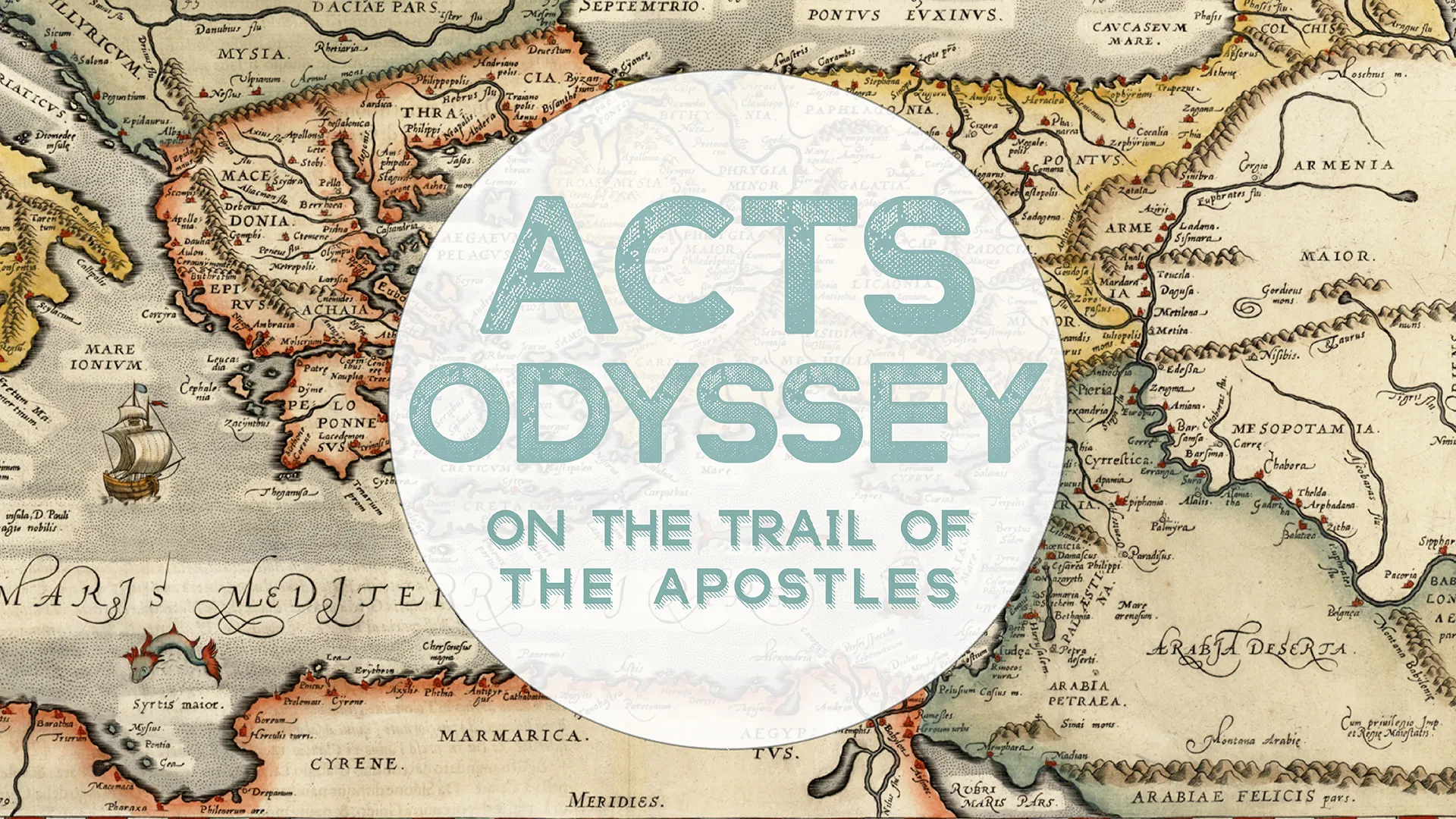
Look at what happens in Acts 16 verse six. It says, Paul and his companions traveled throughout the region of Phrygia and Galatia, having been kept by the Holy Spirit from preaching the word in the province of Asia. When they came to the border of Mysia, they tried to enter Bithynia, but the spirit of Jesus would not allow them to. What's this all about? Let me show you on a map. They're trying to keep going through the Roman province of Asia Minor, modern Turkey. They try to go east, they're blocked. They try to go northeast, they're blocked. Now it doesn't say how these doors were closed. It doesn't matter how the doors were closed.
The point is they really, really, really wanted to do something that was genuinely a good thing from good motives. And they were going to be fulfilling a real need, but they couldn't. So what do they do? Verse nine. During the night, Paul had a vision of a man of Macedonia, and that's where modern Greece is today, standing and begging him, "Please come over to Macedonia and help us." Excuse me. After Paul had seen the vision, we got ready at once. Notice now it's "we." At this point in the narrative, suddenly Luke is joining the team. From this point on, it's all first person. We got ready at once to leave for Macedonia, concluding that God had called us to preach the gospel to them.
So they get in a boat, and for the very first time, they set sail for a new continent. They are going to Europe. Now watch this. It was because they didn't get to go where they wanted to go that they ended up where they needed to be. It was because they didn't get to go where they wanted to go that they ended up where they needed to be. Is that for you today? Maybe you've been crying about something that didn't happen for you, or somebody who didn't like you, or a job you didn't get, some closed door. But rejection is nothing more than redirection. Relabel that box. See rejection as redirection. Do you get that? See rejection as redirection.
When you begin to see it that way, you see that some of the heartbreak in your life was probably really God moving you into position for some of the ministry he wanted you to do that you didn't even dream about. That's one relabel in your life, one perspective shift. And then number two, they model a new perspective on disappointments. We all hit disappointments in life, and I want you to imagine their disappointment. They cross the ocean. They hit the Greek coast. They go into the first big city, Philippi. They had a vision. A man from Macedonia. He's probably going to meet them there like Cornelius met Peter, right? That's probably what they expected. There's nobody waiting for them.
So okay, that's cool. So we'll go to plan B, and that was every city that they went into, they always looked for the Jewish synagogue because that's kind of where they, that was their always their home base, and they look and look and look. There's not even a Jewish synagogue here. And what that means is there's not even 10 Jewish men in the whole city because there had to be 10 for there to be a synagogue, and so suddenly they're realizing we are outnumbered and we're not wanted because here's what dawns on them. Philippi, the city they've stumbled into, is a purely Roman colony. There's basically no Jews there. It was founded by Rome as a retirement community for retired Roman soldiers.
As part of their retirement from the Roman army, they got property in Philippi. So basically everybody who lives there is Roman and a soldier. They're super patriotic. They speak Latin, not Hebrew or Greek, and they are totally in favor of the Roman gods and all that Roman paganism, and they are very, very prejudiced against the Jews. So what? Talk about disappointment. What do they do next? Just pack up and go home? No, verse 13. Excuse me. On the Sabbath, we went outside the city gate to the river where we expected to find a place of prayer. Here's what's behind this. If there wasn't enough Jewish people for a synagogue, a building in a city, what they would do is they just meet informally at a river or someplace outside the city gate, a grove of trees, and kind of have an informal prayer meeting.
Well, Luke doesn't say this specifically, but they may not even have found that. What they do find is a group of women that's gathered there by the river, and we find out later they're wealthy women, so they weren't down there washing clothes or something. They were probably hanging out at like the Philippian equivalent of the riverfront verve or something. They were just hanging out. So we sat down and began to speak to the women who had gathered there. They don't find Jewish men. They don't find a man from Macedonia, but they find Gentile women, so they roll with that. See, here's the relabel on the box called disappointment. Don't confuse unchanging goals with changeable tactics. Do you get that? Their goal never changed. Spread the word. Their tactics had to change.
No Jewish men, no Macedonian men. Let's go to these Gentile women. A couple examples. You know, we plan on building a coffee house over here near Cabrillo College on our property. It's the last phase of our 2020 vision to reach the college students. Super stoked about it. Yes, amen. What if now we're in the final stages of getting all our paperwork done to get permits? What if we don't get permits for that? Sometimes you don't get permits for work. Does that mean we're thwarted in our goal? No, because our goal is not to build a building. Our goal is to build into lives. The building's a tactic, and I don't know what'll happen, but if we're thwarted in that tactic, we just change tactics.
Let me give you another example. God's goal for Renee, just as it is for you, is to develop Christ-like character in me. Now, I can tell you that Renee's preferred tactic is for Renee to sit in his comfortable office and write sermons and deliver them in a comfortable environment. That is not always God's tactic to grow me. In fact, it shifted big time a few years ago, as many of you know, when my mother was dying of complications from Alzheimer's disease and she came to live with us. The goal stayed the same. God's goal. The tactic totally changed, and it became, "Renee, now you're going to grow in Christ-like character through brushing your mom's teeth for her, through helping your mom to get dressed, through reading bedtime stories to your mom at night, through holding her hand when she's crying and she doesn't know why." And let me tell you something, that was a lot more effective than writing sermons.
No one wants pain. No one wants inconvenience. But it sure is effective when it comes to rattling your cage and growing your character and shifting your perspective. God's goal for me never changed. In fact, it was accomplished even better through that tactic. In fact, our whole family became blessed. Even mom in her last years was blessed through time with us and time living with my sister up in Oregon. Paul's goal never changed, but his tactic changed. Watch what he does. Luke says, "One of those listening in this group of women was a woman from the city of Thyatira named Lydia." Lots of clues about Lydia from this passage. Fascinating character. Check this out.
She's not from Philippi. She's from Thyatira. You know where Thyatira was? Back across the ocean where they came from. But they wouldn't have met her over there. Why? She's a traveling businesswoman. And it says she's a dealer in purple cloth. Purple cloth was the most expensive cloth to make. The most expensive clothes. So she is a traveling businesswoman who owns her own business dealing with expensive things sold to wealthy people. And it turns out she's even got a beautiful, spacious home there in Philippi. We find out later she invites Paul and his disciples to stay there. She's also got a house back in Thyatira. So this is a wealthy woman.
Now, in this verse, we also learn she was a worshiper of God. And that means she has left behind the pagan religion of Rome and Greece. And she's become really interested in this idea of one true God who's invisible and everywhere at the same time that she reads in the Hebrew Bible. So she's super interested in that. And it says, "The Lord opened her heart to respond to the message." Why? Remember we talked about it last weekend and in the intro, the 613 rules in the Torah to a Gentile woman like Lydia, those would have seemed insurmountable. I really want to believe in this God, but to convert to Judaism, I've got to keep all those laws and the kosher laws about food and all of this.
So Paul says, "Let me tell you something. You can get to know that God personally by grace." Because that God came to earth as Jesus Christ. And He's the only person who lived a perfect Torah-keeping life. And He was able to sacrifice Himself to pay the penalty for all of our sin debt on the cross. That's how much God loves us. He took the bullet for us. He took our guilt. And so all you have to do is believe in Him and you're saved and you can know that God. You're longing to know. Now, Lydia was a person who knew beauty. She sold beautiful things to beautiful people. Her whole life was about beauty. And she is attracted to the beauty of Jesus, to the beauty of the gospel message as Paul changes his tactics and keeps the same goal.
Now, that's great. But right after this is where things really start to go south. And you see the third perspective shift that you and I are challenged to make every day, a new perspective on hardship. A new perspective on hardship. Verse 16. "One day, as we were going down to this place of prayer, we met a slave girl who had a spirit that enabled her to tell the future. She earned a lot of money for her masters by telling fortunes." Kind of weird, kind of Halloween appropriate, right? So what's all this about? Well, it says a slave girl, one scholar I read said she's probably between 10 and 14 years old, very young.
And the way fortune telling worked in the ancient Greek world was this. Certain women who had "the gift" would go into these spells where they would rant and they would rave and they would say cryptic things and they would shout out cryptically and strangely. And the men who owned them, who called themselves priests, would interpret their ravings for people and say, "Oh, here's your fortune." They say, "Oh, what she's saying as she's going off about all kinds of things you can't understand, what she's saying is you need to plant wheat instead of corn or you need to marry that person or whatever the person was asking them to tell their fortune about." Now, probably these days we would analyze these women, we'd say they're mentally ill, they're schizophrenic, and they're being pimped out by these men who own them. This is a horrible human trafficking situation.
And I also believe she is being influenced by an evil spirit. But let me hasten to add, that's not something that believers need to be afraid of because watch what happens. Verse 17, "She followed Paul and the rest of us, shouting." Just picture this, Paul's trying to preach and she's shouting, "These men are servants of the Most High God and they have come to tell you how to be saved." Her endorsement is not helping, right? Now, what's interesting is she's totally telling the truth. That's totally true. But you know what this shows us? Is how you say it is as important as what you say.
Have you ever gone to a concert like over at the Shark Tank or something in San Jose and it seems like there's always people out in front, Christians with picket signs, and they have John 3:16 and believe in the Lord Jesus Christ on their signs and as people walk in they're screaming, "Accept Jesus! Accept Jesus!" And you have this totally weird feeling about it, right? I've told Adrian many times, "Stop doing that. Don't do that. It's embarrassing." But you know what? You're feeling what the Apostle Paul is feeling here because Paul gets fed up with it. Luke says he got annoyed. I love it. This is real life. He goes, "That's enough." And this is a great Rembrandt sketch of that moment. You see Paul and Silas and the slave girl and Paul is turning around and it casts out the spirit and out it goes.
And you know what? I love that this girl's story is right after Lydia's. Lydia is put together. She's driven. She's savvy. She's wealthy. She's probably well known and well respected. And Jesus steps right into her life and saves her. And then right after that it's this girl completely busted up, taken advantage of, abused and the spirit of Jesus steps right into that place too. Now if I were to ask you, how many of you relate to Lydia that is actually, as I mentioned, a first century painting of a wealthy woman? And how many of you go, "Honestly, that kind of looks like me and my friends a little bit. That's 2,000 years old but that looks pretty contemporary to me. That's the group I'm a part of. I'm doing okay. God has blessed me. I'm attracted to the beauty of Jesus." My guess is a lot of us here, male or female, would go, "Thank God. That's kind of like the group I'm from. I relate to that."
But if I were to ask you right now, how many of you were demon-possessed fortune tellers who happen to be slaves? My guess is none of you. Actually, this is Santa Cruz. So two people would be like, "Dang, how did you know? That is what I do for a living." But look, what was that slave girl's problem? Her problem is a very common problem. She had put herself under the influence, watch this, under the influence of a spirit over which she was powerless that was leading her into self-destruction and other people were disrespecting her. Now is it sounding more familiar to you? Some of you can't relate to the Lydia's of the world. You're like, "I am not from that class, that's for sure." But you hear the second woman's story and you go, "That's where he found me. In the midst of addiction, in the midst of despair, in the midst of darkness, in the midst of my own stupid decisions and other people abusing me, he stepped into my uncleanness and he delivered me." And some of you were both.
Some of you were Lydia on the outside, smart and put together. And on the inside, you had a slave girl's secret. And Jesus says, "I see that and I can deliver you." So now this girl is healed. She is whole. Are her owners happy? Is a pimp happy? Is his prostitute is set free? Luke says, "Her master's hopes of wealth were now shattered." And so they grabbed Paul and Silas, dragged them before the authorities at the marketplace. "The whole city's in an uproar because of these Jews," they shouted to the city officials. Now first of all, was the whole city in an uproar yet? No, they were in an uproar. It's like when I get these emails, "Everybody's upset about this." Okay, who's upset? Well, me and my mom.
You know, the whole city's in an uproar. And watch this, because of these Jews, there's an anti-Semitic thing going on. Now this is very clever. They don't actually say what Paul and Silas actually did because some people might have thought, "Well, good for them." What they say is something completely false. They are teaching us customs that are illegal for us Romans to practice. They hit everybody's political hot button. And just like today, you hit the hot button and everybody goes off. Verse 22, "The crowd joined in the attack against Paul and Silas. The magistrates ordered them to be stripped and beaten with rods." Rods, that refers to these sticks that were bound together with rope. This is a carving of three of them from an ancient Roman altar.
And they would beat you senseless with these thick stanchions that were the size of a giant baseball bat. And after they'd been severely flogged, they were thrown into prison and the jailer was commanded to," what? "Guard them carefully." When I picture this guy, I kind of picture Paul Blart Mall Cop. Do you remember that movie? Only he's a mean guy. Now how do I know he's a mean guy? What did they tell him to do to guard them carefully? That was the extent of his orders. But look what he does. When he received those orders, you know, kind of rubbing his hands gleefully, he put them in the inner cell. And the inner cell of a Roman prison in the first century would be a part that was a little bit lower than the rest of the cells with a drain in the middle so all the human waste would run downhill into that inner place.
And fastened their feet in the stocks, forcing their arms and legs in an uncomfortable position for hours. Notice, he didn't do this part by order. He did this part by desire. Guy's a little messed up. So, picture it. You're Paul and Silas. You're sitting there in human waste. You're naked. You've just been beaten up. Totally, a total injustice. And you're in stocks, completely humiliated. So what do you do now? Here is the most remarkable verse of the entire story. Verse 25. "About midnight." Now I don't know about you, but for me, about midnight is where all my problems get worse. Right? About midnight is when there's nothing but trouble in my life and all my problems are unsolvable. Everything seems worse about midnight. And what are they doing? Paul and Silas were praying and singing hymns to God. And the other prisoners were listening to them.
Here's how I picture this unfolding. Remember Paul said he had to learn how to be content. Because, you know, he was from Tarsus, which was like Oxford or something. It was a university town. And we learned that he was educated by Gamaliel, who was the top rabbi in the world at that time. So his parents had to be people of means. Paul was a Roman citizen. Put him in the top 10%. This is a person of privilege. He is not used to this at this point. Gets used to it. But at this point, this is still somewhat fresh. So I imagine it like this. Silas has to start the hymn sing. And he's going, you know, when darkness veils his lovely face, I rest on his unchanging grace. And Paul's going, shut up, Silas. Trying to sleep. When all around my soul gives way, he then is all my hope and stay. On Christ the solid rock I stand. Take it, Paul. Paul goes, all other ground is sinking sand. All other ground is sinking sand. That is so true. Silas, remember this one? Oh, Lord, my God, when I in awesome wonder. And now they're both singing. And everybody's listening because they've never heard anything like that in prison before.
See, what happens to you when you sing praises in your midnight? Let me explain it to you this way. I'm going to show you some pictures. These are very, very zoomed in pictures of everyday objects. And I want you to see if you can guess what some of these are. What do you think this first one is? Shout it out. You know what this is? This is a sliced banana. Can you see it now? Very, very, very close up. What about this one? Looks like the Grand Canyon. Any guesses? This is the vinyl groove of a record. Of a vinyl record. This one is cool. I bet some of you are going to get this. What do you think this is? Somebody said it. It's velcro. You see the hooks and the catches? That's what velcro looks like. And what about this one? What is this? It is hair. Specifically, it's a human eyelash. Isn't that interesting? Here's one more. What do you think this is? Specifically, it's my grandson's ear. I just wanted you to know that. I had a grandson three months ago. I don't know if you've heard.
But my point is this. My point is perspective. Listen, when you are so close to something, even if you see it with total accuracy, those are totally accurate microscopic pictures of all those things. But you're still completely missing the point of what they are. And you're missing the beauty of what they are. You're close to it. And that's what happens to your problems around midnight. But when you worship, it zooms out your perspective. So you can see the beautiful big picture. One example of this. George Pelins. Man here at TLC. Many of you know George and Lynn. For decades, they ran the Pajaro Rescue Mission, which has now morphed into the Pajaro Women's Center and Team Challenge. What an awesome ministry. And after all that amazing work for the kingdom. Yeah, that's right. Now, after all this amazing work for the kingdom, does George get a comfy retirement? No.
Let me just read you a little bit of what George is facing. George has a white blood cell disorder that creates an immune deficiency. His body can't find infections. He's sick all the time. Plus he has congestive heart failure. Plus he went blind in one eye. And he has macular degeneration in the other eye. Plus he has severe rheumatoid arthritis, which means every move he makes is painful. I mean, what else can you have? So George calls me last week. He goes, "Renee, I want to get some book writing tips. I want to write a book." And I said, "Really, George, what's your book about?" And I'm thinking, if I'm George, my book's about something like, "Why does God allow bad things to happen to really good people?" Right? So George goes, "Here's what my book is about." He goes, "My book is about the blessings of being a Christian." I go, "Really?" I said, "What do you mean? How many blessings are we talking about?" He goes, "Well, so far, I'm up to 55." I said, "Like what?" He goes, "Well, in Christ, we're all adopted into God's family. Imagine that." And he goes, "In Christ, we have the power of the Holy Spirit. The same Holy Spirit that raised Christ from the dead is in us." And he goes, "In Christ, all our sins are forgiven. And it's not because of anything that we did, but it's by God's grace." And he's going on and on. And he didn't know. I was just crying on the other end of the line. And I thought, "If George doesn't ever write another word of that book, he has already ministered to me." Because he has such a big perspective. He's worshiping his big God and he sees the big picture blessings.
And here's what George has done. Here's the relabel. Now, don't miss this because this is huge and it's going to throw some of you for a loop. Are you ready for this? You got to develop a willingness to embrace suffering. You say embrace suffering, what are you talking about? Let me show you something from earlier in the book of Acts. Acts 9:15–16. The apostle Paul has been an enemy of the faith. He comes to Christ and the Lord appears to a disciple named Ananias. And he says, "You got to go help out Paul." The Lord said to Ananias, "Go! This man, Paul, is my chosen instrument to carry my name before the Gentiles and their kings and before the people of Israel." Watch this. "I will show him how much he must" what? "Suffer for my name." Now, it's not like God had some kind of a vendetta against Paul. He killed a lot of Christians. I'm going to make him take some of his own medicine.
Now, what it's about is this. For Paul to be used greatly, he had to be wounded deeply. When you think about it, Paul's accomplishments and his suffering went together. His ministry was shaped by all these trials and because of these trials, he was able to minister in ways, as we'll shortly see, that he never would have been able to had he not been in prison, had he not been persecuted. And that will be true for you too. Your greatest wounds will become your greatest ministry. Look, Paul told the Philippians himself, he says, "It has been" watch this "granted to you that for the sake of Christ you should not only believe in him, but also" what? "Suffer for his sake." Isn't that encouraging? Turn to your neighbor and say, "You're going to suffer." And say it with a smile. "You're going to suffer in life. Aren't you glad you came to church today?"
Listen, here's why this is important to hear. All of us want to do great things, right? We want to do great things with our lives. But if you want to be used, you must expect to be bruised. You see, that's kind of an overly catchy little rhyme. Let me put it this way. Most of us want to do the kinds of things Paul did without ever having to go through the kinds of things Paul went through. And it doesn't work like that. If you want to be greatly used by God, accept this now. You're going to suffer. And God is going to take that suffering and he's going to make it a platform for ministry. You say, "I don't know about this." Listen, suffering is going to happen. It just is. That package is going to be delivered to your front doorstep no matter who you are. So you either change the label and embrace it as something God will work through or it just remains absurd.
Now watch how God uses Paul's imprisonment. How does the story end? Earthquake. The doors are set open to the prison. The stocks are rattled open. The jailer is afraid that all the prisoners have escaped. He becomes suicidal. Paul calls out, "Don't harm yourself. We're all here." And the jailer goes in and he falls trembling and says, "Sirs." Remember how he treated them? Now he says, "Sirs, what must I do to be saved? What can I do to spare my life? You're obviously amazing sorcerers or something." And they say, "Believe on the name of Jesus Christ and you will be saved." Not do penance for all the stuff you just did to us. Just believe. And the man washes their wounds and he takes them to his house and he introduces them to his wife and kids. And they sit there and they listen to Paul talk about the gospel. And then in the morning they all get baptized together and this mean jailer is filled with joy.
Man, I love this story. I love that you have these three totally different human beings. And they're all changed by one person, Jesus Christ. And I don't know who you relate to more, Lydia with a slave girl or Paul Blart. But I'm just here to tell you this church is a mixture of all three of those people. And maybe you relate to all of them. But what helped them 2,000 years ago is what can save you today. Believe on the name of the Lord Jesus Christ and you will be saved. And I want to give you a chance to do that in just a minute. But one last observation from this story. The most effective perspective adjuster on earth is worship. Those praises at midnight. And that's why the worship night tonight at 6 is so important. It is an investment in your perspective. So I hope you can join us tonight.
Let me close with a story. I saw the truth of this story in my relationship with my mother when she was going through her prison of Alzheimer's I referred to earlier. Long after she could almost do anything for herself, long after she lost her ability to converse very well, you know what she could still do? She could still sing. And often mom would get confused or upset or anxious. She'd be rocking back and forth, shaking and looking very worried. She was in her midnight. And I would take her by the hand and I'd start to sing. Oh Lord my God, when I in awesome wonder, or holy, holy, holy. And you know, she knew all the words and she'd start to sing the songs. And I don't know how much she understood. But after we sang, she was different. She was calm.
And she had three phrases left that she could say at the end of her life, just three. And after we sang, she would always use those three phrases. She would point up to the clouds or the flowers and she'd say her first phrase, beautiful. And then she'd look at me and she'd put her hand on the side of my cheek and she would say, thank you. And then her final phrase, I love you. And you know what? When you and I worship God, it motivates us to say those same three phrases to Him. Beautiful. Thank you. And I love you. Heavenly Father, I just pray that you would adjust our perspective. God, I know I need a perspective shift and my guess is a lot of people here need one too. And so, God, help us to see our lives from your divine perspective, mostly help us to just see you and say you're beautiful. I love you. Thank you. And God, I pray that if there's anybody here who relates to Lydia or the slave girl or the jailer right now that they would just hear Paul's words down through time, believe on the Lord Jesus Christ and you will be saved. And I pray that people would say right now, Lord, I believe. In Jesus' name. Amen.
Sermones
Únase a nosotros este domingo en Twin Lakes Church para una comunidad auténtica, un culto poderoso y un lugar al que pertenecer.