The Art of Neighboring - 2023
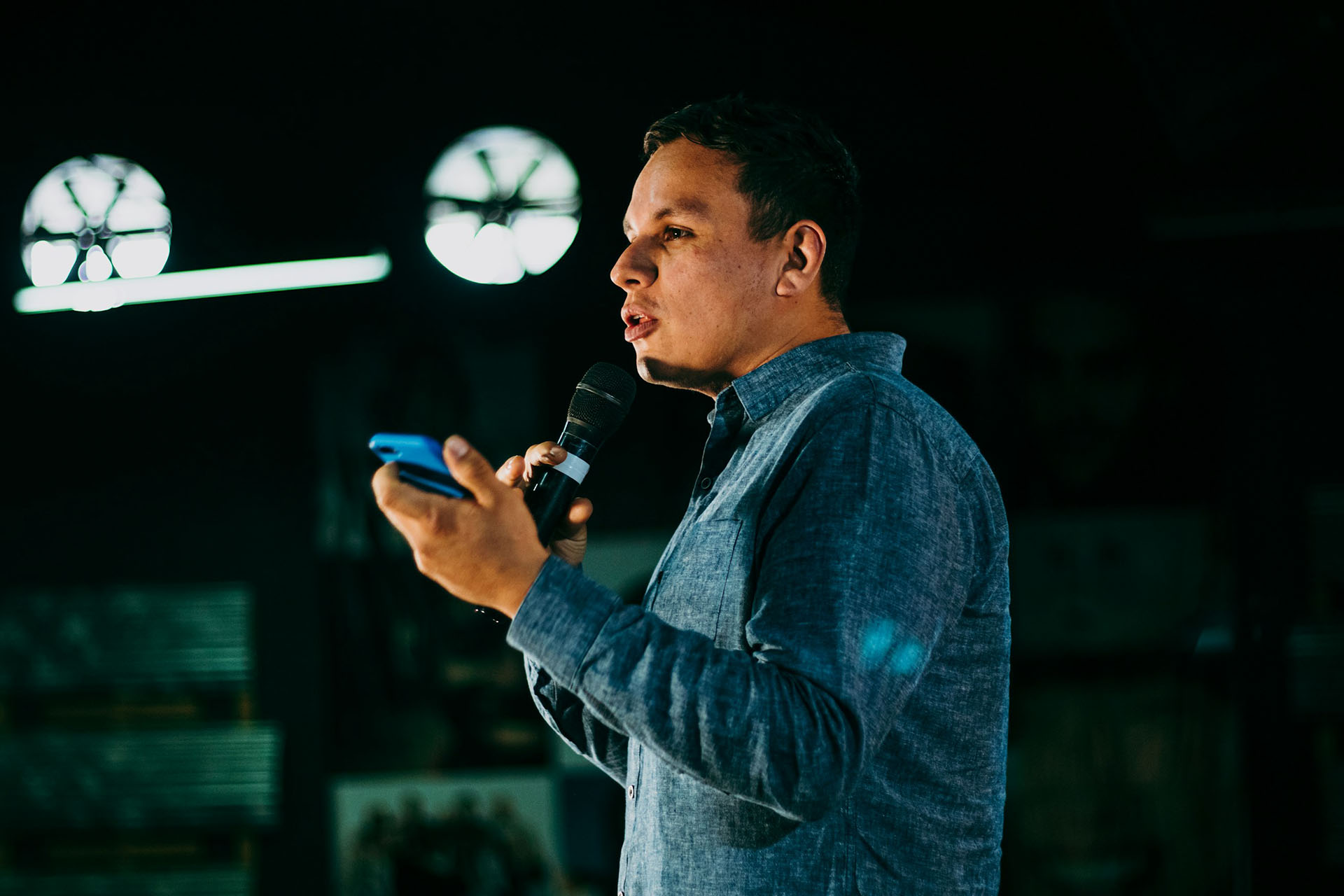
René shares the importance of loving our neighbors and practical ways to do so.
Transcript
This transcript was generated automatically. There may be errors. Refer to the video and/or audio for accuracy.
Well good morning everybody. Who's happy to be in church today? So good to see you this morning. My name is René, another one of the pastors here and I'm glad to be back with you. This summer I've been able to speak at churches and conferences here in California and Oregon and Missouri and elsewhere. And I just want to thank you for that.
In fact, you may not be aware, but most of our pastors here in the summer, especially, are asked to preach and teach and lead at other churches and conferences all over the place. And I really appreciate the value that this church places on that, that your staff is not just here for us, but we are here to support what God is doing all over the world. And specifically, I want to thank Mark Spurlock who filled in for me last weekend. Can we just give it up for Mark? He was there at the last minute.
If you weren't here last weekend, neither was I. I was at Hope Chapel on Maui. My good friend Ben, who's the senior pastor there, asked me to come over and help out after the Lahaina fire. The churches are just in the thick of the fire relief and he kind of texted me at the last minute and asked if I could kind of fill in for him for a few days.
As you know, and this brings back such memories of our own CZU fires, doesn't it? Over 2,000 structures were destroyed there, mostly homes. Over 100 people lost their lives and the churches are really engaged in the fire relief response. As we know here, it takes a while for the government bureaucracy to kind of get things going so that they can show up to help. And so initially, it's really just the Red Cross and the churches that are helping out.
And as good as the Red Cross is, they're wonderful, but their volunteers leave after a few weeks or months, but the churches are still there maintaining those relationships. So Ben asked if I could speak for him in their three weekend services. Hope Chapel is a wonderful church over there on Maui. And I just want you to see what I saw. I want to give you a little report because I feel like I served as your representative.
I was also able to volunteer in their distribution center. This is where they help people get food and get clothes and medicine and lodging and water and diapers and all kinds of necessities. Over 2,200 people have come in personally for help, many of them for more substantial needs like lodging. And I just want you to know while everybody is tired and they are grieving, yet also there's a real palpable spiritual revival that's happening there as well.
I was also able to speak at their beach baptism there earlier this week, actually on Monday morning. And I just want to show you this because I want you to sense the excitement. So many people are discovering faith in Jesus Christ. And many of these people that you'll see getting baptized just started attending Hope Chapel since the fires. I mean, this was a historic disaster, yet it has also brought together the community, brought many to faith in Jesus in historic ways too.
One of these men, this guy is named Zach. He's a relief worker from Oregon who flew in to volunteer. He came to Hope Church for the first time last weekend because he vaguely heard it was kind of into relief efforts. He told me he's been putting off commitment to Christ and he got baptized Monday morning. And the final woman, yeah, praise God, this final woman in the video is Michelle. Just look at her emotion when she comes up out of the water and let me tell you her story.
This is Michelle on the right and Michelle lost her home at all of her belongings in the fire. She still has her job though and this young woman is a co-worker of hers. And she said, "Michelle, you know, I attend a church called Hope Chapel and we are here for you. We can help you pay for gas. We can help you get lodging." And Michelle said, "I don't know. I feel a little bit awkward about asking for help and I'm not really religious." And she said, "Get in the car. We're going to Hope Chapel right now."
And so they went to Hope. Michelle got help. And she said, "You know, maybe I want to start attending this church." She's come to Hope Chapel for the last two weeks and last Monday morning she dedicated her life to Jesus and got baptized. So many of these stories and I just want to thank you again Twin Lakes Church for your part in this. So far we've been able to send over about $226,000 toward their fire relief fund.
And at the baptism last Monday morning I asked their executive pastor Jim Franks to describe what that means to him and what the last four weeks have felt like over there. Watch this. We didn't know that the Lord had prepared us for such a time as this and we are in our neighborhood. We are trying to be open to everyone but when these fires hit we just realized that the Lord was saying, "Be ready for those neighbors who you haven't even met yet that are going to be coming out and being a part and want to be a part of your family."
So as we opened up our donation center and then especially as we reached out to these churches on the west side, when I think about being a good neighbor, I think about these churches that just had so many members that were affected. They opened their doors even though they had so many who were had even lost their homes. And as they opened their doors, we said, "What are we going to do? We need to follow that example." And so we rushed in to be able to help them.
We sent a tent over to Citizen Church so that they could continue to do their service, serve meals, do everything that they were doing. But at the same time, open up our doors and so far we've had just so many folks come through. They are receiving care. They're receiving love from the church and they're going, "What is this hope that you have?" That is the story that we're getting.
I met a family last night and just very, very joyful. I could not believe that they had potentially lost everything. And they were holding this little child and I learned that they actually fled from the fire. Their home caught on fire. They fled from the fire. She was pregnant. They came out. They were living with someone who had just extended care to them. They had their baby in that home and they're holding this 11-day-old baby. And they said, "By the grace of God, we are here and we found our home church."
So Twin Lakes, you have extended generosity to us. We are extending generosity out to those who are now our new neighbors. And now what we've found is that people are finding a place to call home in a time of immense tragedy and uprootedness. And what we want to do is just allow them to find a place for hope and a place to call home. So God is really, really moving in powerful ways. And thank you for reaching out, being good neighbors yourself.
But I don't know if you know, did you notice the word that Jim kept using in that little 90-second clip? Things like he said, "In our neighborhood." And how the Lord told us we need to be ready for those neighbors that you haven't even met yet. And he said, "When I think about being a good neighbor," and we're extending generosity now to those who are our new neighbors. Say "neighbor" out loud with me. Neighbor. That's what it's all about.
This morning what we want to talk about is the art of neighboring. And listen, this is one of those weeks. Grab your message notes that look like this. And if you don't have them, you can download them on our app or at tlc.org/notes if you're watching online. This is one of those messages that I really want you to keep these notes. And I want to encourage you to keep referring to these throughout the fall season.
Because these aren't just notes for this sermon. What you see here is our game plan as a church. This is what we are here to do as a church. And here's why I want to talk about this right now. Let me kind of oaring at you again to what's coming up here at TLC. As Adrian said, next weekend is the big TLC and Aptos 50th anniversary celebration. As he said, we're going to have food. We're going to have a choir. I'm going to be preaching with Pastor Kraft. It's going to be a Zoom call from heaven. It's going to be fantastic. And invite your friends.
And then in two weeks we start our fall series, Explore God, about the top seven questions people have about faith. Like, how can I trust the Bible? How can I even believe God exists? What's the purpose of life? And as he said, we're doing this series with over 150 churches from Monterey to Marin. And that series is going to take us to Thanksgiving.
So as we lean into these exciting events this fall, I want us as a church to get ready spiritually, mentally. Why are we doing those things? What are we as a church all about? What is it that we are trying to do here? Well, it's very simple. We're here to do only two things. The two things that Jesus told us to do.
When Jesus was asked, what is the most important command of the Bible, here's what he answered. Mark 12:30, Jesus said, and let's read this out loud together church, "Love the Lord your God with all your heart and with all your soul and with all your mind and with all your strength." Now stop there for just a second. I know from my own personal experience when you know the love of God, and I'm talking about basking in it, rejoicing in it, experiencing it, it changes your life, it changes your perspective, it changes your self image, it changes your peace level, it changes your faith from being just some rules-based religion into really being a relationship when you love God because you realize he first loved you by sending Jesus Christ to die on the cross to forgive your sin debt.
Man, that just changes everything. And honestly, that's one of the reasons for our Explore God series, not just to learn the answers to questions about God, but to learn to know and experience and love God. So important. But Jesus isn't done. He says the second is this, and let's read this out loud together. Ready? "Love your neighbor as yourself. There is no commandment greater than these, these two."
Now I want you to imagine, what would happen if we got better at the two things Jesus said mattered most? What would happen if when people thought of Christians, like the first two things that popped into their minds was, "Oh yeah, Christians, those are the people who love God so much, they're all about love." And man, if you need to be loved, you've got to go to the Christians because they love people so much. Love God, love people, that's what they're all about. What would happen if that was kind of our brand, so to speak?
Well, I know it would happen because Jesus said it would draw people to faith in Him. And that is precisely the reason for the revival in Maui right now. People are going, "Man, that church is like Hope Chapel," and all the churches on Maui are just hitting it out of the park right now. They love people. And when you go into there, you just sense a spirit of love and peace.
Well, here's the problem. That is not what Christians in general in America are currently kind of known for. Why not? We get so easily distracted. And I have kind of a theory here. In church, we tend to talk at least a little bit about the first command, "Love the Lord your God." Now, we tend to make it very theoretical and esoteric, but we at least cover this. Yet, we hardly ever really study the second command to love your neighbor.
I've got to tell you something. I went to seminary for my master's degree, a grad school in theology, and I had a ton of courses on knowing God and His word. Do you know how many courses I had on loving my neighbor? Zero. Even though Jesus says, "Man, that is in the top two." In fact, they go together. He says, "The way you show you love me is by loving one another." And I've got to tell you, Jesus just didn't say this off the top of his head once. This is apparently a phrase he said a lot because it's in the Gospel of Mark, it's in the Gospel of Matthew, it's in the Gospel of Luke, it's repeated in Galatians, other people quote him saying this.
And so that's the command I want to really dig into today. And that's the command that I want us to be obeying as we lean into all these fall events because for some reason, we try to push back on this second command, right? Love God, absolutely. I love God. Love your neighbors. "Oh, I don't know. I'm busy. My neighbors are weird. What do you mean, love my neighbors? Which neighbors?" Those neighbors? And people push back on this in Jesus' day too.
In fact, one time, a guy walks up to Jesus and says, "What do I need to do to inherit eternal life?" And that question is always kind of funny to me because it's like, "What's the bare minimum because I don't want to do more than I have to? What do I need to do?" And Jesus says, "Well, what do you think?" And the man quotes Jesus. He says, "Well, love the Lord your God with all your heart, soul, mind, and strength, and love your neighbor as yourself." Like you always go around saying Jesus and those great commands and Leviticus, and Jesus says, "You have answered correctly, 'Do this and you will live.'
Now, this is a very important phrase. Can you say this out loud with me? "Do this and you will live." I don't think Jesus is just talking about eternal life in heaven someday. I think he's saying, "When you love your neighbor, when you do the art of neighboring well, it's just good for you." It kind of reminds me of a story that Malcolm Gladwell writes about Rosetta, Pennsylvania. This is a vintage photo of a Rosetta restaurant on a typical night. It's a real place. It's not a rich place, mostly poorer Italian immigrants for several generations.
Yet, the people in Rosetta, Pennsylvania for generations, have been remarkably healthy. Physicians and researchers talk about the Rosetta effect. Because it's weird. People there got 41% of their calories from fat, smoked heavily, struggled with obesity, and yet, hardly anyone had heart disease. No suicides, no alcoholism, no drug addiction, very little crime. The people were dying of old age. That's it.
As Malcolm Gladwell writes, "What researchers slowly realized was that the secret of Rosetta wasn't diet or exercise or genetics. It was Rosetta itself." They started looking at how the people visited each other, stopping to chat in Italian on the street, cooking for each other in their backyards. He says, "They learned about the extended family that underlay the town's structure. They saw how many homes had three generations living under one roof. They saw how the townspeople went to mass together every week and the calming and unifying effect of the church." What were they saying? "Do this and you will live."
So, the guy talking to Jesus here in Luke 10, does he say it? "Great, makes total sense. I want to live now and forever. I'm going to love my neighbor." No, not a chance. Next verse, "But he wanted to justify himself." Clearly, he doesn't want to do this. "So he asked Jesus, 'And who is my neighbor?'" Because in those days, just like today, major political divisions were tearing society apart. People were asking, "Are you with the Romans? Are you with the Jewish nationalists? Are you of the Pharisee sect? Are you the Sadducee sect? Where do you stand on the rail trail debate?" On and on and on these divisions, you know, we're tearing people apart.
So, Jesus tells the parable of the Good Samaritan. That's the context for this parable. Do you remember the story? A man is attacked by thieves, a Jewish man, and he's left barely alive and a priest walks by. So, it's good news, right? The man's saved. No, the priest walks on past. And then a religious worker walks past, "Good news, the man's saved." No, he walks on past, too. And then a Samaritan sees him. Now, in those days, the Samaritans were a despised minority, an ethnic and a religious, a political minority.
In other words, the Samaritan probably would have been mistreated by the very man who was lying there dead if that man hadn't been lying there dead, because the Samaritans had been mistreated and attacked for hundreds of years by their Jewish cousins in that time in history. But the Samaritan doesn't look down and say, "You deserve this, you jerk." He has compassion. He gives him first aid. He takes care of the guy. And Jesus says to the man who was questioning him, "Which one of these do you say was this man's neighbor?"
And it's interesting because the man in Luke 10 can't even bring himself to say the word "Samaritan." And so he says, "The one who had mercy on him." And Jesus says, "Go and do likewise." In other words, go and see the world around you as your neighbor. Think of how that perspective would change your life. Just for a minute, think of all the people you encounter in a typical day, the barista over at Loft. Jesus is saying, "Look at them and think, 'Neighbor.'" The store clerk over at Staff of Life, "Neighbor." Your own coworkers or student friends or teachers, "Neighbors." Now, you want to know the hardest one of all? Your own weirdo neighbor. Think, "No, neighbor."
And by the way, I just want to say if you're going, "Yeah, you know what? I'm okay. I don't think we really have a weird neighbor in my neighborhood." And guess what? It's probably you. But anyway, but think of how this would change all of your interactions. You'd ask them about themselves. "Hey, neighbor." You would serve them. "What do you need, neighbor?" So Jesus says to do it over and over and over again. We often overlook it, but it's a command of God.
So what I want to do for the rest of the time together is just say, "How do we do this practically?" In our culture, especially since COVID and everything, we're kind of out of practice on this neighboring thing. And so let's look at five practices of neighboring. And as I say, I would love for this to be kind of our playbook for the fall here at Twin Lakes Church. I adapted all of these from a great book called "The Neighboring Church." And again, keep these notes with you. Let's make this our game plan.
And I tried to make these steps very memorable. They are stay, pray, play, obey, and say. First, stay. Wherever you find yourself, just put down roots, and let's love our neighbors by getting to know them. To love them, you have to know them. Now, the problem is right now, most people in America say they only know some or even none of their neighbors.
So flip over to page two of your notes. I put a chart there. If this is you, then -- and whether you live in a house, an apartment, a mobile home, you're camping, what are the names of the people who live around you across the street, down the street, to the left, to the right of your house? Homework. Write in their names. And then anything else that you learn about them. And keep this chart on your fridge or in your car or somewhere where you see it. And as you get to know more about your neighbors, write that in too. What do they do? What are the kids' names? Because we tend to forget those things, right?
Let's love our neighbors by first getting to know them and then once you know them, pray. Pray for them by name. Let's love our neighbors by praying for them. Let me show you one reason to do this. That really changes your perspective on the world. Deep in our brains is something called the reticular activating system. Everybody's got one. Now, what the reticular activating system is about is this. You get so much stimulus all the time. Sights and sounds and smells and sensations that the RAS helps you focus on what's important to you and filter out everything else.
And it really changes what you see and perceive. And we've all experienced this. For example, if you get into bird watching, all of a sudden you're seeing birds everywhere, right? That you never noticed before. You're thinking about a car. You're noticing cars everywhere thanks to the RAS. Well, when you begin to pray for your neighbors, you start to see them differently. God opens your eyes to them. You see them with a different lens because you're praying for them daily by name.
I think this is one of the reasons Jesus says, "But I tell you, love your enemies." And sometimes your neighbors and your enemies are the exact same person. And pray for those who persecute you, right? When you're praying for someone, you start to see them as real people with real needs. And that's when love and ministry can start. So stay, get to know them, pray for them daily by name, and then play. Let's love our neighbors by showing them hospitality.
The Bible's pretty clear on this, like Romans 12:13, practice hospitality. Invite them over. Now, just this idea is stressing some of you out because you think to have people over, I have to have like a Martha Stewart perfect home, right? Well, I heard a term that I love that I shared with some of you before, "Scruffy hospitality." Say that out loud with me, "Scruffy hospitality." And that means don't worry about a perfect house. You're not trying to get your neighbors to envy you. You're trying to get them to befriend you, right?
But there's a big challenge here. The word "hospitality" in that verse means more than just be nice to your friends. The original Greek word, "phyloxenos," comes from the word "phylo," which means brotherly love, and the word "xenos," which means stranger, as in the English word xenophobic, right? Fear of foreigners or strangers. Well, what hospitality literally means is to be the opposite of a xenophobe. Love the stranger.
So if you're honest, who seems a little bit strange to you? Who in your neighborhood do you not want to befriend? I'm going to scandalize some of you with what I'm about to show you next. I will always remember ABC 7 in San Francisco. It did a story back in 2020 during the election, remember that, about two neighbors, Tasha Hancock and Marnie Litton. Litton, a Republican Hancock, a Democrat. And they are friends, and they daily post on all the socials about their friendship.
Why? We're both mothers, Hancock says. This is to demonstrate to our kids that you can have different opinions, you can look different and still respect and love one another. Watch this. It's all about loving thy neighbor. Now, one of the reasons that I remember this new story is because it was held up as being so unusual. It's so, it strikes me, you know how they put that lighthearted story in the last slot of the local news every single night, kind of to end the news with a little frothy thing, and it's always something like, and finally in the news tonight, Marvin Fleck of Blaine, Minnesota has trained his own dog to co-pilot his Cessna. Bill Blatt says the story. It's always something weird, right, like that.
Well, now this is apparently on that level. Two people who disagree politically and are friends, what zany eccentrics! They need to be put on the news. But this is what our culture has come to. People really don't seem to know how to be in relationship with people who don't check all the same exact boxes they check. Yet, that's what hospitality biblically means. As Christians, we're called to love Philo the stranger, Zenos.
So stay, get to know them, pray, play, and fourth, obey the specific command of Scripture to love our neighbors by meeting their needs. Like the Bible says, if someone has enough money to live well and sees a brother or sister in need but shows no compassion, how could God's love be in that person? Check this out. I read a story this week of a New Jersey couple, Adam and Kristen Polhemas. So here's the story. They moved next door to a house that was the neighborhood I saw. Peeling paint, overgrown yard, abandoned car, the owner never emerged, faced $1,000 a day for fines.
Adam says, "Until my wife and I moved in, no neighbors had ever had a conversation with the owner." But Adam and Kristen looked for chances to say hi. They discovered her name was Anne Glancy. Anne they discovered when they got into daily conversations with her, she had no money to pay for repairs. She was a widow. She had no family to help, no friends to help. So Adam, who is a state trooper, says, "Anne, we got your back." And they got friends from their church to fix up her house. They spent the whole summer landscaping, donating the car, scraping, priming, painting. They transformed the home. And they transformed Anne.
This is Adam and Kristen and their friends and there is Anne right there. People magazine says, "The generosity has transformed the once solitary Glancy, who served the cruiser grandfather's carrot cake recipe and homemade orange juice." And now she continues to interact with her widening social circle of other neighbors. Anne says of her big hearted neighbors, "They are, what? Good Samaritans." You know, that's why every fall we always do our major food drive for Second Harvest Food Bank, because people see us then as good neighbors and this is what Jesus said we're supposed to be best at.
So what's our game plan, so to speak? We stay, pray, play, obey, and then finally say, "Let's love our neighbors by sharing Christ with them." Now, same here going, "Oh no, sharing Christ, awkward?" Not necessarily. Look at how the very earliest Christians did it, like Paul who says, "Because we loved you so much." We were delighted to share with you not only the gospel but our lives as well. When you learn to share your life with your neighbor, part of your life is your life story and part of your life story is your faith story. And it just begins to come up naturally.
You know, I really think that we've looked at sharing our faith all wrong. This might help you. You are not a sales rep for God. That's the way we think of it sometimes, right? You are a satisfied customer. Do you see the difference? A sales rep says, "Buy this car and you'll love it." A satisfied customer says, "Oh man, I have this car and I love it." There's a big difference. Just be authentic. Be ready to tell people your story when asked, how Jesus saved you, changed you, means to you.
Check this out. I just read a new review of a new book. It's called "The Great De-Churching." Who's leaving, why they're going, and what it will take to bring them back. And the reviewer said this, "While every story is different, I was struck by how often the researchers said most people would return if they found, first, new friends in a church and second, if someone would simply ask them to attend." Believe it or not, there's a ton of people around you who don't attend church and aren't against it. They realize that actually a healthy church could be fun and would be a great find in life. And they're open to an invitation from a friend.
So let's stay, pray, play, obey, and say, "And obviously we don't do this, you know, so that our neighbors will become Christians. We do this because we're Christians and we're called to do this." Now, this all seems pretty easy. Why don't we do it? Two barriers, first time. Obviously we're just so busy, me included. But you've seen the illustration of the three buckets, probably. One is nearly filled with sand, one with water, one with big rocks. And the challenge is to get all of this in one single bucket. Seems impossible, but it can be done if you put the rocks in first, and then the sand to fill in the crevices, and then the water to soak into the sand.
You fit into your schedule first the things that matter most. And Jesus keeps saying, "What are the two big rocks?" He says, "Make sure to get these in your bucket. What are they? Love God, love people. Love God, love your neighbors." So you put those in first and everything else fills around those two. And I'm preaching to myself here because I tend to get over-scheduled. I personally need to take a hard inventory of my own life and create some time for these friendships with my neighbors to happen.
But then there's a second obstacle besides time, and that's just fear. Our country's so divided. Social media politics are dehumanizing. People on the other side of any issue, pick any issue, and the other people are just weirdos. It's so easy to think my neighbors are like aliens, right? Just because they're Republicans or Democrats or whatever, you are not. But remember, Philo Zenos, loving the stranger to use, is actually a command. So let's get over these obstacles if they keep you from obeying Jesus.
Now, you might be thinking, "Great René, I'm in!" Well, we made it super easy for you to do it today, to put the big rocks in the bucket first. You can sign up to join one of those Explore God small groups. We made it easy, tlc.org/smallgroups. There's also a table in the corner of the lobby today. Second, serve your neighbors by volunteering through Connect Expo in the lobby today. If you've been thinking, "Yeah, I want to serve somewhere, but I don't know how to get plugged in." Today is your day.
This is something we do every fall here at TLC. We have 19 ministries out in the lobby today, ranging from, "We just need somebody with a pickup truck once a month," to, "We need a couple to foster a child," and everything in between. And what I did is, before church, I ran around in the lobby, got a few people to tell me what they are there for. These are people that you can meet at the tables. This is just a sample of what's out there today. Watch this.
Hi there. My name is Delilah Casero. I'm a social worker with the Santa Cruz County, and we're looking for families wanting to take in kids ages 8 to 17. If you're interested, come on and see me. Part of our ministry to the end house is, we need people who have trucks who can tow our mobile laundry or shower units. It's only once a month. Let's say you don't like to do that. We need those who just hang out with the folks who come and use the service or just do laundry at the end of the day.
Hi, my name is Ashley. Hi, my name is Ricky, and we're looking for English as a second language teachers to help out with TLC and Español Spanish speakers. Hi, do you love books and do you love talking to people? Come and help us in the bookstore. Homemade for helping people with chores at home that need to be done, and driving angels that take people to appointments.
So come and see me. Our patients are on their last few days or months, time of their license, so just somebody to sit with them, talk to them, read a book, pray, hold their hands. That's all we need for them right now. If you're interested in anything video, audio, anything media, we need your help. We need camera operators, sound board operators, all of that stuff. Meet us in the lobby at the AV Team booth.
We are looking for cooks and people who want to deliver home cooked meals to our neighbors anywhere in Santa Cruz County. And these are our neighbors maybe coming out of the hospital, someone who is elderly, anybody who loves to cook or would want to deliver the meals. If you're that person, come and see me in the lobby. Hello Twin Lakes Church. This is Miss Yolanda, and we are looking for people just like you to come help us love and disciple these kids every other week, one time a month, every other month. You let us know. We would love to have your help. Come see me in the lobby today. Bye.
You can tell why I put Miss Yolanda last, because nobody could follow that energy, right? So listen, there's a map on the back of your bulletin showing where everybody is, and there's a list of the ministries there. Take some time today. Go out to one of those ministries. That's just a sample. And listen, I want you to know, if you sign up to help at one of those ministries and to volunteer, what you're doing is you're taking them for a test drive. They're not going to go, "Now you are locked in for life." Just check it out, try it out, and see if you like it.
And then finally, when you go home today, fill in that neighbor chart. And put up these notes somewhere. And let's begin these five steps in your own neighborhood as we start this fall series. Listen, what would happen if we got better at the two things Jesus said mattered most? I think what would happen is something like Michelle and her friend. People would find a friend, get help, and some will find eternal life. Let's pray together.
Heavenly Father, may TLC just be known as a church that loves God and loves people. I think it is. Help us to keep getting better at that, Lord. And thank you for first loving us through Jesus. And Lord, I want to pray for those who just need to know that they're loved today. They came here, they just need to know they're loved. May they know your love. They're loved by Jesus. May they receive the love of Jesus Christ, our Savior. And it's in His name that we pray. Amen.
Sermons
No More Sermons in Series
Join us this Sunday at Twin Lakes Church for authentic community, powerful worship, and a place to belong.