Ready Set Go
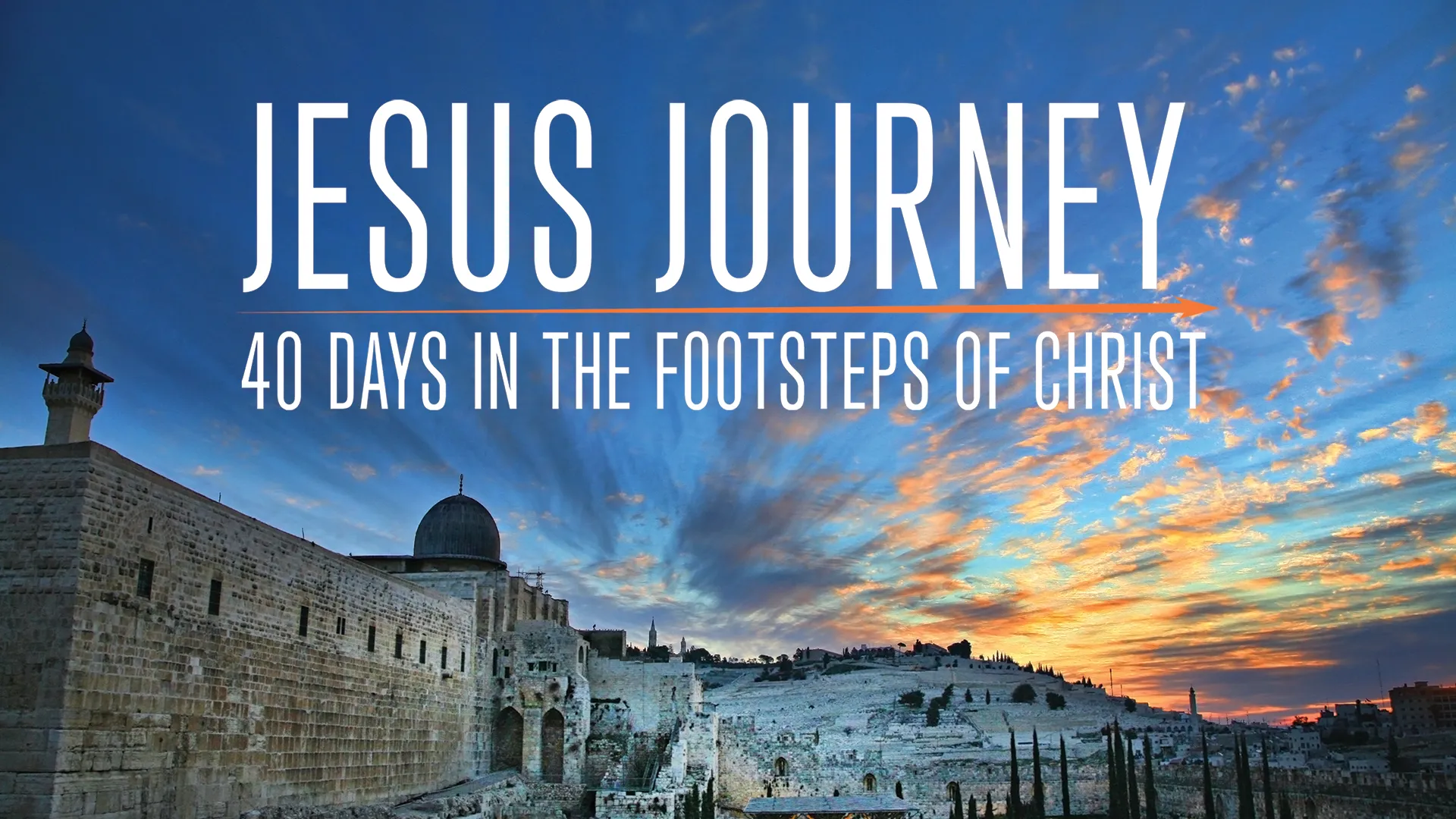
Jesus calls us to follow Him, no matter our past or doubts.
Transcripción
This transcript was generated automatically. There may be errors. Refer to the video and/or audio for accuracy.
Let me reintroduce myself to you if you came in a little bit later this morning. My name is René. I'm one of the pastors here at TLC and I just want to mention that my oldest son got married this weekend. I'm so stoked! Yeah! I'm so happy. I gotta tell you I've been feeling just like high as a kite this week and I just feel like dancing, doing a Gangnam Style up here on stage or something because it's crazy!
Check out the ceremony. It was right here at Twin Lakes. Mark Sperlak just did a masterpiece of a job. It was such a beautiful time for Lauria and myself. The whole staff came over. We partied. Some of us like Adrian danced till he dropped and it was a lot of fun. Kind of an emotional time for me as you can imagine. How many of you have seen your children married off? Can I see a show of hands? Yes, so I was going through this whole emotional time thinking he's out of the nest. He's out of the nest now and many of you have come to me and said they'll be back. So all right, that makes me feel a little bit better, but this is our three kids dressed in black and in white. There are the newest addition to our family, our daughter-in-law Kelly Malone.
They both grew up here at church together and here's how I kind of knew that she was meant for my son. Guess what Kelly's middle name is? Yeah, it's René, so there's another René Schlepfer. Weirdly, guess what my middle name is? Kelly. No, just kidding about that. That's not true. But I honestly I think because I just watched one of our little ones leave the nest. I'm just particularly emotionally sensitive right now to any story about little ones growing up.
True story, I went to see Finding Nemo in 3D about a week ago and I was literally weeping in the theater at a cartoon. During the credits people saw me crying and I said, "He has to learn how to let Nemo go." Ruined, but I'm so loving this whole phase of seeing your kids kind of launch out and try new adventurous things. That's probably why I love the video clip I'm gonna show you. This is a clip I found on YouTube of a little girl about to go on her first ever ski jump.
Check this out. I'll be fine. I'll do it. Here goes something, I guess. Okay, you can do this. I'm gonna jump. Whoa, my ski's slipping off. Remember, never snowflow, okay? No snowflow. Keep it straight and you'll be fine. Okay. Do you go faster on the end run? A little bit. A little bit? Yeah. Is it any steeper, do you think? Not much? Same steepness, it's just longer. Just longer. Just longer. Just a bigger 20, that's all. Yep. It's a bigger 20. Go ahead. You got it. I got it. It's fine. Yeah, it's fine. Okay. Here. As long as you wait, you'll be more scared. Aye. Go.
Yeah! Yeah! Just the suspense at the top of the first time freaks me out. That's the only thing, it's so fun! Huh? 60 seems like nothing now. Don't you love that? Yeah! How many of you have kind of a fear of heights? And you are wishing you had not come to church today, right? Okay. But you know what, I was watching that video and I thought to myself, I bet that sometimes Jesus feels a little bit like the Father in that video. He felt like that maybe when he called the first disciples and when he calls you and me.
He calls us to follow him and we're up at the top of the ski jump and we're going, "I don't know, I don't think I can do it. I think you're looking for somebody else. I don't have the skills necessary or the bravery." And Jesus is saying, "Come on, you can do it. Ready, set, go!" And that's what we want to talk about this morning. The moment that Jesus Christ called his very first disciples to follow him and the adventure begins.
Grab your message notes that look like this. The bulletins that were handed to you when you came in. We are in week two of a series for the fall we call Jesus Journey. It's all about rediscovering the first century world of Jesus Christ. So you can understand Jesus Christ better, right? Now, part of this is a book that we put together with all kinds of pictures and maps in it. It's called Jesus Journey. You can pick it up right at the info desk in the lobby. And we're asking a donation of $10 to help cover the cost.
So if you don't have $10 today, I do not want you to leave without one of those books. If you don't have one already, grab a book. There's 40 Daily Devotions, Jesus Journey, 40 Days in the Footsteps of Christ. And those tie into a website, and that ties into small group Bible studies that are even as I speak taking place all around the country. We've got these small groups going on and all around our county and Santa Clara County and Monterey Bay County. So get into a small group. Get into this Jesus Journey to learn more about the world of Jesus Christ.
Now, for example, this morning we're going to be in Luke chapter 5. You might want to turn there if you have your Bibles with you. There's also pew Bibles and the pews right in front of you. Luke chapter 5. Here's the setting for Luke chapter 5. We've heard these verses before, many of us who've spent any time in church. But probably they've been in this blurry world that has been indistinct. But these verses took place at a real time in history, at a real place on the planet. And I want to help you picture it a little bit.
The Bible says that Jesus calls His very first disciples around the Sea of Galilee. What did that look like and feel like? Well, we were there in April. Took some pics and video I want to show you. Picture a large freshwater lake and it is fed mostly by the Jordan River as the upper Jordan carries ice-cold snow melt water from Mount Hermon. Now Mount Hermon is not just one mountain, it's really a mountain range that is nearly 10,000 feet high in Israel. You probably don't picture this when you think of the land of Jesus, do you? It has snow year round. It's got a ski resort up there that is open almost year round.
And the snow melt water runs into the upper Jordan just gushing down these mountain streams. This too is probably a lot different than the Israel of your imagination, right? I never saw a flannel graph lesson of Jesus teaching beside a thundering waterfall. But that's what the land north of the Sea of Galilee looks like. And then these mountain streams flow with their clear cold water into the north part of the lake, the Sea of Galilee. The north part of the Sea of Galilee is an area bordered by the towns of Migdall, Capernaum, Corazin, and Bethsaida. These were bustling towns in the time of Christ.
This is called by historians the Evangelical Triangle. Now this was a pretty small area. To give you a sense of scale, I want you to imagine a triangle, an imaginary triangle, going from Santa Cruz to Aptos out to Corraletus and then back to Santa Cruz again. That's not a very big area. And yet this is the size of the Evangelical Triangle. Why do they call it that? Because most of Jesus Christ's ministry happens in this small area. Now he did occasionally travel outside of this. Of course, as a child he looked down in Egypt. As an adult he went up to what is modern day Lebanon. He went down to Jerusalem. But this area was his headquarters.
Eighteen of the thirty-three recorded miracles of Christ happen here in this small area. All twelve of the disciples are from here with the possible exception of Judas. And what's this place like? Well because of all the water, this place is beautiful. It looks a lot like coastal northern California. In fact, if I knocked you unconscious, I wouldn't do this but just theoretically, if I knocked you unconscious and you regained consciousness without knowing where you were in this part of the world, I almost can guarantee you that you would think you were in the Salinas Valley or the Napa Valley, some agricultural coastal California area.
So I just want to get you a picture of how lush and beautiful this place is, even though the Sea of Galilee was and still is notorious for its volatile weather, its sudden storms. Why? Well, you've got that cold air coming down from Mount Herman in the north, channeled into the Jordan River Valley. That flows into the Sea of Galilee. And from the south, you've got the blistering, superheated cooking air come from the below sea level Death Valley-like Judean wilderness. That goes up through the Jordan River Valley. And you've got that super cold air, that superheated air, meeting over a body of water. And that is a recipe for weird weather. It still happens to this day.
In fact, in the 1930s, a storm basically destroyed the lakeside city of Tiberius. Tsunami-sized waves crashed into the city and overwhelmed it entirely. Another similar storm happened in the 1980s. And of course, these sudden, violent storms become a part of the Jesus journey. Now, even though it's got all these storms, and it can be a treacherous place to boat, it is an irresistible spot for fishermen. Why? Primarily because of a very unique geological phenomenon at this spot, Tabga. This is just a couple of miles south of Capernaum. And there were seven freshwater underground springs here that watered the land and flowed into the lake and made it an oasis.
You see how green this spot is, even in the summer, compared to the brown hills around it. That's because of the springs here. And check this out. The water from these warm geothermal springs as it leaks into the lake is, of course, warmer than the cold snow-melt lake water. And so there's a lot more algae, a lot more water plants. And because there's more algae, what else is there more of? Right there in the water there. There's more fish because there's more for them to eat. And because there's more fish right there, what else is there more of? There's fishermen. That's right.
In fact, they don't even have to use bait there. They just drop their nets, and there's so many fish who are gathered around where the warm springs flow into the lake. That's the only spot of the lake where this happens. This is the kind of the headquarters for the ancient fishing industry there. All the fishermen would gather around the springs, dropping their nets. Schools of fish would just swim right into the nets and get caught if the nets were dropped in the right spot. And they have found other intriguing remains of this profession.
In fact, on a misty winter morning, January 24th, 1986, two fishermen brothers went out for an early morning sail, and the lake water was a little low because of a recent drought. And they spotted sticking out of the mud near the lake shore, something that just made them catch their breath. They couldn't believe their eyes. What they saw was this. It turns out the brothers had found an intact wooden fishing boat from the time of Jesus Christ. This is a 2,000-year-old wooden fishing boat that was found sunk in the mud on the Sea of Galilee, right where it says Jesus and his disciples fished.
In fact, this is probably the very kind of boat that the disciples and Jesus traveled. And of course, it wasn't probably the very boat, but it was a boat very much like this that was on the scene when we pick up our story this morning. Look at Luke chapter 5 starting in verse 1. It says, "One day, as Jesus was preaching on the shore of the Sea of Galilee," and now you can picture this beautiful area better, "great crowds pressed in." And I'll just add this. Josephus tells us that the smallest of the towns in this area had 10,000 people. That's twice the size of Aptos. And so this was a crowded place.
It wasn't the kind of rural, empty countryside that you might picture too. There's a lot of people here. And so these great crowds pressed in, and Jesus noticed two empty boats. Now you can picture them better too. "At the water's edge for the fishermen had left them and were washing their nets. Stepping into one, Jesus asked Simon, its owner, to push it out into the water. And so he sat in the boat, and he taught the crowds from there." First of all, he's got kind of a crowd control moat going on, right? But also, have you ever been out on a boat and noticed that you can hear conversations and music from another boat that's like 100 yards away because water travels so well, sound travels so well over water?
Well, that's another reason I think that Jesus pushes out the boat a little ways from shore and he's teaching all these crowds on the sloped bank. It's a natural amplifier. Well, when he had finished speaking, he says to Simon, "Now go out where it's deeper and let down your nets to catch some fish." Master, Simon replied, "Now he's not a disciple yet." We know he knew who Jesus was because Jesus had already healed his mother-in-law of a fever, but he's not a disciple yet. Master, Simon replied, "We worked hard all last night. We didn't catch a thing, but if you say so, I'll let down the nets again."
And this time their nets were so full of fish they began to tear. Simon Peter fell to his knees and said, "Oh Lord, please leave me. I'm too much of a sinner to be around you." Fascinating reaction. We'll talk about it in a minute. Jesus replied to Simon, "Don't be afraid. From now on, you'll be fishing for people." And as soon as they landed, they left everything and followed Jesus. I love this passage because I want to show you how this teaches. Jesus calls the rejects of society. You say rejects? Yeah, because this whole scene is radically counter-cultural.
Let me explain to you how disciples were normally chosen by the rabbis of this time. There was formal education for boys, not girls, of course, just for boys, and your formal education here in our culture it ends at 18, right, with high school. In that culture it ended at 15. And so there was something like college that you could apply to go to. The best and the brightest boys applied to study with a rabbi. In other words, a rabbi did not go out and pick you. A rabbi would never walk around and pick his students. You went to the best rabbi schools and you were interviewed and you applied for a position as a disciple or a student of a rabbi.
And this would be very prestigious because if you got into rabbi school, then you studied until you were 30. And then at 30 you could become a rabbi yourself. And in that culture that was just the height of prestige. This is what every parent wanted for their kids. But if you weren't chosen, then men had to enter the trades by the time they were 18 years old. Now some of the trades were very prestigious, like being a mosaic designer or being a builder. But you know what historians tell us? We're the two trades that were the least prestigious. Shepherd and what do you think the other one was? Fishermen, that's right.
This is an important detail because when Jesus calls these fishermen, they'd already been rejected. Who knows how many times? By applying to a rabbi to study with him. They had already been deemed not good enough. They hadn't made the cut. They weren't considered sharp enough to get picked. And then Jesus, the rabbi of all rabbis, as it turns out, does something totally counter-cultural, doesn't wait for somebody to apply for the gig. He goes out and he doesn't see people who are acting like cool junior rabbis. He somehow sees people who are doing all kinds of other seemingly unrelated things. And he says, "Okay, I pick you, and I pick you and you, and I pick you to be my disciples."
Here's what I personally love about this. Sometimes I feel outgunned, under-qualified to be a pastor. And I think, "Man, there's so many people that are so much sharper than I am and so much better people, better fathers, husbands, better people, better Christians than I am." And maybe you feel that way too sometimes when you think about you being a follower of Jesus. And you feel like, "How could God really want me when I know how unqualified I am?" In fact, maybe you've even been told, "I reject you" by somebody really important to you. Maybe you've been told, "I'm sorry, not this time." Maybe it was a boyfriend or a girlfriend. Maybe it was a husband or a wife. Maybe it was an employer or a school admissions counselor or even a ministry leader who said to you at some point in the past, "You know what? I do not pick you, not anymore." And that scar is still with you.
And sometimes if you're honest, you think, "If they didn't want me, why should I think Jesus would want me?" Maybe sometimes like me you get that feeling you used to have when teams got picked in school. I wasn't like the world's greatest athlete, but teams would get picked and I'd be left alone with a couple of other nerdy kids like me standing on the asphalt and teams would be arguing over who had to get René right. And maybe you feel like as an adult now, the teams all around you are picked and no one picked you. And maybe even this morning when I showed you the pictures of my son's wonderful wedding, that hurt a little bit because you feel like all the couples are picked. All the families are picked.
Maybe you even here at church you feel like, "I don't know how much longer I can stand it because it feels like all the cool people at church are all picked. They're full up on their friend list and I feel like I don't fit in." Well, you've got to hear this. You are exactly the person to whom Jesus Christ comes and says, "But I pick you. I pick you to change the world. I pick you to be part of up there coming down here. I pick you to join me in building the kingdom of God." You're the kind of person Jesus picks as his very first disciples. Man, that's powerful stuff and it gets even more amazing.
Check this out because next we see that Jesus calls the despised. Look at later in the same chapter in Luke 5 it says, "After this, Jesus went out and saw a tax collector by the name of Levi." Levi's his Hebrew name. He's also called Matthew or Matthias. That's his Greek name and he's sitting at his tax booth. Now, in those days, tax collectors were extremely despised. This may seem hard to imagine in our enlightened era, but in those days people didn't like paying taxes, right?
In fact, here's a great little Roman era engraving of an ancient Roman tax collector. You see what's happening here? People are standing in line and he is picking out stuff for himself to tax and then they are leaving him after he's picked this stuff out. They don't look too happy about this, do they, right? Why? Well, in Roman days, the Roman government outsourced the license to tax to whoever from the local population gave them the highest bid. And so Levi had apparently given the Roman government the highest bid and so he had the right to be the tax collector.
And what they would do is the Romans would say, "All right, here's what we figure we need to get in terms of taxes from your county and the way you will earn your wages is you tack on kind of the retail tax onto our wholesale tax and you can keep whatever you can collect." And so people like Levi would go out and they would just try to extort as much money as possible from people and there were a lot of opportunities for them to do this. Here's some of the taxes in the Roman Empire. There was a ground tax. This is incredible. You grew something out of your own ground that you owned, harvested it yourself and ate it yourself and never ever even went to market with it. Levi could still tax you on it. Like your own garden tomatoes, "Tax please."
There was also a spot tax. A guy like Levi could stop you at any moment, like in that Roman engraving, and just could ask you to open up whatever satchel or cart that you had with you and he could invoke an instant tax on it. There was also a living tax. Believe it or not, if you were simply alive and between the ages of 14 and 65, this guy Levi could walk up to you and tax you for being alive. I mean, this would be one annoying guy to see coming down the road toward you. Let's be frank, are there any people in your life that you don't like to see coming? Are you thinking of them right now? Are they sitting next to you right now? Don't raise your hands.
Let's face it, we all see people, we see them coming down the hallway and it's like, "How can I get away? Can I get into another room?" Because they're sort of extra grace required people or something. Well, Levi and any tax collector would have been the ultimate example of this. Nobody wants to be around him because he's going to go, "How's it going? Good. Tax for living, please." He's despised. Nobody wants to be around him. And then Jesus walks up to this guy and he says, "You, follow me. I want to be around you." Levi says, "What?" And he leaves everything and follows him.
Now, the story even gets better. I'll just kind of throw this in. It's not in your notes, but in the next couple of verses in Luke 5, it says, "Levi is so excited he throws a party for Jesus, this is the only thing he knows how to do." And so he invites the only people who will be around him, which are other tax collectors, and frankly, other outlaws and people the tax collectors hire to be their friends, also known as prostitutes. And so there's all these prostitutes. Luke describes them as sinners and tax collectors. They're all at a party and it says, "The religious leaders and even some of the disciples of Jesus are scandalized." Why are you hanging around with those people, Jesus?
In our era, we can tut-tut them, all those narrow-minded religious people. They just don't understand about missions. I want you to put it in our era, okay? Imagine this happening today. This would be like Jesus hanging out with strippers and hookers and maybe gang members and bookies. This would be like you leaving church and there's a totally tricked-out Cadillac Escalade SUV, and you can hear the hip-hop music from it. Boom, boom, boom, boom. And there's all these people in it that look like they're extras from, you know, some hip-hop video. And the window rolls down and there's Jesus waving at you. You're going, "Jesus, where are you going? To their party!" Would you be scandalized?
I'd be, "What are you doing with them? They're my friends. I'm a friend of sinners. Now, I don't participate in their sin. I don't approve of their sin, but they want to invite me to party. I'll be there because these are sinners and because they need friends because you people reject them." And Jesus goes to these despised people and calls them, and then it gets even better. It goes to a whole new level. Because just a couple of page flips later in Luke, in chapter 8, we see that Jesus calls the marginalized. This is quite remarkable because Luke lists the disciples, and then he says, "Among them," and here's a list of women, "were Mary Magdalene, from whom he had cast out seven demons, Joanna, the wife of Kooza, Herod's business manager, Susanna, and many others who were contributing from their own resources to support Jesus and his disciples."
Now, this is just crazy because in first century Judea, women were extremely marginalized. They were not allowed education. They certainly weren't allowed to sit at a rabbi's feet. They just weren't even allowed into the inner courts of the temple, but Jesus includes them. And here's a couple of fascinating details. Have you ever noticed how Mary Magdalene's name comes first in every list of female disciples? Unless Mary the mother of Jesus is mentioned, then she's first. But if Mary the mother of Jesus isn't in there, it's always Mary Magdalene first. Why is that?
Now, Dan Brown and sensationalist news stories will tell you, she was married to Jesus, but there's no historical evidence for that. You know what it probably does prove, though? She was the leader of the female disciples. Just like Simon Peter's name is always mentioned first in a list of the male disciples, her name is always mentioned first in the female disciples, she was their leader. Now, if she's their leader, I want you to look at her background. She's their leader, yet she had the sketchiest background of them all. It says, "She was the one from whom Jesus had cast seven demons." Now, I don't know exactly what this looked like, but this was probably somebody who for years had wandered the streets of that village, Migdal.
By the way, that's what Magdalene means. Magdalene's not her last name or her family name. Magdalene just means somebody from Migdal. So Mary of Migdal was probably one of these crazy ladies who'd wandered the street muttering to herself and maybe lunging at people and screaming and laughing maniacally, definitely persona non grata, right? And Jesus shows up and sets her free and gives her sanity and then gives her a leadership role. And I love that the very next name Luke lists after hers is a woman from the opposite side of the tracks of blue blood, Joanna. Joanna is the wife of Koozaa, and did you notice who he works for? Who? Herod! We talked about Herod the Great last week. This is one of his crazy sons, who's definitely anti-John the Baptist, anti-Jesus.
You know, can you imagine the conversations in that household, hun? This is not going over too good at the office. You can't be hanging around Jesus, you know, and yet she follows Jesus Christ. And this is not the last time you see Joanna. She's listed in Luke 24 as being among the women who were the very first to see the resurrected Christ. And then you probably see Joanna later in the book of Romans. Romans 16, 7, Paul, writing about 20 years after Christ, mentions somebody he calls Junia. Junia is just the Latin form of the Hebrew name Joanna. It's the same name. In Romans, he calls her an apostle, which for Paul meant a witness to the resurrection of Jesus Christ. There's a bunch of other reasons scholars believe that's the same person. And in Romans, she's in prison for following Jesus Christ.
But what I love is you've got Mary Magdalene and Joanna together here. Do you see how Jesus seems to be deliberately choosing people from the opposite side of the tracks? It's like he's going out of his way to do this. Small business owners, you fishermen, he's a big government tax and spend guy, Levi, right? Crazy lady, Mary Magdalene, meets palace-accustomed blue blood Joanna. And he does the same thing to you and me to this day. He's saying, "All you Democrats and Republicans, all you rich and working class, all you blue bloods and crazy ladies, and all you blue blood crazy ladies, you know, let's show them this is what the kingdom of God looks like. It's not about us versus them. It's about anyone from anywhere who hears Jesus' voice saying, 'Follow me,' and chooses to follow him."
I love this. I love it. Love it. So what does all this mean to me? Why do I take this home? Jot this down. First, stay astonished that Jesus calls me. You didn't even have to go and apply for salvation. Jesus picked you. He says, "You didn't choose me, but I chose you and appointed you that you should go and bear fruit." And he still does. I love the way Brennan Manning puts it. "We should be astonished at the goodness of God, stunned that he should bother to call us by name, our mouths wide open at his love, bewildered, that at this very moment we are standing on holy ground." Man, always stay astonished that it wasn't because of your great background or abilities, but because of his grace that he calls you.
And then the second point is related. "See myself as Jesus sees me." How do you see yourself? Can you relate a little bit to Simon Peter when he says, "Lord, please leave me. I'm too much of a sinner to be around you." You ever feel like that? Listen, you ever wonder if you were good enough for God? You ever stay away from church because you feel like, "I don't know a lot about this stuff." You ever even stay away from prayer because you feel like, "I don't really know how to pray." Well, what if that's not the stuff that God's looking for? What if Jesus just says, "Well, but I pick you." I don't care that you're a fisherman and not a rabbi student. I just pick you.
What if Jesus doesn't call perfect people but sinners? And not just Peter. Think of the other disciples, right? I mean, let me just run through a quick list. Andrew, that's the guy who says to Jesus, "Well, here's a boy who has five loaves and two fish, but what good are these among so many?" He's just Mr. Eeyore, right? Not exactly a great man of faith. Or what about James and John? I love these guys in the Bible because they're always asking Jesus things like, "Hey, Jesus, Jesus, you ask Him. Oh, you. Okay. Will you do for us whatever we ask?" Because we're going to ask you a question. Will you just do it, whatever we ask right now? Will you promise to? They literally say this. It's in the Bible.
And Jesus goes, "What?" And they go, "Well, when you come into your kingdom," and now He's spent three years explaining to them what the kingdom of God is, right? It's helping the poor. It's going to the least of these. They totally don't get it. They go, "When you come into your kingdom and you're in your castle and you're on your throne, we just want one thing. Can me and my brother sit on the right throne and the left throne next to you and leave those other guys out? Just us three. Would that be awesome? Can you do that?" So egocentric, right? And He picks these guys. What about Thomas? Somebody tells him the resurrected Jesus Christ has appeared to me, and Thomas says what? No, not I doubt it. He goes, "I won't believe it! Great man of faith." Jesus calls Simon the Zealot. Zealots were basically terrorists. They thought you could get the kingdom of God with arms and sword and overthrowing people. And Jesus says, "Yeah, that's not been working out too good for you, has it, Simon? So I want you to come and be part of my kingdom of love." But all I know is like how to assassinate people. Well, I pick you. Come and be part of my kingdom of love.
And today, Jesus calls you. Again, a powerful Brennan Manning quote. I love this. "Grace calls out, 'You are not just a disillusioned old man who may die soon.' A middle-aged woman stuck in a job and desperately wanting to get out. A young person feeling the fire in the belly begin to grow cold. You may be insecure, inadequate, mistaken, or pot-bellied. Death, panic, depression, and disillusionment may be near you. But you are not just that. You are accepted. Never confuse your perception of yourself with the mystery that you really are accepted and called and chosen by Jesus." And it's not just like he's picking people to be his staff.
One time he compares his love for his people to the love of a groom for his bride. And of course, this is personal for me because I watched my son all day on Friday and never frowned once. He was just radiant beaming with love for his bride. His eyes were sparkling and dancing and his face was glowing. And Jesus is saying, "I don't just pick you to be a pupil." He's saying, "That's how I feel about you, my bride, the church." So see yourself the way he sees you. Stay astonished that he calls you. And once you get that, you can go on to the final point, which is serve others as Jesus served me.
More than once, Jesus has to tell his disciples when they're shocked at who he's talking to, things like this, "Wake up and look around. The fields are ripe for harvest. I did call you when you were rejected, and so now come with me as I pick these other rejected people." The best example I've heard about for a long time of this in the life of a local church just read about it this week. On November 23rd, 1963, the whole world was riveted by the fact that JFK was assassinated. How many of you happen to remember where you were on that day? A lot of you.
Well, as you know, Lee Harvey Oswald, the gunman, was arrested and then shot and killed. And Marina Oswald, his widow, a Russian immigrant, was ostracized. She lived in Dallas, Texas, couldn't get any work. People didn't want anything to do with her. She couldn't get a place to live. She wasn't a citizen. She didn't speak the language. She had been married to the guy who killed the most popular president in a century. Well, Ernest Campbell, who was pastor of a church in Ann Arbor, Michigan, hears about this, and he somehow gets in touch with Marina Oswald, and he suggests that she can stay with them, and the church will take care of her, help her get her citizenship, teach her English, help her get a job.
And she lived with a very modest family in the church who were Jesus followers. Well, the news leaks out, and then mail begins to pour into the church, most of it saying the church was being unpatriotic and unwise and unfair. This was typical of the tone. One woman wrote, "I've belonged to church for 40 years, and I can write what it's done for me and all that time on the back of a postage stamp. And now you help this Soviet communist wife of an assassin. What are you thinking?" Others said it was un-American, and Pastor Campbell answered every single letter with a version of the same thing.
He said, "You have suggested that we are unwise or indiscreet or un-American or even just plain stupid. We may, in fact, be all those things and a whole lot more. But the one thing you have not shown us is that what we have done is un-Christlike. Do that, and you will have our undivided attention." Man, that's beautiful. And that's why part of this Jesus journey adventure is about reaching out to the least of these as Jesus did. It's not just about learning about Jesus. It's about following Jesus. That's why we emphasize the Serve the Bay projects. And pick one and go serve. You'll find Jesus there.
That's why in a few weeks we're going to be talking about the food drive. Man, set a high goal for yourself. Bring in donations for the food bank. Why? Listen, I'll tell you something. People don't care how much you know about Jesus. They care how much you live like Jesus. A community leader who was a friend of mine told me once, "I am not a Christian. I have never been to church once in my life. And I want you to know I will never go to church and I will never be in your church." That was the first thing he ever said to me, actually. That was like his opening. Here's the ground rules for our relationship.
Well, guess what? After the food drive and Serve the Bay last year, I am walking around in the lobby after one of our Christmas services, and I see this man with his wife, tears flowing down his face. And he walks up to me with his arms outstretched and he says, "Hallelujah!" And you know him today as Pastor Paul Spurlock. No, that's not true. Just kidding about that. But he did come to church. Why? Well, because he saw what the church was doing in the community, touching the Mary Magdalene's with the Levi's with the Simon Peter's.
You see, the big idea here is to see life as an adventure with Jesus. Because Jesus didn't say, "Just learn about me." He said, "Follow me. Follow me." It's like all these people he's calling are all at the top of the jump. And Jesus is saying, "Ready, set, go." And did you notice before he really even teaches them a thing, he says, "Let's go!" Really the one flaw in the ski jump analogy is that Jesus is already on the jump ahead of us, saying, "All right, let's go. Watch what I do." Now, you may be having doubt at the top of the jump right now, trying to figure out if you should follow Jesus.
You've heard this little voice in your heart, his whisper, "Follow me." And you're up there going, "I don't know." But following Jesus doesn't mean you get everything about Jesus before you decide to follow him. The disciples he called in the passages we looked at today really had no idea what was ahead for them. But you know what they thought? "Well, here goes something." And off they went. The top of the jump is scary, but the journey is so fun and so thrilling, and you will never know until you let go and push off.
And so you know how I want to close today before we sing our final song? First of all, I'd like you all to stand up with me. And then I want to pray with your response to the call of Jesus to follow me. So I invite you to close your eyes for a moment if that helps you. And I want you to think about this. Jesus is saying to you, "Follow me." And I want you to search your soul. Is there anything you want to say to God in response right now? Maybe it's just, "Thank you. Thank you. Thank you. Thank you." Thank you for Jesus and his calling.
Or maybe it's, "God, give me courage for the leap of faith, for the jump, to place my trust in you." Maybe there's something that God's been calling you to do, and fear has been keeping you from doing it. And today can be the day that you say, "Okay, Jesus. Here goes something. I want to do it." Or maybe you've never fully devoted yourself to following Jesus. Today you would say to him, "Yes, I want to become your follower. I don't understand all about you, Jesus, but I want to follow you down the ramp and into adventure." Heavenly Father, thank you for this amazing gospel of the kingdom. Thank you that we get to be part of it. Thank you that we get invited to be in on it. And we pray this in gratitude together. We pray it in Jesus' name. The church say it, "Amen."
Sermones
Únase a nosotros este domingo en Twin Lakes Church para una comunidad auténtica, un culto poderoso y un lugar al que pertenecer.