Pergamum: To Confused Christians
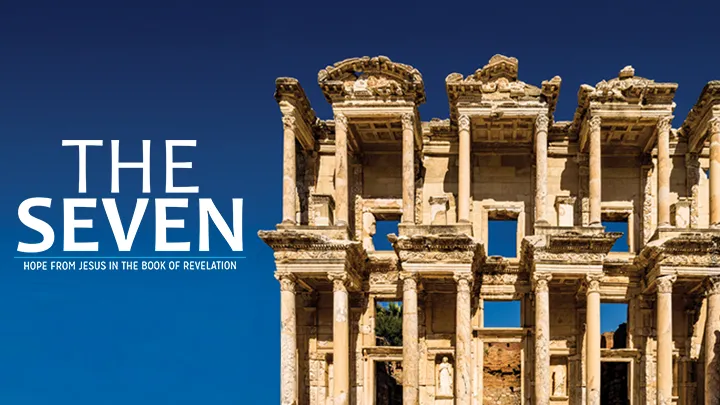
Jesus speaks to confused Christians in Pergamum about faith and authority.
Transcript
This transcript was generated automatically. There may be errors. Refer to the video and/or audio for accuracy.
My name's Rene. I'm one of the pastors here. I want to welcome you whether you're live here in the auditorium or watching on our video venue service or whether you're online. We always get emails from people literally all over the world, so it's great to have you here.
I want to invite you right now to take out the rubber bands that you were handed when you walked in, and if you did not happen to get a rubber band, you can pick one up on your way out to help you remember the things that we're going to talk about. Alright, now everybody got the rubber band? Let me see it. Kind of wave it around a little bit. You know, this may have been a colossal miscalculation to hand out rubber bands without giving a maturity test of some sort. My wife is going to shoot me with a rubber band. No, don't do this. If the sermon gets boring, do not shoot me with a rubber band. I'm begging you because then you won't have it when you need it.
What this is for is the sermon is a little bit long today, so here's what this is for. What I want you to do is take a rubber band like this, and then when the person next to you falls asleep, just flick them like this to wake them up many times during the sermon. No, do not do that. What I want you to do right now is to put it on your wrist like this so it'll be handy when you need it later on in the service. And once you've done that, grab your message notes, look like this.
The seven is the name of our series in the book of Revelation. Revelation is the last book of the Bible. It was written by a man named John while John was imprisoned, exiled on an island named Patmos, and while he is on the island, John has a vision of Jesus Christ. In this vision, Jesus dictates to John seven letters for John to write down, letters from Jesus, and they're to be given to seven ancient churches that are in modern-day Turkey. It was called Asia Minor at the time, and we wrote a book called The Seven. Every chapter of this book is designed to dovetail perfectly with the message series, and a hundred percent of the proceeds of the book go back to the church. I don't get a dime, neither does anybody else.
And then we have small groups meeting in homes discussing the book literally all over the county. So if you want to get into discussion groups, you can get sign-up sheets also at the info desk. The point is we are making this a church-wide immersive study because we have the feeling that if all of us together as a church, kind of veteran Christians and newbies and everybody in between, are all studying the same verses of the Bible together, I think something powerful can happen. There can really be great positive momentum that can develop because of that as we study the seven.
Now this week, let's look at the third of the seven letters. This one is written to confused Christians. Alright. Now, listen, I want to ask you a question as we get into this. And this question is going to prepare you for the kind of sermon this is going to be a show of hands. How many of you love Raiders of the Lost Ark type movies, kind of archaeology adventure, right? Ancient mysteries. Most people here love that. Good. Because in order to understand the verses we're going to look at today, we're going to have to go all Indiana Jones on the Bible here today.
We're literally going to go kind of virtual on a virtual tour of the archaeological site of Pergamum, and we're going to see some things that most people never see. But archaeologists have unearthed in order to help you understand what these verses are all about. Are you ready for that? Alright, let's dig in. It all starts like this in Revelation 2:12. Jesus says to the angel or messenger of the church in Pergamum, "These are the words of him who has the sharp double-edged sword. I know where you live." Now stop right there just for a second. Because if somebody comes up to you and says, "I got a sword and I know where you live," these are not comforting words normally, right?
But as you'll see, Jesus doesn't mean them like, you know, a stalker. "I know where you live." Jesus means it like this. I get it. I know the kind of environment you are in. And so to understand what he's saying, we've got to ask, "What kind of environment were these people in?" So let's look at a Pergamum city profile. Fascinating city. It was hugely influential in its day, and it kept on influencing people right up until Hitler and the Nazis. And so this really is all right at the lost arc here.
So look at this map. Pergamum was the capital of the whole province of Asia Minor. And here's why this is an important part of the story. In those days, the Roman governor had his office, so to speak, at the capital, Pergamum in this case, and only the Roman governor of each province had what was called the jus gladiae. That literally means the justice sword. A gladiae was that sharp, short, double-edged sword that was worn by Roman gladiators. And the Roman governor always wore one of these swords as a symbol.
Now he didn't go around chopping people's heads off with it, but it was a symbol that only he had the legal right to pronounce a sentence of capital punishment. Only he had that kind of authority. This is why in the story of Jesus, when they put him on trial, they have to get the approval of Pontius Pilate, the governor of that province, because nobody else would have the right to execute him, to pronounce a sentence of capital punishment.
So the Roman governor, by wearing this sword, was saying, "I am in charge here. I am the ultimate authority over your life. I determine your destiny." And the Christians in Pergamum were feeling this because they were literally being put to death for their faith. So now with that small background, do you understand why Jesus says to this church, "These are the words of him who has the what? Sharp, double-edged sword." He's saying, "No, the governor is not the ultimate authority over your life. Ultimately, I am the one who has final say over your birth, over your life, over your death, over your destiny."
And we could stop right here for some of you. Just stop, because God wanted some of you to come in just to hear this. Because the point is, whatever you're afraid of, the government does not have final authority over your destiny. ISIS does not have final authority over anybody's destiny. Your family of origin does not determine your destiny. Your own stupid past mistakes don't determine your destiny. What other people think of you doesn't determine your destiny. Only God determines your destiny. It is in the hands of somebody who is all-powerful and who loves you. And that is the point of these words to this church, and they needed to hear this, and some of you need to hear this right now today. You are in his hands. You're in his hands. Amen?
But let's go further into Pergamum. Last fall, we went to the ruins of Pergamum, and I'm going to give a short video tour of this to the small groups in their video this week. But as you can see, it's a little creepy. It's a little mysterious, a little unsettling even to this day. Let me show you why. The religious and political center of Pergamum was perched high up on top of a thousand-foot high mountain overlooking the rest of the city as it still is today. These are the ruins of the theater there. It's the steepest theater in the ancient world. It sat 10,000 spectators.
I walked down these steps with my son David, and both of us were like, "If you tripped, you would not stop for a thousand feet. Straight down." Right? And the thing was, Pergamum was meant to be unsettling. It was meant to keep you off balance. It was meant to be kind of like the mystery spot. How many of you have been to the mystery spot here in Santa Cruz? Right? You know that kind of creepy, "What is happening to gravity?" I think that this peak at Pergamum was meant to give people this disconcerting feeling. Why? Because it was meant to be a mysterious, sacred spot.
There were dozens of temples on top of the hill in Pergamum, temple upon temple, layered on top of each other. And Jesus has a very interesting name for this spot. He says, "I know where you live where Satan has his throne." Now what in the world does that mean? Well, we don't know for sure, but let me show you some options, and then I'll tell you why I believe he calls it by this name. Check this out. We're really veering into Indiana Jones territory here. The most common symbol associated with Pergamum was the serpent. And I'm going to show you, these are all coins minted in Pergamum, and they all feature snakes.
Because snakes at Pergamum were featured in almost every temple ritual there. For example, do you see the snake crawling out of the basket on this coin? This basket was called the Sista Mystica, and it was used to house the sacred snakes that were utilized in the initiation ceremony at the temple of Bacchus, or Dionysius. He was the god of pleasure and orgies. We get our name, our word debauchery, from the name of that god Bacchus. Here's another example. This coin shows a snake curling around a sacred rock, and that was part of the worship of Apollos that also took place at Pergamum.
This next one shows a snake curling around a staff, and that was the symbol of the healing god Asclepius. At his temple in Pergamum, if you wanted healing, you came in and told the priest what you wanted cured, and then they said, "Well, you'll have to go through our temple ritual." They gave you a sedative, and you laid down on the cool marble floor of the temple, and then they released the snakes. And the snakes slithered across the floor toward you, and if one or more snakes slithered up on you and went to sleep there, that was a sign of that god's favor, and that meant your ailment was going to be healed.
How many of you feel at this moment like your annual physical is not such a bad idea after all, right? Flu shot, no big deal compared to this. So if you're in Pergamum, serpents and snakes are all over the place. Another temple in Pergamum was the temple of this Egyptian god Serapis, often depicted with a human head but then a body of a snake like this. So it could be that all of this serpent imagery is being hinted at in this verse, because the most common symbol of Satan in the Bible is the what? Is the serpent. And I think any Jew or Christian who was living in Pergamum would have seen all of this as very creepy and evil.
Or it could refer to the temple of Zeus. This is the site of the temple of Zeus today, not much left, because in the late 1800s, a German archaeologist dismantled that temple piece by piece and took it to Berlin, where for most of the time it was stored in a warehouse, unseen. But then in 1930, the Pergamum Museum was opened in Berlin. I said it 1930. And what happened there was they reconstructed the temple of Zeus, the altar of Zeus, just in time to inspire a man named Hitler and his chief architect Albert Speer, who designed the huge Nazi grandstand at Nuremberg to be an even bigger version of the altar of Zeus.
And so this thing has an incredible history. Now, when this altar to Zeus was viewed from the valley floor at Pergamum, it would have looked like an ancient throne. You've seen those pictures of chairs with low arms around them. It would have looked like a chair just waiting for a giant god. And since this was the temple of Zeus, kind of seen as a chief rival to the Lord in the Bible, maybe this was the throne of Satan. One more possibility. There were several massive temples to the Caesars on top of the Temple Mount. These are the ruins that are still there, but just to give you a sense of scale, watch this. Here I am with my family up there. Yeah, even the ruins are just massive and intimidating.
And it was at these temples to Caesar that at the time the book of Revelation was written, everyone in the city was required to worship Caesar as Lord and God. And if they didn't, they were killed. So which is it when Jesus refers to the throne of Satan, the seat of Satan? Well, I think it's a combination of all these things. I think what Jesus is saying is you guys live in a place with all kinds of combined pressure on Christians, all kinds of evil influences on you to abandon your faith. He's saying there is a unique combination of influences there in Pergamum, and I get it.
So how did the Christians fare in Pergamum in the face of all this pressure? Well, Jesus says in the next verse, "Yet you remain true to my name. You did not renounce your faith in me, not even in the days of Antipas, my faithful witness who was put to death in your city where Satan lives." Now, the Bible doesn't tell us anymore about this guy Antipas, but some other ancient writers reveal some details. He was told, he made an example of, because he was the senior pastor of the church there at Pergamum, told to worship Caesar at one of these temples up there on the hill. And when he refused, he was put inside of a hollow brass statue of a bull, and a fire was lit underneath it, and he was slowly roasted inside until he died.
Yeah, pretty grim. And Jesus is talking about all of this horrific stress up there on the Temple Mountain when he says to the Christians at Pergamum, "I know where you live." It's not like a stalker, "I know where you live." He's saying to them, and to you and to me, "I get it." I get that compared to the other seven cities, you guys live in an unusually weird place, and I understand the cultural pressures on you to compromise your faith, and I appreciate the fact that you are not doing that.
And I think that this means even to this day, he doesn't see every city the same. I believe Jesus is saying to you and to me, "I get it. I know what it's like. I know you live in Santa Cruz County in 2015, and not Boise, Idaho, or Peoria, Illinois in 1955. I get Santa Cruz. It's Berkeley on the beach. It's wonderful, and it's weird. It's not Kansas." I mean, we have nothing compared to the pressures of Pergamum, but we have our own pressures here, and he says, "I get it. I see it." He knows what it's like to be a Christian in Pergamum or in Santa Cruz or in Manhattan or in Hollywood.
And so he gives us three important truths for Christians in a challenging culture on page two. Now, you know what's interesting to me? Look up here for just a minute after you get your page turned. What's interesting to me is, does he tell the Christians at Pergamum, "I know where you live, so get out of Pergamum"? Does he say that? No. The problem was not that there were Christians in Pergamum. That was not the problem. The problem was there was too much of Pergamum in the Christians.
And so check out what he says next. He says, "Nevertheless, I have a few things against you. There are some among you who hold to the teaching of Balaam, who taught Balak to entice the Israelites to sin." Now, hang on again for a minute. What is this all about? Who are Balaam and Balak? They sound like Star Trek names, don't they, Paul? You know, "I am Balak of Sektor V." That is not who this is. It's a great story, though. And so let me tell it to you.
I want to take you back 1400 years before Jesus Christ. Way, way back. The Hebrew Scriptures, the book of Numbers talk about this. The Israelites have just been freed from Egypt. They're wandering in the desert, living in tents in the wilderness. An enemy, an army general called Balak, tries to defeat them with his army, and it doesn't work. And so he contacts Balaam, and Balaam is sort of a sorcerer for hire. And Balak pays Balaam to curse the Israelites.
To make a long story short, they go up on a high hill overlooking the valley where the Israelites are camped. And Balaam folds up the sleeves of his robe and kind of gets ready to stretch out his arms and pronounce a supernatural curse against the Israelite people. He opens his mouth, and instead of a curse, out comes a blessing straight from God. "May the Lord mightily bless Israel." He goes like, "What did I just say?" And Balaam's looking at him like, "I paid good money for a curse." And so Balaam tries again. Out comes a blessing again. Three times he tries to curse them. Three times a blessing comes out instead.
I want to show you a picture of this from my old—the first Bible I ever owned, a little children's picture Bible. I love this picture of it because Balaam is like, "What is happening? I'm trying to curse him." And I love Balak apparently wearing his lederhosen. I don't know. He was at the Berlin Museum and he bought some. And I love how he's like going, "What are you doing? I paid you to curse." So this is a great, great story, great scene.
Well, a little later, Balaam comes back to Balak and he said, "Okay, you didn't defeat them with your armies. I couldn't defeat them with my supernatural witchcraft. So plan C. I got an idea. Let's get the most beautiful, sexy prostitutes, have them go down into the camp and entice the men." And they'll start having sex with them. Some of them will fall in love with them. They'll marry them. And then when the women keep worshiping our pagan gods, their husbands will want to worship those pagan gods too.
And here's why this is genius. He says, "Then basically the Israelite people will disappear because what makes them unique right now? Their monotheism, their belief in the one true God. And so if they no longer believe that and they lose their theology, they will vanish as a people. Mission accomplished. You will have won the war without wielding a weapon." And so they try it, and it almost works. That is the story that Jesus is referring to here. And it relates to the Christians of Pergamum because the Roman Empire with its jus gladiae, right, its gladiator sorts apparently didn't intimidate them.
You know, their pastor was like, "You can kill us. We're not going to deny Christ." The supernatural weird mystery spot power of the temples didn't intimidate them either, right? So they were solid. But they had a weakness. And that's what Jesus addresses next. He says, "Just as Balaam taught Balak to entice the Israelites to sin, so that they ate food sacrificed to idols and committed sexual immorality, likewise you also have those who hold to the teaching of the Nicolaitans."
Now stop right there for a second because some of you are going, "Oh, good. Here we go. Sexual immorality, my favorite subject in church. Sure glad I invited my friend to come to church with me today to hear this." I got to say something here. Of course we do need to talk about sexual immorality. It's in the Bible. But there is a massive gospel-threatening danger in preaching about immorality. And that's this. They come across so moralistic. And here's what I mean by that. They can give the impression that you're only welcome in church if you meet certain moral standards.
And because most of us feel like we fall short in some area, right? Accurately, we fall short in some area, we often end up feeling like, "I guess I'm not welcome in church." And we experience self-condemnation when we hear these messages. Or worse, we get all self-righteous. And we feel like at last, a sermon for all those immoral people. Right? Sure hope those people down my pew are convicted because they need to hear this message. Right? Self-condemnation, self-righteousness, both completely unproductive.
But if you really look at what Jesus says at this church in Pergamum, you see he avoids both of those traps. Because he focuses on the root cause of their immorality. He does not tell these believers like preachers so often do, "Just stop it!" Right? That's what Craig Barnes calls the "bad dog sermon." "You bad people, bad people! You just stop it! Just try better! Just behave yourselves, you disgusting slime!" Right? And that's how so many of these messages can come across. But Jesus doesn't do that, does he? He goes far deeper than the behavior. And he gets to the belief that leads to the behavior.
See how many times he says they taught them. Likewise you have those who hold to the teaching. For him, that's what he's attacking here. That's what his point really is. In fact, somewhere on your notes I want you to draw a little chart. Very simple. It's two words, right? Put the word "beliefs" on top and the word "behavior" on the bottom. And then kind of draw a circle that connects the two. "Beliefs" and "behavior." Because this summarizes what Jesus is saying to the church at Pergamum. He's talking about the relationship of belief to behavior.
First, what happens is your beliefs modify your behavior, right? Of course they do. Like, for example, let's say, "I believe that there is no life after death. You only go around once. And if there is a God, he would want me to be happy. Life is short, so I'm going to have an affair." And that belief that life is short, you only go around once, there's no hereafter, there's no reward in the hereafter, kind of changes your behavior, makes it easier to rationalize. I'm going to sign up for that Ashley Madison website I've been hearing so much about, right? You'll be sorry, but those beliefs influence that behavior.
And then let's say you follow through on that. And you have an affair, and then your behavior modifies your beliefs. And what you start to think about yourself is, "I am just a promiscuous, unholy hypocrite." And that belief, which is now modified by your behavior, further modifies your behavior. "Because I am a hypocrite, I don't deserve to be in church. I don't deserve to hear about God's love because I've stepped over the line, and God surely doesn't love me. He's disgusted with me." And so that changes your behavior, and you're stuck in this cycle of sin. What can break the cycle? We can all relate to this, right?
Well, that's what Jesus talks about here. Three quick truths here. He says, number one, what I believe matters. Let's start there. What I believe matters. See, in places like Pergamum or Santa Cruz, Christians live in a culture that tells us, "Doesn't matter what you believe, right? All beliefs are the same." But that's demonstrably not true. Because different beliefs lead to different outcomes, right? Different beliefs lead to different outcomes. And that's why 12-step groups, for example. They all say it's not just about stopping whatever self-destructive behavior you're addicted to, it's about changing your stinking, what? Thinking. You change your stinking thinking that leads to that destructive behavior.
For example, if you believe there's no hope for me, I will never change, that's going to lead to destructive decisions. If you believe I'm perfect, I have no need of improvement, any criticism of me is judgmental and wrong, that's also going to lead to poor decisions, and you will be insufferable to live with. But if you believe I'm a sinner for sure, and I'm loved by God for sure, you're going to find humility and hope and healing in that belief. Now, really engage your brain here. I want you to imagine that your brain's got a gear shift, like a car, and I want you to put it down in turbo gear here. Ready? Can I grind it in? I can smell some brains burning here.
Alright, because I want you to look at this. Here Jesus talks about the Nicolaitans and what they taught. Who were they? What did they teach? Well, scholars say that what they taught was this. God is only concerned with your soul and not your body. That was basically their belief; it's what they called dualism. God is concerned only with—he wants to save your soul, your body, not so much, your body's doomed. It's going to be consumed by worms; there's no physical resurrection anyway. And so anything you do to your body and do with your body doesn't matter. Why was that so appealing? We saw how in Pergamum they had all these temples, right?
Well, from time to time you'd get an invitation with your name on it, on a little token called a tessera. Here's an example of one. These are found all over Pergamum. They're usually made of bone or ivory or white rock or clay. They were used for all kinds of things. This particular one is an invitation to a party at a temple. It's the admission ticket. Now, why would you want—why were these things coveted? Well, at the temple parties they had first of all amazing food. Here, this is a decoration on a Greek urn that shows one of these temple parties. You were spoiled, and the food had been offered to the pagan gods, so it was the best. Like finest French Laundry Napa Valley restaurant kind of food, right?
And then after the food, there were these crazy orgies with the temple prostitutes. And the Nicolaitans were going, "That's okay for you to do that. That's cool because whatever you do with your body doesn't matter to God. It's your soul that matters to God. Your body's going to burn anyway, so go for it." And Jesus says, "No." Now, why would Jesus say no to something like this? Well, it's immoral. Why is it immoral? I want you to think just for a minute of the exploitation of the lives of the women and the girls and the boys that were involved in temple prostitution. It is horrifying to research what happened then and, by the way, what still happens to this day.
All in cultures around the world when it comes to temple prostitution, they have miserable, hopeless lives. And this is always the reason God is against any sin. He wants people to be free and to have abundant life. And he sees the big picture in ways that individual cultures, because of their customs, can be blind to. And he sees how sin is destructive. Destructive to individuals, destructive to families, destructive to society. And since he wants people to have freedom, he gives us these rules in scripture.
Now, today, we may not hear the lie of the Nicolaitans, the dualistic lie, but what about these lies? Everything is relative. God just wants me to be happy. Freedom of choice is the ultimate good. How will these beliefs lead to destructive behavior? Well, I know how I want to be happy. I know what I want to choose. Just one G-rated example. You know, during the football season, what I would like to choose that would make me happy is to stay home all weekend long, starting Thursday night, and watch every single broadcast football game, and literally never leave the couch. I would sleep there on that couch so I don't miss a minute, and I would only eat bacon. That's what I want to do. That would be my choice. Make me happy.
But if that's all I did, 100% of the time, what would happen? It actually would limit my choices. It would actually destroy my happiness because it would destroy my health, and it would destroy my family, it would destroy my ministry. So God's saying sometimes you have to limit your choices for the ultimate good, and that's why we yield ourselves to God's wisdom in Scripture. He sees a bigger picture than my immediate happiness, the point being what you believe matters. You could put it like this. Plant a thought, reap an action. Plant an action, reap a habit. Plant a habit, reap a destiny. That make sense? Plant a thought, reap an action. Plant an action, reap a habit. Plant a habit, reap a destiny. Your destiny starts with your thoughts.
And then second, how I behave matters. How I behave matters because behavior then modifies beliefs in a way that may surprise you. Watch this. What Balaam created is called by psychologists cognitive dissonance. Got that? I'll give you a minute to write it down if you're taking notes. What is cognitive dissonance? Well, here's where those rubber bands come in. Everybody take your rubber band off your wrist, and I want you to stretch it like this vertically. Alright? Because this is an illustration of what happens inside of you when you experience cognitive, which means mental, and dissonance, which means disharmony.
Cognitive dissonance happens when something you believe, which is represented by your upper hand, conflicts with something you are doing, your behavior, which is represented by your lower hand. So stretch it out like this. You feel tension, like tension in this rubber band, between your beliefs and your behavior. Like, let's say you believe that smoking causes cancer and is unhealthy, right? But then you start smoking, and you like it. And now there is tension between your beliefs and your behavior. And tension always seeks resolution.
So one way to resolve that tension would be to what? Shout it out. Yeah, stop smoking. You change your behavior to match your belief, and now the tension is gone. But that is not what most people do. Most people go the other way and change their beliefs to match their behavior. They tell themselves, "Well, it hasn't really been proven that smoking causes cancer." I've heard there's a lot of flaws with a lot of those tests. I've read them on valuable Internet sites. And not only that, but I could quit any time I want to. In fact, I'm going to completely quit next month. One more month of smoking is not going to hurt me that bad. In fact, I'm going to quit next week. All lies, but you change your beliefs to match your behavior, and now there's no more tension. And people do this all the time.
And listen, I have to come up with examples, so I don't mean to pick on you. If you smoke, you are totally welcome here. None of us are perfect people. That is just an example. I'll give you one more example. And again, I don't mean to say that this is the worst sin and that you're not welcome here. What I'm saying is this is an example that I think, frankly, we can all relate to at some level. Let's say I want to have an affair, yet I vowed I would not do that when I got married. Tension. Now, I can either modify my behavior to match my belief, or I can start modifying my beliefs and reinterpret my own marriage and say, "I was never happy anyway."
My spouse really is practically having an affair with work, so they cheated first. And my needs aren't being met, and I'm only human, and it's not going to hurt anybody else, resolves the tension. And the reason I use that example is because it relates back to Balaam. Do you see how ingenious it was of Balaam? He was creating cognitive dissonance for the Israelite soldiers. Their belief was, "I believe in one God who has no idol and who's against sexual immorality." Their behavior was, "And I am sleeping with these Canaanite prostitutes." Tension.
And Balaam predicts exactly what is going to happen. The soldiers eventually change their beliefs. "I will believe in their pagan gods because their gods are okay with this behavior." And this is what happens when you keep changing your beliefs because of cognitive dissonance. And this is the real danger for these Christians in Pergamum and for you and me, is that you'll keep modifying your beliefs until they don't even resemble historic Christianity anymore. And without wielding a weapon, the war has been won for your enemy because your Christianity has been so deluded, it's not even Christianity anymore.
So whenever you feel cognitive dissonance, and you will again and again, ask yourself this question, "Am I going to be shaped by Christ or by culture? Am I going to be shaped by Christ or by culture? Will I keep my beliefs and modify my behavior, or will I modify my beliefs to match my behavior?" And that gets right to point three, how I respond to God matters. How I respond to God matters. Verse 16, check it out, Jesus says, "Repent, therefore." Now stop for a second. Last week I told you how I think the word repent has been spoiled.
Because the English word repent is translated from the Latin for penance, and it carries with it the idea of sorrow, right? Being so sorry for your sins that you just collapse and I heave up tears, you go, "I'm so sorry, sorry, sorry God, I'm so stupid, I'll never do it again, never, never, never," and you end up throwing ashes on your head. And that's not what the word repent means in the original Greek at all. It does not have that connotation, and this is very important because often we think we're repenting by going, "God, I'm so stupid." But what you're doing is reinforcing a negative opinion of yourself that's just going to lead to rationalizing more negative behavior, and in your repentance you're focusing on the thing that you want to stop.
"God, I'll never smoke that cigarette again, why do I do that, I'll never smoke that cigarette again, that tobacco that I want to taste on my lips, I'll never do that, oh, I need a cigarette," you know? If I repented over cigarette smoking like some people do, I'd be a smoker myself. So what's the option? The Greek word for repent is metanoia, which simply means a change of mind that impacts my life's trend. It means I change my stinking thinking. I change the way I'm looking at God, I change the way I'm looking at myself, I change the way I'm looking at my self-destructive behavior.
Now, I'm not saying this is easy, "Oh, just a flip of the switch, I change my thinking." It's hard to overcome self-destructive behavior, but you know what? That's why we have 12-step support groups here on Monday night, on Thursday night. There are friends of yours who have repented, have changed their thinking, and therefore changed their behavior, and they want to support you too, if you're struggling with something like this. Jesus is saying, "If you think you're too far gone, if you think there's no hope for you, if you think God is disgusted with you, those are lies. There's so much hope for you that I'm giving you the invitation to repent, and then I'm going to tell you there's going to be a reward for you."
And look at these rewards. He says, "To the one who is victorious, I will give some of the hidden manna." Manna was that supernatural, delicious bread that fell from heaven and fed the Israelites. Jesus is saying, "You may miss out on those temple feasts, but you're not missing out on a thing because I'm going to give you manna to eat." And look at this, "I will also give that person a white stone with a new name written on it, known only to the one who receives it." Earlier I talked about those white stones, those tessera. This is a handful of these tessera right here. Remember I said they're used as tokens for all kinds of things. I go into way more detail in the book.
But remember, one thing these were used for was invitations to those temple parties. And Jesus is saying here, "Those are not for you, but you will not miss out on a thing because I will give you my invitation to the ultimate party, the wedding feast of the Lamb." Jesus is saying, "Listen, I know where you live, I get it, and you may feel marginalized as a Christian in your city, in your neighborhood, in your industry, maybe even in your family of origin, but I give you an engraved invitation into God's house for a party forever. You will always be welcome at my feast and written on it. I have a new name that I've chosen for you."
This is such a beautiful truth. He's saying, "I choose your forever identity." This is a reference to some Hebrew scriptures like this one from Isaiah 56:5, where he says, "To them I will give a name better than sons and daughters. I will give them an everlasting name that will endure forever." He's saying, "I know in your earthly life that the best kind of relationship you could possibly think of with God is like, 'I'm a son or I'm a daughter of God.'" He's saying, "Guess what? It's better than that." It's better than that.
He's saying, "You may suspect that people have kind of secret names for you as a Christian. Maybe they think of you as a weirdo or a Jesus freak or a prude or a Puritan, or maybe you have secret names for yourself. I think a lot of people do. And when you think of yourself, you tell yourself the secret name, fatso, klutz, loser, jerk, hypocrite." And Jesus is saying, "No, don't let your society define you. Don't let work define you. Don't let your culture define you. Don't let your family of origin define you. Don't let your past failures and your own self-condemnation define you. I'm the one who defines you forever, and I call you beautiful, courageous, beloved, somebody who is closer to me than a son or a daughter. You are loved by God. You're loved by the one who has the ultimate authority over you. That's who you need to let define you."
Do you see how this is the way to woo people back who are stuck in immorality? Preachers who preach against immorality like we were talking about earlier by saying, "Just stop it, you bad people. You bad people." They're never going to win that battle. And in fact, what's going to happen is it makes faith easier to give up on when people are experiencing cognitive dissonance. How many times have you heard somebody say, "Yeah, I used to go to church, hated all those hellfire and brimstone sermons, left them behind." It's easy to leave that behind when it's all negative, but that's not how Jesus approaches their immorality.
He says, "You can repent by my grace. It's a gift of grace, repentance." And if you're being enticed by a false love, he's saying, "Let me show you how mine is a better love." Do you see the way to escape a false love is to remember the better love. Do you get that? All of the ways that the Nicolaitans and you and I go astray is really a false love. I am infatuated with someone or with success or with some addictive behavior, and so I give my heart to it. And the only way to escape that false love is to see the better love that we have in Christ. Because that's the only thing that can resolve that tension forever. Let's pray together. Would you bow in prayer with me?
Heavenly Father, thank you so much for the invitation to repent, the invitation to hope, to a changed life. And God, I pray if anybody's here today and they're thinking, "I cannot change. I've tried so many times. God must be disgusted." Help them to see. Those are lies. And what's ahead for them is a better life and a better love. God, right now there's somebody in this room who needs to repent, needs to have that mind shift. And God, I just pray empowered by your grace that they would do it now, that they would run into your arms. Maybe for the first time say, "God, thank you for loving me, for dying for me, for being resurrected so that I could be forgiven of my sin and be invited to that forever party." God, help us to be defined by you and not society, not our past, not even our family, but by you, our good Father who loves us. Thank you, Lord. We love you too. In Jesus' name, amen.
Join us this Sunday at Twin Lakes Church for authentic community, powerful worship, and a place to belong.