The Law of the Harvest
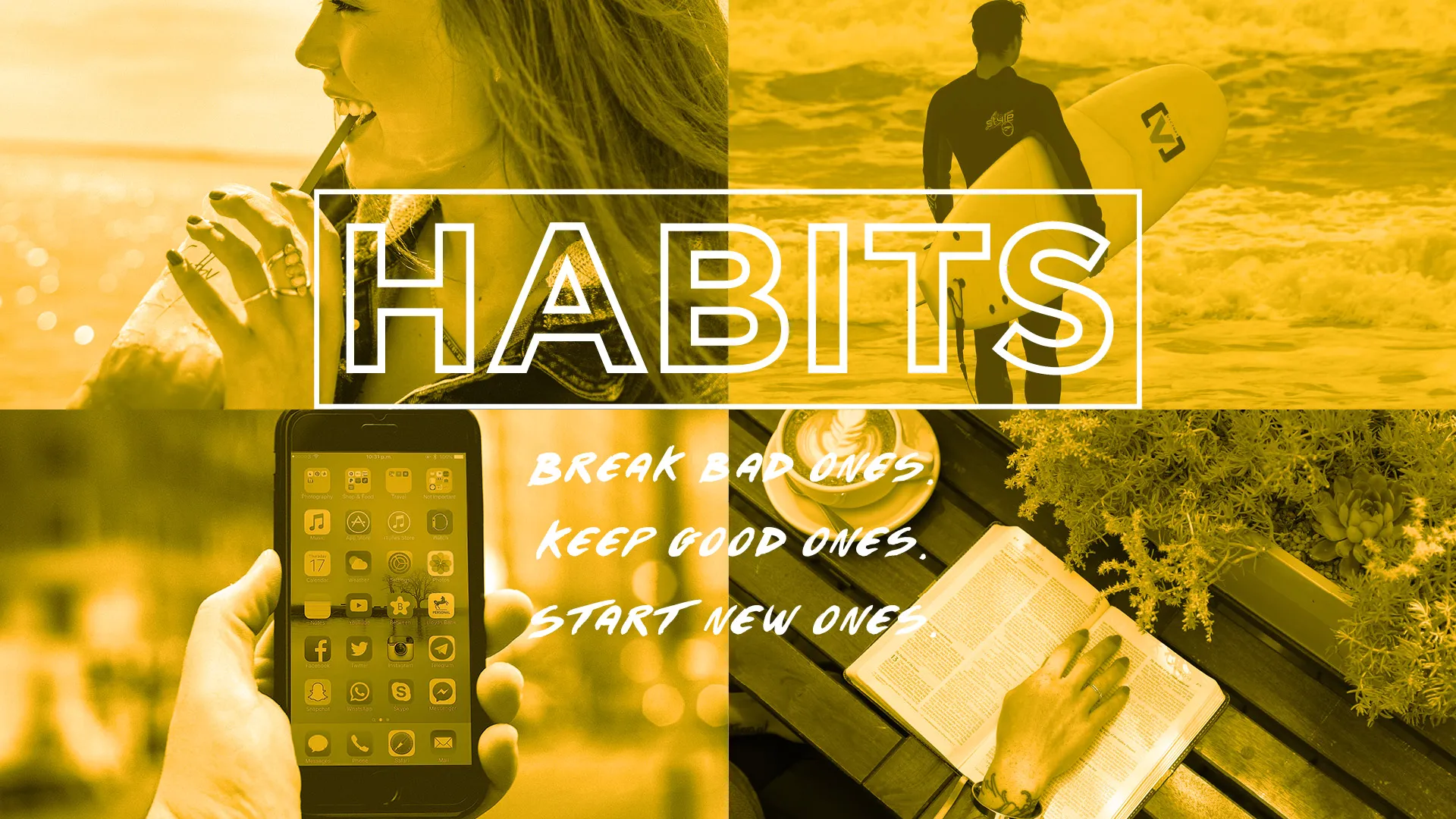
René shares how our daily habits shape our lives and faith.
Transcript
This transcript was generated automatically. There may be errors. Refer to the video and/or audio for accuracy.
Well good morning! My name is René, I'm one of the pastors here at Twin Lakes Church and Habits, as you see, is the name of our New Year's Series. Why? Because the Bible talks a ton about the importance of developing good daily godly habits. About 40% of what you do every single day is by habit. That is a very powerful, powerful stat. I mean tying your shoe, the motions you go through when you're driving, the route you take to work or to school, what you do first thing in the morning, what you do first thing when you get home—all of that is related to your daily habits you've established in your life.
We've learned in this series that habits are very easy to start, but they are very, very difficult to break. Would you agree with that? You might have noticed that even as a speaker I've developed certain habits when I preach that are very difficult for me to break, though I may try. By the way, we're selling sponsorships, as you can see, for Freddie just like for race cars, so if anybody's interested, you have a business, my name is René@TLC.org. But it's very hard to break habits. Now habits can be good or they can be bad, so you have to take care about what kinds of habits you're consciously developing in your life, and that's been the point of our key verse for this whole series from Galatians 6:7.
Let's read from the New Living Translation out loud together. Let me hear you say from Galatians 6:7. We'll put it on the screen. Here we go. Here, let's read it together: You reap what you sow. We have referred to this verse every single week in this series, and this morning what I want to do is dive down into this verse and into the whole passage from which it gets its context. We're going to discover a principle that, if you learn it, can completely revolutionize the way you look at your life—not just your long-term life, but every single daily choice and daily habit you make.
It's sort of a paradigm, a framework, if you will, straight from the Bible for seeing your life that will clear up so many things for you. I want to start by telling a story about one of the most incredible trips I ever took in my life. It happened about two years ago, and Paul Spurlock, our pastor of outreach, who you just heard during announcements, and I went on a trip to Central America to visit some of the missionaries, some of the international ministries that Twin Lakes Church supports. On this particular trip, we spent a lot of time in Nicaragua.
What I learned when I was down in Nicaragua that I hadn't known before is that it's now the second poorest country in the western hemisphere, second only to Haiti. In the part of Nicaragua that we went to, there is only one paved road that runs through roughly half of the country. Even on that paved road, to this day, cowboys and cattle and carts far outnumber cars. It was like a trip back in time, not just a trip in geography. While Paul and I were there, we traveled with this man—this is Rigo Reyes and his son Juan Carlos. Rigo is a fascinating individual.
Rigo was an executive at Dole Foods, which gives him kind of a Santa Cruz connection because Dole Foods has been big here as well. Rigo's got an advanced degree in agricultural engineering. When he was an executive at Dole, he owned several homes. He was headquartered in Mexico City. He had beautiful cars, but he left it all to follow his new life's calling to become a pastor and to become a pastor of pastors and plant—not planting food, but planting churches, and his territory is all over Nicaragua.
While we traveled with Rigo, he took me to one of the poorest villages in the country. You know what this is on the screen? This is the main bridge into the village over the creek that separates it from the rest of the country. That's how poor it is. This village is not on any maps. This village isn't on Google. In fact, the only way Rigo, who lives in Nicaragua, found out about this village is he got lost on his way somewhere else, and he was in this village that was totally uncharted on any maps. It's completely unknown even to the authorities.
While he was there in that village, Rigo found out that these very poor people were trying to scrape out their survival by growing corn. It would grow all stunted like this. They had terrible harvests, and they never had enough to feed their families. They were literally starving. Rigo's heart goes out to them, and he says, "Listen, can I plant a church here? Because I notice you don't have any church—nothing, not a Protestant church, not a Catholic church, no churches in this whole village." He said, "Can I plant a church thinking if I plant a church, then we're going to be able to get something started to help these people out?"
You know what they told him? No. They said, "We are not interested in your church or anybody else's church." Because they said, "You know why? We are living proof even God has forgotten us." They said, "You heard about a God-forsaken country? Well, that is where we live because we have been God-forsaken." So no, we're not interested in a church.
Well, Rigo thought to himself, "You know, I don't think I got lost here in this village. I think God put me here." He said, "I think with my background at Dole Foods, I believe I can help them in the name of Jesus even if they don't let me plant a church here." Through his connections at Dole, he got them the best hybrid corn seed on earth and he showed them the best ways to plant it. He said, "This is going to make all the difference." They told him, "Well, we'll try it, but it won't work because nothing grows right here. This land is cursed."
Well, guess what happened? Their first harvest, they quadrupled their corn numbers. They were able to sell enough extra corn after they fed themselves to buy chickens, which grew so healthy off the new beautiful big corn seed that they were able to sell those chickens and buy more livestock and buy more corn seed. I want to show you these are the people that I met there. This is 18 months after they first met Rigo. This was a couple of years ago that I met them, and they told me through an interpreter, "Last summer we were starving, and today we're rich." You think, "Oh, you know those quaint people thinking that they're rich today."
Well, let me just show you something I just took with my cell phone because I had never seen anything like this. Check this out. Their biggest problem now is where to put all the corn. They have piles of it everywhere. They produce makeshift silos out of scrap tin to keep the literally thousands of extra pounds of corn all over their villages and in little hills. They've gone from starving to silos overflowing everywhere. By the way, they told Rigo, "We want you to start that church for us too." This is a story that you guys have helped make happen.
Like Adrian mentioned, one of the least known aspects of Twin Lakes Church, I think, is that every single week when we take our offering, at least 10 percent of that offering goes to our international ministry partners, including this ministry here. You're going to hear a lot more about that next weekend during World Outreach Week. So if you've been here a couple of years, you've contributed to this miracle that you see on screen here.
But here's the major takeaway for us today. This amazing story is a living example of a huge spiritual principle that is in the Bible that, if you know it and if you apply it, it will change your life in so many ways. So grab your message notes as we look at this in detail: the law of the harvest. This is going to give you a framework for you to see your habits and your choices and your decisions in a way that could change everything for you.
Now first let me give you some of the context here because we're going to look at those verses from Galatians chapter 6. If you're new to all this, all that means is it's in the New Testament. The Apostle Paul was one of the early followers of Jesus Christ, and he wrote a letter to Christians in a region called Galatia. So the letter to the Galatians is called the letter to the Galatians or Galatians in the Bible. All through the letter to the Galatians, Paul is hammering on one theme again and again and again. He's trying to make a huge point to the Galatian believers, and if you don't understand this context, you will completely misunderstand what he talks about later in Galatians chapter 6.
So let me take two minutes to fill you in on this. The Galatians somehow have been convinced that they are blessed by God, that they get to go to heaven because of their good behavior. That if they're good, they get to heaven, and if they're not good, they don't get to heaven. Some teachers have given them a long list of religious rules and told them, "You have got to keep these religious rules, and if you keep them, God will bless you and bring you to heaven. If you don't keep them, you will go to the other place." They're pretty scared about this, and Paul's writing them, "No, that is not true." Like in Galatians 2:16, he says a person is not justified by the works of the law but by faith in Jesus Christ. You don't get to heaven, in other words, based on how good you are or how well you perform or how religious you are.
You are saved a hundred percent on what Jesus Christ did on the cross for you as you trust in him. And then what happens when you trust in Jesus Christ? Not only are you saved and you get to go to heaven when you die, but look at all the blessings God lavishes on you. Look at Galatians 4:6-7. God adopted us as his very own children, and because we are his children, we don't have to earn it, we don't have to prove it, we don't have to get it. We are his very own children because we placed our trust in Jesus Christ. God has sent the spirit of his son into our hearts, prompting us to call out Abba, Father.
Now look at the next verse. Now you are no longer a slave but God's own child, and since you are his child, God has made you his heir. We sang about this earlier: I'm no longer a slave, but I am a child of God. Is anybody else excited about this here? That is your identity in Christ. You are treasured. You are cherished. You have a lavish inheritance. The reality of this, when it washes over you, makes you so impressed with the magnitude of God and the riches of his mercy toward you that you long to know him, that you long to live for him, that you just want to follow him. That's why Paul just layers it on all through this letter. It's all grace, grace, grace, grace, grace.
You don't have to earn God's love. He gives it to you freely. At the very end of this epistle, Paul gets into what I call the law of the harvest. Why? Because some people will hear how we're saved by grace and not by works, and they will think, "Well then why don't I just sin? If I'm going to go to heaven anyway, if I receive Jesus Christ, why can't I just live a life of self-indulgence and why can't I trample over people and mistreat people and do whatever I darn well please if I'm saved by grace?" Paul says, "Well, that's a good question. Here's one reason," and this is where he starts this section: "Do not be deceived," Galatians 6:7. "God cannot be mocked. A man reaps what he sows."
Now reap means harvest. Sow means plant. He's saying you harvest whatever you plant. Whoever sows to please their flesh, from the flesh—that is your old nature—will reap destruction. Whoever sows to please the Spirit, God, from the Spirit will reap eternal life. Now stop here for just a second. He's not talking about going to hell or going to heaven based on your behavior because that would contradict everything else he has just said prior to this in the book of Galatians. He's not going to contradict the point he's been making for five and a half chapters.
So what's he saying? He's saying you can have a saved soul but a lost life. He's saying your little daily actions and your little daily habits can turn into actions that lead to destruction or an abundant life that has that serene, joyful quality of eternity even here on earth. You are always saved only by God's grace, but actions have consequences here on earth still. Pretty simple idea. So verse 9, "Let us not become weary in doing good, for at the proper time we will reap a harvest if we do not give up."
There are four parts of the law of the harvest that I want you to jot down on page two of your notes there, but honestly, I challenge you today not just to write these down but to memorize these, to learn these, to brand these on your memory banks because these are that important and that life-changing. So let's extrapolate the law of the harvest from these verses. First, jot this down: You reap what you sow. You harvest exactly what you plant. You don't plant pineapple and get mangoes. If you plant pineapple, you get pineapple. The people in that Nicaraguan village had been growing bad corn seed, and so they got bad corn—that little corn he's holding in the top picture. But when they planted the great corn that Rigo brought them from Dole, they got great corn because of this truth: you harvest what you plant.
How does this apply? In so many ways, you cannot harvest health if what you are planting is a daily diet habit of, you know, a bag of Doritos for every meal smothered with melted microwave Velveeta cheese knocked down by a four-coke chaser every single day of your life. You will get a harvest of junk if you plant junk. Now that seems kind of obvious, right? But let me just get a little bit uncomfortable with my application. Most of us have one of these with us right now, right? You got an iPhone, you got an Android, some kind of a smartphone with you. These things are taking over our lives. Have you noticed this? Most of us check and recheck them constantly, and this has become a habit because there's a reward associated with it.
Now it could be a bad habit. How do you know? Well, let's apply the reap what you sow principle here. What is the last person that you say good night to at night if you're married or you have kids at home, and the first person you say good morning to in the morning? If it's not a human being but this, it might be a bad habit. When you go out to eat with friends, if before you sit down you say hi to all your friends, and then the next thing you do is you take your cell phone out of your pocket or your purse, you put it on your table in case your cell phone has something to share with the rest of you, it might be a bad habit.
What are you going to reap if what you're sowing is more time with this object on a day-to-day basis? If you're literally sowing more minutes with this than you are with flesh-and-blood relationships, it's simple math. What are you going to harvest? Your relationship with that device is going to thrive. You're going to develop an awesome relationship with your phone because you're spending a lot of time with your phone. You're going to have sunset walks with your phone. Oh look at that, look at that phone. You're going to have conversations with your phone: "Hi Siri, how am I doing as an owner?" You know, you're going to buy new cases for your phone, but you're going to buy them on Amazon on your laptop so your phone is surprised. You're going to love your phone. It can get crazy, but there's a real problem here because if what you're planting is time with this, then that's more of what you're going to get if you are cheating flesh-and-blood relationships because you reap what you sow applies in every area of your life.
Now some of you are thinking, "Wait just a minute," because if you reap what you sow, I got a friend who totally disproves this because I got a friend who's living self-destructively and is annoying and loses his or her temper all the time, and they have a fine life. For that matter, why am I not getting a better life because I'm planting good seed and my life stinks right now? Well, for one thing, to continue the farming analogy, you know there are some things that are out of the farmer's control. Farmers can get drought followed the next season by flood, like we're experiencing right now in Santa Cruz County. So some things are out of your control, but as far as you can control what seed you plant, you will get out of life what you put into life.
The next principle also applies: you reap later than you sow—always, never instantly. You reap later than you sow in another season. You know those villagers didn't plant one or two corn seeds and then instantly get tons of corn the next hour. There's always a delay between sowing and reaping where it seems like everything's coming to a standstill and nothing's happening, nothing's coming out of that ground. That's why Paul says at the proper time, you gotta stay patient. Don't give up right before the harvest.
Let me give you one example of this—one of my favorite examples—a man named Ab. I love that name, Ab. If we'd had another child, we're going to name him Ab Schlepfer. Ab, that's not true, but Ab was the first employee for the Walt Disney Company outside of Walt and Roy, and they didn't have enough money to pay him a salary. Like a lot of startups, they offered him stock. In fact, they gave Ab 20% of Walt Disney, so he had a one-fifth share of the Walt Disney Company. But a couple of years in, he said, "You know, this company's going nowhere." So he sold his one-fifth interest in Disney for two thousand nine hundred and twenty dollars.
Now Ab went back to work for them years later in the special effects department, never got his stock shares back, and in his lifetime, the market value of those shares rose to 750 million dollars. He sold it for less than three grand. He learned the hard way: you reap later than you sow, so don't give up just before the payoff. You know, you parents keep sowing those seeds in your babies or your grandbabies—those hours of care and hours of prayer and discipline and hours of nourishment that you are putting into those little humans in your house who are eating all of your food and soiling all of your laundry and keep messing up your house. Don't give up because you reap later than you sow—every time, sometimes much, much later.
And you reap what you sow, and you reap more than you sow, don't you? My friend Rigo helped those villagers plant a little corn seed—just a little—but as you saw in my pictures, they reaped hundreds and hundreds and here's some more pictures—and hundreds and then thousands and tons of pounds of corn. That is the whole point in farming. Paul says we will reap a harvest. Now we're going to reap a piece of fruit. No farmer would ever farm if he thought planting one orange seed would get him one orange. You always reap way more than you sow, for good or for bad.
A great illustration of this: I spoke a couple of times this past fall at a church down in Palm Springs. Anybody here ever been to the Coachella Valley? Raise your hands. It's a fascinating place. I really actually like it a lot, and every time I speak somewhere, I always try to soak in a little bit of local color. They've got lots of date farms down there, so I visited a date farm, asked lots of questions, and I discovered a fascinating story I'd never known before. There's lots of kinds of dates in the world, but the kinds of dates that are best for eating is a variety called the Medjool date.
Well, the Medjool date almost went extinct 110 years ago. All the Medjool date trees in the whole world were diseased, as far as they knew. Every last one of them, they were all dying within one generation. So the U.S. Department of Agriculture around 1910 sent two guys to the Middle East and they said, "Try to find any Medjool date trees that are not diseased." They found 11 young ones in Morocco, and they said, "Get them out of there." They went to what was then a very out-of-the-way corner of the world where they couldn't be affected by other diseased trees, and that was down in the Coachella Valley. They said, "It's kind of like Morocco. Let's plant it down there." So they planted the 11 trees down there and they put an old farmer in charge and they hoped for the best.
When they went to visit him the first time, his dogs had dug up the roots of two of the trees trying to get cool and killed them, so now they were down to nine left in the whole world. Well, they nourished them, and it was an amazing success story. Then they exported them back to Morocco and Tunisia and to Israel and to Jordan, and today any Medjool date you eat that is from anywhere on the planet is a descendant of those nine trees that they saved in the Coachella Valley because you reap more than you sow—sometimes way, way, way more.
It applies spiritually too, and you right now look around—right now, just for a second—at this building because you are sitting in a place that is a living demonstration of this. Now look around here and imagine your own spiritual life here. Now look at the screen because Twin Lakes Church first started with this building in 1890, and it didn't do that great. After a few decades, the church was closed and, I mean, like boarded up for years. Shuttered, the doors were padlocked. It was done. It didn't have services there anymore. The roof leaked, and nobody took care of the building.
Then on March 30th, 1930, the 11 people who signed this piece of paper met to relaunch Twin Lakes Church—11 people and two who couldn't make it who voted by absentia—but 11 people were at this meeting. We have one of the earliest board meetings of the church, the minutes from it, and after all bills were paid, they said their net savings was 19 cents—11 people with a net of 19 cents. Pride opened the doors and restarted this place. 11 people, 19 cents—that's not a lot of seed. But now what has happened over the years? Think of what's happened here on this campus. Think of Camp Hammer. Think of the new Twin Lakes Christian School building that we just opened this year. Think of our preschool. Think of our daycare. Think of just in the last year, 499 people through the ministries of Twin Lakes Church here locally who started their walk with Jesus Christ.
Think of the foreign mission fields. Think of the international ministry partners. Think of the dental clinic that my wife is at right now as I speak over in Chennai, India, at Little Flock Children's Home, where we built a brand new clinic building this last year. Look at the smiles on the faces of these little girls that are kids at the children's home that we support. All of this and so much more is all traced back to 11 people and 19 cents. Listen, there are some times in your life when you feel like, "I can't do this. I've got no power. I've got no strength. I'm not smart enough. I don't have enough time." You know, just ratio-wise, do you have kind of 11 people in 19 cents worth of seed that you can put into your education or into your marriage or into raising your kids? Hang in there because you reap what you sow, and you reap sometimes way later than you sow, but you also reap way more than you sow if you sow.
And that's the last point: you reap if you sow. You know, Rigo could have given those villagers the seed, and they could have said, "Thank you so much. That's so kind of you," and not planted and not watered it and not fertilized it, but nothing would have happened. It's not just about the seed; it's about sowing the seed. You can apply this in all kinds of ways. If you want a better life, start sowing the habit of diligence and education and hard work because you can't reap what you haven't sown. Or what about your marriage? Your marriage isn't going to get better automatically all by itself. You have to invest good seed in it, and that is why we constantly throughout the year have marriage classes, and we have couples cafes, and we have marriage retreats. We've got a blended family marriage retreat that we're promoting that Mount Hermon is doing in just a few weeks. More information on that specifically for blended families is available at the info desk.
Or what about this? Your spiritual growth. Ever found yourself saying, "Man, I'd love to know the Bible better. I'd love to have a closer walk with God. I wish I was doing more with my life. I'd love to be living a life of purpose and investment in my community, have an impact with my life." None of that's going to happen by itself, and there are bags of good seed at this church and other great churches here in Santa Cruz County all around you. There are Bible study classes you can join. There are home groups you can join for different interest groups for young moms and for young marrieds and for seniors. There are service groups that you can become a part of, like the Moms Angels group or the group that brings food to people. These things will bless you, and you're going to end up after a year of doing these things going, "Wow, I'm reaping a harvest—knowing the Bible better, of walking closer with the Lord, of feeling like I'm doing something with my life." But you've got to plant those seeds if you want to reap that harvest.
Paul says if we do not give up because a lot of people start sowing good seed, but then they just give up. You know one of the biggest reasons for people giving up? People get so depressed looking at the terrible harvest that they're getting in their lives now that they just give up. Listen, listen very carefully. Maybe you made a mistake in your life—who hasn't, right? Sometimes we escape the consequences by God's grace, but maybe you planted some bad seed at some point in your life, and boy, have you reaped a huge crop of badness. It can be such a downer to still be paying for something stupid that you did years ago. But listen, you can't re-sew last year's crop. Does that make sense? You can't go, "Man, I wish I wouldn't have told my boss that he was such a jerk. Why did I think that was a good idea? Why did I do that? I wish I wouldn't have set my alarm on the day of finals at school. Why did I sleep through half my finals? I wish that wouldn't have happened." That's but you, or whatever it is. You can't climb into Doc Brown's flying time machine and go back and undo those things. All you can do anything about is next year's harvest, so you have to move forward.
So what's Paul's main application? Verse 10: Therefore, since we reap what you sow, as we have opportunity, let us do good to all people, especially those who belong to the family of believers. Just so you don't get immediately overwhelmed to all people, he says, "as we have opportunity." He's saying just keep looking around you. What are the opportunities? Paul’s saying don't get cynical, don't get hardened, and don't give up. Whatever it is that you'd love to see happen in your life, in the world, in our nation, just keep planting good seed. Plant good, regular daily habits, and now you can't make that grow—only God can make seed grow. That's where the power of the Holy Spirit comes in. But you plant good seed, you trust in the Lord to make it grow, and you wait for that wonderful harvest believing you will reap what you sow—later than you sow, more than you sow, and if you sow, so do not give up.
Now I want to close by interviewing you guys. It's going to be a living illustration up here. This is another person that you guys support with your giving internationally. This is one of our great international ministry partners who has been ministering in Naples, Italy, in a very tough neighborhood there for 40 years, and you are going to love the story he's going to tell. Would you please welcome Doug Valens-Wela?
Gotta watch that—that was pepperoni pizza last night. Doug, how are you doing?
Gracie, gracie, thank you, René. Doug, 40 years ago you left. In fact, Twin Lakes Church, I think, was your first supporting church—this church right here. 1977 until this date, 2017. I'm not good in geography, but how many years is that? That's at least 10 or 12 years. That's 50 or 60 years in my book. Yes, one of the first churches to begin sowing seeds in a land that is much like Nicaragua. It's been really forgotten by—you know, you've shared this before, but we tend to think as American tourists, well, you know, Italy, that we should think of all the tourist places. But Naples specifically, this is a hard, hard area that's been ravaged by drugs—hard drugs, ravaged by gangs, and it's controlled. It really is controlled by these families that make sure nothing happens unless they move the keys ahead.
Now here's why I wanted Doug to share because I've been here for 23 years, and there's been years, honestly, when Doug has come back from ministering in Naples, and he's told me, "René, I just want to quit because there's nothing happening. Nothing's going right." But he hung in there, and right now you are in a season where you're seeing incredible harvest. You know, he's absolutely right. I would really encourage you, do not give up. There were times when my wife and I, at the very beginning of this ministry, we'd open up this little church, and we'd wait, and not a single person would show up. We'd go back home and you say, "Wait, so you'd have church services, and nobody came?" Zero. I mean, not even nobody. We paid them. We'd go home and you say, "What are we doing this for?"
In 1981, I had a chance to, much like our friend that you talked about, Rigo, to lead two young men to Jesus Christ—Marcos Carpati and Jenny Carleo. You see them here. These men now are leading two wonderful, thriving congregations, and they'll slice their veins for the cause right now, and they'll give it up so much. I mean, we've had tough times, but along with Twin Lakes and so many other generous people, almost to the day one year ago, January 17th, years and years of pain and anguish and sewing, we opened up our second church in the city of Milito, and this is our grand opening day. You at Twin Lakes were so generous in your giving and your praying, and actually since 1998 when the very first team came over from Twin Lakes and the Dig Beats and Liz Bishop and so many others came over and invested with their lives, now we started this.
Talking about great habits, René, every single Saturday a group of men get together. We call them "Womani di Pregiera." They pray. They pray. You know, they were praying that one day maybe God will really smile upon that nation, and we'll see great revival in a nation where less than one half of one percent know Jesus as their savior. But we're doing it. Just to give you an idea of some of these, we've seen the numbers—a big stats. So give us a couple of personal stories here. How about these two men right here? The guy on the left with the red shirt is named Salvatore, and he sold cocaine and heroin. He was a dealer, and he did a lot of that. Now that's amazing monopoly because you see the drugs come in, and they make sure these families, these mafia families, they make sure it gets distributed, and they like it to be distributed because they have a stranglehold on the many people. When you get bad habits, especially drugs, it's so hard to release yourself from these things.
Well, Salvatore got amazingly saved. What a transformational story! He started rebuilding his life—good habits. The next guy you see next to him, it looks like Bin Laden's cousin or something. His name is Nicola. Nicola was a buyer, was a user, but Nicola prior had a thriving construction company. But then he got into heroin and cocaine, and the mafia likes that. Even when you can't pay, they continue to give, and then it comes a point where, just like the law of the harvest, it's time to reap. Couldn't pay. Eventually, Nicola had to hide in our church because his sisters were being—they were being hurt. His family was being hurt, and he had to hide in our church because they wanted him. Through constant, constant dealings with him, he turned to Jesus Christ as his savior.
This is an important picture because they're the two men that were doing the build-out and the worship center because we bought this building—10,000 square feet of building out, drywall and plumbing and electrical—and now these two men, one who used to sell and one who used to buy, are now sowing seeds for the kingdom, and that's a great deal. We thank God for that story. Hey, let's thank Doug again for doing a great job!
Great job! Hey, as we wrap up, I want you to think about this question: What would I like to harvest in my life? I want you to write down that question in your notes and then put up those notes somewhere. I just want to challenge you and think about your answer: What do you want to be harvesting, say, a year from now? Sobriety? Or maybe more Bible knowledge? A stronger marriage? A stronger relationship with your kids? Whatever it is, pray about it. And then let me ask you a question: What do you plan to do about it? What seeds are you willing to plant right now? What daily habits that, by the power of the Holy Spirit as he makes them grow, have the power to change your future harvest in your life and, by extension, the power to change the world?
Let's pray about that together. Would you bow your heads with me? Heavenly Father, we just all want to confess to you right in this moment that absolutely, Lord, there have been times in all of our lives when we have sown seeds to please the flesh. Thank you that we don't always reap what we sow, but sometimes we do reap those consequences. But thank you that you forgive us. Thank you for your grace. Now help us to live our lives aware of the principle of the harvest and to look forward for the harvest that we want to see in our lives. God, I pray if there's anybody who feels like giving up that you would just encourage them today to keep sowing seeds. They're in the seed of sowing right now; they're not in the seed of harvest. So help them to keep persevering.
God, I pray that if there's anybody here right now who wants to receive your grace, they would just pray with me in their hearts: "Lord, I want to respond to that gospel right now. Help me to understand that I am not saved by my good deeds. There's no performance pressure here. I can simply receive your grace, purchased for me by Christ's completed work on the cross. I don't understand all of that, but I receive it, and now help me to live my life in light of that love." In Jesus' name, amen.
Join us this Sunday at Twin Lakes Church for authentic community, powerful worship, and a place to belong.