Against the Wind
The early church thrived in diversity and unity amid uncertainty.
Transcript
This transcript was generated automatically. There may be errors. Refer to the video and/or audio for accuracy.
Into a violent world that prized only power, came a movement motivated by love. A few frightened failures huddled in one room became a global phenomenon, fanning across their world within 30 years. With no army, no politics, no detailed strategy, they changed history. How did it happen? And can it happen again? This is Acts Odyssey. We are in a series on the book of Acts, which is a book in the New Testament of the Bible that describes how the Jesus movement started. And next week is the last weekend of this series. And so I would love to include some stories about how God has worked through this in people's lives. If you have been impacted by this, if your small group did a project, if there's some other story, just email it to me, rene@tlc.org. I really would love to hear it.
Now, if sometimes you feel like this whole Christianity thing is not diverse enough, or is full of people who are judgmental and hypocritical, or it's gotten too political, well, then looking at the early church in the first century is so refreshing because they have zero political power and yet they end up changing the world, right? And talk about diversity. They have Jews and Romans and Africans and Greeks and slaves and free people and Roman citizens and non-citizens. It was the most diverse movement in world history up to that point. And they were able to preserve the diversity and yet have unity in their goal, in their mission, and in their devotion to one Lord Jesus Christ.
And I got to tell you before we go on, one way I pray that Twin Lakes Church reflects the early church in the Book of Acts is that kind of diversity in unity. I mean, how relevant is this right now? You know, almost exactly half of the voters in America woke up on Wednesday morning with what to them was really good news. And almost half of the voters in America woke up what to them was just completely a disaster. And I want to make something crystal clear because I'm sure we've got both groups represented in this room. No matter which half you are, no matter how you voted or did not vote, everyone is equally welcome here at Twin Lakes Church. There is no political litmus test in this church ever. We are all here for one reason. We're serving one Lord Jesus Christ.
You know, for me, almost the worst case scenario would be for somebody to come to church and honestly come here to seek God and then somehow get the impression that they're unwelcome because of their political views. And that's why we want to focus on what makes us one as believers. One Lord, one faith, one baptism, one spirit, and that's what the early church did in the Book of Acts. So let's dig into this message because listen, wherever you're coming from this week, a lot of people in America and around the world are for various reasons feeling uncertain about the future, right? And so what I want to talk about this morning is going into an uncertain future based on what God says, not on what you feel. So let's check this out.
Let me set up the story. When we last left Paul last weekend, he was in Ephesus. Then right before today's story, the Apostle Paul decides to go back to Jerusalem. Maybe a bad idea because he gets there and there's a massive riot. The crowd tries to kill him. The Romans arrest him. 40 assassins vow to murder him. He is held in protective custody by the Romans. For two long years, they don't know what to make of him. And finally, after his long delayed trial, he has a chance to speak before the king of Judea and the Roman governor. And the small groups are going to study that this week in our small groups with video we shot on site there in Caesarea.
And the king of Judea and the Roman governor conclude Paul has done nothing wrong, but he made a legal appeal to Caesar. And so to Caesar, he will go and he is put on a ship bound for Rome. I mean, it's been one thing after another for him already, right? Well, on the ship, he has yet another adventure, a storm and a shipwreck. And so this morning we want to talk about what it feels like to be going against the wind and sailing into an uncertain future from the book of Acts chapter 27. And here's some of the key descriptive phrases from the story. Luke is traveling with Paul and he writes things like, "The wind was against us. We took a violent battering from the storm and we finally gave up all hope." And listen, maybe you feel like that is true of you right now.
I want to talk to you if you feel like in your life it has been one thing after another. And now feelings of fear are keeping you up at night. You're so nervous that you're just entertaining scenarios of disaster all the time. Maybe personally because of your health or your family or finances or maybe you feel that way about our nation right now. And so I want to talk about fear today. And talking about fear and sailing into an uncertain future, this is very, very personal for me because I've got a lot of fears. Anxiety is one of the issues that I guess I don't know just genetically or something. I'm predisposed to struggle with in the past. I've even wound up in the hospital with anxiety attacks. I hope that encourages you that your pastor struggles with anxiety.
Actually, somebody once told me, "René, your greatest strength as a pastor is your willingness to be so screwed up publicly." I didn't know how to take that, but let's start in Acts chapter 27 verse 4. Paul is on this ship. And by the way, the Bible says there were 276 people on board. So this is not a rowboat, okay? I want you to be able to really picture this. Thanks to marine archaeologists, we know a lot about Roman ships. They were much more advanced than you might think. They found several Roman shipwrecks that were about 130 feet long. That seems to have been kind of a standard size. That's a big ship. But the largest yet found is this barge that is actually longer than a football field. It was 327 feet long, found in 1900 in the mud flats of the ancient harbor of Ossia near Rome. This is a first century Roman ship. They had to build a special building to display it. You can see how huge this was, built in the time of the New Testament.
And in the Acts Odyssey book, I talk about other ships that ancient Roman writers described that were even larger than this one. So they had big ships, right? This gives you an idea of what these ships were like. But let me ask you this. Does that look like a ship designed for open ocean travel? These were barges that were designed to transport goods. And they were designed to hug the coast going from port to port in fair weather, not going into the open ocean in storms. So keep that in mind as we read about their journey. Luke says in Acts 27, starting in verse 4, things like, "The winds were against us. We made slow headway for many days. And we had difficulty arriving. And then when the wind did not allow us to hold our course, we sailed to the lee of Crete. And we moved along the coastline with difficulty. Much time had been lost."
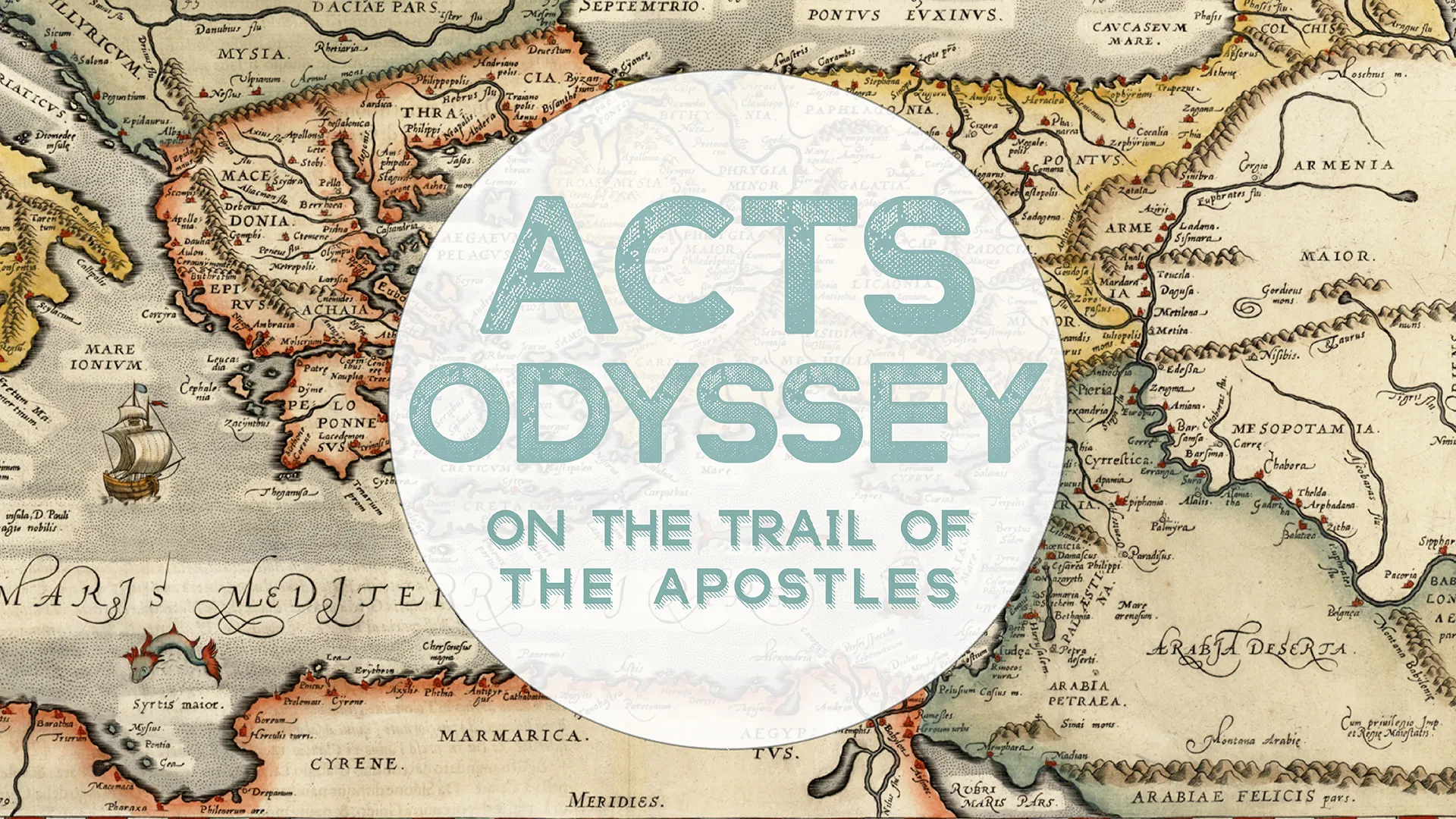
Here's what happened. I want you to look at our Acts Odyssey map. They had been trying to sail up the coast and just kind of island hop, but the wind didn't let them do that. And so they were on this island called Crete. And the sailors just wanted to pop into that little harbor there, Phoenix, just 40 miles up the coast from where they were, because they knew they would have to winter there. And that was a good town to winter in. But Paul warns them, he says, "It is too late in the season. There are storms coming. Do not put out to sea right now. We could get into real trouble." But Luke says that the captain of the ship and the first mate ignored his warnings. And what should have been a three-hour sail turns into a hurricane. And they run aground on an island.
And I want to show you something. They've actually found ancient engravings of the captain and the first mate on this ship. They looked like this, which is so weird when you think about it. But because the weather started getting rough and the Roman ship was tossed and a wind of typhoon force diverts this grain barge into the open ocean where they have no sense of where they even are. And what God does next can teach you and me a lot about surviving the storms of life. A few years ago I heard Mark Spurlock share a fantastic message about this. He's done a lot of research. And so I asked him to share his thoughts. You can see his three points on the outline.
Let's welcome Mark Spurlock as he shares with us. Thank you, René. Good morning, everyone. Thank you. Well, we're going to zero in on three crucial choices in life's storms. But before we do that, René was describing for us the type of boat that Paul and his companions were likely on. A bit bigger than you may have imagined. And I think the same thing can be said of the storm that they get caught in. Because here's the thing. We live right next to the largest ocean in the world, right? And we have nasty storms and huge waves. Just this Wednesday there were 40-foot sets up at Mavericks. Just an hour up our coast. And so I think the tendency for us next to the Pacific Ocean is to think, well, in comparison, you know, the Mediterranean Sea, that's got to be like a big lake. I mean, how bad can the storms there actually be?
Well, I came across a news report recently about a cruise ship that gets caught in a storm pretty much the very same place on the Mediterranean. Watch this. These photos taken by passengers show a ship wrecked after getting caught in a storm. The high winds and heavy rains in the Mediterranean were terrifying enough in land. At sea, it must have felt far worse. We spoke by phone to some passengers on board. We thought it was the end of the world for us. I mean, everything was flying. The bed was flying. The night tables were flying. And the boat pitched back and threw everybody backwards. And you heard, I mean, the whole boat screaming. Anybody that was on their bed was riding back and forth being smashed into walls. There's a lot of injuries, you know, a lot of mad people. Yeah, not exactly happy campers.
But I want you to look at the map again because there's the island of Crete that is mentioned in our axe account. And so again, this is the very same neighborhood. Now in the storm that this cruise ship is caught in, they clocked the winds at over 80 miles an hour. That's hurricane force winds and waves were as high as 60 feet. I mean, can you imagine being in those types of conditions even in a really, really big boat? Well, it turns out you don't have to imagine it because one of the crew members on "Brilliance of the Sea" actually shot some video on his phone in one of the dining rooms on the ship. Just check this out for a few seconds.
Yeah, can you say, "I want my money back?" But I want you to think about this because the "Brilliance of the Sea," this cruise ship is longer than three football fields and it's made out of steel. Holds well over 2,500 people. And yet after the storm, over 100 passengers had to be treated for their injuries. Now let's go back to Paul and the boat that he's on. Even if it's one of those big ones, it's only about a third as long and it's made out of wood planks. How in the world are they going to survive? How are you going to survive the storms you face? Well, essentially I think it comes down to how we answer these three crucial questions and the first one is this. Ask yourself, "What can I do?" Not like, "What can I do?" But, "What can I do that's proactive?" Because so often, we get caught in a storm and if you're like me, the first thing that we want to ask is, "Why? Why is this happening to me?"
But as you know, you rarely get the answer to that question. And let's just say that you do. It doesn't really change anything, does it? You still have to deal with reality. And so a much more productive question is to ask, "What?" As in, "What can I do in response to this storm?" And I want you to see how this plays out on the ship starting at verse 16. "We were hardly able to make the lifeboat secure. So the men hoisted it aboard. Then they passed ropes under the ship itself to hold it together. Because they were afraid they would run aground on the sandbars of Sirtus, they lowered the sea anchor and let the ship be driven along." Now in those days, the ships would tow the lifeboat behind them to save space, but clearly theirs is filling up like a bathtub and so they hoisted on the deck.
In other words, they just start out with the first, most obvious thing that they can actually do. Then Luke says they wrap the whole of the ship with these ropes like you would tie a roast. These ships in ancient times actually had ropes for this very purpose, just hold it together. Then he says that they're afraid that they're going to run aground on the sandbars of Sirtus, you know the dreaded sandbars of Sirtus. It sounds like some place Captain Jack Sparrow would hide out in. But these sandbars, if you look on this map, they're off the coast of modern day Libya and they extend a hundred miles out into the ocean. And so these sailors, they know they're being blown right into this ship's graveyard. And so in response, they deploy the sea anchor and that's just this big plank that has a weight on one end and a float on the other. So when you tow it, it goes upright through the water and acts like a parachute.
Now can you see what they're doing? In rapid succession, they just snap into action and they do the things that they can actually do. Can't do anything about the storm, but what can they do? Now it's normal in the storms that we face. It's natural to be in shock, grief, to be afraid, to be angry. We all go through that, but what can you actually do in response? I mean, we can get, again, we can be stuck on these questions of why, why me, why now? But in the middle of all that, there are still things that you can do to stay afloat. You know, you can get help, you can get counseling, therapy, you can get into a support group, you can slow down, you can maybe invest in just your own self-care.
Have you ever noticed this before? I've seen this, I don't know how many times as a pastor, but if our physical risk, our physical health is at risk, then man, we want the best treatment that we can get right now. I mean, we want it like yesterday, but if it's emotional or psychological, spiritual, if your marriage is sinking, often we lack the same sense of urgency. And perhaps that's because, you know, we've become convinced the storm is never gonna blow over. So, you know, what's the point? But you always have choices, choices that will either help keep you afloat, or choices that can even further sink you. So again, the crucial question to ask is, what can I do? What's that next best step that I can take? And that next best step is gonna be a proactive step, it's gonna be a wise and healthy step.
All right, second question that we can ask is this, what can I do without? The men have basically done everything they can do to keep the ship afloat. Unfortunately, it's not enough. And so now they're gonna make some tough choices. Look at verses 18 and 19. "We took such a violent battering from the storm that the next day they began to throw the cargo overboard. On the third day, they threw the ship's tackle overboard with their own hands." Notice the progression here because more often than not, this is the way it goes. You know, ship strikes, we do whatever we can do in response, and lo and behold, we're still taking on water. This is the time when we have to start thinking about what we can do without.
Because you know that sometimes, you know, there are things we have to give up in order to go on. And it is rarely fun, is it? Your doctor tells you you gotta make some changes in your diet. Not gonna tell you you gotta cut, you know, carrots out of the daily diet. It's not gonna say, "Hey, less broccoli, more bacon." There's always this tension between what we can do and what we can do without. A couple I know, just recently, they got hit with a tax bill much larger than they were expecting for the years. So, first, they start thinking about how they could boost their income, but they also identified ways that they could cut back. First thing they did, they canceled their satellite TV subscription, and believe it or not, they're still alive. Miracle, I know.
Maybe for you, though, it has to do with trimming things out of your schedule, because here's the thing. When we get struck by a storm, it has a real impact on the amount of time and energy that we have to give to other things. I'll give you a personal example. When my best friend died last year, one of the best decisions I did, I gave myself permission to say no to things that I otherwise would have said yes to, because if you take a major blow, you're gonna have to find ways to lighten your load. You just can't roll the way you typically do. And by the way, it doesn't have to be a drag. Sometimes it's very liberating and clarifying when we're forced to decide what actually matters most in our lives.
So, again, ask yourselves, "What can I do? What can I do without?" And third, the third thing to ask in the storm is, "Where is my hope?" Now, talk about a clarifying question. Where is your hope this morning? Really? What keeps you feeling safe and secure? And heaven forbid, what would happen if that were taken from you? Would you still be able to find your bearings? Would you? Think about that, because that's the exact same thing that happens on the ship. Look at verse 20. "When neither sun nor stars appeared for many days and the storm continued raging, we finally gave up all hope of being saved." And pay attention to what Luke, the author here, says, because he does not say, you know, when the storm continued raging for many days, those pagan Roman soldiers, those guys, they gave up all hope of being saved. "Nor did they say," you know, those superstitious sailors, you know, they just buckled at the knees. No, what does he say? Let me hear you. "We finally gave up all hope." All of them did. And why? Because they had lost their bearings, the sun and the stars. That's all they had to keep them oriented. And now that's gone.
Well, how about you? If you lose your true north, so to speak, the thing that you're counting on, how do you keep your hope alive? I have no idea. No, I'm just kidding. I'm gonna toss us back to René. He's gonna come up here, close us out, remind us about the hope that never fails. Hey, thanks, Mark. Good stuff. Let's thank Mark for sharing with us today. So all I want to do is dial down real quick on Paul's speech. Look at verse 21. It says, "After they'd gone a long time without food, Paul stood up before them and said, 'Men, you should have taken my advice not to sail from Crete. Then you would have spared yourselves this damage and loss. Can't resist saying, 'Told you so. Should have taken my advice, guys. But now I urge you to keep up your courage because not one of you, not one will be lost. Only the ship will be destroyed.'
Now, stop for just a second there and look at those words that start off that sentence, "But now," because I think it's super important to see this because God says that to you and me all the time, right? "You should have taken my advice, but now." And this is why I want to focus on this. You know, it's one thing to believe that God will get you out of the storm if you believe he put you in the storm, but what if it was my fault? What if I'm here because I didn't take his advice? That's when real fear kicks in. You know, if God put me in the lion's den, then I believe he can protect me, but what if it was my fault? What if I lost my job because I did something stupid? What if my relationships are falling apart because of something I've been doing? Well, guess what? God says, "Sure, you should have taken my advice in Scripture. Yeah, there's some things you should have done differently, but now. But now."
You can't change what you didn't do. You can't change what you should have done differently. You can't change what you did do. The only thing you can change is what you're going to do next, but now move forward. But now make the best choice from here on out. Do not dwell in the past. Somebody once said, "It's impossible to drive forward while staring in the rearview mirror, right?" So don't become obsessed with, "Why am I in this storm?" And so on. As Mark said, "Just do the next best thing now." Rest of Paul's speech. But now I urge you to keep up your courage. Verse 23, "Last night, an angel of the God to whom I belong and whom I serve stood beside me and said, 'Do not be afraid, Paul. You must stand trial before Caesar, and God has graciously given you the lives of all who sail with you. So keep up your courage, men, for I have faith in God that it will happen.'" Circle in your notes here in your Bible, "It will happen, just as he told me. Nevertheless, we must run aground on some island."
Paul is totally confident that they will be saved, but he says, "The ship is doomed." So don't put any hope on the ship. Let me just summarize his speech in three quick bullet points. First, don't focus on the headlines. Don't focus on the waves. Focus on God's promises. Focus on God's unchanging promises. He says, "It'll happen, just as he said, even though the boat will go down." Do you believe that today? Listen, some of you really need to hear this today. You need to make sure your hope is not tied to your conditions. See, if your hope is tied to the boat, when the boat goes down, your hope sinks too, right? If your hope is tied to your bank account, when your bank account goes down, your hope goes down. If your hope is tied to some political candidate, when that candidate goes down, your hope goes down. If your hope is tied to some relationship, when that relationship breaks apart, then your hope goes down. But Paul is saying, "My hope is not in the boat."
You could really summarize his speech in that one sentence. "The sailors were trusting in the boat to get to shore." But Paul's saying, "You know, funny thing about the boat, I like the boat. Keeps me dry. It's better than dog paddling to shore." But guess what? We're dog paddling to shore. The boat's going to go. Can you say, "My hope is not in the boat?" Say this phrase with me out loud. "My hope is not in the boat." Because the boat is going down. Every boat eventually goes down. And really, this is the second bullet point in the storm. It helps to face the worst case scenario. Face the worst case... See, listen, fighting fear is not pretending bad things don't happen, right? A lot of people think the way to fight worry and the way to fight fear is to say, "I will just refuse to worry, and I'm just going to pretend only good things will ever happen to me. I'm going to have blue skies forever. I proclaim that." And that is not what Paul does here. The ship's going down, everybody.
Listen, sometimes you need to look at your fear right in the face and go, "All right, what if?" What if that does happen? What if the worst thing I can imagine happens? Because sometimes it does. Now, listen, most of the time, the things we're worried about never happen. But sometimes the worst thing you can imagine actually happens. Well, what if? What if it does? The relationship may not turn out the way you want it to. The retirement may not work out like you dreamed. The candidate or proposition you might like might get defeated. You're going to be okay. The boat might sink, but you will survive. I mean, you really will. If worse comes to worse and you die, you'll be resurrected.
See, look at verse 22 again. Is this an encouraging verse or a discouraging verse? If you start with the sentence, "The ship will be destroyed," that's bad. But if you back up one word, "only," only the ship's going down, but we're not. It really reminds me of that time that Jesus said to his disciples, "Do not fear those who only can kill you." Don't be afraid of people who can only kill the body. And when Jesus rose from the dead, his disciples get what he meant because Jesus appeared before them alive and said, "Worst case scenario for you guys happened to me. They arrested me. They unjustly tried me. They spat on me. They tortured me. They crucified me. They killed me, but I only died. And then I rose." And mine is the first resurrection of many, including yours.
Sometimes the best way to conquer fear is to ask the worst case scenario question. This might sound trivial to you, but you know, when I was trying to decide, should we go ahead and build the 2020 children's building, it was a super traumatic decision for me. I guess maybe afraid of failure. And somebody very wise, it was Don Gaynor, I think, said, "Well, Renee, what if the worst case scenario happened and you tried this and people didn't go for it or what's worse, people make the pledges, then they don't keep the pledges. And we tried to build a building and then horrible things happen and we go into debt, everybody gets mad at you because it was your idea and you got fired. So what if that did happen? Would God still love you? Would your wife and kids still love you? Would God grow you through it? Would Twin Lakes Church still have a purpose in the community? Would the Church of Jesus Christ globally be okay?" Yes, yes, yes, yes, yes.
My hope is not in the boat. Now, I love the boat. I love this church, but my hope is not in the church buildings. My hope is in the one who said, "Upon this rock, I will build my church and the gates of Hades will not overcome it." Amen? You know, say this phrase again with me. Just say it with me because it's so instructive. Say, "My hope is not in the boat." Say it. My hope is not in the boat. Whatever your boat is, don't put your hope there. My hope's not in the boat. My hope is in the Lord of the wind and the waves. Face the worst case scenario and then feed hope, literally feed hope.
Verse 33, "Just before dawn, Paul urged them all to eat for the last 14 days. He said, 'You've been in constant suspense, have gone without food. You haven't eaten anything. Now I urge you to take some food. You need it to survive.'" And he reiterates, "Not one of you will lose a single hair from his head." Listen, what Paul is saying is this is not just a spiritual battle. And in my observation, this is the mistake so many Christians make when it comes to anxiety. It is a spiritual battle, but listen, it is also a physical battle because we're not just spiritual beings. We're not ghosts. We're also physical beings. You do need to fix your thoughts on Jesus. You also need to eat right. You also need to have healthy sleeping habits and healthy activity in your life. Paul says you need it to survive.
Paul does not say, "Guys, you only need prayer to survive." He says, "Guys, you need food." Physical habits can feed your hope. Eating right, getting out, looking at nature, being social, and then look at how it all ends. After he said this, he took some bread and gave thanks to God in front of them all. To me, I'm imagining the ship that you just showed us video of, and Paul's going like this, and he's taking bread, and he's breaking it, and people are watching him. And they see him eating it, and they were all encouraged and ate some food themselves. What happens? They see Paul calm and collected and courageous. And when you're courageous, it's contagious.
So here's the question to take home with you. Listen, what do people see you doing? What do people see you posting on social media? What do people hear you saying? Do they see you as a Christian hopeful or freaking out? Ask, "Am I an example of panic or of trust?" Because what people really need to see from the people of God, especially in this country at this time, is the kind of calm and courage and unity and hope that Paul shows in this storm. Amen? Now, what happened next to Paul? Did he survive? And if so, how did they all make it? If the ship's going down, how do they all make it safely to shore? Well, you're just going to have to read the Acts Odyssey book to find out. Let's pray together.
Heavenly Father, in our storms, give us your wisdom to know what we can do, to know what we can do without, and to place our hope firmly in you and not in the boat. And God, after a week of a lot of focus on the kingdoms of people, we just want to pray, "May Your kingdom come. May Your will be done on earth as it is in heaven." In Jesus' name we pray. Amen.
Sermons
Join us this Sunday at Twin Lakes Church for authentic community, powerful worship, and a place to belong.


