Expect the Unexpected
God can turn unexpected challenges into opportunities for growth.
Transcript
This transcript was generated automatically. There may be errors. Refer to the video and/or audio for accuracy.
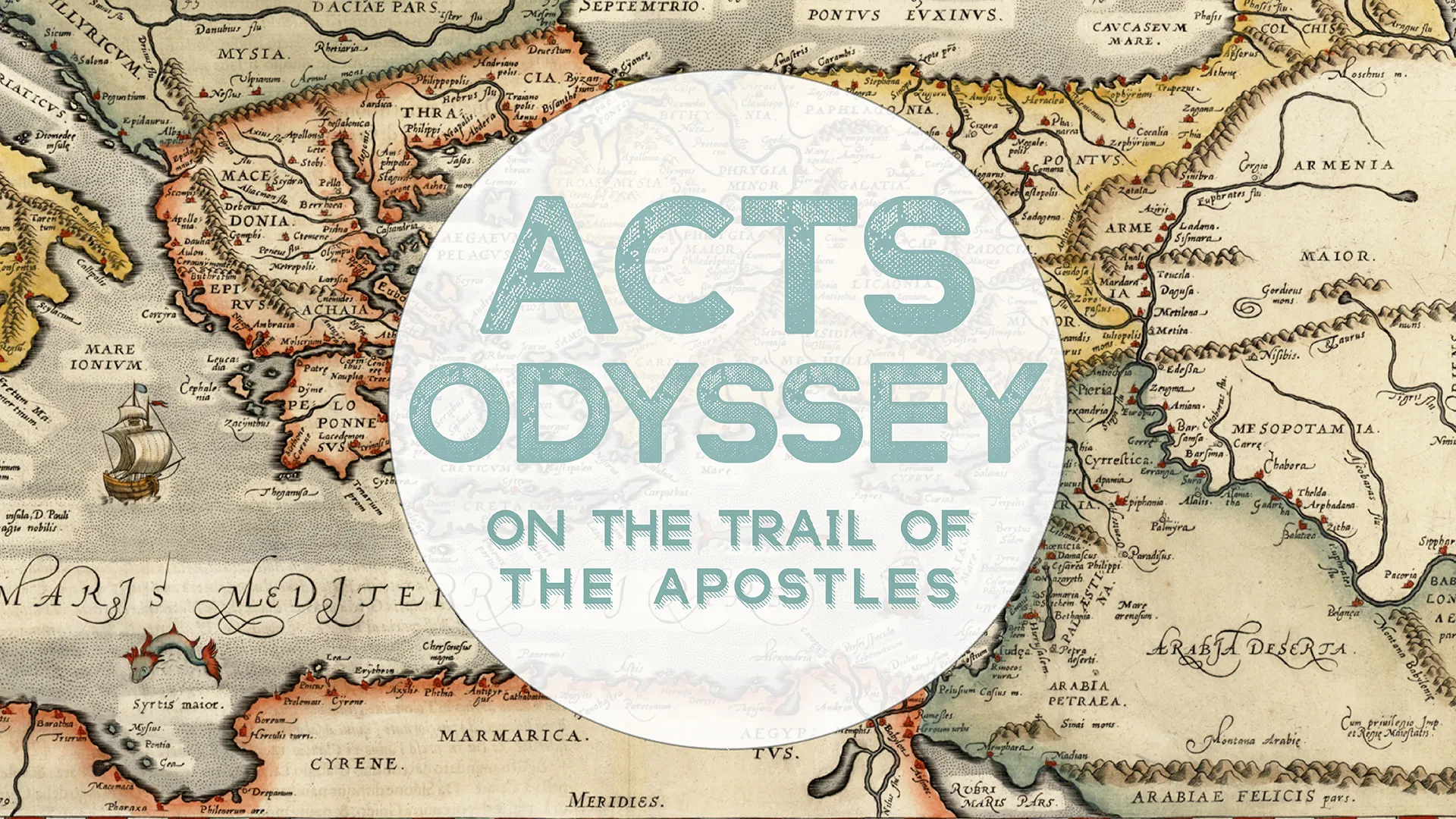
Into a violent world that prized only power, came a movement motivated by love. A few frightened failures huddled in one room became a global phenomenon, fanning across their world within 30 years. With no army, no politics, no detailed strategy, they changed history. How did it happen and can it happen again? This is Acts Odyssey.
In this series we are studying the biblical book called Acts. It tells the story of the very beginning of Christianity and we are asking how can it happen again? How can we be like these people who are so exciting, so adventurous, so daring, so welcoming when they against unimaginable odds took the message of Jesus Christ to the world? And I gotta tell you, as I have studied Acts and I am just digging this study. By the way, if you haven't gotten into it yet, if you're just joining us today, I wanna tell you, we wrote a book that ties into this study. It's kind of a travel guide to the book of Acts called Acts Odyssey. You can pick one up at the info desk. It's a $10 donation. All the money goes back to the church and if you don't have that, just take a book. We want to get one of these into your hands. There's also audio books, all kinds of other ways you can get involved.
On page three of your notes, it tells you how you can text to receive free daily video devotions every weekday based on the book of Acts. Because we really wanna immerse ourselves in the environment of Acts and help answer the question, how can this all happen again? And as I said, one of the things that really impresses me most about these early followers of Christ is how they respond to the unexpected twists and turns of fate. Unexpected surprises happen to these people in Acts all the time. The book is like a parade of problems. Suddenly, they're betrayed. Or suddenly, they're thrown into prison. Or suddenly, there's a riot. Suddenly, there's a shipwreck. Suddenly, there's a snake bite. There's always something upending their expectations.
And instead of doing what I often do, asking, "God, why me?" Or, "God, why this?" Or, "God, how can bad things happen to good people like me?" They never seem to ask those questions. Instead, they just kinda go, "All right, what's next? I'm up for it." And this is huge. Because would you agree with me, here's a truth about life. Nothing ever goes exactly the way you plan. How many people would agree with that, right? Nothing, nothing, nothing, nothing. Ever goes exactly the way I plan. Therefore, it follows that, listen, so much of your happiness and so much of your effectiveness is about how are you going to handle the unexpected things, right? How do I react to unexpected challenges that life hits me with? The sudden road closures. The sudden illnesses. The sudden breakdown of the bullpen blowing a three-run lead in the ninth inning of a must-win playoff game. All kinds of things that hit us, we're out of the blue, right?
Well, in this story from the book of Acts, chapter 8, that we look at this morning, nothing goes the way anybody plans. But when you see how they react and how to apply it to your life, it really does have the potential to change your entire existence. So what I want to do is tell this amazing story first. It's a story that a lot of people don't really know is in the Bible and the people who know it's in the Bible, I don't think they really understand the nuances of the story. So I want to tell the story and then I want to draw three principles from it. So quick plot recap. Last week we saw how the 12 apostles, the original inner circle of Jesus' followers, were all arrested and they were warned to stop talking about the name of Jesus. They were flogged. And after that, here's the verse we left off at last weekend, "The apostles left the Sanhedrin rejoicing because they'd been counted worthy of suffering, disgrace for the name day after day in the temple courts and from house to house, they never stopped teaching and proclaiming that Jesus is the what? The Messiah."
So now what happens next? Well, this is a game changer because one of the men who speaks out boldly is a very persuasive speaker named Stephen and he's making such an impact that the religious rulers decide they're going to make an example of him and they drag Stephen outside the city gates where he is stoned. And I always have to explain to a Santa Cruz audience what I mean by stoned. This is not the Santa Cruz kind of stoned, all right? This is rock sitting your head until you die. This is a bad kind. Not that that other kind is not bad, but you know what I'm talking about. And it says on that day a great persecution broke out against the church in Jerusalem and all except the apostles were scattered throughout Judea and Samaria. They just take off.
And one of the early Christian leaders, a guy named Philip heads to Samaria. Why? He goes there to hide out. Let me show you on a map. Samaria is exactly where Nablus, the West Bank, the Palestinian governed territory in Israel is today. And if you think tensions today between Palestinians and Israelis are bad, ratchet that up about a hundred degrees to understand how bad tensions between the Samaritans and the Jews were in the first century, in the time that the Book of Acts happened. There was violence. There was bloodshed. There was racial tension between these two groups. There was political tension between these two groups. And there was religious tension between these two groups.
Right before the Book of Acts was written, a band of Samaritans broke into the temple at Jerusalem and slaughtered pigs and spread pigs blood everywhere to make the temple in Jerusalem unclean. And in retaliation, a band of Jews broke into the Samaritan's temple here and slaughtered a bunch of Samaritans who were at worship. So this is like Sunni, Shiite. This is Palestinian Jew. This is really intense racial and religious division. And that may be exactly why Philip goes there as a Jewish guy. He's going to lay low in a place that he thinks the religious leaders of the Jews are never going to chase him because they won't dare come into that territory. But you know what's interesting? He cannot stop talking about Jesus. Luke says he proclaimed the Messiah there.
Now this is interesting because the Samaritans have their own religion, but they also believe that a Messiah-type figure would one day arrive. Now they had a different name for him. They called him the Ta'eb. But their own prophets said that the Ta'eb would come one day from God and he would set everything right. And so when Philip starts talking about the Messiah, it connects to this thread in their culture. And so crowds of Samaritans become Jesus followers. And Philip, this Jewish guy, must have just been amazed at this. He's thinking to himself, it's like the Jesus message is better received here among Samaritans than it was back home. Amazing. Completely unexpected. But he had to him in thinking, "I think I found a home here. These people love me and my enemies can't reach me here." But God says, "Don't get too comfortable."
In verse 26 it says, "Now an angel of the Lord said to Philip, 'Go south to the desert road that goes down from Jerusalem to Gaza.'" Let me show you this on a map. That's a road that goes from the interior and you see how it skirts dangerously close to Jerusalem where everybody's hunting Philip's head and then through the inhospitable desert down to the coast to the Gaza Strip. And Philip had been thinking, "But I'm up here safe. I don't know if I want to take that detour down there, but all right God, if you're directing me to, I will." And so he started out and on his way he met an Ethiopian eunuch. This is an African man who as we shall see is riding in a luxurious chariot and Philip, against all expectations, gets involved in a conversation with this man, a conversation that changes his country's history.
But I want to press pause on this story for just a second to show how all of this illustrates the three points in your notes about handling the unexpected on page two. I want you to think of this. The catalyst for all of this action in Acts 8 is interruption. Nothing goes the way any of these people plan. It's one interruption after another. But I see in these early followers of Jesus three ways that world changers expect God to work through the unexpected. And since our lives are full of unexpected stuff hitting us all the time, if we learn to see those unexpected things through this prism, through this lens, it's going to activate courage and activate boldness and activate faith. Jot these things down.
Number one, they clearly believed that God turns unexpected pain into gain. Think, God takes even the worst thing that these people could have imagined, the death, the assassination of their beloved Stephen and the resulting persecution, and God uses it for good. How? Question. What did Jesus tell the disciples to do at the very start of Acts in Acts 1:8? He said, you will be my witnesses, and let's read the rest of this verse on the screen out loud together, in Jerusalem and in all Judea and Samaria and to the ends of the earth. Second question, did they do this right away? No. They got to the first place he mentions Jerusalem and then they just stayed there. For the first seven chapters of Acts, they never make it much further than the city gates. Why? It was exciting. What was happening there was so beautiful. And Luke says, even though the leaders were against them, they enjoyed the favor of all the people. Why would they want to go anywhere else? So they just stayed in Jerusalem.
It was not until the persecution happens that they may not be able to go anywhere else. That they move out because they had to. And it says, those who had been scattered preached the word wherever they went. Now, obviously God does not want his people killed. That was a bad thing done by bad people. But God takes this bad thing and he turns it into something that has good effect. I'm going to put a sentence on screen. You tell me if you think it's true. Sometimes we get so comfortable where we're at that we don't move to where God wants us to go. Right? That was the case with these first followers of Jesus. God wanted them to move geographically to there, to there, to there. And they were like, but this is so comfortable. And that happens with you and me too.
Maybe your move isn't geographic. Maybe you know, and you've known this for years, what Jesus is calling you to do is to move from your addiction to sobriety. Or to move from your focus on your career and frankly kind of a workaholism to a place where you're really cherishing your family. Or he's been wanting you to move from a place where you and your spouse are sort of living separate lives, but living under the same roof to a place where you really have intimacy and beauty in your relationship again. You know he wants you to make that move, but for a lot of us, just like for these guys, it doesn't happen until we're prodded by pain. Right? Suddenly, there's pain. And you're prompted to make the move. Now, I'm not saying that God causes the pain. In most instances, we human beings do a pretty good job of that all by ourselves. But God takes the pain and he can use it to move you someplace good.
If we had the time, I bet we could hear a hundred examples of that just from the people in this room. How a job loss or a relationship crisis or even a disease or even a death moved you to a place that was better for you spiritually. God can take unexpected pain and turn it into gain. And these people believe that. And you're going to see them responding to problems all throughout the book of Acts with this core belief. The number two, they believed God has unexpected divine appointments for me all around the corner. You familiar with this phrase divine appointment? That's when you cannot understand why your plans did not work out. And then you realize God changed your plans for a reason. There was somebody who needed a helping hand or a listening ear or a caring heart. It wasn't your plan, it was a divine appointment.
You say, what are you talking about? Check this out. Just got this email a couple of days ago, somebody who attended TLC for the first time last weekend. Maybe she's here this morning, so I'm going to keep this anonymous. But she says, I just moved here four weeks ago to Santa Cruz, moved from another state. I've been sort of looking for a church home but unsuccessfully. Well, this last week I was on my way to Costco. And you know how that neighborhood around Costco gets so busy, just solid traffic jams, right? She says, well, I ended up getting an offender bender. That's always a drag. While we got out and we're figuring out our insurance information, the other driver asked if I had a church I was attending. And she invited me to Twin Lakes. This is the person who hit her, inviting her to church. It turns out that's only a seven minute drive away from my house. And then she invited me to join her small group. Well, I did. And I attended last weekend for the first time and was so encouraged, I went home and sent the sermon to a ton of my family and friends. Isn't that cool? That fender bender divine appointment.
And in Acts 8, Philip and this Ethiopian man, divine appointment. But here's the thing. You need to keep your eyes and ears open for the divine appointments. Because do you agree with this? You, what you look for tends to be what you see. Have you noticed that? If you look for trouble, if you wake up in the morning thinking, this is that, like normal, this day's going to be full of annoying interruptions, can never get, can never get my to-do list done. That's exactly what you'll see. But if you look for the divine appointment, then that's what you'll see. So I just want to lay down a challenge. Look for the divine appointments this week.
And then the third thing we see in this story about all these unexpected twists and turns is this. God reaches out to unexpected people. Unexpected people respond to the gospel. Philip already saw the Samaritans, these complete, these people against whom there was all this racial, religious, political tension. And yet they completely respond to the gospel. That was unexpected. And then now he's about to experience it again with this African man. Never assume someone else's response to the gospel. Never assume, well, that person or this person, they're not going to be responsive to me talking about Jesus because I just don't think they're that kind of a person. Never, never, never assume that. Because God reaches out in unexpected ways. And I really want to drill down on this for the rest of our time together.
Because this starts happening in Acts one chapter after the next. Watch this. In this chapter we had Samaritans and this African man. The next chapter, a Pharisee who is a persecutor of the Christians ends up becoming a Christian. In the next chapter, which we talk about in our small group videos this week, an Italian, Roman, Centurion soldier becomes a Jesus follower. And that just happens one chapter after another. It blows the minds of the 100% Jewish leadership at the time, how it's just becoming this amazingly diverse Jesus movement. So let's really dig down into this. Let's lift the pause button and rejoin the story.
Philip meets an Ethiopian along this road. Now, who was this guy? In those days, Ethiopian did not mean the country of Ethiopia that we know today. The term Ethiopian was used by all Greek writers to refer to any African south of Egypt. There were the Egyptians, then there were the Ethiopians who were all the other Africans. Okay, so Africa is a giant continent. Can we narrow it down at all? Yes. Luke says he was an important official in the government of Candace, queen of the Ethiopians. This is an important clue because Candace is actually not a name. Candace was a title like Pharaoh or Caesar. The Candace was the name of their queen. All right? And actually it wasn't pronounced Candace, it was pronounced with hard C's, kandake. Can you say that out loud with me? Say it. Kandake.
The Kandake was specifically the title of the queen mother of the Nubian kingdom in Africa. That's very helpful. Let me go to Google Maps to show you where the Nubian kingdom was. It was in the middle of what we now call Sudan, down in Africa south of Egypt. And around the time that the book of Acts takes place, there was a very famous wealthy queen who ruled there for a number of decades, a famous Kandake. We even know what she looked like. Here she is, Queen Amanatori. Queen Amanatori is who this man in this story in the Bible worked for. And we know this because she ruled the country in the middle of the first century for about 30 years, right when the story takes place. And we know a lot about her from history. She is buried in her own pyramid. This is her tomb. It used to have a steep pyramid on top like these other pyramids from the same area which she built. In fact, Queen Amanatori built more than 200 of these pyramids in Nubia.
And this is important because historians say the amount of building that a ruler does indicates their wealth, right? Somebody who's not wealthy and prosperous isn't going to have the resources to build a lot. She builds 200 pyramids and she builds palaces and she builds huge reservoirs for water. And based on records of other countries who traded with the Nubian Kingdom, we know what their main exports were. Look at this. They exported primarily gold jewelry, exotic animals, and expensive fabric. Let me ask you, are these the exports of a poor country or a wealthy country? A wealthy country. Why is this relevant to our understanding of this Bible story? Well, guess who's handling all of this wealth? The guy Philip meets in this story. Luke says he is in charge of the treasury of the kandake of Ethiopia. So he's like the CFO of a very wealthy country. He's dripping with wealth.
All right, what did he look like? Well, I want to show you some ancient Nubian art from around that time. This is how they portrayed themselves. He looked something like this. He was a black African man. I even found an ancient image of a Nubian official riding a chariot, just like the guy does in this story. Can you make that out over there on the left? Can you see how there's a servant actually driving the chariot? And the wealthy official there is just relaxed, just riding in the chariot, which explains how this story worked. Because the story says he was sitting in the chariot, reading. There was somebody else driving. And I want you to look at another interesting detail. What is pulling the chariot? What kind of an animal? It's a cow. It turns out that the Nubians used horses to pull chariots only in times of war. When they were just traveling somewhere, they used cattle. And keep that detail in mind, because it helps explain something later on in the story.
So everything I just told you would have already made this guy very exotic to a Jewish man, very much an outsider. But Luke goes even further with a fascinating detail. He says this Ethiopian was also a eunuch. That means he'd been castrated. His gender was altered. Now, I don't want to get into too much detail or make anybody uncomfortable here, but it means his testicles were removed or even crushed so that they wouldn't work anymore when he was probably a young boy. Now, how in the world would Philip have known something that personal about this guy? Well, there are some very visible effects of castration. Males do not develop what they call secondary gender characteristics. The voice of a male who's been castrated is very high and effeminate. They don't have any facial hair, so their skin would be very smooth, like a woman's skin. And, of course, another effect is that he couldn't have any children, which would be a very big deal in that culture, even more than in ours, because a lot of your worth was partly gauged on how big's your family? Well, he could have no family.
Now, in case you're wondering before I move on, why in the world would anybody get castrated? In those days, in many royal courts, they would only allow castrated males to serve royalty. Why? Because they didn't then have to worry about those castrated males getting involved with the queens or the princesses. You see how that worked? So here's a big question. What is this man doing here? What is he doing in Israel? He's the ultimate outsider. He is a black, African, sexually altered foreigner. So what's he doing here? Well, look, Luke tells us he's gone all the way from his palace in Nubia to worship at the temple in Jerusalem. Let me just show you. That is a long way. And now he's coming home. So just think about this. What do you think would make a man like this take a thousand-mile-plus journey, leave his own culture that had its own religion, by the way? Why would he do that? Well, the answer is there must have been an enormous emptiness inside of him.
You know, sometimes we think of reaching out, and we think reaching out means reaching to the down and out. But, you know, reaching out as Christians also means reaching out to the up and out. Just because you're wealthy doesn't mean you don't have spiritual needs. Sometimes the wealthy realize they can't get the satisfaction from all their wealth like they thought they could, and apparently that happened to this guy. He gets interested, excuse me, in the God of the Bible, and he says maybe there is something for me up at that temple in Jerusalem. And then when he gets to the temple in Jerusalem, after all that journey and all that sacrifice and all that time and all those miles, they would not have let him in. Because the temple was organized according to the religious law, which had all kinds of rules about who could go into temple to worship.
Like if you had accidentally even touched a dead body, you couldn't go to the temple for a number of days until you were cleansed. Or if you had mold in your house, you couldn't go to the temple until your house was cleansed of the mold. Why? Because all those rules were there to get across one idea. God is holy and we're sinful. And you can't just walk into God's presence. Something has to be done about your sin, your uncleanness. And all those rules and regulations were like object lessons to get that point across. But some of the temple rules permanently excluded people. And one of the rules was no eunuchs. No castrated people can ever go and worship God. Not ever. So you know the rest of the story when Luke says that this eunuch went up to the temple to worship. He went to all that trouble just to be excluded. He took that whole journey just to be left outside. Imagine his disappointment.
And it says on his way home he was sitting in his chariot. Again because somebody else is driving. So he's sitting down in his chariot, maybe his legs dangling, reading the book of Isaiah the prophet. Now why would he have been reading this part of Isaiah, which is a book in the Hebrew Bible? Well he's reading a section that's called the suffering servant section. And it's about a mysterious figure who is completely innocent of anything, yet is condemned by God to feel rejection. And when Philip comes up to the chariot it says the eunuch was reading this part out loud. He was led like a sheep to the slaughter. And as a lamb before its shearer is silent so he did not open his mouth. In his humiliation he was deprived of justice. Who can speak of his descendants for his life was taken from the earth. And this Ethiopian must have been thinking I identify because I felt humiliation. And I feel deprived of justice and that line who can speak of his descendants. Remember as a eunuch he can never have descendants. And so this Ethiopian is thinking I can relate to this person I'm reading up. This person in Isaiah knows how I feel. I'm drawn to this person. But who is this person?
And just at the moment that he's thinking who is this? The Bible says Philip shows up. Divine appointment. And the spirit tells Philip go to that chariot and stay near it. I don't know if you heard an audible voice or is this one of those nudges that you feel sometimes. But it just says go just stay near stay near and see what happens next. Now how in the world does a man on foot keep up with a chariot? This part of the story never made sense to me because I know how fast horses are. And I thought it was like this Philip going do you understand what you are reading you know something crazy. But based on the evidence we just saw what do you think the chariot was probably being pulled by what? A cow. So Philip's able to just kind of stroll on up and he hears the Ethiopian reading and Philip starts. Remember who he's looking at. And this is a Jewish man talking to him. This is very foreign and Philip makes the leap into a conversation. He never brings up newbie in politics. He never brings up the fact that this guy was a eunuch. He never brings up anything that's going to cause conflict in their conversation. Instead he chooses to build bridges and he says do you understand what you're reading.
And this Ethiopian turns to Philip and says how can I unless somebody explains it to me. Come on up and sit in the chariot with me. Tell me please who is the prophet talking about himself or someone else. And Philip must've been going are you kidding me. I know who he's talking about. And it's someone else. And it says then Philip began with that very passage of scripture. And he told him the good news about Jesus Christ. And if he began with that passage then he went to a verse in Isaiah 53 that says by his wounds we are healed. And he must've said to this Ethiopian eunuch you know none of us are clean enough to enter the presence of God. So how did God solve that problem? He came himself to take on all of our uncleanness so we could be made clean. Take on the curse for us so we could receive blessing. To take on death for us so we could get life. And maybe in the eunuch's eyes there was a glimmer of hope and he thought no it's too good to be true.
Now notice it says Philip began with Isaiah 53. He began there. That means he didn't end there. That means he kept on rolling the scroll. And that means he came to the next part of Isaiah. And just imagine the crackle, the electricity in the air when he says to his new friend in the chariot listen to this. Isaiah 56. Don't let foreigners who commit themselves to the Lord say the Lord will never let me be part of his people. And don't let the eunuchs say I'm a dried up tree with no children and no future. And the eunuch had to be going what? That's in there? Yeah for this is what the Lord says. I will bless those eunuchs who keep my Sabbath days holy and who choose to do what pleases me and commit their lives to me. I will give them within the walls of my house a memorial and a name far greater than sons or daughters could give. For the name I give them is an everlasting one. It will never disappear for the sovereign Lord who brings back the outcasts of Israel says I will bring others too. Besides my people Israel.
Can you imagine his reaction? I'm just thinking he's just starting to just weep as he sees himself referred to in scripture. And as Philip says the Messiah came so that you could be brought in. And this just resonates with this African guy and it says as they travel along the road they came to some water and the eunuch said look here's water. What can stand in the way of finding baptized? And the answer is nothing. And he gives orders to stop the chariot and Philip baptizes him right there. I think of some of the pictures of our own baptisms a couple of weeks ago. And I think this man must look something like this just coming out of the water just rejoicing. And it says he went on his way with joy back to his home country.
And get this this is brand new research I just read an article this summer. Historians used to believe that Armenia was the first country to declare itself a Christian country before the Roman Empire went Christian. But now they know that Armenia wasn't first. Actually it was another country. It was Nubia. This man's conversion started dominoes that changed his whole country. And it was because Philip just chose to see this unexpected journey as a divine appointment and was open to just starting a conversation. This is such a great story isn't it? And clearly you know what I appreciate Todd's enthusiasm. Let's all give God's glory for this great great great story in scripture.
It really is great because here's big. Here's two takeaways from this. Listen first of all when I feel like the outsider I need to remember God welcomes me in. This is why Jesus came. God welcomes you in. Heard a great story called the Whisper Test. A woman named Mary Ann Bird was born with a cleft palate you know a deformed upper lip. And this was way back before the days when surgery was widely available to repair that. And so she was made fun of by her classmates in elementary school as you can imagine. Always felt rejected by the kids. And one day it came time for the Whisper Test. The annual hearing test. And here's the way it worked. The teacher would call each child to the front of the class. They would stand there with their back against the blackboard. And the teacher who was in back of the class would whisper something. And of course this would be heard by the whole class. But if the furthest person away the child at the front of the pass was able to repeat what the teacher said. Then they passed the Whisper Test. The hearing test back in those days. And the teacher would always say something innocuous like, "The sky is blue." Or, "You have new shoes." Well one year the teacher in fourth grade, Ms. Leonard, was doing the Whisper Test. And when her turn came Mary Ann was called to the front. And she already felt so conspicuous. All the other kids stared at her. And here is what she writes happened next. "I stood there and waited. I waited for those words which God must have put into her mouth." Seven words that changed my life. Because Ms. Leonard did not say, "The sky is blue." Or, "You have new shoes." No. Ms. Leonard carefully whispered, "I wish you were my little girl."
And you see what you start to see happening from this point on in the Book of Acts. Is God whispering to outside group after outside group after outside group, "You are my girl. You are my boy. You are my child. Welcome home." So if you've ever come to church and thought to yourself, "I identify with that Ethiopian eunuch because I've made the journey and felt like the doors have been closed to me." That is not God. That's our fault if we made you feel that way. God came to say, "The doors are open." It doesn't matter what your background is. It doesn't matter what you've done in the past. It doesn't matter what your country of origin is like. Why? Because we're all saved by God's grace, which we can't possibly earn. It has nothing to do with our background, nothing to do with our culture, nothing to do with our race, nothing to do with our works. It's God's grace alone. And so the ground is equal at the foot of the cross.
When I feel like the outsider, remember God welcomes me in, but there's a corollary to this that's just as important. Listen carefully. When I feel like the insider, I need to remember to go near the outsider. And I mean go near literally. You know what Philip was told by the Spirit? Go near that man's chariot and stay near. The Spirit says the same thing to you and me. And I mean literally. When before church or during the greeting time or after church, you see somebody who maybe because of, like this man in the story, because of their race or because they're an immigrant apparently from another country or because of their language or for any other reason that you see from their body language, maybe they feel a little bit like the outsider. It is your responsibility as a representative of Jesus Christ who came to break down all barriers to make a beeline for that person and say, "Hey, my name is so-and-so. I just want to welcome you." And to let the outsider know they feel welcome.
Now, this is not easy. This calls us out of our comfort zones. This is still a problem in churches today because naturally as human beings, we want to coalesce into our little groups where we are the insider. But as Christians, God calls us out of our comfort zones. Now, I talked in this story about the racial tensions that were part of the first century world. It's sure a good thing that racial tensions aren't a part of our world anymore, isn't it? Of course, they still are a part of our world, part of our country. It's headline news. And so we as a church need to be aware of it and need to be asking, "What do we have to say to that? How can we personally as individuals get past that and extend a hand of friendship?"
I was talking at Mount Herman this summer where I was speaking with John Wineglass over lunch one day. And John, you see him up here sometimes playing keyboards or playing violin. John is an Emmy Award-winning music composer and conductor, and he's an African-American. And we were talking about race and the gospel. And I asked him if we could continue that conversation with all of you eavesdropping. I wanted to do it live, but John had to be in Los Angeles this weekend. And so a couple of days ago, we sat here and videotaped it, and here's part of our conversation. John, people might look at you and think, "Here's a multiple Emmy Award winner. Here's a symphony composer, university teacher. Surely he hasn't had experience with racism, but you have."
Oh, yes. Yes, yes. Very much so. I recently, probably in the last three or four years, in Santa Cruz, of all places, a place that's pretty progressive, was called the N-word. And I've been many places, the South, Louisiana, Mississippi, places where you would think that would happen. But for the first time ever in my life, probably about five years ago, that was the case right here in good old Santa Cruz. Called a racial slur in Santa Cruz. Yes. And I think you mentioned you had something happen at a local golf course. Yeah, there's a local golf course where even today, in short, people of color are not allowed to play there. Either through their bylaws or kind of ways of, what's the term, passive aggressively avoiding people of color, whether it's financially or just by laws, that they don't allow people of color to golf there. There's a lot of neighbors who attend here at TLC who are black, and their son was the object of racist action at San Jose State. I mean, he was chained up like a slave and called racial slurs, and this is not Selma in 1950. This is San Jose in the 21st century. California, which is... Does that surprise you? It's bizarre, yeah.
So we know there's a problem, a problem that we don't encounter, but that anybody who is black says, "No, believe me, it still happens." So what can we as Christians do? What can we do as a church? What can we do personally? It is coming outside of your comfort zone, probably, of reaching out to people of different background. Go sit next to them in church. Shake their hands. How many eyes? Right. I think, yes, but it has to be genuine, because the person will know. You'll know if it's not. You'll know if it's force. It has to come from the heart. And so, yes, go sit with that person. Take him out to lunch. I've had a lawyer who came to me at the particular church, one of the churches I serve with here, and wanted to take me and my wife out to lunch to discuss topics and things of that sort. I think the more that we talk about it and the more that we have discussions about it, the more that we are surrounded with people who are not like us, the better place the world can be. It's being intentional about going out and forging relationships with people who are different than you. The Korean community, the Chinese community, the black community. It's intentional. And to get through what we're going through today, it's going to be taking intentionality to address the issues that are on the front page today.
So, John, as a Christian, how does the gospel speak to racism? Well, actually, my wife just sent me a text earlier about this very thing, and it was in Galatians 3:28 where it talks about being one in Christ and not focusing on the differences, but on our similarities. And I think that if we're able to have a discussion where we're able to share our ideas and, again, be open to one another and not judgmental and not personal, then it'll be a step towards healing. I want to be part of the solution, don't you? I want to be part of the solution as God's people. And I love the verse that John referred to at the end, Galatians 3:28, and as we wrap up, let's just read this out loud together. And looking at the book of Acts, you understand what forged this kind of thinking, because these people who started the Jesus movement are seeing to their amazement that one border after another is being hurtled, and all these other people from other races and groups and languages are all coming into the church and being Jesus followers, and what they realized was the truth that's expressed in Galatians 3:28.
And let's read it together and say it like you mean it. "There is neither Jew nor Gentile, neither slave nor free, nor is there male and female, for you are all one in Christ Jesus." And that can happen again. Let's pray together. Heavenly Father, thank you so much that you came to welcome us in. And God, I just pray if there's anybody here today who feels like I am an outsider here, God, I pray that they would run into your arms and hear you saying, "Welcome home." Because of the sacrifice of Christ, all debts have been paid, and we are one in Him. And God, help those of us who may feel like insiders to always have our eyes open, and to see those who may feel like outsiders and draw near to them and stay near and listen to the conversation and befriend sincerely and welcome them into the family. We want to be like this early Jesus movement more and more and more and more and more here at Twin Lakes and beyond. In Jesus' name we pray. Amen.
Sermons
Join us this Sunday at Twin Lakes Church for authentic community, powerful worship, and a place to belong.