Greetings

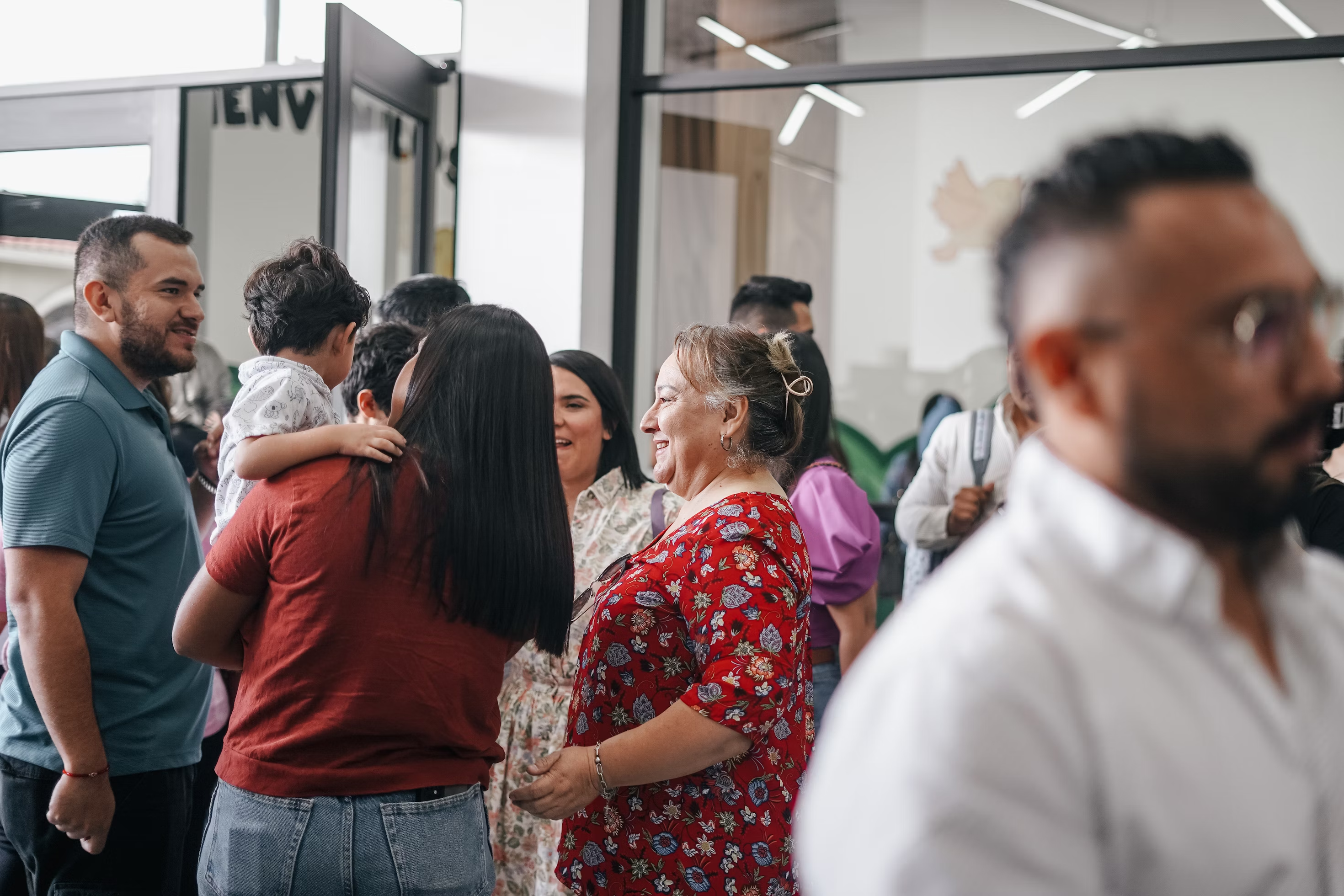
Richard shares the importance of greeting one another warmly.
Transcript
This transcript was generated automatically. There may be errors. Refer to the video and/or audio for accuracy.
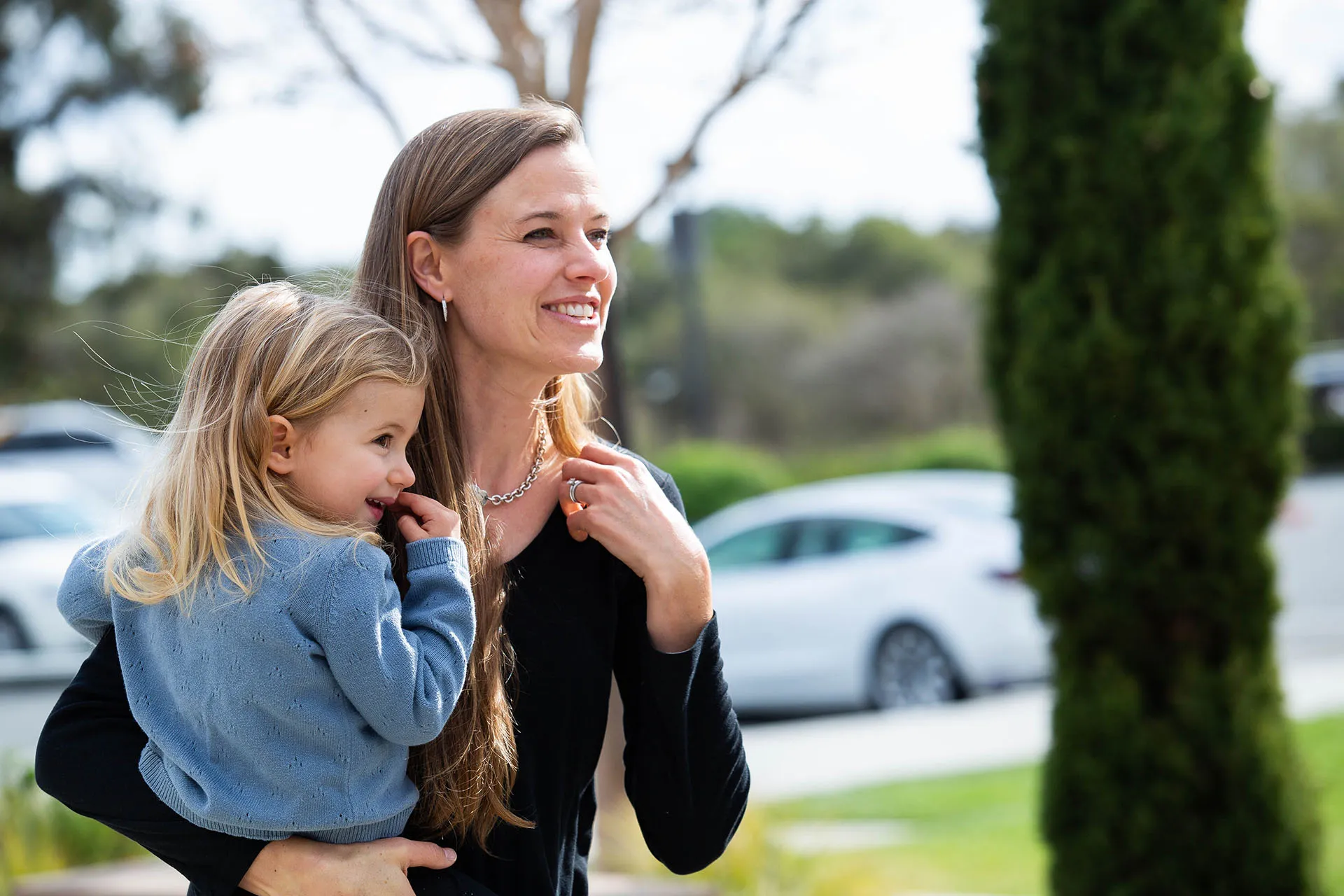
You know our lead pastor René is on sabbatical. He is in Switzerland currently. If you do not follow René on Instagram or Facebook, get on that because the pictures he is posting from Switzerland are amazing. He's like single-handedly gonna race tourism in that country because it is incredible the photos he is taking over there. But while he is on sabbatical, he has pretty much prepared his a list of people to come in and speak, and our speaker today, Rich Con Wisher, and René spoke together at Mount Herman last year. I got a little text from René, I think in the middle of your first talk, and the text said, "Get him here." So today I can check that off my list because he is here. Rich and René share one very strong thing in common: they both have had to spell their last name every day of their life. Con Wisher, I have learned how to spell it though, but they are rich is a great guy. He is from Newport Beach. He's the lead pastor at St. Andrews Presbyterian Church. It's a church about the size of Twin Lakes. He's actually a Reverend Doctor, which means he has gone to school a lot and schools like Princeton Seminary, Fuller Seminary, some of the higher-end sort of educational experiences. He is, as I said, the lead pastor. He's got a wonderful wife, Kelly, and two girls. Here's a photo of his family. Kelly and the girls aren't able to be here, but I wanted you to get a picture of them, and we are thrilled you are in for a very fun, great morning. Please join me in welcoming the Reverend Doctor Rich Con Wisher.
Wow, so good to be with each and every one of you today. Glad to be with you. Schlepfer and Con Wisher, does that not sound like a really bad German law firm or what? I'm particularly glad to be with you today while René is gone because there was, as I was listening to René speak last year, there was a deep theological concern that was being raised with me that I knew that if I had the chance to share with this church that I would be able to address with you. And know this does not have to do with predestination and free will. No, this doesn't have to do with infant baptism or adult baptism. It has to do that I found out that your pastor prefers cats to dogs. And so we need to have the dog uprising in this church while René is gone. Can I have an amen? Because the most spiritual prayer that anyone can pray is, "Lord, help me to be the kind of person that my dog thinks that I am."
I want to actually begin today in a really unusual place. And so I'm gonna ask for a little extra leeway and a little extra rope this morning for us to be flexible to do something that we probably don't normally do in church. But there's a reason that we're gonna do this, and I learned this exercise that I'm gonna ask you to participate in from the management guru Ken Blanchard. He did this exercise I was studying at Oxford at the time and as a part of a C.S. Lewis event, and he did this exercise in one of the oldest churches in Oxford, a really kind of beautiful cathedral setting where John Wesley had preached and C.S. Lewis had preached from the pulpit. And so if they can do that here, we can do that kind of in the Santa Cruz area, right? We can be flexible and do something a little outside the box. So here is what Ken Blanchard talked about. He said that he had every single one of us get up to do this little exercise, and here’s how it's gonna work. I'm gonna ask you to get up, and for 30 seconds, I'm gonna ask you to mill about this room as if you are late for your flight at a busy airport. You are avoiding eye contact. You do not want to interact with the people around you. It is like a competition of who's gonna get the coffee before they can get on the plane. And when I'm talking about a busy airport, I'm not talking about San Jose busy airport. I'm talking San Francisco busy airport. Okay, so I think big airport. And so for 30 seconds, I'm gonna ask you to get out of your seats and mill about this sanctuary. For 30 seconds, as if it's a busy airport. Ready? One, two, three, go.
Stop where you are. Don't go back to your seat. Just stop where you are. I'm gonna ask you to do the very same thing now, but just with a different mindset. Ken Blanchard says what you should do next is for the next 30 seconds, I want you to pretend like you are at a family reunion. And he says, obviously this presumes that you actually like your family. So for the next 30 seconds, ready, set, go. Family reunion, hugging people, welcoming people.
All right, I love it. I love it. Some people have loved it so much that they've started to leave. No. All right, let me have your attention for a minute. I want you to go ahead and start to work your way back towards your seats, and as you're doing so, turn to somebody who's sitting next to you when you get back to your seat and talk about a time or a place where you feel really welcome. You feel really at home. Ready, set, go. As you go back to your seats, have that conversation.
All right, if you're not sitting, go ahead and sit back down. Now, I want to speak with you today about one of the most neglected of the New Testament commands. It is the command to greet one another. Many of us don't even think of this as a command. We think of it as more of a divine suggestion. But I'm telling you, when I started to take this more seriously, the light bulb went off personally for me, and I want to share with you how this was a great aha moment for me. And so for me, if you asked me to answer the very same question I asked you to share with someone near you, where's a place where you feel really welcome, where you feel really at home, where you feel like the hospitality level is at an all-time high and you just belong? For me, it is this place that I want to put up on the screen here. Can you tell me where this place is? It's Disneyland. That's right. The little Mickey ears on my youngest daughter Ashby there should have been a little bit of a giveaway. I love going to Disneyland. I have been there hundreds of times with the kids, and it's not very far away from home. Whenever we go to Disneyland, it is amazing how kind of this big slab of concrete becomes a magical kingdom.
I want to tell you about a time I recently went to Disneyland. It was this year. They were celebrating at the beginning of this summer their 60th anniversary. And the way that Disneyland was kicking off its 60th anniversary was to have a 24-hour marathon, all day, all night experience. So starting literally at 6 o'clock in the morning and going all the way to 6 o'clock the next morning, you could have 24 hours of Disney magic and fun. And so here was the logo for the day that I want to put up on the screen. I talked to the kids, had a day off, and said, "Do you guys want to do this?" And they're like, "Yeah, we want to do this." So we woke up at four something in the morning, we got in the car, we got to the plaza where we were getting ready to go inside. This is what the plaza looked like at 5:30 in the morning. It was wall to wall people. With the number of times that I've been to Disneyland, I have never ever seen it like this. You were gonna wait in a really long line just to try to get into the park. It got so full that day that early in the day they had to close the park. They were literally at capacity and couldn't let, for safety reasons, anyone else in. When you look at this situation, you got to think to yourself, this is a customer service nightmare, right? Because you've got full capacity. You've got people who have gotten there earlier in the morning. They are caffeinated, they are sleep-deprived, and they are grumpy. And yet Disney handled this moment with incredible ability to make everybody feel welcome, even though they were stretched to the limits.
One of the things that they do to make people feel welcome is lining Main Street. And it didn't matter if you were the president of Disneyland or if you were somebody who worked as a part of kind of their editorial crew, they were all lining the streets of Disneyland, and all of them had special commemorative little Mickey hands here and down Main Street. And they're not called employees; they're called cast members. And they're literally running up and down the aisles, and they're giving high fives to people and they're saying, "We're so glad you're here." Whoo, it's six o'clock in the morning and you're at Disney. And they kept doing this all throughout the course of the day. Now, what a fun moment was that when we got to 6 p.m. in the evening? When we got to that point, over the loudspeaker, a very mellow voice jumped on and said, "You have been at Disneyland for 12 hours." We didn't quite make it the full 24 hours; we made it about 18 hours here. We were at the end of our run at Disneyland that day. Oh my goodness, we lost some Disney magic. Here you go, we're gonna put this back up. Pray for the hand right here. Don't just talk to the hand, pray for the hand. You want to turn it around, you want to see this side? There you go. Oh, look at that. We're not gonna continue this sermon until that stands. In the name of the Holy Spirit, stay.
Okay, so one of the reasons that I'm telling you this is that Disney takes hospitality, greeting, welcoming, accepting other people to a whole new level. In fact, they've got it down to what they call a science. They actually refer to it as Gestology, and they've written a book from the Disney Institute called "Be Our Guest" that has had a huge impact on me as a church leader in being able to understand the way that we are able to maximize being able to make people feel like that they belong. One of the things that they say in this book is that a 200 million dollar attraction won't be fun if the cast member at the front is less than pleasant. Think of all the time, all the creativity, all the resources, all the energy that has gone into designing each and every one of those rides or those attractions. And if you get to the very front of that line and you're about to get on, does it really matter how great that ride is if somebody is rude to you as you're trying to get on the ride? It's gonna color your whole experience in that regard.
I want to begin today by asking, do you think that's ever happened at a church? Where we have this huge operation that we have poured a huge amount of time, energy, prayer, and resources with the greatest message and the greatest God of all into this moment, and yet they encounter somebody that's less than pleasant, and it ruins the whole experience for them? Brennan Manning says the greatest single cause of atheism in the world today are Christians who profess Jesus with their lips and then live a life that contradicts the way and what they are proclaiming. Last night, there was a woman who came to this church who had on a tracking anklet around her leg, and she said that when she got here, she got stares, and she was basically dressed down by some of the people around her. Disney says this in their mission statement: "We create happiness by providing the finest entertainment for people of all ages everywhere." You compare this mission to the mission that you have here at Twin Lakes of grace and tell me which mission does this world more desperately need today? It's this one, right? But let me ask you a second question: who has a deeper passion and commitment to people and to hospitality? Is it Disney or is the church? Do people come to churches to learn how to do hospitality, or do people go to Disney to learn how to do hospitality?
This is in spite of the fact that for us, hospitality plays on a whole different level. That for us, like with this scripture here that it says, "Keep on loving each other as brothers and sisters. Do not forget to entertain strangers, for by doing so some people have entertained angels without knowing it." That for us, hospitality is not purely a pragmatic thing. It's not something that's just good customer service or it adds to the bottom line. There are eternal and spiritual implications of the way that we treat one another. One of the most prevalent one another commands, and yet one of the most neglected, is this greet one another command. It occurs in four different books of the Bible in four different very different settings, but my favorite is what comes in Romans 16. So if you want to turn in a Bible that you brought with you or we've also got this scripture printed on the handout for you to be able to look at this great passage, I think of Paul as being kind of the original guestologist, the one who really understood what it meant to make people feel welcome.
Romans 16:3–16 says this: "Greet Priscilla and Aquila, my co-workers in Christ Jesus. They risked their lives for me; not only I, but all the churches of the Gentiles are grateful to them. Greet also the church that meets at their house. Greet my dear friend Epinetus, who was the first convert to Christ in the province of Asia. Think about this: Epinetus, the first person who came to Christ as Savior and Lord in all of Asia. Greet Mary, who worked very hard for you. Greet Andronicus and Junia, my fellow Jews who have been in prison with me. They are outstanding among the apostles, and they were in Christ before I was. Greet Ampliatus, my dear friend in the Lord. Greet Urbanus, our co-worker in Christ, and my dear friend Stachys. Greet Apelles, whose fidelity to Christ has stood the test. Greet those who belong to the household of Aristobulus. Greet Herodian, my fellow Jew. Greet those in the household of Narcissus who are in the Lord. Do you think Narcissus is self-absorbed? Some of you are gonna get that joke tomorrow. Greet Tryphena and Tryphosa, those women who work hard in the Lord. Greet my dear friend Persis, another woman who has worked very hard in the Lord. Greet Rufus, chosen in the Lord, and his mother, who has been a mother to me too. Greet Asyncritus, Phlegon. Anybody here named their kid Phlegon? Good biblical name. Hermes, Patrobas, Hermas, and the other brothers and sisters with them. Greet Philologus, Julia, Nereus and his sister Olympus, and all the Lord's people who are with them. Greet one another with a holy kiss. All the churches of Christ send their greetings."
This is one of those passages where if you're reading through the book of Romans, if you're doing a devotional, this is one of those passages you skip over, right? It's like all the genealogy passages or the begat passages. You're like, "Yeah, yeah, yeah," you get to the story. But if you're willing to slow down and to pay attention to what's here, there is great gospel to be found in this text. It's not just a list of names that what we get to see amidst all of this, greet, greet, greet, greet, greet, greet, are different ways in which all different kinds of people belonged to the church. Did you notice all the different types of people that Paul greeted? Race: there are both Jewish names as well as Gentile names. So we're gonna list these up on the screen here. We're gonna list the kind of the race, also Jew and Gentile, or the class. If you look at the names, you've got different levels of kind of names that were clearly aristocratic in nature, and you also had very humble names that are a part of the list. So you have both noble and ruling classes represented here. You have different genders represented here. Here you have, in a letter that's going to the heart of the Roman Empire, to Rome, a very patriarchal society where they did not have a favorable view of women. At least eight of the names being commended here in this list are women. And this is right on the heels of Paul at the very beginning of the 16th chapter of Paul commending to them Phoebe as a deacon, as a church leader for them. And then you also have all of these different names. Is there anything more beautiful and precious to you in a social environment than someone knowing who you are? Knowing your name? Is there anything more terrifying in a social environment? We're like, "I cannot quite come up with that name." I love the fact, take comfort in this in the Bible, that Paul was human. He was not perfect. He's going through all of these different names, and he's like, "I want to greet Rufus and Rufus's mother." He can't quite come up with Rufus's mother's name. But the command, did you notice, isn't just to greet one another; it is to greet one another how? With a holy kiss.
So here's what we're gonna do. What? You're right, I'm just kidding. Because when we think about greeting one another, we have to try to figure out in different cultures, people experience greetings in different ways, right? Because a greeting in one culture might be different than a greeting in another society. This was true for me. I grew up in the great state of Texas. Do we got any Texans here today in the trans place? That's what I'm talking about right there, my whole little amen lot corner right there on that one pew. And so I grew up in Texas, and this is just how you greeted one another growing up in Central Texas. You would walk by on the street, you would see somebody and say, "Howdy." It's just you talk that way. And I moved from there to go to graduate school in Princeton, New Jersey. And so I'm walking down the streets of Princeton, New Jersey. It's just kind of a knee-jerk reaction. You see somebody, and I'm like, "Howdy." "Are you talking to me? Are you looking at me?" It's like I almost got myself killed. So I had to perfect the art of the head nod, the "How you doing?" That's how they greet one another in the—I was gonna say the great state of New Jersey, but in the state of New Jersey. And so I had to learn how to adapt my style to be able to meet people where they are. This was also true for me when I went back to Texas and then moved back up to the New York City metropolitan area that had a heavy kind of European influence. And people on the—I would shake hands on the way out of the door of the church for people, and there were women there that would kiss me on the cheek on the way out the door of church. And my wife was standing nearby, and I turned to my wife and I say, "I still got it." And she said, "Rich, they're European. They kiss everybody. That's how they roll. You haven't had it for a long time." You can't argue with the pastor's wife.
All this to say is that we have to figure out kind of the cultural landscape in order to be able to live out this command faithfully, and this cultural stuff matters. And so I want to show you a short video. It's an ad for a bank where they kind of demonstrate how important these kind of local cultural customs are. So let's watch the screen.
Oh, the English believe it's a slur on your host's food if you don't clear your plate. Okay, whereas the Chinese feel you're questioning their generosity if you do. At HSBC, we never underestimate the importance of local knowledge, which is why we have local banks staffed by local people in over 80 countries across the globe.
Okay, hey, just be. See, the world's local bank. Culture matters, right? How are we gonna faithfully live out this command? What does it mean to greet one another with a holy kiss kind of universally? Well, there's a couple of ways that we could demonstrate this. You know, in today's society, we've got the chest bump, right? But maybe you don't like this chest bump based on your loyalties. Maybe you prefer this chest bump. Go Southern California, right? I just lost the whole congregation except for two people in the back over there. All right, maybe we want to bring back this one to the church. How about the Eskimo kiss? Everybody rub noses with someone on the way out the door of the church. All right, go in peace. We got the high five, which has been around for a while. So living strong since the '80s, or the universal hug, the embrace of another. So when Paul says greet one another with a holy kiss, we have to figure out which part of that is culturally conditioned and what does he really mean by that universally? And I think he means these four things with it.
I think it means that, first of all, we need to greet one another sincerely, kind of with holy, pure motives. Have you ever been in a social context where it felt like the person wasn't really paying attention to you, that they were just kind of talking about themselves? Where they were like, "Well, that's enough about me. What do you think about me?" kind of thing? In fact, I can remember this one time when I was in college, and a friend of mine, I was standing—I know exactly where I was standing—right outside the steps of the dining hall. And I was complaining and whining about something, and a friend of mine just started doing this around me. He just started walking around me, and I was like, "What? Stop it!" After a while, and he said, "I'm sorry, I got sucked into your little orbit, your gravitational pull for a while there." And so I love how Dale Carnegie puts it. He puts it this way: "You could make more friends in two months by becoming interested in other people than you can in two years by trying to get other people interested in you." Amen. And so when we're gonna greet someone, it has to be sincere. It has to come from holy and pure motives where you're genuinely interested in them.
The second thing I think that when Paul says greet one another with a holy kiss, I think it's got to be personal. It can't be an impersonal greeting, and the greatest threat to this today is that there are limits to our technology and how we should leverage them. I have a friend that, even though I'm a good friend of his, he will never answer his cell phone. He forces you to text him, even if you want to have a bona fide conversation. I had a colleague on one of my previous staff that I would be in my office, my door would be open, I wouldn't have an appointment, I was available for him to just walk in and have a conversation with me, and I would hear the bing on my computer. And I would look at my email, and he had just written me like a four-page single-spaced email of all the things that we need to talk about. And so I would unplug my laptop, I would walk over into his office, I would sit down, and I would say, "Okay, let's talk about it." But I just—there was this level of comfort, and this is not an introvert-extrovert thing. It's just that technology is starting to take over our lives in a way where we're losing the ability to have that personal connection. The Dean of Student Affairs for when I went to college was talking with him recently, and he says that they know moments where college roommates are sitting in the room together. No one else is in there with them, and they are texting back and forth to one another while they're in the room. Hello, put it down. It's called a human conversation, and the church and Christians ought to be leading in the way in making sure we maintain those personal kinds of connections.
The next one here is it needs to be slow. The greatest threat to greeting one another in Christian hospitality is the fact that we are in such a hurry. And I'm running out of time, so I'm gonna get to my next point. No, there's a difference between being hurried and being busy. Jesus was busy, but he was never in a hurry. He had the kind of life where he could be interrupted. And the last one here is blessedly. Did you notice that in this what we think of as a list that Paul not only says greet this person, greet that person, greet that person, greet that person, but he also heaps out praises and blessings on them? He gives out these encouragements, and this is another way that the church should lead in the sense that we ought to be blessing factories where we are pouring out God's praises upon the people that we are in contact with. This last week, I love the fact that Jill Briscoe said, "Do other people, using a phrase from the prophet Isaiah, do other people experience being with you as a well-watered garden?" When someone is with you, do they feel like they're taking a walk through a well-watered garden?
So what does this mean for us? What is this on the ground level? My big aha pastoral ministry had to do with what I refer to and what I've heard other people refer to as the ten-five theory. And that is just that most of the research about church says that people make a decision about whether or not to come back to a church based on their experience of the first ten minutes or the last five minutes of them being on the campus. In other words, the sermon doesn't even typically register on the Richter scale of whether or not an influence someone's coming back. So all the pressure's off me, and it is all squarely on you. It really is. Place the mantle of hospitality and warmth and greeting and people encountering the love of Jesus Christ on how they encounter this church. And it's not just about this particular church or all churches. It's also that that way would be true as it's lived out in the workplaces and other things as well. And so I'm not up here to recruit volunteers for your greeting ministry or ushers or anything along those lines because we are all cast members for the kingdom of God.
I'm gonna tell you a true story about a friend of mine that I knew in a previous church. His name was Ray Do, and I want to put his picture up here on the screen. Ray was kind of an interesting guy. When he moved to the area, his heart was far from God, and he had kind of this split personality experience in his lifestyle because by day he was a financial guy, and he would put on a nice suit and he would go to the financial district to work. But by weekend, he would put on black leather, and he would ride his Harley all over the place. And so you can imagine the two very disparate kind of groups of friends. But he had no idea about God, and he had never attended a church before. When he bought the house, when he moved into the area, there was a couple that was a part of our church by the name of George and Brenda Shepherd. George and Brenda had Christian hospitality and love just coming out of their pores. And so they, when he bought the house, they started this relationship with Ray, or when he bought the house from them rather. And the other thing that they did were just kind of little things. And so since he was new to the area, when he took possession of the home, they had this huge gift basket there of kind of some of their favorite local things, and it had a list of like, "For the best butcher, go here. For the best kind of market, go here. For the best diner or coffee shop, go here." And the last thing they had on the list was, "For the best church, come to our church, and we'd love to see you there." Ray had never been invited to church in his life before, and the Holy Spirit used that invitation to move him to go. True story here, not a preacher story, a true story here. He pulled into the parking lot. Val was the only one that got that joke because it's—I think it's Tony Campolo that said if that story is not true, it should be. So Ray pulled into the parking lot of the church, pulled into the spot, didn't get out of the car, pulled back out, and left the parking lot. And did you know that upwards of 40% of people who have attended a church before reported that they have pulled into a church parking lot, changed their mind, and left? Up to 40%. Next week, pulled into the parking spot, got out of the car, walked a few paces away, got back into the car, and left. Next week, got to the parking spot, got out of the car, made it all the way to kind of the door of the church, kind of peeked inside, turned, got back in his car, and left. Week four, he had the bravery to go inside. George and Brenda were there; they were primed, they were looking for him, and as soon as they saw him, they made a beeline to him. They personally welcomed him. They invited him to sit with them. He had his first experience and taste of Christian worship. Fast forward a couple of months; they're a part—he's a part of their small group. You fast forward a couple of months; Ray makes a first-time profession of saving faith in Jesus Christ as Lord. Fast forward a few months; Ray is inviting other people, and he is living out the gospel in a variety of ways, serving, giving. And that's when I got to know him. Ray died suddenly and way too young. But you should have seen his funeral. This side of the sanctuary, nice Wall Street types with suits. This side of the sanctuary, black leather. All together to honor a man who had loved them and welcomed them no matter who they were. And even though he lived out his faith in a variety of environments, he was consistent that he was worshiping the one true God wherever he was, and that people got to experience the gospel when they were with Ray.
Jesus puts it this way. He says this in the Sermon on the Mount, so it's bound to be important. And if you greet only your own people, what are you doing more than others? Do not even the pagans do that? How far beyond your comfort zone do you go when you come to church and when you're in your workplace and your neighborhoods? Do you live out the command to greet one another? Is Twin Lakes more like a busy airport for people or a family reunion? Are we really gonna be outdone in hospitality by a cartoon mouse? And what's more important, creating happiness for the finest entertainment or sharing the very grace of God? Let's pray.
Our loving God and Father, I ask that you will change this church to take this New Testament command and to take it seriously. God, will a light bulb moment go off for them to own their responsibility? Will you raise up an army of people who are committed to hospitality and serving and loving this community? And God, I pray that that will take root so much here that when René gets back, he won't even recognize this place. That the quotient of love and grace would increase by the power of your Holy Spirit and that there would be a new warmth, a new vitality here. And so God, help us to get beyond ourselves and to sincerely, slowly, with blessings, heap out your praises and encouragement upon all types of people. And we pray all of these things in the name of Jesus, and all of God's people said.
Sermons
Join us this Sunday at Twin Lakes Church for authentic community, powerful worship, and a place to belong.