Jesus & Toxic Religion
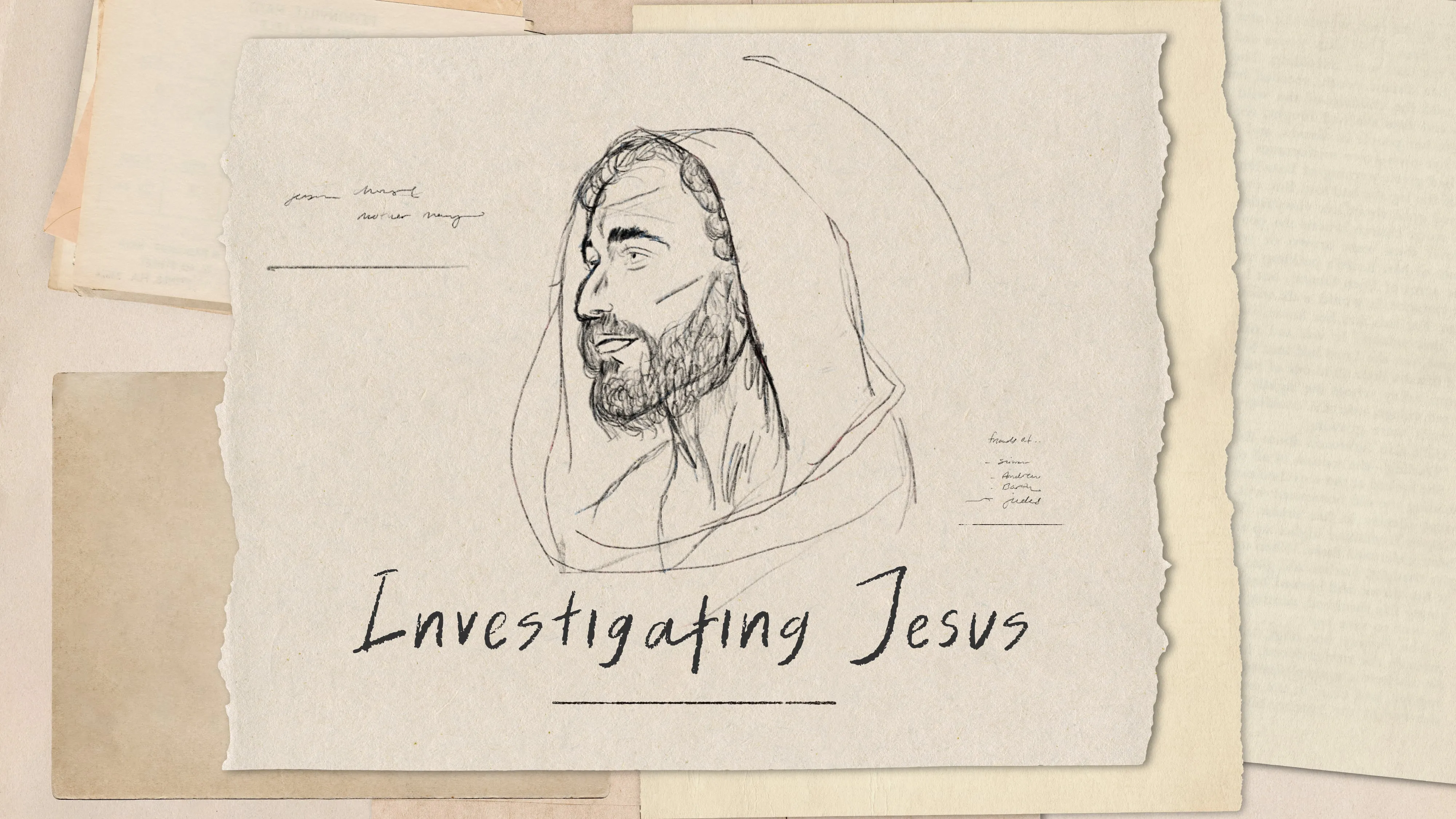
Are all religious teachers to be trusted?
Transcript
This transcript was generated automatically. There may be errors. Refer to the video and/or audio for accuracy.
Investigating Jesus—that is the name of our series. We've been in the Gospel of Luke looking at highlights of this gospel. And good morning. My name's Renée, if we haven't met yet. And I'm so glad to be back. Thank you.
Hey, listen, a couple of things. Last weekend I was actually here, but I was speaking at the Spanish congregation. And I want you to know they are thriving. They've grown in the last year. We are zeroing in on the next permanent pastor. So keep that congregation in prayer. God is blessing.
I also really want to thank Valerie and Jessica and Jared and Herman for filling in for me the last four weekends. Let's give them a hand. It's so great to have just such a great team.
So here's where I've been. My wife Lori and I have been in Switzerland visiting my family. Most of you know most of my family. My aunts, my uncles, my cousins—they're all over there in Switzerland. Truly just an astonishing place. Pictures just don't do it justice.
But in the midst of all of this beauty, one of the coolest things that we were able to do was a couple of weekends ago, we held church services in our hotel bar. It was the largest and most unusual pulpit I have ever stood behind in my life. I was like the bartender of the Bible that day. Although clearly when I looked at this picture more closely, not everybody was exactly riveted. I see that every weekend here, and I thought it was just the room.
It turns out, no. Just curious, how many of you would go to church services in a bar? Can I see that show of hands? Yes. Well, Switzerland is where some fascinating developments happened in the history of Christianity. And let me tell you a true story about one of them.
The place is Zurich, the year is back in 1519. And it's dark days. The Black Plague is sweeping through the city. Thousands of people are dying. And the people who are able, I mean the politicians, the priests, the prosperous, flee for the hills. Except for a priest named Ulrich Zwingli, who stays behind to help the sick and the dying.
Brilliant, well-educated, well-connected man, but he sacrifices his safety for the poor. And then he pays the price. He himself gets the plague. He almost dies, barely recovers, marshals his strength, and goes right back to serving the sick and becomes beloved of the people. When everybody comes back into town, he is a folk hero.
His church services are packed, and he begins a theme in his preaching. He starts protesting the abuses of the church. Like, he says, the churches are so rich. What are they doing with all their money for the poor? And the people say amen to that.
And then he says there are so many rules that are taught by the church that are actually not in the Bible. We need to toss all those extra rules out. And the people say amen to that. And he says, God can show us through study of the Bible what his will actually is. We don't have to rely on some church authority in Rome, and everybody goes, amen.
Then he says, for example, here's some of the stuff that God is showing me. Like musical instruments in church are actually against God's will. Those are unbiblical and a sin, and he literally takes an ax and destroys his expensive church organ while his church music director looks on and weeps.
And he says, you know what else? Art in church, especially any art that shows people, of course, is evil and must go. And he organizes mobs of people who, again, just he is their beloved leader because of his devotion to the poor. And they destroy all this beautiful art. They hack faces off the statues. They smash stained glass windows.
And then he says, you know what else God is showing me? Anybody who preaches that adults should be baptized is wrong. In fact, so wrong that, well, they should be killed. And so in Zurich, Switzerland, they pass the death penalty legally against Baptists. They call them Anabaptists in those days.
And if they spotted anybody baptizing people in a lake or in the river, like we're going to do in a few weeks at the beach baptism, you know what they did? They said, oh, since you like being baptized so much, we're going to hold you under until you drown. And that's how they killed them.
And then he says, you know what else God is showing me? Those Catholics over the border. I mean, if we're killing Baptists, we need to kill the Catholics too. And he literally straps on a sword and armor and goes down swinging, killed in battle.
And it's not like we're looking at this five centuries later, you know, with modern sensibility going, oh, that's terrible. Martin Luther, a contemporary, another great reformer just over the border in Germany, when he hears about Zwingli dying, is not exactly broken up about it. He says he was a proud fanatic, and if his error had prevailed, the entire church might have perished. He was that charismatic.
Question, how in the world does this happen? How does a good religious leader go toxic? How does a pastor who became famous for saving people become infamous for killing people? And it's not just Zwingli, right? There's a list. The Inquisition, the Crusades, just up the road in San Francisco, the People's Temple with Jim Jones.
And here's the real question. That's all in the rearview mirror now. How do you spot these people before they hurt you? I mean, how do you know I'm not some kook? Really? You know, in my observation, Christians, if they're careful about anything, tend to be very careful about what you believe, about doctrine. But we also need to be careful about who you follow.
Yet so many good Christians just don't pay enough attention to this, even though the Bible is stuffed with warnings about it. You say, well, I'm pretty careful about it. Let me ask you this. I'm going to put some statements on screen and ask you just mentally, do you agree with this statement or not? Think about these carefully.
All pastors are people of God and can be trusted. Do you agree with that? I said silently, I appreciate your enthusiasm. They were more enthusiastic about that than the baptisms. No, don't trust pastors. Okay, how about this one? As long as a pastor's doctrine checks out and they're a good speaker, well, then they're trustworthy as a leader. Christians must always submit to their spiritual leaders.
You know what? Jesus did not agree with any of that. In fact, he said, watch out for false prophets. They come to you in sheep's clothing. I mean, it looks on the outside like they check out. They seem harmless. But inwardly, they are what? Ferocious wolves. He's saying there will be bad guys, like inevitably. So how do you spot the bad guys?
But let's talk about it. We're in this series that we call Investigating Jesus, looking at key passages from the book of Luke. And we call it Investigating Jesus because that's exactly the term that the author of the Gospel of Luke uses in the first few verses. He says he carefully even interviewed eyewitnesses and wrote down what he discovered about Jesus.
And one of the most surprising things that he discovered when he investigated Jesus is that the main conflict, the main dramatic tension in the story of Jesus is not Jesus versus sinners. In fact, he called himself a friend of sinners. And it's not even Jesus versus Romans. It's Jesus versus the religious leaders. That's where the tension is.
And the tension is thick. And there's a great story Luke tells where we really see this tension ratcheting up. It's found in the Gospel of Luke, chapter 11, verses 37 through 41. And we'll go a little bit past that even today. This is intense. If you have your Bibles, grab them, open up to that. If you've got your notes, or you can go to tlc.org/notes if you're joining us online to look them up so you can follow along with me.
This is going to be intense today. This is going to be challenging today. Are you ready to hear some challenging, intense stuff today? All right, here we go. Here's what happens, starting in verse 37.
When Jesus had finished speaking, a Pharisee—and you might know that, generally speaking, this was the most dominant religious sect of the day. They were what we would call a legalistic, fundamentalist-type group. It was a little bit more complex than that, but that's basically characterized them—invited him to eat with him. So the Pharisees are inviting Jesus to eat with him.
So he went in and reclined at the table. He's like, okay, you want to invite me to eat? Sure, let's go. And he goes down and sits down. And this is a big problem because he's not doing something. The Pharisee was surprised when he noticed Jesus did not first wash before the meal.
Now, this is not about hygiene. If you are a hand sanitizer lover, please don't go, Jesus didn't know about germs. This is about ritual hand washing. Way back, more than a thousand years before Jesus in the days of the tabernacle, the priests who served at the tabernacle, who went to the Holy of Holies, were told that before they handled the holy vessels, they had to ceremonially cleanse their hands and their feet in something that was known as the big bronze laver at the entrance to the tabernacle.
And this transferred over later to the temple about a thousand years before Christ. Now, centuries after this, in the time of Jesus, the Pharisees taught that this hand-washing ritual, which was meant for specific people, the priests, in a specific place, the tabernacle, for a specific job handling the holy vessels in the holy place, now this applied to every single man, woman, and child in the entire nation.
Why? Because they taught maybe the reason God hasn't sent the Messiah yet is because we're all not perfectly pure like the priests in the temple. So let's all try to be as pure as priests and then God will send the Messiah. And if you're not doing this, then maybe you're keeping the Messiah from coming.
So now, ironically, here comes the actual Messiah, and he strides right in and sits down at the table and doesn't do it. And the Pharisees are like, why are you not doing our very important ritual? And Jesus says, funny that you should ask. Let's have a conversation about this.
And he talks about five signs of toxic religion that he sees in them. And the first one is this. It emphasizes the outside, not the inside. External conformity, not internal transformation. Verse 39. Then the Lord said to him, now then, you Pharisees, clean the outside of the cup and dish, but inside you are full of greed and wickedness.
Ever grab a coffee mug out of the dishwasher or the cabinet at home or maybe at work and it looks great, but then you go to pour coffee into it and you realize it is just nasty inside? Someone did not wash that thing. And Jesus is saying that's exactly what you religious leaders are like. And, of course, that's what all Christians can be like.
Plenty of us wear crosses around our necks but swords in our hearts. We claim the way of Caesar. We claim the way of Jesus, rather, but we think the way of Caesar. Let me put it this way. The problem with me and the problem with you is not that you don't look Christian enough. That is not the problem. The human problem is in here, in our hearts. That's where the anger is and the strife and the selfishness and the sin, our stinking thinking, right? My shame, my guilt.
And that's why I need a supernatural savior to deal with the stuff in here. And that's why Jesus goes on to say, you foolish people, didn't the one who made the outside also make the inside? But now, as for what's inside you, watch this cure. Be generous to the poor, and everything will be clean for you.
He's looking at these guys saying, here's how to fix your problem. Be generous to the poor. What does that do? Because your problem is that you have ingrown eyeballs, as I heard somebody put it. It's always about you all the time. Even your religion is about your performance. Try thinking of others.
And by the way, research proves this. It shows generosity is correlated with more energy, reduced stress, higher happiness, lower blood pressure, a healthier immune system, and much, much more. You know, Jesus said, be generous and everything will be clean for you. That Jesus, he knew what he was talking about.
Or how about this? I'm reading this morning at breakfast, an article in the Wall Street Journal. A study revealed a startling truth of the 90 different stress reduction strategies studied, including meditation, massage, etc. Only one of the 90 consistently mitigated the effects of stress: serving others.
Jesus is saying, guys, you are approaching spiritual growth totally backwards if you're making it all about you. And this is why we try to make part of our DNA here at TLC. Being generous to the poor, feeding the hungry. This is why we're building the Hope Center, for example.
This is why next weekend is Connect Expo. Most of our ministries will have tables set up all around the campus, and we're going to make the service a little bit shorter so you can go out, hang out, talk to people. If you've been wondering, well, I'd love to serve people. I don't know where I fit in. Check it out. It's kind of like rush week in college. This is next weekend. Don't miss it.
Now, if you're still saying, well, I don't know. I don't have the talent to serve other people. I don't have money to be generous to the poor. I want you to meet one of my favorite people here at Twin Lakes Church who, to me, exemplifies what Jesus is talking about here. Watch this.
My name is Edna Mae Kibbe, and I joined Twin Lakes in about 1961, maybe early 62. The most important thing about my life is that I learned to know Jesus early. I've often said that the most profound theological truth I ever learned, I learned when I was five years old: Jesus loves me. And everything else I've learned has been based on that.
Well, after my husband died and I had lots of free time, as my friends got older and I got older, I found that there were a lot of people who couldn't do what I could do. And there were shut-ins. And I began doing more visiting with different people. I got involved with the Sunshine Ministry and taking poinsettias and Easter flowers.
And one by one, I gathered a group of people, five or six, that I visit on a regular basis. People say, oh, such a blessing when you come and see us. And I said, you are not the only one who gets the blessing. I am blessed every time I can make someone smile. And when I can encourage someone and turn their eyes away from their problem onto the Lord, or just be a friend or just break up the monotony of their day if they're in a care facility.
The most encouraging thing that I can say is that same thing: Jesus loves you and he cares about you. And that's what my whole life has been based on. And I feel as though this is my calling, that the Lord has privileged me to be able to do this.
The Lord can still use you, even if you're not young and can't do things that other people can do in many ways. But I can do what the Lord has gifted me to do. If you look in this direction, you can see a lot of trouble, a lot of terrible things. But if you look in this direction, that's a whole different story because God knows the end from the beginning, and He is in charge of everything, and he will have the last word. So trust him. He has been faithful to me.
I love that new song that is popular now, the one that says, all my life he has been faithful. All my life he has been so, so good. With every breath that I'm able, I will sing of the goodness of God. And so I just thank the Lord every day, and I do what I can and wait to see what he's going to do next.
Don't you love her? Edna Mae just radiates such calm and such joy, but it's not churchiness, is it? It's Jesusness. Edna Mae is not a church lady. She's a Jesus lady.
But there's a second common sign of toxic religion that Jesus talks about here, and that's this. It produces passionate commitment to the wrong things. Watch this. Verse 42, Jesus says, Woe to you, Pharisees, because you give God a tenth of your mint and rue and all kinds of other garden herbs. They were scrupulous about giving exactly one-tenth of their mint leaves from their personal herb garden to the offering plate.
Okay, Lord, let me count them out. One, two, three, four, five, six, seven, eight, nine. Those are mine. Ten, that's yours. Now the next one. I mean, it was insane, right? But he says you neglect justice and the love of God. He says you're super committed to the wrong stuff. Don't be passionately committed to secondary issues.
Now, how do I know if it's a secondary issue? Well, Jesus says these are the two primary issues: justice, and if you do a word study on that in the Bible, you'll find almost every single time it means justice for the poor and the love of God. Now, listen, most of us are not going to spend time tithing our mint leaves. So just insert anything that is distracting you from these two things, justice and the love of God.
It could be anything, even good things. I mean, what are some of the possible distractions, right? Politics, talking about the exact timing of the return of Jesus, maybe debates over the age of the earth, culture war issues like the new Cracker Barrel logo. It could be anything.
Now, please don't misunderstand me. You can have your strong opinions about all of that. Jesus doesn't tell these hyper-religious leaders that it's wrong to tithe your mint leaves. If you want to do that, you can tithe your mint leaves. But, you know, you only have so many hours in a day. And some things are just more important to God than other things.
And every minute that you give your attention to a secondary issue is one less minute for what Jesus says are the two most important things for you to think about. But Jesus is not done because there's a third and even, especially here in America, more dangerous sign of toxic faith. And that's this. It idolizes celebrity and authority. Celebrity and authority.
Jesus says, woe to you Pharisees. You love the most important seats in the synagogues and respectful greetings in the marketplaces. They loved being put on a pedestal. Those two things—celebrity just causes trouble, especially among pastors. And not just in mega churches, this can be just as true of a leader of a home church with a dozen people.
Wherever there is kind of a cult-like devotion to a person, you probably picked up that's one of the reasons that we like to say around here we are one of the pastors at Twin Lakes Church. That's what our team does because we don't want it to be about one person.
But also in toxic systems, there's a hyper emphasis on authority, hierarchy. I am in charge here. I'm over you. I am your covering, and you can't decide anything or do anything without me. And these two things produce a couple of toxic symptoms in churches: irreproachable clergy and irrational submission.
Irreproachable clergy, thou shalt not question thy pastor, and irrational submission. I must always submit to my church authority. And these two things are really where Zwingli went wrong to circle back to Zurich, right? He became convinced that everyone in the city must agree with him, not just the Christians, every last person, and ultimately that was the reason that he gave his approval to killing the Anabaptists.
That was a power play. They were not being submissive to his authority, and once you make that the end all and be all, and you spot, you know, a rebellious spirit every time somebody disagrees with you, then you're going to justify anything as his story sadly shows us.
Jesus says woe to you because you're like unmarked graves which people walk over without knowing it. In other words, people think you're benign as a lawn, but actually you're as diseased as a corpse in a shallow grave. Wow, Jesus, glad we invited you to our party today.
Now look at their response. One of the experts in the law answered him, and experts in the law were kind of the henchmen of the Pharisees. They were the ones who crafted all kinds of little extra rules to keep people from breaking biblical laws. One of the experts in the law answered him, Teacher, when you say these things, you insult us also. You hurt our feelings, Jesus. Joe's over there in the corner crying.
And this is always the response of abusers, right? They turn any criticism around and make it about them. You hurt my feelings. They become the victim. Don't fall for that. Jesus didn't. Jesus replied, oh, and you experts in the law, glad you spoke up, forgot you were here. Woe to you, because you load people down with burdens they can hardly carry, and you yourselves will not lift one finger to help them.
And that's the fourth sign of a toxic religion. It just feels heavy. Feels heavy. And Jesus is painting an interesting word picture here. In those days, donkeys loaded down with burdens would have been a common sight. Kind of like the first-century version of a pickup truck, right? And Jesus is saying, you religious leaders treat people like donkeys.
In fact, I think we got a picture of a donkey loaded down with heavy burdens. There it is. And he's saying what you do is you load people down with so many rules that it's self-defeating. They can't even get any forward traction. And this is a great picture of what that feels like. Loaded down with so many burdens that you're stuck. It feels heavy.
And that ties into the final sign of toxic religion. And that's this. It complicates rather than simplifies. Complicates rather than simplifies. Look at verse 52. Let's skip there. Jesus says, woe to you experts in the law because you have taken away the key to knowledge. You yourselves have not entered, and you have hindered those who were entering.
What's he talking about? The key to knowledge. What's that? It's the key. He says there's a key to understanding the Bible. Wouldn't you love to know what the key is? But these religious complicators have taken away the key. They just made it all just a bunch of stories and rules.
What's the key? Do you remember when Jesus was asked, what's the greatest command? And he said what? Love the Lord your God with all your heart, soul, mind, and strength. And he said, and love your neighbor as yourself. Then he says something very interesting. All the law and prophets hang on these two commandments. That's the key. Love God, love people, because when you do that, love God, love people, then you are going to fulfill the spirit of the law.
But what toxic religion does is it takes away this simple key and complicates the Bible. And the big picture of God's love for you and love for the world gets lost when you're focused on so many tiny details. Never confuse detail with depth.
So what happens next? Verse 53. When Jesus went outside, the Pharisees and the teachers of the law began to oppose him fiercely and to besiege him with questions, waiting to catch him in something he might say. Oppose him with fierceness and besiege him, setting up the dramatic confrontation that we're going to talk about next weekend. Hope you can join us.
Now, this is such a great story—much drama. But you've got to ask yourself, why would Jesus make such a big deal out of this? He's so positive with everybody else, but he's so negative toward these religious leaders. Well, think about it. If what God wants more than anything else is a love relationship with you, if that's the very reason that Jesus came to earth, then he is going to fight anything that gets in the way of a loving relationship with you. And it turns out that bad religion is the biggest obstacle.
Now, I realize that as I teach all this this morning, there is a massive danger, and it's this. We can be Pharisees about the Pharisees, right? We can say, God, I thank you that I am not like other men, like these Pharisees over here in scripture, for example. I'm a nice, gracious person. None of this applies to me.
But, you know, we are all leaders. Whether you're a leader in ministry or in your family, your school, your church, your neighborhood, as a parent, as a teacher, at your workplace, you're a leader. So let's do a little self-evaluation here. Just think about this.
Typically, are you a person who radiates Jesusness or kind of churchiness and Phariseesness? Let's use Jesus' own metrics here. And I'd encourage you actually to get out your phones and take a picture of what I'm about to put on screen and just think about it this week.
Do I tend to emphasize in my parenting, at work, outward compliance or inner character? Do I emphasize trivial matters in my own media consumption, in my conversation, or justice and God's love? Do I emphasize authority, hierarchy, or servant leadership? Do people seem to feel lighter or heavier in my presence? Am I a complicator or a simplifier?
That's food for thought, right? But let me wrap up with the really good news. In the Gospel of Matthew, Jesus looks at these people who are so burdened by all this toxic religion. And he says, come to me, all of you who are weary and burdened, and I will give you what? Rest.
Here's his burden. Take my yoke upon you and learn from me. For I'm gentle and humble in heart. And you'll find rest for your souls. For my yoke is easy and my burden is light. Look at those words: rest, gentle, humble, rest, easy, light. If that does not describe your experience with Jesus, maybe it's not Jesus. Maybe it's a toxic caricature of Jesus.
Jesus doesn't say, come to me and try harder. He just says come to me and just be with me, and in his gracious saving presence, that's when we're transformed.
I'll close with this. A while back, I got this email from a young mom here at TLC, and I'm going to read just part of her email to you, but I want you to listen to some of the things she says and how this ties into what we've been talking about.
She says, when I started with the Lord about 12 years ago, I began to hear about Proverbs 31, the godly woman and wife. I bought many books on that topic for years. She says, I toiled at being this ideal Christian woman. I measured my performance as a Christian on the feedback I received from my husband. If he was happy, I was being a good Christian. If my husband was unhappy, I needed to try harder. It began a very unhealthy cycle, which ultimately led to despair, resentment, and depression.
Listen to this. On the outside, everything looked perfect. On the inside, I was slowly dying. And since the yardstick I used to measure my effectiveness as a Christian was my husband, it put a lot of pressure on him too. It was then that I realized many of the women who write these books are under a yoke of slavery themselves.
I remember reading one very popular book, and the author said she never let her girls be idle. They weren't even allowed to watch TV unless they were also accomplishing something. Polishing their nails was the example she gave. That's when it dawned on me, not all Christian books are good. This was a revelation to me.
I suddenly realized that for years I was distracted from the better thing, simply Jesus. I'm sure that there are many women under the slavery of being the perfect Christian woman. They're striving, weary, guilt-ridden, depressed, and dry. Of course, being a loving wife and mother is important. However, it should not be the measure of who you are. Jesus is truly the only measure we need, and there's nothing we can do or not do to change the way he sees us, his beloved, precious ones.
And here's how she closes. I still have all those books. I thought of donating them, but I don't want anybody else to fall prey to that performance-based religion. So she says, I have decided I'll have a bonfire at the beach, invite my closest friends, give thanks and praise to our awesome God, and burn those suckers.
I love that email. Listen, if your faith has somehow become performance-based, if it feels heavy, if it's become complicated, you can find freedom today, too, like she did. You can lay down those burdens and find rest in the one who loves you unconditionally.
Let's pray together. Would you bow your heads with me? With our heads bowed, I just want to encourage those who are new to all this to turn to Jesus. For those who've been turned off or hurt because of toxic religious people, run from them and simply turn to Jesus. If you need soul-deep rest, turn to Jesus.
And I invite all of us veteran religious people who can err in the Pharisee direction to repent of any signs of toxic religion in our own lives. And again, turn simply and purely to Jesus. Lord, help us to rest in you and then to radiate your restful presence to others. In Jesus' name we pray, amen.
Join us this Sunday at Twin Lakes Church for authentic community, powerful worship, and a place to belong.


