Open Yourself to Jesus
Discover how Jesus offers freedom and healing to all.
Transcript
This transcript was generated automatically. There may be errors. Refer to the video and/or audio for accuracy.
Good morning. Come on, let's give God a hand in praise. It's good to be together in worship. Super excited. Let me acknowledge those who are watching online as well as those of you who are gathered here. As I said on yesterday and earlier this morning, this is my second most favorite congregation to be at. It's totally, I'm serious. I'm so grateful. I have such love for this congregation and for your senior pastor who is a dear friend of mine.
As you know, he's in Switzerland. He sent me a text this morning, and he said that on yesterday, he and Lori, his wife, conducted a worship service in the hotel bar. This is my name, right? And he said they served cocktails of worship and teaching, and it is his prayer that everybody left shaken and stirred. He also indicated he's praying for you guys. He was praying for me. And let me just say that that's a reflection of the fact that your senior pastor, literally, this is not hyperbole, is one of the most gifted preachers and teachers, not just in the Bay Area, but anywhere in the United States of America. Can we just give God a praise?
Such an honor to sit under his ministry and for me personally to know him and to be here today. And I've also had an opportunity to get to know the staff over the years that you guys have been so gracious with me coming. And at the top of that list is Pastor Val. Can we give Pastor Val a... Isn't she awesome? She's amazing. And she is so intricate to so much of what happens across this church on a regular daily basis. She remains humble. She's uniquely gifted in her own right.
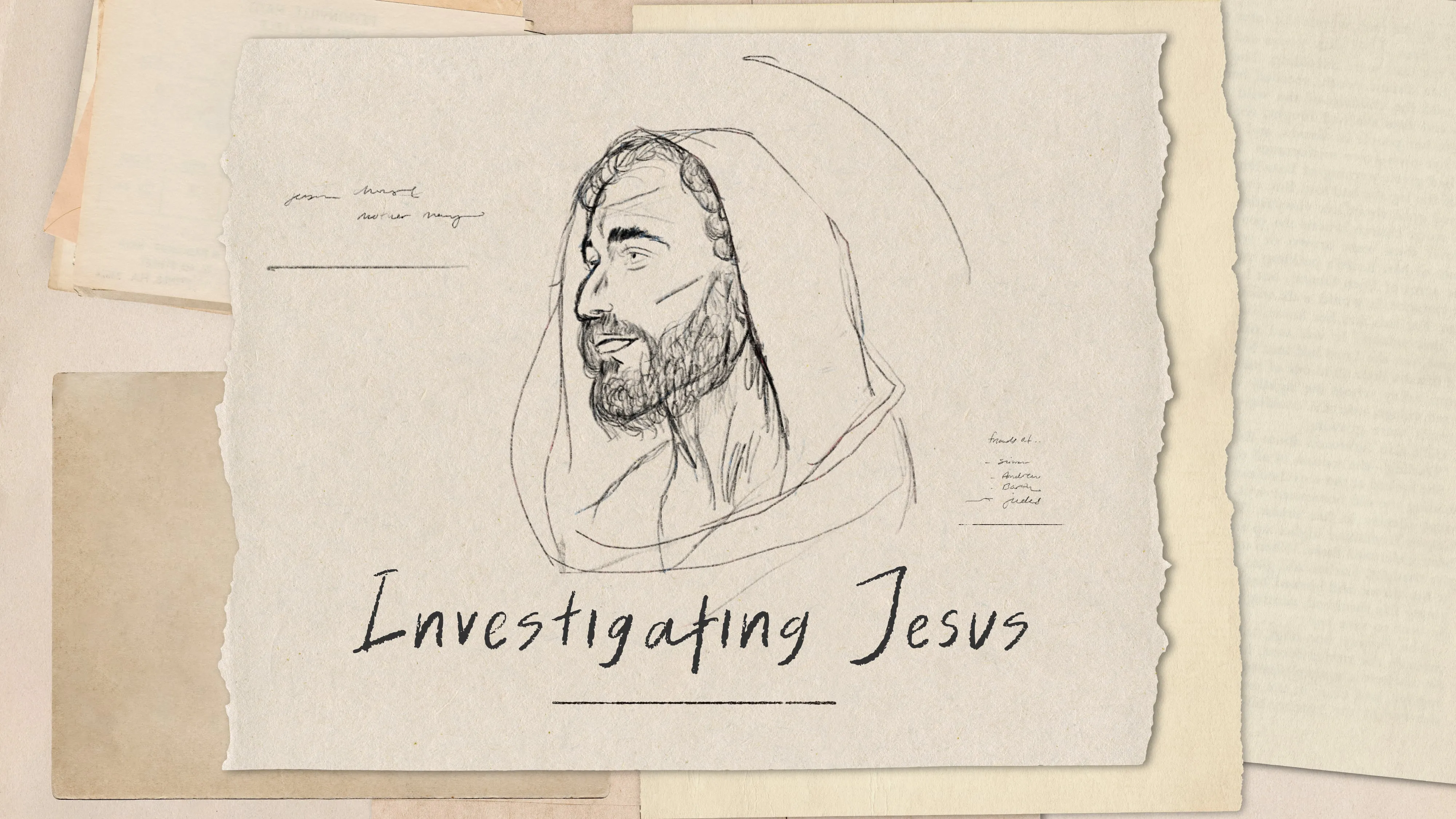
I peeped in last weekend when she opened up this series, Investigating Jesus. Everybody shout, Investigating Jesus. That's what we're doing. That's what we're doing. And she laid an incredible foundation for this series. If you did not hear her teaching last weekend, I want to encourage you, please, somebody shout please. Please. Please go home, pull it up on the YouTube or on the website. It's incredibly important, the foundation she laid, in order for you to experience all that God has for you to experience during the course of this series. Amen?
All right. One more thing. In this particular gathering, I am so super blessed to have my wife, Dr. Rhonda Hamilton, with us today. Would you please stand? And with that, I was going to make a joke, but I'm not because I don't want to get in trouble. Would you stand? Stand, please, and honor them. It's my tradition to invite people to stand as we interact with the Word of God.
In the gospel of Luke, God, thank you for this time, and you clearly are here. Draw a little closer to those watching online, those here, and to me. Pour out your spirit. Take this broken piece of flesh that you know so well, and despite me, come close and speak a transformative word to all of us, including the teacher. In Jesus' name, everybody said amen.
Wonderful passage Luke is writing here in chapter 13 and he says on a Sabbath Jesus was teaching in one of the synagogues and a woman was there, shout a woman was there, woman was there who had been crippled for 18 years. She was bent over and could not straighten up at all. When Jesus saw her, come on say it, when Jesus saw her. When Jesus saw her, he called her forward and said to her, woman, you have been set free from your infirmity. Shout set free.
Then he put his hands on her and immediately, say immediately, immediately she straightened up and praised God. Everybody shout praise God. Come on, give God a hand, pray. Let's celebrate. Come on, come on. All right. Be seated, please. Be seated. If you were listening to Pastor Val last weekend, you heard her talk about Luke, the writer of this passage. He wrote both the Gospel of Luke and the Book of Acts.
You learned that he was a Greco-Roman writer, the only non-Jewish writer in the New Testament. You also learn he was a companion of the Apostle Paul. And you also learn that he was commissioned to write a truthful and truth-finding dissertation, if you will, about this person, Jesus, who he was and what he did.
And so, while he was a physician by training, he took on the responsibility of being a really good historian. And as he began to lay out the details for those who were investigating Jesus, as though you are in the same way you're investigating him through this series, he made sure to pay attention to noting certain time and historical stamps in his details so that people could check his work.
So he would name important names during certain times and so we learn about Augustus Caesars and Tiberius and Herod. He would make sure that he would name certain towns and villages so that his contemporaries could actually go to those towns and villages and talk to people who saw and knew Jesus or talk to their children who understood and was exposed to the experience of their parents' interaction with Jesus.
And so he would name towns like Nazareth and Jerusalem and Nain and Bethany. He was very particular about his details. Wanted to make sure you could investigate well. That is why this is such a peculiar passage. It's unusual. It breaks the pattern, if you will, to how Luke writes. He tells this story. He begins by saying it was on a Sabbath. He doesn't tell us what was important about the Sabbath. It was a Sabbath.
We find Jesus in one of the synagogues, one of the synagogues. He doesn't name the synagogue. So the missing details are interesting, right? We don't know what Sabbath. We don't know what synagogue. There's a synagogue ruler that's a part of the larger story. I won't talk about him today, but he's unnamed. Especially unusual to Luke is how he refers to this lady who's at the very center of this story. He simply calls her a woman. Say a woman. No name.
This is fascinating to me because if you know anything about Luke, he was very much attracted to how Jesus interacted with the poor and the minorities of his day and especially women. So much so that he took on the spirit of Jesus as he was writing the history of Jesus in both Acts and in Luke. For example, Pastor Val talked about John the Baptist last weekend. Well, Luke talks about John the Baptist's parents and he makes note that John the Baptist's father was important. He had an important religious lineage.
But he said, but the most important one, he kind of implies, is really the mama. He said, the mama, who's named Elizabeth, her religious lineage goes all the way back to Aaron, the brother of Moses, the priestly tradition. So he was saying, he said, look, Elizabeth was somebody. Shout somebody. Somebody, somebody. It was Luke who talked about, gave us the name of Lydia, and he pointed out the detail. Again, the only one, that she was an entrepRenéur, businesswoman, and she would open her house, and the first church in Philippi would be established.
And he's particular about details, especially when it comes to women. And here he says simply, a woman. So what we know about Luke suggests to me that he is intentional about leaving out these particular details. Somebody ask, why? Oh, I like how you ask your questions. We are investigating today. So why? He left out those details so that he did not name her so that you and I can put our name right there.
He did not provide a village or a region so that you could provide your own village, Santa Cruz or Aptos or wherever you're looking for. In other words, he, in this particular part of his writing, says, I've given you a lot of facts so that you can intellectually learn about Jesus. But I'm shaping this story so that you can actually have an encounter with Jesus. He wants you to find yourself in this story. He wants you to connect your story to what you're hearing.
My grand-aunt, in the final years of her life as I entered my teenage years, called me in one day and she said to me, essentially, look, you've grown up in this house and you've gone to church, you know Scripture. But I'm concerned about whether or not you actually know Jesus. You know about Jesus, but I'm not sure you know Jesus. And then she said to me, I'm not going to be around forever. In other words, my faith will not be sufficient for you. And then she says, you've got to know Jesus for yourself. Tell the person next to you, you've got to know Jesus for yourself.
It's one thing to know about him, but it's another thing to know him. And Luke has just paused in his writing to essentially say to all of us, listen, it's one thing to have the intellectual facts about Jesus. But at the end of the day, Luke says, listen, listen, listen. You've got to encounter Jesus for yourself. And so he's intentional about what details he leaves out. And he's very intentional about what details he leaves in.
First of all, he tells us about the social status. He's trying to give us access into her story. And the social status of this woman, we know she was a, the text begins by saying, and a woman. Everybody shout woman. So in that cultural context, her social status meant she was at the bottom of the social ladder. Secondly, he tells us about her physical disability and her emotional disposition. He says, and a woman was crippled. Everybody say crippled. Crippled, that means that she was looked down on in three different ways.
A, they looked down on her because she was a woman. And B, she was looked down on because she was a disabled woman. And later we discover that she is actually bent over. Shout bent over. She's bent over. Wherever she went, she went bent over. And that means that literally people physically looked down on her. No doubt she was familiar with shame and embarrassment that followed her wherever she went. Because wherever she went, she was bent over. She was known in the villages, the woman, the bent over woman.
And then he tells us a little bit about the source of what has caused her to be bent over. It says she was crippled by a spirit. Shout out, a spirit. Spirit, we can talk about that in a lot of different ways. But today, I simply want to talk about it in these terms. She was crippled by an unseen power. An unseen power she was under the influence and then the one time stamp he gives us in this writing is he tells us how long she has been crippled. She has been crippled for how many years? 18 years.
Now we know because the term woman is used in this text twice, which and they're using not a term for teenagers or young adults. This is a mature person that the Greek term is actually used for. So we know that she is older than 18 years old. So the insight here is simple. 19 years ago, she wasn't crippled. 19 years ago, she walked straight up. 19 years ago, she walked open and innocent and trusting to the world. 18 years ago though, something happened. Some unnamed trauma worked its way into her life.
Maybe it was a horrendous accident. Maybe it was an inconceivable type of abuse that pushed into her life. All we know is that 18 years ago, some unnamed, unspecified trauma happened in her life and the effect of the unnamed trauma has left her bent over under the influence of an unseen power. And at this point, Luke is begging us to come close to the text because every one of you watching me online and here, you see, we've all had some trauma to drop into the details of our history. And many of us showed up here today. We don't know it, but we are bent over.
This was the power of this woman's story. Shout, bent over. He's intentional about how he uses this term because there's a lot of ways you can translate this. The NIV translates this as bent over. The NLT translates this as bent double. The King James Version says she was bowed together. The suggestion is that she was bent over so much as far as a human being could be bent over. It meant that she was bent over in such a way that she was closed. Can you say closed? Closed.
She was closed. She was bent over and closed as she went to the market. She was closed as she went to house. She was closed as she walked into the synagogue. Whatever room she walked into, she was out closed. Closed, that's the suggestion. You know, that's what trauma does to us, doesn't it? One of the effects of trauma is that it causes us to be closed. Closed, closed, closed.
One of the reasons why it's hard for some people to believe in Jesus in this very moment is because of the trauma that has happened to us, and it has caused us to be closed. To be closed is to be closed off in some case to, you used to know joy, but now you're closed. You used to be trusting, but now you're closed and cynical about love or romance or faith. You used to be hopeful, but now you came in here today bent over. You're watching. Close, close, close, close. Don't have any hope for that relationship. Don't have any hope for that child I'm struggling with. Don't have any hope that I'll be the parent I'm supposed to be. Don't have any hope that I'll get a breakthrough in that addiction. I just, I'm closed. Somebody shout closed.
And then the text says, I love this. It says, she's bent over. And she could not straighten up at all. It means that she did not have the power within her to fix what was broken. She could not straighten up at all. It means that despite how hard she tried, she could not set herself free. She could not straighten up at all. And what Luke is suggesting is that one of the prerequisites to really recognizing Jesus as we investigate him is to discover about ourselves that there are some things that we just cannot do at all. But Jesus, somebody shout, but Jesus. Come on, shout, but Jesus.
You know, Luke is hoping that as he tells this story, that you might discover that you might be able to say, this story could be my story. But the reason why I love this story is because this story is my story. You see, like you, I had trauma that shaped, in my case, my early life. I was six-month-old, San Francisco, California, the fourth of four children, born with a head full of curly hair. One day, I broke out what they call infantile rash. And by the way, when I showed up, my family was divorcing in the midst of great chaos and trauma in the environment.
They took me to the doctor. He gave me medicine. It turns out, unknowingly to the doctor, I was allergic to it. All my mother knew, though, was that her six-month baby child was just scratching and gouging his scalp to the point of bleeding. So here's what she did. She bandaged my scalp to keep me from scratching. One day, she unwrapped the bandages to discover that the combination of no air and allergic reaction had created what they call severe chemical burns. It was as though I was in a house fire and my scalp had blazed up. It was literally like jelly. She was unwrapping layers of it along the way.
They rushed me to San Francisco State Hospital. And while they were operating, working on me in the emergency room, they spilled stuff in both eyes. I'm told that the trauma was of such that my heart stopped beating. But how many of you know, long before you know who Jesus is, he knows who you are. Come on now. And so the doctor did what the doctor does, and Jesus did what Jesus does. Come on now. And I'm here preaching to you all these decades later. Shout trauma, shout trauma, trauma, trauma, trauma happened to me.
And a year later I went through skin graft after skin graft in the hospital for a year. At the end of that year, I came out, my parents had divorced. My father concluded that my mom had been unfaithful to him, so he disowned me. My mother became deathly ill, could not keep me, so she's about to put me in a foster home. Somebody shout grace. I can't hear you. Shout grace. Even in the midst of the worst things that have happened to us, God keeps showing up with grace, y'all.
And my grand-aunt and grand-uncle in Cushada, Louisiana said, if you can get him from San Francisco to us, we will keep him. And that decision when they got me there is literally what saved my life. They raised me as that. Go and celebrate that. Go ahead. It's remarkable isn't it how horrible things can be happening to you and yet God is somewhere working in the middle to keep the horrible things from having the last word over your life.
I ended up in Cushada, South Cushada. Yeah, that's a small little town in Louisiana. But when I got there, I was bent over. I grew up bent over, influenced by an unseen power, bent over, bent over because of how trauma left me totally and radically disfigured as a little kid growing up. And so the kids would tease on me and pick on me. I usually say I was the last to be picked to be on a team, the first to be picked on. Not only that, I was a special needs kid, so I also had the stigma of having learning disabilities.
I, like the woman, understand what it's like because every room I walked in, I carried my disfigured men. I carried my sense of shame, my sense of embarrassment that had literally become a part of who I was. And I became a behaviorally challenged kid. I was the kid that nobody wanted in their classroom. The reason why I talk about it is the results of the unseen power. The trauma was whispering some lies to me. I thought I was ugly, so I acted ugly. I thought I was stupid, so I did a lot of crazy stuff. I didn't think I was special, so I put my life at risk. When I ran out of trouble, I invented trouble.
But thank God I was in Cushada, y'all. Small town, wasn't a lot to get into, y'all. My imagination was limited. Thanks be to Jesus. Oh, that was my story. So here's the first question that you want to fill out on your question. Here's what you want to walk away thinking about that positions you for an encounter. What unseen power is bending me inwardly, leaving me nearly closed off? You see, the effect of the woman's trauma 18 years ago was seen in her being bent over. Can you name the trauma? Can you name the unspecified tragedy that has caused you to be?
Now here comes the first of multiple points of good news in the text, y'all. I get excited because before he finishes the sentence, he talks about who she is. And then he says, shout good news. Come on, shout good news. Then he says, she was there. Did you hear it? Shout there. Oh yeah. The one who was at the bottom of the social ladder. The one who every room she walked in, she carried embarrassment and shame. The one who was bent over because of whatever sneaked into her life 18 years. She was there in the regular routine of her day.
She happened to show up at the same synagogue that Jesus was in. Maybe it was the synagogue she would go to for every Sabbath day. I don't know. Maybe she heard there was a special guest preacher there on that Sabbath day. And so she showed up to discover to investigate Jesus. I don't know. All I know is she was there in the right place at the right time. So there. If you take tea off of there, it leaves you with what? Thank God you're here. Thank God we're here. Thank God they're wanting we're here, south right place, south right place at the right time.
She came not asking for a miracle. She did not expect a miracle. She just came to investigate as you did. You came today to investigate. Can you not see her? She's sitting in an audience like this. She's tucked away in the back. She does not want to draw attention to herself. She does not want to be a distraction to what's going on. She considered herself invisible anyway, so she's in a sense hiding. There she is. And then the next good news, shout good news. Oh, this is so good. The next good news moment of the text comes and the text says when Jesus what? Saw her.
Ooh, isn't that wonderful? Here she was hiding, invisible, nobody paying her any attention, but the text says that Jesus saw her. Oh, that's good news, y'all. That means that nobody else may see you, but Jesus sees you. That means that you might be invisible. Your shame and embarrassment that you hold to yourself may not be seen, but Jesus sees you. Now, for some people, that's uncomfortable because you have the misunderstanding of who Jesus is. When you think of Jesus seeing you, you think in terms of this story that I want to share with you.
And I was a kid. I told you I had all kind of behavior challenges. And when I'd be in church on Sunday, my grand-aunt was an usher. And she ushered at the front door. And so you didn't get in church unless she let you in. But she kept her eyes on me about three four rows up one Sunday I was clowning acting for worship was going on like today and I was just cutting up and then I felt something cold on my back and I slowly looked around and my grand-aunt's eyes was right on me. She didn't say one word but her eyes spoke paragraphs. I was caught, shout he was caught. I was caught right in trouble.
And that's how we think about for some of us we get nervous when I say Jesus sees you. But that's not how Jesus sees you. Jesus, when he saw that woman, and we know, we know, see he didn't call her by name. He didn't point at her. He saw her and she saw him seeing her. That's how he was able to say to her come forward. And when he saw that woman, he saw her through eyes of compassion. You see, he did not just see that she was bent over. He saw her in the totality of her entire story. He saw why she was bent over. He saw the desperation on the inside that she might be set free from what bent her over.
But he saw in her a daughter that needed to have an encounter with a loving Savior. Here's what's remarkable about what sets us free. That it is the love that comes to us through Jesus. Which is unlike any love we experience in the world. Not like your mama's love. Not like your spouse's love. Not like your children's love. As good as that might be. Jesus' love is so magnificent in its broadness. It's so unconditional in its unlimitedness. It's so deep in its mercy that I can imagine that as she started to come towards Jesus, that she was first conscious of the eyes that were on her.
But when she focused on his eyes, the warmth of his love, the compassion, the mercy that was drawing her, she was experiencing something she had never experienced before. And it was so powerful that she forgot about the audience. And she got caught up in his grace. Tell somebody, that's Jesus. That's Jesus. Come on, say that. That's Jesus. That's Jesus. You're investigating. He's trying to help us to discover him. And so he calls her forward.
It takes me to the second most important point here, which is that in order for us to access the power of Jesus, we have to disclose, we have to reveal to Jesus, shout to Jesus, and to others, shout to others, what we've been hiding. Can you imagine her coming out full view, fully exposed? And as she stepped towards Jesus, the unseen power began to lose power over her. The shame began to dissipate as she began to move towards Jesus. It requires full exposure. You see, the power that I'm talking about, that trauma exercises over us is really wrapped up in lies.
And so when we start exposing ourselves, we also begin to expose the lies that is at the very core of our beings. I said yes to Jesus in the eighth grade, so my sins were forgiven. But it took two years for Jesus to make the trip from my heart to my head. I'm still cutting up mad crazy, y'all. In the 10th grade, a young girl, I was still disfigured and was trying to get her boyfriend jealous. So she invited me to come sit down by her. And like a crazy person, I went and sat down. She started flirting with me. She said, scoot close. I scooted. And she started whispering in my ear. Don't ask me what she said. I was about to collapse.
And then somebody tapped me on my shoulder. I looked. It was the boyfriend, big old football player. And he said, Lindsay, he said to me, he said, get up. And I got up and a fight broke out. He hit me and I hit the ground. That was the end of the fight. They walked off arm in arm. I went to the bathroom to clean up. Shout exposure. Jesus was beginning to expose what was hidden within me. I was in the boys' bathroom and I had an epiphany that I was flunking out of school. And my grand-uncle and auntie was now in their late 60s and early 70s. They would have wasted the better part of the latter years of their lives. And so it moved me in that respect.
And I said, God, you know, I need you now. I cannot straighten up at all. I need you. I need you. They say if you have the faith the size of a mustard seed, you move mountains. I don't need you to move no mountains. I need you to open some doors. I want three things, God. Since you God, I'm asking you. One, I want to be on the stage with the honor students when I graduate, which was a statistical impossibility. But he was God. Two, I wanted to go to college. Three, I wanted my grand-uncle to know they had not wasted their life. Amen.
And then I left the bathroom and went to my library science class where I had been a terror. When I got to the class, the teacher says to me, I've kicked you out. I've transferred you. This is the answer to my prayer. I've transferred you to the toughest teacher on campus, Ms. Gafford, World History. I go across the campus. Before I get there, my reputation has outrun me. Ms. Gafford was an African-American woman, tough in her late 50s at the time. She's still alive. I tell the story with her. We have a good time.
When I got to the classroom, she said, you wait outside. African-American woman, wore a different wig every day. Carried a gun and a trunk, reportedly, and will cuss you out if you mess with her. She said, you wait in the hall, tough. Say tough. And so when she came out she grabbed me in my collar, pushed me up against the wall. She took her finger and shook and she said boy if you come in my class acting a fool like you do the rest I will kill you do you understand? True story.
Show you how much I was under the power of an unseen power. The influence I go into the class, bit, y'all, bit over. Shout, bit over. And I sit down and she asked a question. I'm raising my hand. I'm going to say something to crack the class up. Shout, exposure. Out of my mouth comes the right answer. The class is shocked. God knows I'm shocked. She takes about 30 seconds, felt like two or three minutes. And she says to me, boy, if you would go home, and study and stop acting a fool, you could be somebody. In retrospect, it was the voice of Jesus speaking through her.
And he was exposing the lie that I had been living with, which was I was not capable of performing well in class. I lacked capability. But something happened that day I went home and I started studying in the world history and I cried my way as I worked from page to page because somewhere I had read that you were able to do that you can do all things through Christ who strengthens you and I cried and read and cried and studied and cried and wrote. Turns out I had a knack of in history, y'all, and at the end of the semester, I was in the top five of her class. Good God Almighty. Look at him break powers in my life. Come on now.
By the end of the year, I competed, won first place in a regional competition in world history. In the junior year, I won first place in the state in an essay writing competition. My senior year, I won first place in a nation, won an all-experienced paid trip to the Republic of China, of Taiwan. And on graduation night, when the principal had honored the last honor student with them standing on the stage, she said, would Herman Hamilton come to the stage? And I came and she read the letter where I had won first place. And the town, got the little village, y'all, come on now. Cushada, y'all, had watched my transformation. They exploded in a standing ovation. I looked out my grand-aunt, tears running down her eyes. Look at what Jesus had done for her boy.
I was on the stage being honored with honor students. On my way to college, he set me free. Shout bend over. Bend over, bend over, bend over, bend over. But how many of you know that God's, through his son Jesus, sets us free in stages? You know, trauma leaves pain behind. It's like an onion. You peel one layer and you live a while, then you peel another one. Stages, watch it in the text. He called the woman. He called her forward, shout call forward. And as she came he said you are set free, that's number two, but she had no evidence.
And then when she got there, number three, he put his hands on her, shout stages. The first stage was how God set me free in high school, but he had to keep working with me because sometimes trauma leaves multiple lies behind. And just because you're set free from one lie does not mean that you've been set free from all lies. And so I met my wife. She's here. Her first day at Gramlin, the Lord told her, you're going to meet your husband the first day. She met me the first day. Three days later, we were on our first date, sitting across the table. That lady sitting right over there, she said to me, are you going to be a preacher? I said, oh, no, I'm not going to be a preacher. No way possible for me to be a preacher.
She looked at me and she said, I think you're going to be a preacher. And she was determined not to marry a preacher, so she was investigating. And I said, no, I'm not going to be a preacher, y'all, baby. But, but, but, but, but if saying I'm going to be a preacher gets me a second date, I'm going to be a preacher. 11 months later, we were married. Last weekend, we celebrated 39 years of being married. But God still had to expose some of the lies that was at work in my life. He had already set me free. I was moving forward, but there were still lies within.
And the first 10 years, trauma will oftentimes make you sabotage your most important relationships. Because the second lie in me was that I was not lovable. I was not good enough to have her. I always thought in those early years that anyway, for somebody as brilliant and beautiful as Rhonda to fall in love with me, she must have fell under a spell. And one day, someday, she would wake up, y'all. And when she'd wake up, she was going to leave. So I thought I would accelerate it by sabotaging. One day, Jesus spoke to me. That's the value of walking with him. He walks with you, and he talks into your life.
And he said to me, it's not that Rhonda needs to wake up, it's you need to wake up. He says that you're the one who feels like you're not worthy of the love she's giving you. He says, let me give you a flash. The love she's giving you is ultimately a gift from me. And since you think you're not lovable, let me remind you. I died for you. I shed my blood for you. I paid a cost on Calvary's cross for you. That makes, how can you be not lovable? Come on now. That makes you priceless. That makes you without a cause. You are lovable. And so wake up and receive the love I'm giving you. And God set me free again. Celebrate that.
All right, let me bring it to an end. I thank you for your patience. Listen to this. He calls her out. Remember, he's in the process of teaching. He stops in the middle of his teaching and he calls her out. And not only is he setting her free, but she becomes the greatest analogy for his teaching to the audience. It's made up of women and men. And what he is saying to the men as they are watching and the women as they are watching is that you see that she's bent over. But some of you, you don't know, you've bent over too.
And for the men, the men, the men here, let me just pause a moment because he had a word for the men as he was working on this woman. And so I just want to say to you men that if when you see a beautiful attractive woman all you see is a sex object to be conquered, you've bent over. If as a man, men, men, if when you wake up in the morning you go through the day thinking you can never get anything right, you're not good enough, you've bent over. Men, men, men, if at the end of the day you've got to beat people down, your wife, your children with your words or your fists just so you can feel strong, you are bent over.
If, if, if, if you need sex or alcohol or drugs or a six-figure salary just to feel that you are important, you are bent over. But shout good news, shout good news. Jesus sent me here to tell all the men in the house he sees you not with eyes of condemnation but with compassion. He sees not only what you do but he sees why you do what you do and he sent me to tell you that if you would dare open your mind he wants to lay his hands on your life and help you to straighten up and straighten out. Come on celebrate that. Shout both hands, I got the hustle I'm doing past but shout both hands.
The text doesn't say it but the plural is in the word lays his what? Not his hand but his hands. And he laid his hands on her immediately. When you hear that some women in the house, the image comes to your mind of men having misused their power and laid their hands on you. Jesus is fully God, but he's also fully human. And in his mildness, he's teaching two things. One, he's teaching us. Listen, ladies, he's teaching you that not all men are bad men because he laid his hands to heal and to deliver.
Secondly, men, he's teaching us that when you have power, there's a certain way to use power. I was watching Pastor Val and Pastor Elizabeth. I was watching them two women leading worship. And I thought about this point, the insight at this point, that when he laid his hands on her, the text says immediately she straightened up. He didn't push her up. He didn't straighten her up. He just laid hands, released power, and she received power. Shout empowerment. That's how we should use our power, men. We should empower the women in our lives, our spouses, our daughters, the women we work with, the folk we report to, we empower. That's what I love about the days of Pastor Val and Pastor Elizabeth and the women that are leading all over this place. This church believes in empowering women. Let's celebrate. That's the Jesus way. Shout, elevate. Shout, elevate.
When he touched her she straightened up that means in that moment her status shifted she went from being the person that everybody looked down on to being the improbable miracle that everybody looked up for. That woman became the person everybody wanted a selfie with, come on now, and they said if he can do it for you I wonder can he do it for me. And then he set her free, shout set free, set free, set free. How do I know it? Because she no longer looked down. She looked up. She no longer looked at herself with shame. She looked at herself differently. She discovered her capacity. And I know she left there. Now she's straightened up. That doesn't mean that all her pain was gone, but enough pain was gone for her to straighten up.
Doesn't mean that all of her questions were answered, but enough questions were answered for her to be set free. And the text says, she praised God. Shout, praise God. In other words, she gave the credit to the right person. Oh, I got to go. Y'all been so patient, but let me just exit here and tell y'all this. Man, Jesus has done a lot for me. Come on now. He took a little boy who was in special education and lifted me to higher education. I taught preaching at Harvard Divinity School. Jesus, I'm in a little church called Zion Chapel. Now I'm passing a big church called New Beginnings Community Church. Jesus did that to me. Come on now.
He took me, a little fella, nobody wanted to date, be seen with. And he gave me the most brilliant, beautiful woman on the planet, Rhonda. Jesus did that for me. Come on. How did I get the way I am? Come on now. Is it my charisma? Is it my strength? Is it my good looks? Is it my intellect? Well, he uses all of that. But I just stopped by to tell y'all, it was Jesus, y'all. Jesus, for God I live, for God I die. Jesus, grace and forgiveness. Jesus, the one who says, you are precious in my sight. So Jesus, so Jesus, so Jesus, give him a hand in praise. That's it, hallelujah.
Stand on your feet. Stand on your feet. Hallelujah. Glory. We praise you, Lord. We praise you. Now when we at the end, your being here is not an accident orchestrated by God. You're hearing this message. It's not an accident. Jesus facilitated it. If you bend over, you've been operating under the unseen power of lies at the very core of your existence and you want to be set free. All I'm going to do just one act of faith just lift your hands let me see your hands all over just lift your hands just an act of faith. I'm going to pray for you but here's the deal here's why you can get excited. God orchestrated for you to be in the right place at the right time.
So the miracle you're asking for is already unfolding. It may look like nothing is happening. Like the woman he said, you're set free. But she had no signs of it until he laid his hands. You may not sense it until next week or next month or six months from now. But as you give your heart to Jesus, some of you need to do it afresh. And watch him and listen to him over the course of this series. So now I pray, God, thank you. Everybody say thank you. Thank you for what you have decided to do, what you have purposed to do in the life of everybody who would dare raise their hand.
Thank you because you have declared that they are based on their faith and trust in you, set free from their infirmity, that lies no longer have power over their lives, and that as they go on their regular way, you will begin to break the power, the unseen power of the lies and allow them to straighten up just what you did for the woman and just what you did for me. You are anxious to do it for them. And so together we say thank you. Thank you for doing in us more than we can imagine by your power. And everybody said amen. and amen. God bless you.
Join us this Sunday at Twin Lakes Church for authentic community, powerful worship, and a place to belong.