Never Stop Investigating Jesus
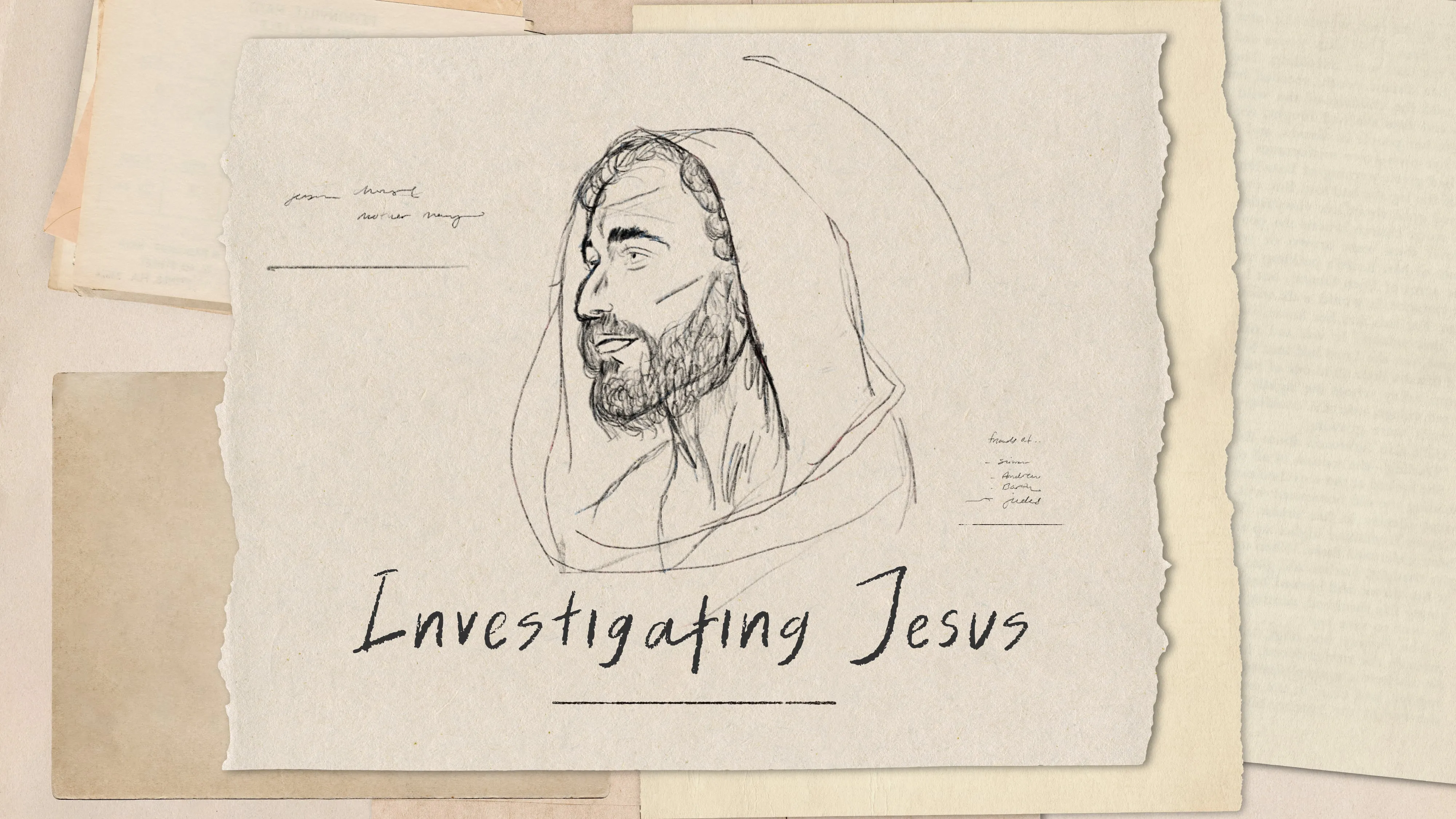
No matter where you are on the journey, never stop investigating Jesus!
Transcript
This transcript was generated automatically. There may be errors. Refer to the video and/or audio for accuracy.
Music Investigating Jesus. That's the name of the new series that we're launching today. Good morning, everybody. My name is Valerie. I'm one of the pastors on staff, and I'm glad that you are with us today. I'm excited to be here and to be kicking off this new series. Do me a favor. Go ahead and get out those notes that you were handed on the way in. If you're joining us online, I want to say welcome to you. We're so glad that you're there. You can get the sermon notes at tlc.org/notes. And go ahead and open your Bibles up to Luke chapter 1. There's Bibles in the pew rack in front of you. If you don't have a Bible and you need one, you can grab one on your way out at the info desk. We'd love to give you a Bible.
But as you're doing all this, I just want to start by saying how grateful I am for you. As I was driving around this week and dodging all the detours and dealing with all the road stuff, I was thinking about how much effort it takes to get to TLC right now. As I jokingly say at this moment, no roads lead to Twin Lakes Church. You got to want to get here. And then when you do get here, construction on the Hope Center, which is awesome, makes the parking just a little bit more chaotic. But every weekend, literally thousands of you don't let those things stop you. And I am so grateful. Your presence here is a blessing, not just to me and to the staff, but your presence is a blessing to the people around you. They may not know you, but just by you being here, it means they're not alone. And their presence means you're not alone. We're in this together. And I'm so, again, thankful for each one of you.
All right. Well, as we kick off this morning, I decided I'm going to start with a confession. It's church. There's a rumor that it's good for the soul. So here we go. Here's my confession. I took a test and I failed. And I hate failing tests. I frankly hate failing at anything. And I really thought, you know what? I'm going to pass this test. I'm smart enough. They're not going to fool me. What was this test I took? It was a test designed to see if I could tell the difference between videos generated by AI or real videos. And I thought, I'm a human. I've got wisdom. I've got discernment. I'm going to beat the robots. I was wrong. Out of 10 videos, I only correctly picked four. It's hard to be sure nowadays. It's hard to know what's true, what's not true, what's the robots, what's real.
And if I'm not careful, my skepticism, which is healthy in some doses, slowly ticks over to cynicism. I stop exploring. I stop asking questions. I stop wondering. I stop investigating. I get intellectually lazy and fatalistic, and I just think, oh, forget it. Nothing can be trusted. That's no way to live, and it's not true. And, you know, it's one thing if I'm talking about discerning the difference between videos and pictures and stuff like that. It gets a little more serious when we start to talk about, well, who can be trusted? Can I trust you? Can you trust me? Or anybody who stands up on this stage? And it gets really serious and the stakes get really high when it comes to Jesus. Can you trust Jesus? Is Jesus really who he says he is? Is what the Bible says about Jesus really true? And are we even allowed to ask? Can we even say our questions out loud?
Maybe you're new to all this church and Jesus stuff and you're coming in and you've got questions. Or maybe you're a little further in the journey and you're thinking, I might have more questions now than I did at the beginning. Or maybe you've been a Christian for a while like I have. You've been around for decades, grew up in it, and you have questions, but at this stage, you're kind of embarrassed to ask them because you feel like, I think I should have known this by now. Is it okay to ask questions? Or are we supposed to just sort of stuff them down and soldier on and just keep smiling as we go? And if we ask the questions, are there even answers to these questions?
Well, I'm up here this morning because I believe the answer is absolutely yes. And as a matter of fact, the Christian faith is a faith that welcomes questions. We are invited to open up the hood and kick the tires and check this thing out to ask our questions. Think about it. Even the Bible writers ask questions. Think about the Psalms. The writers are always asking questions like, where are you, God? Why do the wicked always seem to keep winning? What's going on? Can you be trusted? And this even extended to Jesus. People had questions about Jesus right from the start, and these are such important questions, because when it all comes down to it, the Christian faith, as much as I love the Bible, God's word, the Christian faith is not about what's written down in this book. The Christian faith rises and falls on the identity of a single person, Jesus Christ.
We could have no Bible, but Jesus would still be real. He would still be creator. He would still be our savior. It all rises and falls on Jesus. And this means that the four gospels, the books that we call Matthew, Mark, Luke, and John, books that were written specifically to tell us the good news about Jesus and talk about the events and things that happened while Jesus was on earth, those books are really, really important. But maybe you heard in a class or read in another book, you're thinking, are those books even reliable? Are they an accurate account of Jesus' life? People have been asking these questions for thousands of years, like I said. Even at the beginning, they were wondering, is this really true?
People asked questions about Jesus thousands of years ago. Did he really feed 5,000 people with five loaves of bread and two fish? So a Greco-Roman named Luke, interestingly, the only Gentile or non-Jewish person to write any book of the Bible, decided to write up an account of the life of Jesus. What did he discover? Well, that's what this series, Investigating Jesus, is all about. Over the next few weeks, we are going to follow along with Luke on his investigative journey. We're going to see Jesus through the eyes of the folks who were really there. So if you are curious about faith, or maybe you're returning to faith, or maybe if you're honest, you feel like you're losing your faith, or maybe losing interest in faith, or maybe you're just kind of blah, bored about it all at this stage of the game, this series is for you.
Because I believe that no matter where we are on our journey of faith, together we are going to discover three things about Jesus in this series. And first, I think we're going to discover that Jesus is investigable. Yes, that's a word. It's a $5 word for your 11 a.m. service. Jesus is investigable. As I just said, Christianity is a faith that invites your questions and does not shy away from the tough stuff. Luke certainly investigated it. He went to the people. He tracked down the witnesses. He took the notes. He wrote an orderly account. Our faith is not mythology. It holds up to investigation. So go ahead, investigate it. Explore it. Jesus holds up to scrutiny.
And it's not just, interestingly, the words or teachings of Jesus that attracted people to Jesus. Because the second thing we're going to find out about Jesus together is that Jesus is personal. Jesus is personal. As Luke was gathering up these stories, people didn't just talk about the teachings. They talked about what Jesus did. They talked about how Jesus interacted with them. They talked about who Jesus interacted with. And spoiler alert, that caused some panic around people. They talked about how Jesus was, what he was like. Following Jesus is not just about following his teachings. It's about encountering him personally. Jesus wants a relationship with you.
And when we encounter Jesus personally, we inevitably find out that third, Jesus is transformational. Jesus will not leave you the same. All throughout the book of Luke, we are going to see people who are transformed. People who are transformed from hopeless to hopeful. They're transformed from grief to joy, from sick to healed. Jesus always wants to make it personal, and he always wants to transform us. He's transformational. So as we start this series and know those things, I also want to give us a little bit of background about this book, the book of Luke and the author Luke.
We know that the book was written about 40 years after Jesus' time on earth, so within that generation of people who knew Jesus. And there is agreement among scholars, which if you know anything about scholars, this is shocking. There's agreement among scholars that the book was actually written by a follower of Jesus named Luke. And this is also confirmed by earliest church traditions. So who was Luke? As I mentioned, he was the only non-Jewish author of a book of the Bible. He was likely from the city of Antioch, which is in southern modern Turkey. At the time, Antioch was a very cosmopolitan city, one of the larger cities in the Roman Empire, and this might explain the very educated Greek that Luke uses in this book.
Now interestingly, Luke did not know Jesus during Jesus' earthly ministry. But he was an early follower of Jesus and traveled with the Apostle Paul. And it's from the Apostle Paul in Colossians 4:14 that we learn that Luke was a doctor. And Luke also wrote another book of the Bible, the book of Acts. And the book of Acts is the history of the very early church and the spread of Christianity. And I think also this isn't directly stated in the Bible but I think also we learn a little bit about Luke and his character in the book of 2nd Timothy.
In 2nd Timothy at the very end, the apostle Paul is in prison. It is the end of his life and he knows he's not getting out of prison this time. He knows he's facing inevitable execution for his faith and he's writing to Timothy this young pastor, this gentleman he had mentored, and you can hear in his voice that he knows it's the end. He says in 2 Timothy chapter 4, for I am already being poured out like a drink offering, and the time for my departure is near. I have fought the good fight. I have finished the race. I have kept the faith. But then he says to Timothy, I'd still love to see you. He says, do your best, Timothy, to come to me quickly. And then he lists the names of all these people who've deserted him. And at the very end, he says, only Luke is with me. Only Luke is with me.
And I think this tells us something about Luke's character. That Luke was a stick it with you till the literal end of your life friend. That he was there watching until the very end with the Apostle Paul. That's the writer of this book that we're about to study. So with all that context and everything, let's actually dive in. Let's actually start investigating. So starting in Luke chapter 1, we're going to start at the very beginning, which as Maria von Trapp says is a very good place to start. So Luke 1:1. Many, let's just stop right there for a second many how many is many three five interestingly this is a really common word in the new testament and in other places in the new testament it's translated as multitude great number large so we're not talking about a couple here we're talking about many.
And Luke says, many have undertaken to draw up an account of the things that have been fulfilled among us, just as they were handed down to us by those who from the first were eyewitnesses and servants of the word. And that means just followers of Jesus. With this in mind, since I myself have carefully investigated everything from the beginning, I too decided to write an orderly account for you, most excellent Theophilus, so that you may know the certainty of the things you have been taught. Luke starts as any good historian would with his methodology. How is he going to write this book about Jesus? Well, first of all, he says, I'm going to give you an orderly account. And I love this so much.
Most of my academic training is in the field of history, and I deeply love an orderly account. I really do a lot. Big fan. Big fan. I'm the person who goes to tell you a story and I say, you will not believe what happened to me. And you're thinking, oh my goodness, okay, let's hear it. What happened to you, Val? And I launch in and go, okay, here's what happened. I was driving late, late in the evening and I was on one of those windy roads up in the Santa Cruz Mountains last Tuesday and suddenly, oh wait, no, it was Wednesday? Was it Wednesday? No, it was Tuesday. It was Tuesday because it was sunny at the start of the day and I had lunch with a friend. Yes, it was definitely Tuesday. And by this time, you have lost all interest in my story. You've probably gone to Loft to get a cup of coffee because you don't know when I might be done with it. And that's how I tell my stories. Anyone else like that? Am I alone? I like an accurate account. And so does Luke.
Luke is stating facts. He's going to provide details that will help us, as he says, know with certainty. And second, Luke is going to investigate it himself. He's going to talk to the eyewitnesses. Imagine Luke got to talk with Mary, the mother of Jesus. How else would he know all the details of Jesus's birth narrative? Every one of us in this room knows the truth of the fact that nobody knows the pregnancy and the birth story like mom. Luke talked to the eyewitnesses. He talked to the people who were there. And then who is this most excellent Theophilus that he talks about here? Scholars believe Theophilus is a real person. His name means lover of God, Theo, God, Felis, love. And perhaps he was the patron of these books, the books of Luke and Acts. Maybe he had questions and so he commissioned Luke to go off and write these books.
And this title that he has, most excellent, seems to indicate to tell us that this is a person of rank. So maybe he was a Roman official back in Antioch who had these questions. And again at the end, Luke says he's doing this all so that you may know the certainty of the things you have been taught. Certainty. Doesn't that seem like a glass of cool water in the environment that we're in nowadays? Certainty. So with that introduction, Luke invites us into the story. And today we're going to pick things up. We're going to skip over the more known birth narrative of Jesus. And we're going to pick things up at the very beginning or just one tick before the very beginning of Jesus' ministry.
And this is going to help set the stage for next weekend when Herman Hamilton, love Herman, do not miss next weekend when Herman Hamilton will be here. And he's going to pick up this story and continue in the book of Luke for us. So let's turn in our Bibles a few pages over to Luke chapter 3. And here Luke introduces us to somebody who I always have a hard time figuring out how to tell you who he is. This is somebody who's like Jesus' warm-up act, the forerunner, the pregame show. Luke introduces us to John the Baptist. And I want you to see how Luke does this. And I love this picture of John, by the way, this painting, because he's pointing. And I feel like that actually summarizes John the Baptist the best. His whole ministry was simply to point. And to say, look at Jesus. Jesus is coming. Point you to Jesus. Point you to Jesus. Point you to Jesus. That was really the ministry of John the Baptist.
So as Luke dives into this part of the narrative, he says in Luke chapter 3, verse 1, in the 15th year of the reign of Tiberius Caesar, I mean, here goes Luke. He's putting us on the timeline right from the start. When Pontius Pilate was the governor of Judea, and then he's going to go through a whole list here, Herod was a tetrarch, which is a more regional ruler. Herod was a tetrarch of Galilee. Herod's brother Philip was a tetrarch of Arturia and Trachonatus. And Lysanias was a tetrarch of Abilene, not to be confused with Abilene, Texas. And during the high priesthood of Annas and Caiaphas, the word of the Lord came to John, son of Zechariah, in the wilderness. Holy moly, that's a lot of names. A lot of names. And to us, we're like, okay, I remember Herod, yeah, Trachonatus. Don't even know about that situation. And it doesn't mean a whole lot to us.
But to the original hearers and readers, this would have meant a lot. It would be like saying nowadays, this all happened when Donald Trump was president, Gavin Newsom was the governor of California, Fred Keeley was the mayor of Santa Cruz, and Renée Schlepper was the lead pastor at Twin Lakes Church. Luke is time stamping. He's time stamping his events for his original readers and for us. This reads like history because it is history. He's telling us what happened and when it happened. So now that he's established time and place, he's going to talk a little bit about what John the Baptist did. And he says in verse 3 that John went into all the country around the Jordan River preaching. And this was his message, a baptism of repentance for the forgiveness of sins.
And we're kind of used to hearing that phrasing, and so we think, okay, that makes sense. That sounds good. But this message really caused a stir back in the day because there was a whole system. The religious leaders had established about how you can be forgiven. And you had to go to Jerusalem, and you had to go to the temple, and this whole system was lining the pockets of a few very corrupt religious leaders. And lo and behold, along comes John out of the desert saying, you don't need to go there. You don't want to be part of that corrupt system anyway, do you? You can repent, which remember just means turning away from your sins, the wrong things you've done. You can repent and be forgiven right out here in the desert.
And as you might imagine, the gospels tell us this was a pretty popular message with the people. It says all of Judea went out to hear John. So we're talking thousands upon thousands upon thousands of people going out to hear this message. And of course, as word trickles back to the temple, the religious leaders were not super stoked on this. They were ticked off at John. I mean, John was cutting into their bottom line. So they saddled up and went out to the wilderness to go confront John. And John sees him coming. And he was not afraid of that. He was actually excited to see him coming. And he looks up and he says, welcome, you brood of vipers. Who warned you to flee from the coming wrath of God? What a welcome. Produce food in keeping with repentance. Fruit in keeping with repentance.
I mean, I imagine that the religious leaders were a little, whoa, nobody talks to us like that. And I think the people were maybe covering their mouths because they're like, that's kind of funny. They're getting it. But then the people get a little nervous. They start to think, wait a minute, are we brood of vipers too? We don't want to be a brood of vipers. And what is this fruit in keeping with repentance? And so they asked John, wait a minute, what should we do? And John's answer is so surprising to them. And I think it's even surprising for us today. Because here we have John, Mr. Hellfire, brimstone, brood of vipers. And he's like, okay, here's what you do. Anyone who has two shirts should share with the one who has none. And anyone who has food should do the same. If you've got more than someone else, he says, share.
And I love what Luke says next. He says, even the tax collectors had come out. And they said, whoa, what do we do? What do we do? And John says, don't collect any more than you are required. Stop stealing. And just to make the tax collectors feel better, there's also Roman soldiers there, and everybody hated the Roman soldiers. And they said, okay, what do we do? And John says to them, listen, don't extort money. Don't accuse people falsely. Be content with your pay. Don't try to make extra money off people by taking advantage of the powerless just because you have power. All of that is fruit in keeping with repentance, a changed heart. And John is introducing, he's pointing people to the Jesus way.
And in just a few weeks, we are going to see that Jesus lays out a blueprint for exactly this kind of kingdom, the upside down kingdom. Now, you can imagine this teaching of John was very powerful. But remember, he wasn't doing to make himself great. He was teaching to point, to point people to Jesus. But the crowd started thinking, this is pretty amazing. Maybe this is the Messiah that we've been waiting for. But John says, no, no, no, no, no, no. I'm not even close. I'm not worthy to tie the sandals of Jesus, the true Messiah. We're just getting started. Remember, I'm just the pointer. I'm just pointing us to Jesus.
And Luke ends this section about John the Baptist with this fact. But when John rebuked Herod, I guess he wasn't just picking on the religious leaders. When John rebuked Herod the Tetrarch because of Herod's marriage to Herodias, his brother's wife, little soap opera there, and all the other evil things he had done, Herod added this evil thing to them all. He locked up John in prison. So there in prison sits our pointer, the one pointing people to Jesus. Who's going to do the pointing? What's going to happen? What's going to happen to Jesus? Come back next week. We're going to talk about that next week.
But as we wrap up today, let me make this personal. What about you? Where are you on your journey of investigating Jesus? What questions are you asking right now about Jesus? Maybe some of them you've barely admitted out loud. You don't even want to think about it. Or maybe you're sitting there thinking, I don't have questions, I don't care, I was told there was going to be lunch, and I'm just waiting for that right now. Or maybe you're just too busy to think about your questions about Jesus. Or maybe you are here and you're thinking, okay, I've been checking this out for a few weeks. I'd actually, I have some questions and I'd like to ask them, but I don't know who to ask. I don't know where to start.
Well, first let me say, no matter who you are, if you were dragged here, if you are too busy, too tired, if you are starting your journey, let me just say you are welcome at Twin Lakes Church. We are question askers here. And second, if you are ready to start that journey, I want to say we have a great class called Alpha. And this is a space and place designed for you to sit and ask your questions. And you can get info about that at tlc.org/classes. We also have some great books available in the lobby at our little book nook. But let me just encourage you, start investigating. You will be so glad that you did.
And as I thought about making this personal, I thought, well, I need to make this personal for me too. Where am I in my journey of investigating Jesus? And I came to the very sobering realization that I haven't really been asking questions. And it's certainly not because I know everything. This is Jesus. I will never know everything. Here's what I discovered about myself. And I'll put it this way. Have you ever received an email and you read the first couple lines and you think, yeah, yeah, yeah, yeah, I know what this is about. And you just skip the rest of the email and close it up and go on to the next thing, only to find out later there was some really important information that you missed?
I think sometimes I stop investigating Jesus because I hear the first lines of a Bible verse or the first words of a Bible story. And I think, oh, yeah, yeah, yeah, yeah, yeah. I know all about this one. And I sort of skip the rest of the email. And in doing so, I miss the opportunity to be challenged. I miss the opportunity to learn as if I could ever mine all the depths of Jesus and what his word says. I miss the opportunity to grow, to grow in my faith, to grow more in love with Jesus. And there have been seasons in my life, sometimes I've stopped investigating Jesus because I did ask the questions and I did not like the answers. And I didn't know what to do with that. So I just kind of quietly slink to the other side and just watch the faith thing go on around me.
I don't want to walk away, but I don't really want to engage either. Sometimes I just don't have the desire to do the work. Sometimes we're in too much pain. We're thinking, I would love to investigate Jesus. I would also love to pay my rent. I would also love to get out of this crazy situation. You know, we're just in too much pain to investigate. Sometimes we're too disappointed. And sometimes we're just too bored. We're skipping the email. Maybe you can relate to some of that. Let me tell you what I told myself this week. Don't settle. Don't settle for I know this. Don't settle for it didn't work out last time. Why would I try now? Don't settle for I'm weary of asking when all it seems like I'm getting is silence, God. Don't settle. Keep investigating Jesus.
Start with this series. Be here every week, and no matter where you are on your spiritual journey, be willing to keep investigating Jesus. And that's really the bottom line for all of us. No matter where you are on your faith journey, keep investigating Jesus. Here's some really cool news. The Jesus that you and I are investigating in 2025 is the same Jesus that Luke investigated because the Bible assures us that Jesus Christ is the same yesterday, today, and forever. Keep seeking Jesus. Honestly, and I believe probably most of us in this room know this someplace in our heart, Jesus is our only hope.
As I said at the beginning, it all rises and falls on Jesus, and that is not a bad thing because Jesus will never fail you. He will never leave you. People will leave you. People will fail you. Circumstances will fail you. You will fail you, but Jesus never will. Your questions, your frustrations, your pain, your disappointments, your silence even, will never drive Jesus away from you. The Bible promises that when we seek him, we will find him. He will never leave you. So ask it all. Investigate it all. Bring it all to Jesus and he can handle it and know that while you're doing that, you do it from the secure place of his loving arms. Jesus loves you.
Let's pray. Heavenly Father, thank you so much for the reminder today that you love us, that you care for us, that you're big enough for our questions, that you can handle it all. And Lord, I pray that you would give us all the courage to ask our questions. God, I pray that you would give us the courage to come to you, to be humble enough to say, I don't understand it all, but I want to be here with you. God, I pray for the person who is maybe just not wanting to start this journey, doesn't even want to talk about you. God, I pray that sometime this week there would be a little turn in their heart, a softening that they might begin to think about even asking a question.
I pray for the people in this room at the beginning of the journey of asking questions. God, I pray that you would provide them with great conversations, good resources. And I pray, God, that as they start to study and get answers, that they would come to that moment where they realize even though they don't understand it all, they know enough to know that you love them and they need you. And that they would ask you to be their Lord and their Savior. And Jesus, for those of us who've been walking this road a little bit longer, and maybe we're just tired, or we're disappointed, or we're indifferent, or for whatever reason we've just sort of stopped investigating, God, I pray that you would soften our hearts this week.
I pray that we would be humble enough to come to you, that we would take that step of faith again to say, I want to know you more. Even though I've known you for years, Jesus, I want to know you more. Father, thank you. Thank you that you want a relationship with us, that you love us. In Jesus' name, amen.
Join us this Sunday at Twin Lakes Church for authentic community, powerful worship, and a place to belong.