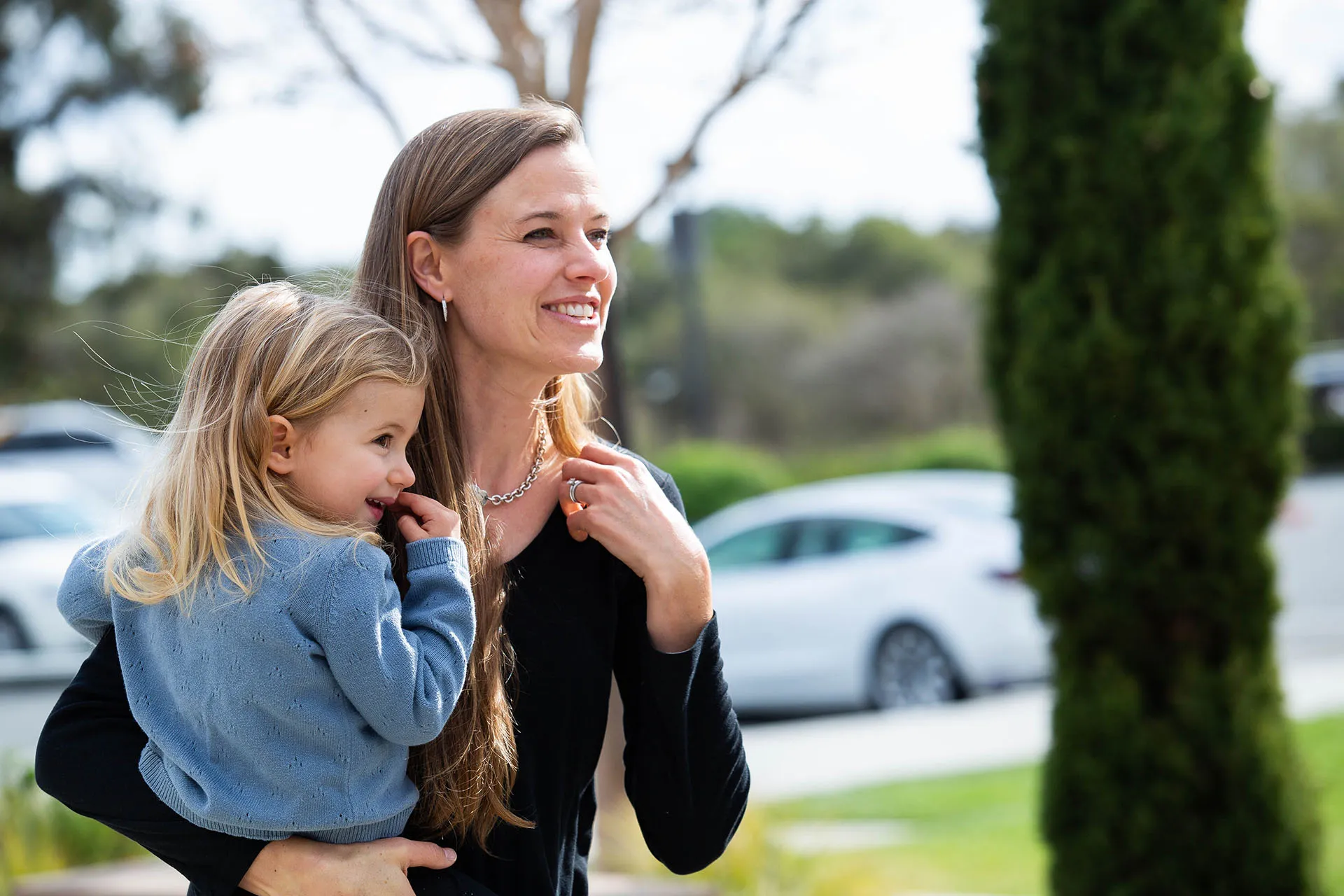
Three Pillars for Every Home

Mark shares three essential pillars for nurturing our homes.
Transcript
This transcript was generated automatically. There may be errors. Refer to the video and/or audio for accuracy.
Good morning everybody. Happy almost New Year. And by the way, I hope you had a wonderful, wonderful Christmas. We were just so blessed this last Christmas to just have some wonderful moments and I hope you did as well. And congratulations by the way for surviving the 12-21-12 apocalypse. You know, good for you. I saw a great weather forecast by the way concerning the so-called Mayan apocalypse. Weather on Friday predicted to be sunny and hot with occasional meteor showers heavy at times. So take cover.
But since we're all still here, why don't you grab those message notes as we kick off a brand new series called Your Home, Your Castle. And as you can see, we found a reason to keep this castle right here on stage. Yes, we're gonna milk this baby for all it's worth. Our next series is gonna be called Recovering Your Life from the Ruins. And... But seriously, it's gonna be like grandma's house around here where the decorations never really come down. They just... They're all your home.
But kidding aside, our culture is obsessed with finding or building a dream home, something you can call your castle. And it can be totally God honoring to build a beautiful living environment, but far, far more important is what's going on in the lives and the relationships of the people who live inside our homes. I'll give you an example. Several years ago when we moved into our home in Corralitos, we had all sorts of dreams and projects and to-do lists and that list has really not gotten any shorter.
But one of the goals that I had was to build a fence around our properties. We had a dog and all that kind of stuff. And our lot's not super wide, but it's pretty deep. And so this fence was gonna be quite a project. I envisioned it taking months, if not longer. And our son Jack was about two years old at the time. And for Jack, this whole fence building thing was awesome. I mean, he loved everything about it and so much so that Laura actually got a carpenter's nail belt and she shortened the waste down to like a 10-inch waste or whatever it was. And voila, Daddy's little helper was good to go.
Here he is. And some of you know this story, but it was all cute and all at the beginning, having this little mini-me following me around, imitating everything I was doing. But to be honest, Jack really wasn't a whole lot of help. In fact, most of the time he was just getting in the way. If he wasn't sticking nails all over the place, you know, he was going for the skill saw and I'm like, "Oh, no, no, Jackie, that's for Daddy. You can just keep hammering those nails away." And I remember thinking, you know, I'm never going to finish this fence. I mean, Jack keeps slowing me down and I'm starting to get frustrated because after all, I had a job to do and I had to complete it.
And then all of a sudden, God puts this thought in my head, "Clear Isabelle, you're not just building a fence, Mark. You're building a boy. You're building a boy." And that boy is infinitely more important than that fence. So that became my mantra. You know, Jack is putting the 10th nail in the same place. I'm like, "I'm building the boy." You know, Jack goes for the skill saw and says, "That's okay, Jackie. We'll just let Daddy cut the wood. I'm building the boy. I'm building the boy." Jack finds the most incredible roly-poly bug that's ever existed on earth. He wants me to drop everything so that I can experience the wonder and look at it through his eye. "I'm building the boy. I'm building the boy."
Well, that fence is long since completed. The boy, who's now 12, still definitely under construction. But I blinked. Ten years went by like that. I'll blink again and my little boy will be a man. The time goes by so fast. Moments are so precious. How do we make the most of them? That's what this message and this series is all about. And whether it's with your children, your spouse, your brother, your sister, your parent, your roommate, you have the opportunity, the calling even, to build into their lives.
And maybe you live by yourself, but there are neighbors, friends, relatives that God has given you the opportunity to build into as well. And so with this in mind, I want to begin this series at a foundational level with principles that apply to every single one of us, principles that I'm calling three pillars for every home. These aren't the only three pillars, by the way. There are more that can and will be said over the next two weekends. So your home can include more than these three pillars, but not less. Not if you want it to be a place where God's good intentions are promoted. Not if you want it to be a place where your loved ones have at least the opportunity to thrive.
And this first pillar is supremely important, and it's called grace. Surprise, surprise, we're talking about grace again at Twin Lakes Church. But that's because grace is absolutely essential. We exist because of God's grace. We have a future because of God's grace. Our Christian homes get kooky without God's grace, and so our homes need to be suffused with grace. They need to have an environment of grace.
Most of the verses we're going to see today come out of Ephesians 5, because in Ephesians 5 and even into 6, Paul is laying out some principles for God's household, both in terms of how we live as a community of faith and how we live in our individual homes. And as he describes this, it's all rooted in God's grace. And if you don't get this, you'll miss really what Paul is doing, because for the first half of his letter, he just describes grace over and over again, uses every superlative, every adjective he has at his disposal, so that in the last half, including the verses we're going to see today, we have a sense of how this all plays out in our lives, what it's rooted in, and the difference that it makes.
It's like Paul is saying this, "You can't live out grace until you first live in grace." So he keeps making this connection over and over again, about how we receive grace and then how we extend it into the lives of others. Now, this first verse I'm going to show isn't in your notes, but it comes right before the section we're going to see. It's Ephesians 4:32, and in it, Paul says this, "Be kind and compassionate to one another, forgiving each other just as in Christ God forgave you." And this sets the stage for us. Literally, he's saying, "Grace others just as in Christ God has already graced you."
And this thought carries right in to Ephesians 5, verses 1 and 2. In fact, why don't you read this out loud with me? In fact, I want to hear you read this so loud in venue, we can hear you over here as well. So let me hear you. It's on the screen behind me or in your notes. Here we go. "Be imitators of God, therefore, as dearly loved children and live a life of love, just as Christ loved us and gave himself up for us as a fragrant offering and sacrifice to God. As dearly loved children, live a life of love." You see the connection there? "When you know that God loves you, you can then live a life of love."
And how do we love? Well, we love just as Christ loved us and gave himself up for us. It's going to be a giving love, a sacrificial love. It gave himself as a fragrant offering and sacrifice to God. So grace flows out of love. In fact, I want to invite you to think of the most loving, most welcoming, most warm and approachable person you know. Does someone in particular come to mind? For me, no one's higher on my list of loving and gracious people than my maternal grandmother. Her name was Helen, but to all of us, she was Grand Grand.
And not to disrespect anyone else's grandmother, but when God created Grand Grand, he created one of the sweetest creatures this earth has ever seen. She exuded love and grace always. And believe me, we put her to the test more than just a few times. She had 16 grandchildren, nine of them were boys, and we were boys who wore trouble like a badge of honor. And yet she always seemed to see past that. She was able to see your better self. And so even though she would correct us gently, she had this way of communicating, "You know what? I believe in you more than you believe in you." I suppose that's the wisdom of grandmas and grandpas, their ability to do that.
But in addition to being a reservoir of grace for her family, she was just this way to every single person she ever knew. She was a talented singer and pianist. She was the choir director in the church that we were at when I was a little boy. And she loved, loved, loved to sing about Jesus. I can still remember her leading the congregation in the hymn that says, "Amazing love, how can it be that thou my God should die for me?" And if you know that hymn, it just swells. And even as a little boy, it would give me chills.
But one of my grandmother's other jobs, before I was born, in fact, when my mother was a teenager, was that she was a piano teacher and choir director up at the California Youth Authority Detention Center when it was up on Empire grade. I know there's one up by Felton now, but up in those days, it was up on Empire grade. And every Monday night, she would drive up there and teach choir to the inmates and give them piano lessons and provide music for those who had an interest in this.
Well, one Monday night, she comes down from the CYA camp and she pulls into the garage and right as she's about to turn off the car, an inmate who had escaped from the camp and no one knew about this, he had hit it in her car. He springs up from behind the back seat and puts the point of a switchblade right against her neck. And he says to her, "Back the car out and keep driving." Now, this was one of her students. So the car just backs out and my mom, her three sisters, my grandfather, they're in the house. They hear the car drive in and then they hear it back out and they think, "Well, maybe, you know, mom's forgot to get something at the grocery store or something like that."
Meanwhile, my grandmother would say later, "She felt like screaming, but she didn't want to alarm her daughter's or her husband." And this guy tells her to drive up Bay Street and then up to High Street. And all the while, she's trying to keep him calm. She's talking to him even though she's absolutely terrified and she's saying, "You know, you don't want to throw away the rest of your life. I know you've done, you know, some...you've made some bad decisions here, but don't make it worse." And, you know, it was getting pretty bad for this guy. He's broken out of jail. He's held a knife to my grand-grand's neck. And the hole that he's digging is getting pretty deep.
But by God's grace, they get up on Western Drive and he tells her to get out of the car. He takes the car, drives all the way up to Half Moon Bay where he's eventually caught by the police after he gives them somewhat of a chase. In fact, here's a newspaper clipping of when he was re-arrested by the police. His name was Richard Hanson. It was all 18 years old at the time. Several papers picked up this story. My grandmother was a minor celebrity in Santa Cruz in the days that followed.
But here's the part of the story that's pure grand-grand. Because Richard Hanson is returned to jail here in Santa Cruz. What does my grandmother do with the guy who kidnapped her at knife point? What do you do with a person who has traumatized you so much that for the rest of your life, you will subconsciously reach behind the seat every single time you get into the car just to reassure yourself there's not some bad guy there? What do you do? I'll tell you what my grand-grand did. She baked him a cake and brought it to him in jail. She even hit a file in it. No, she didn't do that. But she did bring him a cake. And she continued to reach out to Richard Hanson because she wasn't seeking retribution. She was seeking his redemption.
She knew this guy was going to spend many years in prison. In fact, she loved him so much she told the DA she didn't even want to press charges against him. In her heart and her mind, Richard Hanson wasn't some monster. He was still one of her students. One of her boys, as she would call them. And at her core, she was a woman of grace. I'll tell you something. When you hear stories like this as a young boy about how grace reaches out, even to people who have harmed you and wronged you, it makes it so much easier to understand grace and to want to be that kind of person yourself.
I mean, when grace is lived out in ways big and small, it really forms a pillar in your family, in your home that everyone else benefits from. So, yes, I can understand grace conceptually, but I also know what it looks like personally. And it looks like my grand-grand, who loved Jesus and everyone else with all her heart. And it causes me to think, you know, what will my children or even their children say about me in this area? You know, will they say he continued the legacy of grace that he learned from his grand-grand? Will they have heroic stories about how I modeled grace? I mean, clearly, my grandmother's a picture of grace. Will I be? How about you?
Ask yourself this. In fact, write this down. How do I demonstrate grace? How do I demonstrate grace? Some of you also have amazing stories of grace. Others, if maybe you're a little bit more like me, you might have to scratch your head for a while and go, "Well, gee, let me get back to you on that one." Well, here's something we can all do. This week, you're going to have the opportunity probably more than once to extend grace to someone who's, in many cases, living right under the same roof you do. I want you to expect that. Pray in anticipation of this. Pray that God will keep you mindful of the infinite amount of grace that he's bestowed upon you. It will make it so much easier to extend that same grace to other people.
In fact, being mindful of God's grace doesn't just make us more gracious. It actually forms a pillar of grace in our lives and homes. And in fact, it leads to the second pillar, which is gratitude. Because gratitude flows out of a deep awareness of God's grace. And one of the great things about gratitude is that it makes you a better person. I mean, grateful people lift everyone else up. Grateful people provide joy in their homes and in the lives of every person they touch.
Author Anne Lamont, somewhat of a colorful Christian character, but she writes in one of her books, "Gratitude begins in our hearts and then dovetails into behavior. It almost always makes you willing to be of service, which is where the joy resides. It means you're willing to stop being such a jerk. When you're aware of all that has been given to you in your lifetime, and in the past few days, it is hard not to be humbled, pleased to give back." You want to have a positive effect on other people. You want people to truly enjoy being in your presence. Learn to be grateful for the little things all around you.
Don't wait until you win the lottery. Don't wait until you get the thing you really, really want. Be thankful today for the things that you have. There's a Hungarian proverb that has kind of a hard truth to it. It says, "Whoever doesn't appreciate the small things doesn't deserve the big." It's challenging, but I think it's good. But I wonder if it doesn't also work like this. Whoever doesn't appreciate the small things doesn't enjoy the big, doesn't enjoy, can't enjoy. Because discontentment has a way of draining us of our ability to experience joy in a heart or home. Devoid of joy is ripe for disaster.
Because here's the thing, so many sins are essentially a warped search for joy. Grasping for something that will fill me, satisfy me, make life more tolerable for me. Look at the next few verses here, Ephesians 5, 3, and 4. This is fascinating. Paul says, "But among you, there must not be even a hint of sexual immorality or of any kind of impurity or of greed because these are improper for God's holy people. Nor should there be obscenity, foolish talk, or coarse joking, which are out of place, but rather, Thanksgiving." Notice what's the replacement for immorality, impurity, greed, a dirty mind or mouth. It's Thanksgiving. Gratitude.
Because gratitude promotes healthy contentment. It enables us to enjoy God's gifts in the ways that He intends for us to enjoy them. But bear in mind, there are counterfeit forms of joy all around us. They abound. If you're single, you may long for the joy of intimacy. There's nothing wrong with that. That's a God-given longing. But you won't find it in sex outside of marriage, not really. Because in your soul, God has designed you to long for the type of intimacy that He's reserved for marriage. And I'm not saying it's easy. Yeah, I didn't get married till I was 33. But there's a joy in trusting God. There's a joy in building contentment in the things that you do have, in the place you are in life that is ultimately better than settling for something that is less than God's very best for you.
Married couples. You know, I've never known anyone to wake up one morning and say, "Hey, you know what? Today, I think I'm going to have an affair." In real life, the beginning of an affair, the beginning of a marriage begins to unravel. It happens when one or both spouses stop cherishing each other, stop being grateful for each other. In fact, one of the secrets of a good marriage is where each person thinks they got the better deal. You know what I mean? Guys, this is a softball over the center of the plate. You know what I mean? Can I hear an amen, guys? There you go. Okay. I'm just trying to help you.
I can assure you this, man, I totally married up with Laura. I mean, I don't even deserve to be grateful in this area of my life because it's just a fact. You know what I mean? She's a better person than I am. But this does give me an insight, I think, into why Paul emphasizes gratitude so often. And I think it's because gratitude, it creates a hedge around us. It's a preventative to all the ways that we might be deceived into thinking that the grass is greener somewhere else.
So to the Colossians, kind of a parallel passage, Paul writes this, "And whatever you do, whether in word or deed, do it all in the name of the Lord Jesus, giving thanks to God the Father through him." Whatever you do in word or deed, do it in the name of Jesus with gratitude. And so before we leave the second pillar, would you ask yourself this, "What do I have to be grateful for?" Write that down. "What do I have to be grateful for?" And I hope you'll be thinking about that this day. And we all have things that have gone wrong in our lives. Well, what's gone right? What's gone right?
And this isn't about adopting some Pollyanna view of the world or ignoring our hurts and our pains, but it's about finding joy in the things that we can find joy in right now and we all have something. Along these lines, a doctor named Richard Swenson writes this, "If you wrote a different reason each day, how long would it take before you ran out of reasons to be grateful? Hopefully 50 years or never. Personally, I'm grateful that grass is green, that we have vision, that our vision is in color, that four-year-olds laugh once every four minutes, that we are six feet tall instead of six inches for sunsets, my wood-burning stove for fishing, for birds, for the capacity to love, for the scriptures."
When you give thanks to God, He then turns it around and gives joy to you. This week in the daily meditation section of your notes, we invite you on a particular day to write down 10 things that you're grateful for. Well, if that sounds daunting to you, why don't you take Swenson's recommendation here and write one thing down each day. And it would take all of about 30 seconds, but it may just end up being the best 30 seconds of your day. I mean, can you think of a greater blessing for the people you love than to be someone who brings gratitude and joy into their lives? I mean, whether you're married, single, divorced, whether you feel like you have no elbow room in your house or far too much? We can all do this. We can all be a blessing to others in this way.
And then little by little, as gratitude becomes a habit in your heart, it becomes a pillar in your home, blessing all who share the same roof or all who cross the threshold. Well, this leads to the third pillar, at least for today, because at the turn of the year, we often think of the habits that we kind of like to, you know, get rid of the ones we'd like to shake. And you've probably come to realize that it's a lot easier to make a habit than to break a habit. You know what I'm saying? A lot easier.
In fact, experts will tell you that you can't ever really erase certain habits because they get hardwired into your brain. What you can do is replace habits and use the power of habits to your advantage. So this third pillar is about forming godly habits in your household, godly habits. We all have certain routines that when you think about it, they actually comprise a significant amount of how we spend each day. What you did when you got up this morning, whether it was to jump in the shower or reach for a cup of coffee, which shoe you tied first, what you ate for breakfast, where you sit in church every week, these are all habits.
In fact, this week I've been reading a fascinating book. It's called The Power of Habit, Why We Do What We Do in Life and Business by a guy named Charles Duhigg. He's a graduate of Yale and Harvard and it's a fascinating book. But in this book, Duhigg cites a 2006 Duke University study which found that more than 40% of the actions people performed each day weren't actual decisions but habits. Think about that. Over 40% of what you do every day is habitual. It's just what you have learned to do over and over again.
And apparently one of the functions of habits is to free our brains up when we're performing regular or routine tasks. So for instance, you know, the first time you backed a car out of a garage, you had to focus. You had to think about it. You know, you're looking in the mirror and all these complex little motions that you have to do to safely back the car out at an appropriate speed. You had to concentrate on it. But now it's a habit. You don't have to think about it at all. Your mind can be way off somewhere else, you know, totally not in the moment. Which is why as soon as you drive away, you can't remember whether you closed the garage door or not, right? Which leads to another habit which my wife loves because soon as we're about a mile down the road, I always go, "Um, did I close the garage door?" She loves it when I do that.
So it's a habit now. My point is, is that significant, a fair amount at least, of the things we do every single day we do out of habit. Now I want you to hold on to this thought as we read these next verses, Ephesians 5, 8 through 10. "For you were once darkness, so were many of your habits. But now you are light in the Lord. Live as children of light, for the fruit of the light consists in all goodness, righteousness, and truth, and find out what pleases the Lord."
Now let's go back to habits. I'm not suggesting that, you know, our transformation becoming more like Jesus is simply a matter of adopting new habits. There's the mystery of God's Spirit working in our lives. But this is certainly, this issue of habits is certainly part of the equation. I mean Jesus had definite habits, didn't He? Scripture tells us that He often went away and prayed as was His custom or His habit. He went to the synagogues weekly, that was His habit. Spending time alone with His disciples, reaching out to strangers, reaching out to people in need, these were all things that Jesus did over and over again. They were part of His routine.
So as we learn to live as children of the light, it will certainly include adopting or forming godly habits. And listen, so often we want your fire to come down from heaven and just transform us in a moment, don't we? We want the Red Sea to part and we think when that happens then my faith is just gonna skyrocket. I'm gonna be just so on fire for the Lord. Well guess what? The Red Sea did part and the people that saw it happen didn't change Him one bit. Why would we think we'd be any different?
The reality is that godliness is most often developed in the little things of life. Little ordinary daily actions that express our confidence that by inviting God into our lives and our routines that that will make a difference. That's where godliness is developed. And I'll give you a very simple example of how a godly habit has paid off big time in our family. And I have to say I'm certainly no parenting expert. My wife, Laura, and I, we have plenty of failures as parents. But one of the things that has always seemed obvious to us is to pray for our children when we tuck them into bed at night.
And from the time that they were little infants and you feel so afraid just to leave them in their crib, pray, Lord, make sure that you watch over them tonight please. To when they start to understand language and you pray out loud and it's partially for their benefit and they listen to what you're praying to now the prayer time is kind of a mutual thing. There's been so many benefits of this routine in our lives. But of the many, many benefits, I'll just name two.
The first is this. It's become a nightly habit. I mean it's a totally a total habit. Sometimes in fact when Laura and I are exhausted or tired and you know I don't want to get up from the couch and go tuck them in the bed. So I wait to see if Laura will do it first. But no matter what the delay is if we don't show up one or more of them will call out and say, "Dad, Mom, can you please come and pray for us?" I mean they will not have it any other way. Like one night during the concerts, right before the concerts in fact when we were here late for the rehearsals, I was just exhausted. I was kind of half asleep and Luke my second son says, "Daddy, will you pray for me?" And I said, "Lucky, can you just pray for yourself tonight?" My kids thought that was totally ridiculous. Like, "No, sorry dad. It doesn't work that way." In fact they even mocked me the next day. They were impersonating me you know during their breakfast time which I totally deserve.
I'm sure I have taught them a number of bad habits. I know I have. But in this one area by God's grace we've been able to form a godly habit into their lives. Second huge benefit is that this habit has given us the opportunity to pray the gospel into their hearts and their heads. Tell you what I mean by that. If you're a parent, grandparent, if you babysat, you know there's a unique openness that children have when you're tucking them into bed. They're just attentive in a very special way. And so my wife and I we thought, "Well, we've got their attention. We may as well make the most of it." And so we would pray something very much like this, "Dear Lord, thank you for this day. Thank you for sending your son Jesus Christ who died for us on this on the cross so that all our sins can be forgiven. We could be a part of your family and that our family can live with hope every day." And every single night we pray some variation on that same theme.
And I can tell you I am absolutely convinced that my children's understanding of Jesus Christ, who He is, and what He's done for us comes from what they've heard in those evening prayers. I have no doubt about it. And you know what? You don't have to be a pastor to do this. You don't have to be a theologian. Any child of God can do this. Simply pray the gospel into the hearts and lives of people at your dinner table or who you're tucking into bed, whomever.
Look what Paul says at the end of the Scripture that we just saw, Ephesians 5 verse 10. He says, "And find out what pleases the Lord." Well, you know what? I think these godly habits absolutely please the Lord. So think for a moment. Take a little inventory. Ask yourself this. What daily habits are developing godliness? Write that down. What daily habits are developing godliness? For some of you, it's your daily devotions and it's become a godly habit. Praise the Lord for that. Now this is why we provide those daily meditations in your notes to make it easy and accessible. It's a springboard. Don't feel limited by that.
For others, you have a daily prayer time maybe while you walk and you pray for people in your lives. And you have no idea the difference that that's making. For others, it's memorizing a Bible verse every day. For some of you, you check on a neighbor and maybe someone who's elderly every single day to see that they're okay. Good for you and good for them. These are good godly habits, which by the way, people in recovery, they learn about the power of habits. They know that you can't always erase old habits, but you can replace the ones that that are always lurking. You can replace them with good godly habits in your life, especially, especially when you band together with other people.
When you say, "This is what I'm trying to do in my life." Or you share this with a friend or a family member. There's a power in doing this as part of a group. And so long before we had any thought about, you know, gathering together in groups to recover or to form better habits in our lives, the author of Hebrews said this, "And let us consider how we may spur one another on toward love and good deeds. Let us not give up meeting together as some are in the habit of doing, but let us encourage one another and all the more as you see the day approaching." Let us consider how to spur one another toward love and good deeds.
And today we've considered three ways that we might do that by building into our homes the pillars of grace, gratitude, and godly habits. And gathering weekly like this, this is also a very good godly habit. So let's not give up meeting together as some are in what? The habit of doing. If not already, I pray that you will make regular church a good godly habit in your life. Because let's face it, life is hard. Life is hard. And there's no guarantees that if you just do this, that, and the other thing that your family, your relationship, your household, it's all just going to be perfect and brilliant. There are no guarantees.
So God calls us to encourage each other daily and help each other along the way. My prayer is that I will be an encouragement to you. And I need your encouragement too. I absolutely do. Because after all, I'm still building the boy and his brother and her sister and their mother just as surely as they're building me. And something similar is happening in your home too. So whatever your household looks like, at whatever stage of the journey, may God give you much wisdom. And may your home rest securely on the pillars of his goodness and his grace. Let's pray towards that end.
Heavenly Father, thank you so much for the opportunity to come together. For some, Lord, this is a habit that they've been following for 50, 60 years. Wow, what a wonderful, amazing blessing for them, for their families. What a wonderful legacy. For some of us, Lord, this might be the first time we've ever stepped into a church. I pray that it would be the beginning of great things, the opportunity to be drawn into a community with you and with your people.
Father, I also have to think that they're here at the turn of the year. There are folks that, maybe they feel like Richard Hancing, the inmate that kidnapped my grandmother and they feel like, you know, I dug a hole that's probably too deep to ever get out. Lord, I pray that you would, through your spirit and through your people, that you would reach into lives like that and bring grace and love and hope and a belief that you can be better than even you believe you can be. So, Father, we might all continue to grow up and mature and become the people that you have called and created us to be.
Father, I pray that your spirit, your word, your church would work mighty in our midst. And then in the months to come, or the course of this next year, we would see growth and blessing in ways that far exceed even what we could ask or imagine for ourselves. I pray this in Jesus' name. And all God's household said, "Amen."
Join us this Sunday at Twin Lakes Church for authentic community, powerful worship, and a place to belong.