When Life Throws You Curves
Life's curveballs are inevitable; trust God and control your response.
Transcript
This transcript was generated automatically. There may be errors. Refer to the video and/or audio for accuracy.
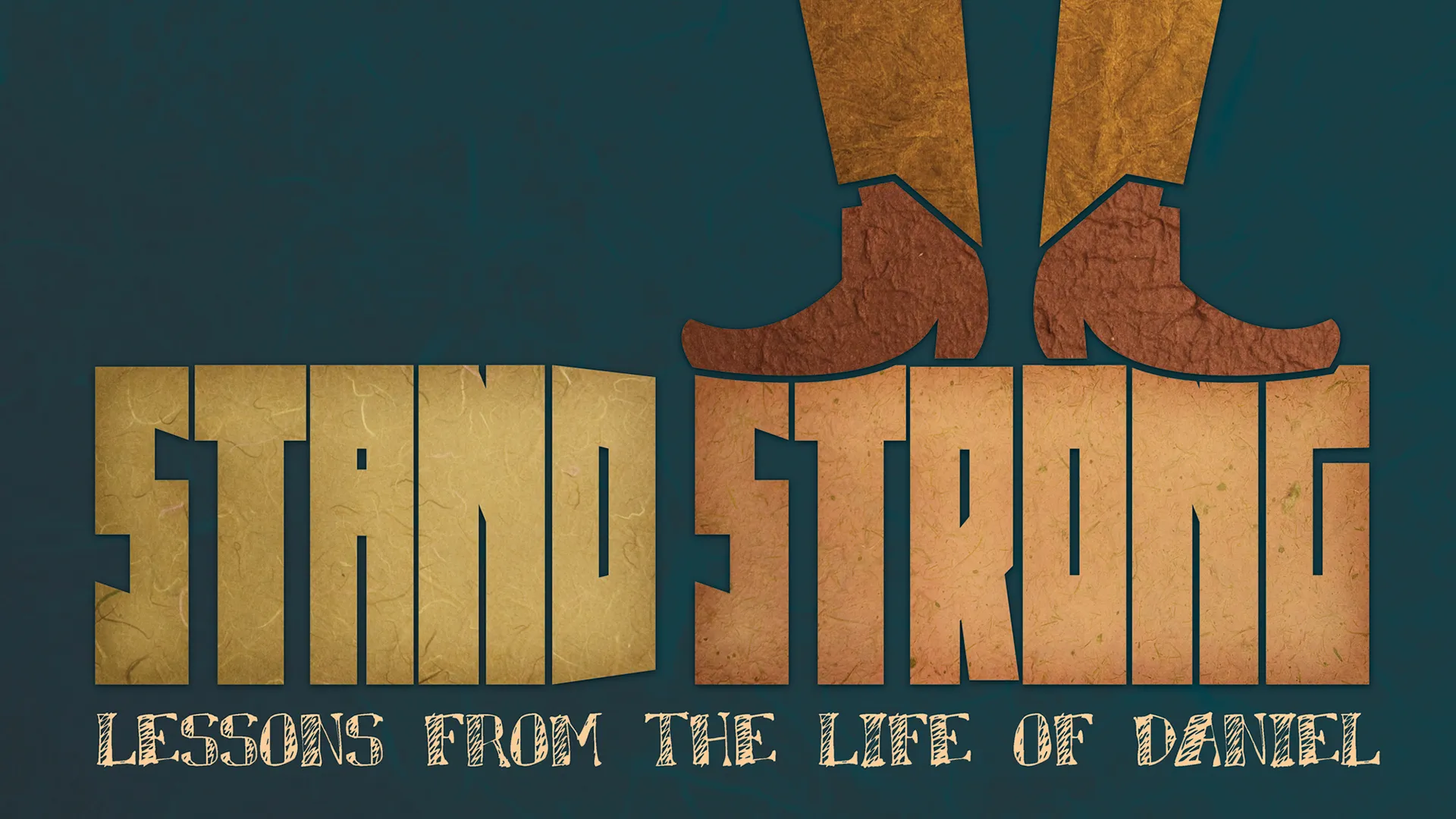
Grab your message, those from inside your bullets, and stand strong as our summer series in the book of Daniel. We're taking a chapter a weekend, and as you're taking these out, I want to do this kind of as a public service. I heard about this a while ago, and you never know when you're going to need these. These are instructions. This is supposedly a page out of the Peace Corps manual for Peace Corps volunteers who are going to South America. This page is entitled "What to do if attacked by an anaconda." This is useful information. These are the instructions.
Number one, do not run. The snake is faster than you are. Number two, lie flat on the ground. Number three, put your arms tight at your sides and your legs tight together. Number four, the snake will begin to climb over you. Number five, do not panic. Number six, after the snake has examined you, it will begin to swallow you from the feet end, always from the feet end. Number seven, the snake will now begin to suck your legs into its body. You must lie perfectly still. This will take a long time. Number eight, when the snake has reached your knees slowly and with as little movement as possible, reach down, take your knife and very gently slide it in at the side of the snake's mouth between the edge of the mouth and your leg, and then suddenly rip upward, severing the snake's head. Number nine, be sure your knife is sharp. Number ten, be sure you have your knife. That's my favorite one of the ten right there.
You know, there's a book all about this kind of thing called the "Worst Case Scenario Survival Handbook." It's a lot of fun to read. And in its preface, the authors write, "The principle behind this book is a simple one. You just never know." And that is so true. You just never know what kind of worst case scenario curveballs life's going to throw at you. Well, this weekend I want to give you kind of a worst case scenario survival message. I want to talk about what to do when life throws you curves, which it will. What do you do when the rug gets pulled out from underneath you, financially, physically, relationally, which will happen? What do you do when life throws you curveballs?
Some of you, you feel like you're there right now. You don't know, you know, what's up and what's down because your life has just gone kind of maniac. Others, you need to know this now because if you wait until the moment, you are throwing a curveball, you will be vulnerable in so many ways. So use this info to put down a firm foundation today. Grab your Bibles if you got them with you. If you don't grab those brown TLC Bibles from the pews right in front of you and turn to Daniel chapter 2, that's on page 625 in those brown TLC Bibles.
In Daniel chapter 2, we see three constants in a curveball world. And what I invite you to do as we go through this series chapter by chapter is just kind of like on one leg kind of balance the Bible on the other one, your message notes, because I really want you to see how these two dovetail, how every principle we're getting here comes right out of Scripture. And in Daniel 2, you really see a framework for anticipating and handling worst case scenarios. Jot these down. Number one, there will always be things I cannot control. That's the first point you get right out of this chapter, right out of the gate. There will always be things I cannot control, right?
Life is going to throw you curveballs like when a batter is standing at home plate and he's anticipating a fastball and whoop, the ball does some kind of weird dipsy doodle that he wasn't expecting. Life's going to do that no matter who you are. There's going to be things you cannot control. You know who looks like he is in control at the beginning of this chapter? King Nebuchadnezzar, the king of Babylon. This is an engraving of him from a coin, probably something like what he looked like with his armor and his helmet on and his hair and braids and everything. And let me tell you a little bit about what we know from history about King Nebuchadnezzar.
While he was still the prince and his father was the king of Babylon, he personally led the armies that defeated the Egyptians, the Syrians, and the Phoenicians. Three major victories over three major enemies. And then he turned to the Medes. And he said, "Well, I can either bring my army and conquer you too, or you can give me your king's beautiful daughter to be my wife." And they said, "Where are you registered? What date would you like the wedding to be?" And Nebuchadnezzar marries her and returns home to Babylon, becomes king, and built the hanging gardens of Babylon, one of the ancient wonders of the world.
He also constructed spectacular palaces. This is one of them that you can still see today. They've unearthed it. Slight hitch, you'd have to be willing to vacation in Iraq, but still it's there. It's very interesting. And what we find is that he was way ahead of his time. Nebuchadnezzar built canals. He built a port in the Persian Gulf, the first port in the Persian Gulf. He built an underpass for pedestrians and chariots to go under a river. That was a first. He built a bridge over the Euphrates River that for the first time known in human history was paved with asphalt. That's right. This is 600 BC and he's laying over the bricks a pavement of melted asphalt and then hardens in the sun because he said it made the chariots ride more smoothly.
And the technology wasn't lost, but paving still wasn't commonly done until the 1800s. So he was way ahead of his time. And in fact, it still hasn't reached some portions of Soquel Drive. But that's another story. But listen, this guy was spectacular. Now in Nebuchadnezzar's day, these clay bricks were vibrantly colored. They didn't look like this. They were just stunning. We have the shape here, but their color was different. And we know that because when they were first unearthed, some of them had all the original jewels and tiles, still spectacular, and some of those survived and are now in the Berlin Museum.
That is original tile and original color on there. That's what all of those gates once looked like. Just amazing. And they're massive. And they have an inscription on them that Nebuchadnezzar, this character in the Bible, himself wrote. And here's a partial translation. It says, "I, Nebuchadnezzar, laid the foundation of the gates down to groundwater level and had them built out of pure blue stone. Thus I magnificently adorned them with luxurious splendor for all mankind to behold in awe." So do you get the picture of who this guy was? This was a guy at the top of his gang, at the top of the world, bringing it into modern times.
He would be like the Donald Trump or the Steve Jobs, the Silicon Valley or Wall Street CEO. He is the guy with a house in Pebble Beach and Kauai and Woodside and Manhattan and Paris and the Bahamas and Jamaica, you know? And honestly, if I think I'm just kind of doing true confessions here when I look at the book of Daniel, while I can honestly kind of applaud Daniel, you know, for standing up, good guy, you know, you're thrown into the lion's den, you didn't back down, I can applaud Daniel's principled stance. It's Nebuchadnezzar's lifestyle that appeals to me.
If I'm really honest, I go to have all those resources to basically be able to control whatever you wanted. Man, that kind of sounds appealing. But he finds out that there are some things even he has zero control over. And you're going to see that in the next three chapters, but it starts here in Daniel chapter 2, verse one, in just the second year of his reign. He is at the top of the world, top of the food chain. Nebuchadnezzar had dreams, his mind was troubled, and he could not sleep. The most powerful man in the world, and he's got insomnia. The most powerful man in the world, and with all his riches, he has zero control over his dreams.
And in those days, this was a big deal because they believed the dreams were the way that the gods communicated to human beings. That's what they believed in the Babylonian culture. And so he's having weird dreams, he can't sleep, and he's troubled about what this means to the future of his reign. And because he has a sleepless night, he wakes up super grumpy. Does anybody else ever wake up grumpy when you don't have a sleepless night? Are you sitting next to somebody who does? Anybody here? Reminds me of a joke somebody was asked, "Do you wake up grumpy in the morning?" And she said, "No, I let him sleep." And some of you may relate to that.
But this is Nebuchadnezzar, he wakes up very grumpy, and he calls his advisors, and he says, "Listen, I really need you guys to tell me what my dream means, but first, I want you to tell me what my dream was. And if you're right about what my dream was, which I know but you don't know, then I can believe your interpretation." In some ways, this is like Inception 600 BC. How many of you saw the movie Inception, right? It was kind of like about the last frontier of control for humans, controlling dreams and venturing into people's dreams to see what they're dreaming about. And that's what Nebuchadnezzar asks for.
He says, "First, I want you guys to climb into my head and tell me what my dream was, and then you can tell me what my dream was about." But the wise men tell him, "King, that's a worst case scenario. That's impossible. Nobody can do that." And then verse 5, the king says, "All right." And he must have been very cranky because of his sleepless nights. He replied to the astrologers, "Well, then this is what I firmly decided. If you do not tell me what my dream was and then interpret it, I'll have you cut into pieces, and your houses turned into piles of rubble." Very cranky.
"But if you tell me the dream and explain it, you will receive from me gifts and rewards and great honor. So, tell me the dream." This is apparently Nebuchadnezzar's idea of an incentive program for his employees, you know? And they say, "Well, we can't do it!" And he goes, "Okay." Verse 13, "So the decree was issued to put the wise men to death, and men were sent to look for Daniel and his friends to put them to death." You see, Daniel and his friends weren't even in the king's court yet. They didn't even know any of this was going on. And so they go to look for them to execute them.
And in many ways, I'm thinking this is like the ultimate good news, bad news for Daniel, because the last we saw Daniel in the last chapter, last weekend, he was being promoted to being one of the king's advisors. Good news! Bad news, new memo, there's going to be some cutbacks. Starting with your arms and legs. And your head cut off your shoulders, actually, Daniel. And so this is a worst case in it, major curveball. And the first thing you learn in every single chapter of Daniel is, there will always be things you can't control. Your future. Your health. Your kids' attitudes. How many of you parents have learned that lesson? You cannot control your kids' attitudes.
And some of the parents are going, "Amen!" Yes, we're just like the guy going Pentecostal on me here. How many of you kids have learned that about your parents' attitudes, right? How many of you adult children have learned that about your parents' attitudes? This is hard to learn. Your emotions, you can't always control them. Your boss. Your friends' opinions of you. What songs they have guests do on American Idol. And it can get so frustrating when they don't give you a vote on everything, right? Daniel's life is like this one curveball after another. But the second constant in a curveball world is this.
There will always be things I can't control. There will always be things that I actually can control. And specifically, Daniel shows me I can always control my response. I can always make a bad situation worse or better by how I choose to respond to it, right? This is a big thing you learn from Daniel. He's always such a cool customer. And first, and this may sound funny to you, but Daniel does this every time, be polite. You can always choose to be polite. Daniel is never disrespectful. In the last 14, Daniel talks to the guy who comes to kill him. This is identified as Ariak, the king's executioner. Daniel spoke to him with wisdom and tact.
To the king's executioner. Now, I don't know how you speak to an executioner with wisdom and tact. Kind of like, "That is a nice ax." You know? You did such a good job sharpening it. "Hey, let's make this a win-win situation here. I don't want you to execute the wrong guy, so let's get more details." By the way, you know how old Daniel is here? The scholars say about 17 or 18 years old at the most. So if a 17 or 18 year old can speak with wisdom and tact to his executioner, you can speak with wisdom and tact to your children, to your husband, to your wife, to the guy who cuts you off in traffic when you're leaving the church parking lot.
You can speak with wisdom and tact. In fact, I want to really get this into your head, and so I want you to say the phrase, "Speak with wisdom and tact out loud with me." All right, let's say it. "Speak with wisdom and tact." I want you to say that especially because it's something about speech. So say it again. "Speak with wisdom and tact." You know, there will be times that people try to emotionally hijack you. They'll come up and poke you in the eye emotionally and try to get a rise out of you. Well, you'll either respond to it like that and let them hijack you and let them provoke you like they wanted to, or you can go, "I'm not going to be emotionally hijacked. I'm going to back away from this situation and not be provoked."
And I'm going to speak with wisdom and tact. Here's the problem. We have a radio talk show culture in America that is polarizing and poisoning our culture. Would you agree with that? Now, it's a talk show host's job to be controversial, so people listen, but it's a rotten way to improve your relationships. It's a rotten way to be a spokesperson for the kingdom of God. But that talk show culture in America is making Christians think they need to speak with anything but wisdom and tact. And right now, anger is such a problem for Christians in our culture. We feel such a righteous indignation, and we get provoked, and situations get us emotionally hijacked.
No, remember wisdom and tact. And in case you're thinking, "Oh, be polite. What a stupid point in a sermon. That's not very spiritual." This comes up a lot in the Bible. Solomon said, "A gentle answer turns away wrath." Jesus said, "Be wise as serpents, but harmless as doves." Peter said, "Always be ready to share your faith with anybody who asks you for the reason, for the hope that you have, but do this with gentleness and respect. Be known." I hope our church is known. And I heard a great story between services that I don't have time to go into now, but some people were telling me that they got involved with a culture here in Santa Cruz that is very suspicious of Christians, and this woman and her husband got involved in it, and they just kept saying, "You guys are Christians? What are you doing here? You guys go to Twin Lakes Church? What are you doing here?"
And they just said, "Man, we just want to love you. We want to serve you." And there's been a revolution in one of the little subcultures here in Santa Cruz because some Christians knew how to speak with wisdom and tact. It builds bridges instead of exploding bridges. Look at how Daniel does it. It says, "He asked the king's officer, 'Why did the king issue such a harsh decree?'" Just getting info. Ariak then explained the matter to Daniel. He's very calm, and so he calms people down. And that's the next thing I see in this verse. Don't panic. Don't panic. And I know this is tough.
I mean, Daniel doesn't panic when he speaks to an executioner. I cannot even speak to any police officer I've ever met without panicking. A little bit. Even if I'm not guilty of anything. And if I am, once I got stopped in Capitola, I was turning off 41st Avenue. I was driving down to the point, that direction, and I needed to go into one of the shopping centers on the left. You know what I'm talking about? And there's all those no-left turn signs that make no sense. They're unconstitutional. Anyway, I'm driving along, and there's nobody on the road. I look down at the road, there's nobody coming. I look in my rearview mirror, nobody coming. I look in the sides in the parking lots, no cars there. So I figure, you know, I need to turn left. The sign doesn't make any sense anyway.
There's no reason for me not to here. So I put on my blinker even, slowed down, turned left, BOO-BOO! Capitola Cop, right there. I'm convinced the Capitola Cops have perfected some sort of cloaking device. You know what I mean? Because Santa Cruz cops don't do that. But Capitola Cops appear suddenly, you know, when you're, especially Capitola parking meter guys. You're out 30 seconds. They're there right in the ticket, you know. But anyway, don't get me started. Don't panic. My point is that the guy stops me, beads of sweat on my forehead, my eyes are darting back and forth, and I'm mumbling and stuttering my responses to him, and he was just going to give me a warning, and I'm acting so suspicious.
He goes, "Get out of the car, give me your driver's license. He phones it in. This guy's got to be a mass murderer or something, right?" "This is hard. I see a CHP driver in my rearview mirror a mile back, and I panic, but not Daniel." It says, "At this, Daniel went into the King." Are you kidding me? First the executioner, now the king. And he's cool. He's calm. And he asks for time that he might interpret the dream for him. So cool under pressure. Now, I'm not saying you need to be like some Vulcan, you know, emotionless. But you can control part of your response, and part of it is don't freak out, because that just makes it worse. And do pray.
Verse 17, "Then Daniel returned to his house and explained the matter to his friends Hananiah, Mishael, and Azariah, and he urged them to plead for mercy." These are the guys who were renamed Shadrach, Meshach, and Abednego we saw last weekend. And he says, "Plead for mercy from the God of heaven concerning this mystery so that he and his friends might not be executed." So, look at the stage here. In your mind, I want you to put Daniel over here on this side of the stage. Just kind of picture him however you picture Daniel. Remember, he's 17 or 18 years old at this point. And I want you to put Nebuchadnezzar over here on this side of the stage.
And I want you to observe their completely opposite responses when confronted with a situation that they cannot control. For Daniel, he can't control the whims of the king. Just like you can't control your boss's opinion of you, right? Or layoffs or anything like that. For Nebuchadnezzar, he can't control his dreams, his sleepless nights. And these are both upsetting situations. So how do they both respond to things they can't control? Daniel surrenders control, gets down on his knees, says, "God, I can't control this, but I'm begging for mercy from you. Help us through this." Nebuchadnezzar, what's his solution? If I'm honest, it's often where I go. He tries to exert more control.
Here's something out of my control so I'm going to clamp down and try to control everybody and everything around me. He has must have more control. What do you tend to do? What's your impulse when you're presented with an experience, with a situation, with a circumstance that to you is uncontrollable? Are you more like Daniel? Surrender control to God? Or are you more like Nebuchadnezzar? Must exert more control on the people around me. You know? You try to exert control through worrying about things. Maybe if I worry about it enough, I'm going to be able to control it. You try to exert more control by manipulation and by anger. Daniel surrenders and it's the turning point in the story, as you'll see.
And here's the really good news. Surrender like Daniel can be the turning point in your story too. Saying, "God, I cannot control this. This child. This cancer. This circumstance. I can't control it." And instead of going around trying to control everything around me because I'm mad about this thing, I can't control, I'm going to say, "God, have mercy." And you'll find that there's power when you surrender the illusion of control to the one who's really in control. When you say, "You're God, I'm not. And I'm going to trust you." You can control your response to the curveballs of life.
I want to show you a little like 10 second clip from one of my favorite movies ever, "The Lord of the Rings." And we were watching these again this week and this clip reminded me of Daniel chapter 2. Because there's the same principle at work here. There's so much truth that Tolkien is communicating in this. Watch the screen. I wish none of this had happened. So do all who live to see such times, but that is not for them to decide. All we have to decide is what to do with the time that is given to us. And that is really one of the themes of Daniel.
Daniel, Mishaad Chabrak, Abednego, theirs was not given to choose the times that they lived in or to choose what happened to them. Yours is not given to decide what curveballs you're going to get thrown at you. But yours is given to decide what you will do with the curveballs that you are given. There will always be things I cannot control. There will always be things I can control, my response. And there's always one to whom you can turn for help. That's point three. There will always be one who is in control. There will always be one who is in control.
Verse 20, Daniel said, "Praise be to the name of God forever and ever. Wisdom and power are his. He changes times and seasons. He deposes kings and raises up others." In other words, God is in true control here, not Nebuchadnezzar. He gives wisdom to the wise and knowledge to the discerning. He reveals deep and hidden things. He knows what lies in darkness and light dwells with him. Daniel, again, is saying basically, "God, you are God and I am so not." And even Nebuchadnezzar with all of his might is so not God. And this theme comes up in Daniel again and again.
And then during that night, Daniel goes to sleep like a baby. And my question is, how is he even able to get to sleep with all of this hanging over his head? But he's not worried at all. And God reveals Nebuchadnezzar's dream to Daniel. Next day he goes to the king and he says, "No man can do what you ask, king. Just want to tell you. No man can do what you ask." And Nebuchadnezzar is like, "Then why are you coming before me? Kill him!" And Daniel says, "But wait, God can." And he took me into your head and showed me your dream. Much like that motion picture that will be made 3,000 years from now. No, he doesn't say that, but he says, "God can show me your dream."
And he says, "Here it is." He's so confident about this. He doesn't even say, "I think it was something like this." He goes, "Here's what you dreamed. You dreamed of a giant statue glistening in the sun that was awesome and tall and majestic. But it was made of different material. From top to bottom it had a gold head and then silver arms and chest and a brass belly, iron legs and feet of clay mixed with iron. And while you were puzzling over all of this, all of a sudden a little rock not cut out by human hands was thrown against this massive statue's feet and then the whole statue falls over. And then this little rock starts growing and it becomes as big as the statue's feet and then as big as the statue and then as big as Babylon and then as big as a continent and then it's as big as the entire world. And then you woke up. "Yeah, weird dream, King."
And then Daniel says, "And this is what this dream means." He says, "This statue represents humanity and human authority and human kingdoms, human rule over planet Earth." He says, "The head of gold, that was you, King." This is kind of a divine timeline and it starts with Babylon. And then the other parts of the statue, Daniel says, are all these kingdoms that will follow after you in the history of mankind. Now later in Daniel chapter 8 he identifies the chest of silver as the Medo-Persian Empire, the Persians. And the belly of bronze stands for Greece, which followed the Persians. And these first three empires, they all happened very quickly, right? These were all world powers at the time that Daniel is writing this.
He can see the Persians percolating over here and the Greeks are entering full flower over here. And so you might even suggest that Daniel could see their dominance on the horizon and within just a couple of hundred years all of these powers have their turn on the human stage, right? Daniel's living in this time of political ferment where one empire after another is gaining power. Now he sees this actually happen in this order historically, but the next empire Daniel does not identify. He says, "Then the legs of iron, those are going to be another empire that rises and it's made of iron because it's so dominant and it beats people down like iron. It's the strongest of all of the medals in the statue." Now all we know is that these legs represent the next empire. Historically, the next world empire was Rome.
And so that's probably what is meant by the legs of iron. And then Daniel also doesn't identify the feet of clay and iron. That is some sort of an unidentified world coalition that comes out of the fourth empire. But big picture, the point of Daniel is one human empire follows another. And no matter how great they are, no matter how unique they all are, none of them last because of the rock, which stands for the anointed one, the Messiah, who starts God's kingdom. And like the rock, the kingdom starts small, but it grows to fill the entire planet. Didn't Jesus say that? He said the kingdom of God is like a mustard seed, this tiny little dandelion sized seed. But it grows to become a huge tree. That's the biggest tree in the garden. Birds find shelter in its branches. That's the kingdom of God.
It starts small, but it ends up being as big as the entire planet. Daniel says, "In the time of those kings, the God of heaven will set up a kingdom that will never be destroyed." Now, kind of put your thinking caps on a little bit. Last weekend I told you that to understand the themes of the book of Daniel and really the rest of the Bible, you got to know that what really meant something to these people was a promise that God had spoken to their ancestors. Abraham, Isaac, and Jacob. I even had you repeat that promise out loud with me last weekend. He promised them a kingdom that will never end. That's right. A kingdom that will never end. And then Jerusalem gets conquered and the temple is laid waste. And everybody gets drawn into captivity in Babylon. The dream's over. Hope is dead.
But Daniel's saying here, "No, the kingdom that will never end is just over the horizon. So don't give up hope." He says, "It'll crush all those other kingdoms and bring them to an end, but it will itself endure forever." Now, why is this in the Bible for you and me? So this was an encouragement, obviously, to the Jews who were living captive in Babylon. Why do you and I need to know this? This chapter, Daniel 2, is the key to unlocking all those weird-seeming Bible prophecies about the last days. And there are a lot of people these days wondering, "Are we living in the last days? People of last days' fever." Again, I saw a poll. 45% of Americans think Armageddon is coming soon.
You look at all the traction that Harold Camping got with that prediction about May 21st and the rapture happening. Suddenly, everybody's interested in Bible prophecy because, like Daniel, we're living in another time of political ferment, right? You've got the Arab Spring and the wars and everything going on. What's going to happen next? People want to know because they're unsettled. Well, to understand the Bible's idea of the future, you've got to see the big picture. Don't get distracted by details like dates and identifying the Antichrist, right? Get the big picture. Don't pull it apart and analyze or overanalyze it like a botanist, right, who pulls apart a flower to study it.
And at the end, he's got a pile of petals and pistols and stamens and stems, you know? Leave the flower together and appreciate the beauty of the flower and the beauty of the garden. And that's why Daniel chapter 2 really is important to get because this is the big picture. This vision sets the pattern for all the rest of the Bible prophecy about the end times. All the rest of the Bible's prophecies in Daniel, in Isaiah, in the book of Revelation, they are all riffing on this idea. And if that's true, then how would you summarize this prophecy in a sentence? Just shout out some options. How would you summarize this in a sentence? Any suggestions? Only the kingdom lasts forever. Only God's kingdom lasts forever. That's very good.
Human kingdoms may rise and fall, but God's kingdom lasts forever. Thanks, Robert. In other words, in the end, God wins, right? Now, this is very important because not all ancient religions believe this Judeo-Christian view of history. In fact, Thor is out this summer. He got a lot of people interested in Norse mythology, right? You know what the Norse religion believed about the end times? You know what they believed about how the future turns out? The gods lose. Evil wins, and all the gods, including Thor, including Odin, they all die in the end. That was their view of the end times.
What about Greek mythology? You know what Greeks thought about how the world ends? They believed that the gods, in the end, forsake human beings because human evil gets so bad that the gods are so disgusted with it, they walk away and they leave planet Earth to descend into just a cesspool of violence and immorality until humans destroy themselves. The gods give up on us. And that is the theme of so many of the ancient religions. In contrast, here's the Judeo-Christian view. God wins. And that's always meant as an encouragement. God wins over all the corrupt governments, over all the injustice, over all the oppression, over all the sadness, over all the illness, over all the weakness. God wins. And that's encouraging.
And that is what is so wrong, I think, about the effect of guys like Harold Camping. You know, I think of stuff like this that was going on. I didn't see a lot of encouragement coming out of this as a pastor. What I saw was a lot of discouragement. What I saw was a lot of anxiety and fear and confusion. The Bible's point is life is throwing God's people curve balls now. But in the bottom of the ninth, when everything looks dark, God's team comes back and wins. As the San Francisco Giants have done nine times this season, may I just hasten to point out, but God wins in the end.
You know, a pastor I admired in Oregon, Ron Mail, used to tell a story of how for one season Monday night football was taped delayed on the West Coast. Do you remember that experiment? Because they wanted it to start in primetime, and so it was actually taped delayed out here. Well, there was a guy that Ron knew who was an ex-NFL player, and he always used to try to provoke Ron into making bets on football games because he said, "Oh, I know all about these teams. I know that coach. I can bet. Let's make a bet." And Ron would always say, "Oh, no, no, thanks. I'm a pastor. Pastors don't bet." He obviously had never met Dave Hicks, but that's another story.
But here he is, and then he realizes this season they're being taped delayed, and his NFL friend did not know that. He didn't figure this out. And so Ron used to call a friend of his on the East Coast, find out what happened in the game, and very confidently bet and make a pile of money for the work of the Lord through that taped delay. Why was he so confident? To be all in, because he knew in the end who would win. And that's Daniel's confidence too.
Listen, I said that we're in another era like Daniel's, right? Where there's a lot of political ferment, nations are rising and falling, but you know what? Like Daniel, you can sleep like a baby at night. Like Daniel, you can have confidence. Like Daniel, you can have fear. Like Daniel, you can have no doubt, because you know God has plans, and he will carry them out, because you know nothing and nobody can stop God. See, there's curve balls all around you, but there's no such thing as a curve ball to God, right? He sees the end from the beginning, and he wins in the end.
Now, not only does that give you confidence, but really the story of Daniel is good stuff also happens even before the end. Even though Daniel believes this will happen, he doesn't go away and sell everything and become a hermit, predicting the doom of all of the world empires, right? He stays very engaged with his culture and with his position, and some good stuff happens to him because he stays engaged. Look at what happens. Then the king placed Daniel in a high position and lavished many gifts on him. He made him ruler over the entire province of Babylon and placed him in charge of all of its wise men, the Magi, like we saw last weekend.
Moreover, at Daniel's request, and this sets up the next couple of chapters, the king appointed Shadrach, Meshach, and Abednego administrators over the province of Babylon, while Daniel himself remained at the royal court. Listen, this entire story is like a giant worst case scenario, but look how it turns out. God works through this worst case scenario to get Daniel and his friends into responsible positions, even in this evil government. And God is working all the time in your scenarios too. That's the big idea in this chapter. God is always at work in every curveball situation.
And the ultimate example of this is the cross, right? The Messiah is finally here. Oh, he's dead. But God works. And here comes the resurrection. And the rock grows slowly to be as big as the whole world. The kingdom of God begins growing. And you can go to that rock as your refuge. You can go to that rock as your anchor. You can go to that same rock as your place of security. And ultimately, that rock either grinds human systems into powder, or you go to that rock as a refuge. But it's really your choice.
You see, in today's story, Daniel realizes, watch this, there are so many things out of his control. And so he's over here saying to God, "I surrender control, my illusion of control, to you." And so the question I want to ask as we close is simply this. Will you do that? Will you stop trying to play God with your life and start trusting God with your life? I'll wrap this up by telling a story about my grandmother. Probably genius level, she was an ultra-capable, creative, brilliant artist. She had been a fashion designer, she'd built a newspaper columnist, a sculptor, and she probably had the most forceful personality I have ever met in my life.
And she loved, just as kind of a hobby, as her gift to the world, to control people. She was the definition of control freak. I mean, she loved people, and so she knew what was best for them. And so she would set up your job interviews with you and chart your career for you and tell you who you ought to marry. And boy, did she get upset if somebody thinks did not go her way. She strong-armed any talk of faith her whole life. Because that was for weak people, totally rejected it, insisted she was agnostic or maybe atheist. And then in her 80s, grandma had a debilitating stroke, couldn't communicate very well anymore, just in mono-syllables.
This woman who had been this multilingual wordsmith, just was reduced to mono-syllables with a sagging face, couldn't control her hands, the hands of an artist, couldn't function anymore. In fact, she found it difficult to do anything. She was moved to a nursing home, and my mom went back over to Switzerland to help her out. And at one point, she said, "Mom, I don't want to push anything on you, but do you want to pray with me to receive Jesus? I want to ask you again, but I feel like I've got to put that question. You said no your whole life, and I respect that. But now do you want to receive Jesus?" And my grandma said, "Yah, yah, yah, yah, yes, yes."
And so my mom prayed, and while she's praying, she's wondering, does she even know what is happening? Is this sincere for my grandmother? Right after my mom said, "Amen," grandma did something she had never done before and did several times after that. She rocked back and forth and back and forth with a smile on her face and tears of joy just streaming down her cheeks as she said, "Yesus, Jesus, Jesus, Jesus." This is a woman who had zero emotional connection to Christianity, no previous kind of behavioral conditioning about Christianity, and yet she was experiencing the intimate love of the rock.
But it wasn't until her illusion of control was shattered that she found she was finally able to surrender control to the one who has control. And you know what she found? She found the serenity that she had been lacking her entire life because she finally met the rock that's greater than her problems. And my question is whether for the first time or whether you've been a Christian for 30 years and you need to be reminded of this today, will you do that? Can you surrender the illusion of control to the only one who really has control when you find you're living a life where many, if not most, things are really out of your control? That's the key to living a full life when life throws you curveballs. Let's pray together.
Would you bow your head with me? With your head bowed and your eyes closed right now, what I want you to do is come to God in prayer and first think of a situation out of your control. Think of a situation that's been giving you anxiety that you can't control. And really anything that gives us anxiety is something that we can't control. So ask yourself maybe, "What have I been anxious about?" Well, that's something that you can't control, probably. Are you picturing what it is? All right, now say, "God, help me learn that I can control my response to things that are uncontrollable. I can be polite and well-mannered. I don't have to panic and I can pray."
And now say, "God, help me to realize that there is one who ultimately is in total control and it's you." And God, I want to surrender to you. I want to go to the rock that's bigger than any human empire. I want to go to the rock that's bigger than the planet. I want to find a refuge, a shelter there in Jesus Christ. Father, help us remember that you're at work. You're always at work. Thank you for that. In Jesus' name, amen.
Sermons
Join us this Sunday at Twin Lakes Church for authentic community, powerful worship, and a place to belong.