God is Still Working
God is actively working in the world despite current challenges.
Transcript
This transcript was generated automatically. There may be errors. Refer to the video and/or audio for accuracy.
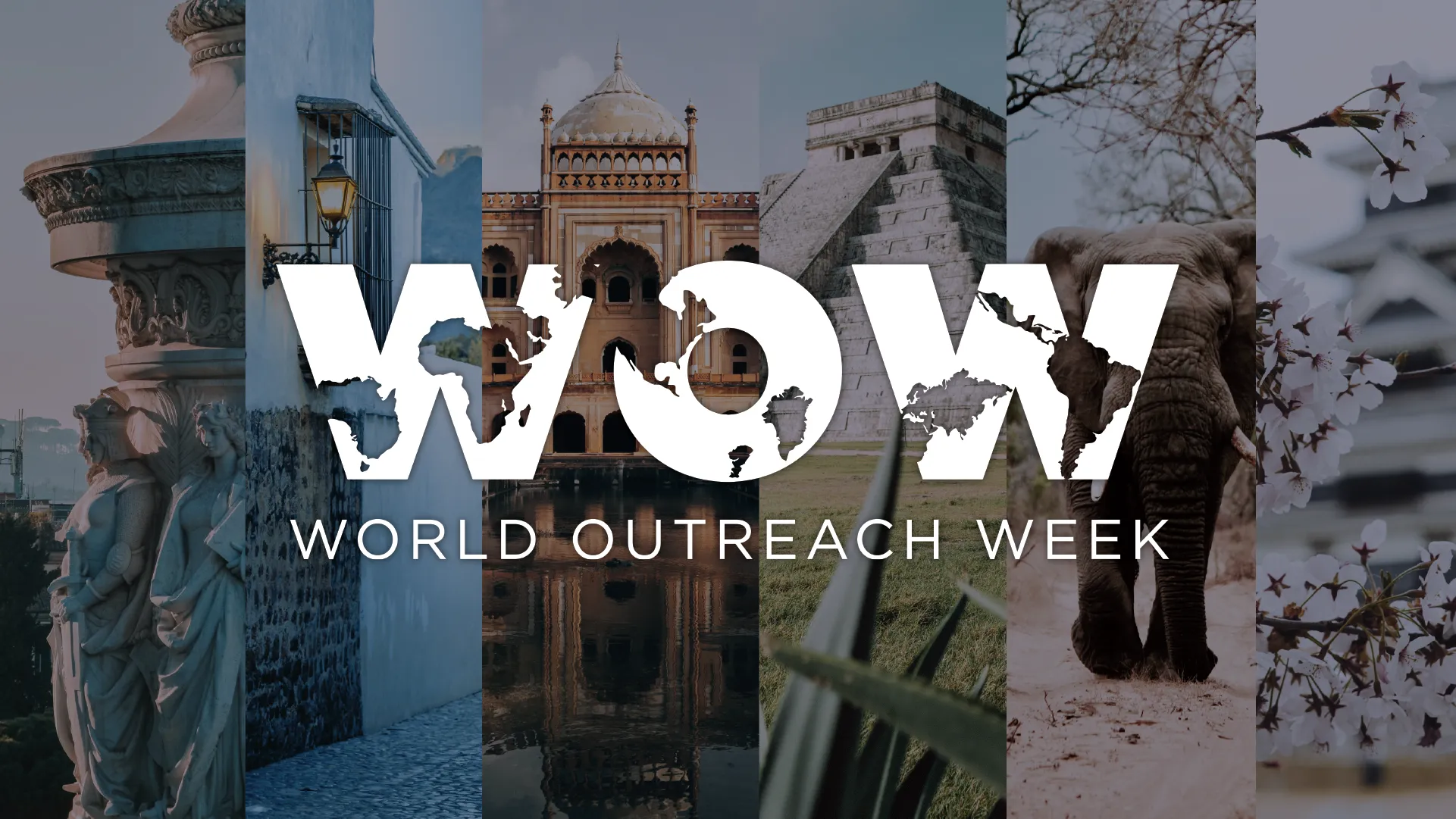
Well, as you've been hearing, it is our annual World Outreach Week. Hey everybody, my name is René, another one of the pastors here at Twin Lakes Church. And here's what this is all about. It's kind of a TLC tradition. If you're just joining us for the very first time this weekend, you picked a great weekend. This is totally different than any of our other weekend services throughout the year. Here's what it's all about. Every year, and it happens to be on Super Bowl weekend, we choose to talk about something that is even more important and even more global than the Super Bowl.
As mind-blowing as that may be to imagine, we're going to talk about what God is doing all around the world. And today my goal is not just to inform you, but to inspire you. Because so many people these days when I ask, "Hey, how are you doing?" The bad discouragement, the vague feeling that things are kind of going from bad to worse, that there's no light at the end of the tunnel, that everything is falling apart. And if that is you, stay tuned because I want to give you a biblical truth that I know will help you.
Are you ready for it? Here it is. God is still working. That's the title for the message today. The pandemic has not stopped God. Politics have not stopped God. Closed borders don't stop God. Racial injustice, social inequities, whatever kind of division you see in our society, none of that stops God. And I want to prove that to you today. It's crazy out there, but God is still at work. And I'm going to show you some great examples from our global partners.
You know, one thing I love about WOW! is that it's not about fundraising, not even a little bit. It's all stuff that you already support because at TLC we tithe, that is we give at least 10% of all the general fund offering that comes into Twin Lakes Church to our global ministries. And that means if you gave $1 to TLC in 2020, a tenth of that, a dime went to our global partners. In other words, what you hear about today is all stuff that you helped make happen. And today is just about getting excited and saying a big thank you.
Now, global partners, that's the more current term, but to be honest, I grew up calling them missionaries. That's kind of the old school term, right? And I still like that word, but many people when they hear missionary, they think of, you know, pith-helmeted, aggressive colonizers, a stereotype that was true in some places and did do a lot of harm historically. But missionaries themselves were actually the very first to reject that paradigm.
In fact, at the very top here, I just want to show you kind of an overview of how world outreach or missions is done now. And what we mean here at TLC when we say world outreach, here's how TLC does it. Watch this. We seek to share the gospel in relationships, natural relationships built by caring for people like refugees, particularly refugees from Syria and Iraq now in Jordan. We work with an Arab Christian ministry there.
And the Bible also talks about caring for the sick. So we support community health organizations and especially mercy ships and caring for the poor by bringing clean water and sanitation and vocational training like at Precush Institute in India, teaching both traditional and modern skills to empower young people otherwise trapped in cycles of poverty. Caring for children was a big part of Jesus' ministry, and we do it through children's homes like Little Flock in India and through camps like Music Camp in Eastern Europe.
Many of these kids literally live in dumps on the edge of town. I've been there. I've seen it. And we show them how they have value and they're loved. And we also support play camps in South Africa, bringing black and white kids together for camp who may not have otherwise met, so they learn about each other. And then also camp attitude in Oregon for kids and families with special needs. And then there's innovative outreaches like Ken Taylor's gospel choirs in Japan, reaching thousands through clubs that learn the gospel through music.
Amazing and more traditional work like Bible translation. Did you know in many cultures, Bible translators are the first to record a spoken language? And we support leadership training through groups like AFNET for pastors in Africa without resources to travel to a college and of course church development. Churches are the linchpin to everything we do. They're safety nets in communities where there's little else to help the marginalized.
And naturally the point is lives transformed by the gospel. And transformed lives really means transformed. It means addiction recovery. It means saved marriages. It means women and children rescued from sex trafficking, orphans placed in homes, widows assisted and honored. It means people set free by Jesus. Now that's kind of an overview of what you support through Twin Lakes Church world outreach.
But you might have looked at all that and asked this very good question. Hasn't COVID shut all of that down completely? Not at all. God is still working. Say that with me out loud. Do you believe it? God is still working. Today I want to take about 10 minutes to look at some verses from Philippians all about this and then illustrate them with stories from some of our global partners.
I'm excited about this because we studied Philippians during January. You probably remember how the author, the Apostle Paul was one of the world's first missionaries, but now he's writing from prison and Christians in Philippi are afraid. So Paul sends them a report to encourage them. It's really a ministry report about his global outreach ministry. And his point to them is, I know the world looks dark right now and it can feel in fact like the end of the age, but God is still working.
And he gives them three ways to move positively into the future when it looks like everything's falling apart and going wrong. And these three ways to move positively into the future, they apply precisely to that discouragement that you and I might be feeling right about now. He says, number one, you can be confident. God is still at work. Be confident. Watch this. Philippians 1 starting in verse 12. Now I want you to know brothers and sisters that what has happened to me has actually served to advance the gospel.
Okay. What's he talking about when he says, what has happened to me? It sounds kind of cryptic to us. So here's some context. You might remember that this was written around 64 A.D. Nero is Caesar, probably insane. He's killed his mother. He's killed his wife. He arrests, he executes scores of Christians among them, the Apostle Paul. He has been arrested and he is awaiting trial, most likely execution at the hands of Nero and his authority and his guards.
So how could Paul say in any way that what has happened to him has actually served to advance the gospel? It sounds like, you know, the forces of evil through the empire of Rome are doing their best to absolutely squash it down. Well, God has not stopped by that. Paul goes on, next verse. As a result, as a result of his arrest, it has become clear throughout the whole palace guard and to everyone else that I am in chains for Christ.
Now a very key phrase there is palace guard. Don't let that just fly past you. That was the legendary Praetorian guard, Caesar's personal security detail. They were recruited from the ranks of the Roman elites and many of these men would go on to become senators and equestrians and other leading figures in Roman society.
Now here's, this is key. We know from other sources that they rotated their shifts. They went from the palace to the prison and back again. In other words, they would serve a 12 hour shift in the prison guarding high profile prisoners like the Apostle Paul. You can just imagine some of these guards. You know, Paul was thinking to himself, I've got a captive audience here. I'm going to tell them all about you. He never stops talking about Jesus, right? And the guards are right there with him.
And then those same guards go to the palace and they guard Caesar and his household. Again, because this is an elite position, so they're guarding high level state prisoners and then they get to guard Caesar's household in the palace on 12 hour shifts. Now I imagine that these guards probably were asked by some members of Caesar's household, what's the deal with Paul? Why is this religious fanatic, you know, arrested and in jail? And so the guards repeat what they I'm sure heard incessantly from Paul, which was the gospel.
And then something amazing happens. The gospel begins to spread throughout the ranks of the palace guard and Paul says, everyone else. Turns out there's a plot twist at the very end of this book of Philippians, almost the very last verse, Paul's kind of saves the best for last. There is a mic drop level revelation and you may not believe it when you hear it. I'm going to share it with you in just a few minutes toward the end of this message. Hang on.
But Paul's point here is as a result of his arrest, the worst thing the Philippians probably thought could possibly happen from his point of view, he's actually influencing more influencers than ever before. Next verse. And because of my chains, most of the brothers and sisters have become confident in the Lord and dare all the more to proclaim the gospel without fear. He's talking about the brothers and sisters in Rome, the Christians in Rome. They're more confident and they have less fear now than before the apostle Paul was imprisoned.
Why? Because, one, even the mighty Roman Empire cannot stop the gospel. Paul is in the best set of chains that Roman money can buy and it is not doing a thing to stop the work of God. Here's what Paul's telling him. Even the crisis is an opportunity when you see it through God's eyes. Have you learned that yet? I love the way Max Lucato put it in the book, "Anxious for Nothing" that we just finished studying in the month of January as a church. He said, "Your challenge is not your challenge. It's how you think about your challenge." Have you learned that yet? Your challenge isn't your challenge. Your challenge is how you think about your challenge.
And our global partners get this. As you heard during announcements, our amazing outreach pastor Paul Spurlock and his team recorded Zoom interviews with nearly all our global partners and you can watch them at TLC.org/WowAndAccess. So much great content. It went live tonight. I encourage you to check it out. That's the place to go for our virtual World Outreach Week this year. But I want to show you some highlights of some of the content that's on that website in this message.
And I'm going to start with kind of a lightning round to prove to you that God is still working. Watch this. I wanted to let you guys know how grateful we are for Twin Lakes Church. A few years ago, you guys helped take up an offering to help us build our next hospital ship of hope. And I want to let you know that while the pandemic has been hard, because it's changed the way our ministry has worked, it has also provided this incredible opportunity to build our next hospital ship faster than maybe it would have done before.
That is the global mercy. That is our new hospital ship that Twin Lakes Church has a ward bed on board. And it is currently in sea trials, which means it's like sailing around. And we're about to get this next hospital ship of hope by next month. And so I just want you to know that even when the world feels like it's on pause and things have looked different, there is still so much that God is doing.
Who would have ever thought that God would take an ex-Filipino nightclub entertainer, bring him to America, send him to Japan to teach Black gospel music to Japanese non-Christians? And even when the pandemic hit, all choirs stopped. And so I thought this was the end of a great ministry for how can choirs sing without gathering. But we went online and we tried Zoom not knowing how it was going to go because everyone had to be muted, but everyone was there visually. Yet we were shocked to find out that over 400 members would be joining gospel lessons online.
We found out that the Japanese were more desperate now than they were before because of the hope they needed to find in Jesus Christ. Six years ago in 2014, ISIS came to a large city in northern Iraq called Mosul. They took it over and the Christians began fleeing for their lives and they fled without anything just what they could take in their hands. And hundreds of people showed up and started living in our neighborhood around our church. Tons of people with tons of needs appearing on our church doorstep.
And it reminded me so much of what you all faced this last summer when you had literally tons of people with many needs showing up on your doorstep there in the parking lot as you opened your home to the evacuees or the refugees from the wildfires. In both instances in this kind of crisis intervention, the same needs are presented. You have people with needs for food, for clothing, for water, for a safe place to be because they've been traumatized.
And in the midst of all this chaos and disaster, for God's people it usually presents an opportunity if we're alert to that. And for our church it's been amazing to see the gifts of the people in our fellowship start to come out and bloom and blossom and appear. You know I really love how Suzanne tied in what was going on in Jordan to what's happening right here at Twin Lakes Church in Santa Cruz, California.
I mean just think about it. 2020 is probably going to go down in history as almost a swear word, right? 2020. It was a challenging year for our church, but also in 2020 more people joined our church services either livestream or in person. We have in-person services every weekend in our beautiful big outdoor tent. More people have joined us in our services than ever before in the 131 year history of this church.
More was given to local outreach. More was given to missions far more than ever before. More was given to the poor and the hungry like twice as much than ever before in the history of the church. More students are in our schools than ever before, not to mention the new ministries, the fire evacuation center that she talked about, the tutoring center in South County for at-risk kids in Watsonville, the Aspenshire School day camp here on our campus and much much much more. I can't even list all the amazing things that God is doing.
I was talking to Paul Barton, a pastor, former pastor here at the church. He's a pastor here in various capacities, mostly worship pastor for over 50 years. Can you believe it? Five zero, 50. He's in his early 90s now and I was talking to him a couple of days ago and we were talking about what an amazing, challenging yet amazing year 2020 was. And he told me, "René, I think God is doing things through Twin Lakes that never would have happened without the crisis." And I totally agree.
2020, most challenging year we've ever had, yet what has happened has actually served in some strange way to advance the gospel. Listen, you can be confident God is still at work. Now, before I move on from this point, let me prove it to you further as if you need more proof. One of our global ministry partners is CHE, C-H-E, that stands for Community Health Evangelism. And here's their director of strategy, Fred Juma, to explain what they do. Watch this.
This is a strategy for community development, talking about good health, promoting good health, prevention of disease and promotion of abandoned lives in Jesus Christ. So when the training team goes into the community, what the training team would do is to talk to the opinion leaders about the benefit of CHE. We call that a vision seminar. Once the vision seminar is done, a number of people will say, "We want to be trained on CHE." And this group that is trained, the opinion leaders, would graduate and we call them the CHE committee in that community.
And they identify some of the problems and the needs in that community. So it is not like a project from outside there, it's a project owned by the community members. After going through training on basic lessons, they visit their homes in their neighborhood, about 10 to 15 homes in their neighborhoods, and they present basic health lessons, like on diarrhea, on worms, on malaria, on breastfeeding, HIV and AIDS, very basic lessons which are presented in a very easy way that every community member can understand.
As they continue with that relationship, keeping visiting and talking about health, they start talking about Jesus. At the end of the day, we'd find there is individual change at the family level, but there is also change in the community. One thing I would like to say is God is the one who causes transformation. If we are talking about people being transformed, turned around, and it can only be by the power of God. So that's basically the whole idea of CHE.
Now you might say, "Great, but that's all dependent on personal visits, right? Shut down by COVID." You really think that stopped God. Watch this, our CHE partner, Terry Dalrymple, tells Paul an interesting stat in this clip. Here's what's happening now. We've connected with the Latin World Evangelical Alliance, which is eight major denominations with 500,000 churches throughout Latin America. They have set a goal to establish 50,000 CHE programs in villages by 2033.
We set up an online training believing there were going to be 40 people that showed up from three countries. There were 240 people that showed up from six countries. Okay, I want to freeze that frame here for just a second because do you see this? They expected 40 people from three countries. They got 240 people from six countries. It is amazing because they had to offer it online. They had massively higher participation than they ever expected.
What has happened served to advance. The gospel is Philippians all over again. Edith Schaeffer famously said, "What we see in tough times is like the wrong side of a tapestry." They're all messed up apparently and jumbled. It doesn't make sense. But on the flip side is a beautiful picture. And Paul is saying to the Philippians, "What looks like my mess is God's masterpiece. So be confident." Now be confident does not mean be cocky. And that's why we need to get to point two, be humble and serve like Jesus.
This is such a big part of our world outreach strategy and the new series that I'm going to be kicking off just next weekend is all about this. How can I act and think more like Jesus and less like John Wayne, you know, more like Christ and less like the culture. And I think we Christians need this so much right now, all of us do, because we can get tempted by kind of the swaggering ways of our bossy culture instead of allowing ourselves to be formed by the servant leadership of Jesus.
And what happens is we start to think that pushiness and bossiness is how to change things. And that was of course part of the problem with some missions in the past. And the Philippians would have been very tempted by that same bossy spirit in the Roman Empire. Paul says this, "In your relationships with one another have the same mindset as Christ Jesus who being in very nature, God did not consider equality with God something to be used to his own advantage. Rather, he made himself nothing by taking the very nature of a servant being found in human likeness."
The word people use to describe this attitude is incarnational. Jesus incarnated became flesh, met us where we are. He didn't demand that we rise up to meet him. He came down to meet us and we try to do that with missions. One example, here's Paul with another of our global outreach partners.
Hi, I'm John Stark. My wife Janie and I had a heart for Bible translation. Twin Lakes stepped up and began supporting us in 1981. In recent years, we've moved over to focusing on the oral populations of the world. And we've prepared a video for you that explains exactly what that means. Today, nearly two-thirds of the world's population are part of an oral culture. That means that in these societies, history, values, traditions, ideas about God, and even practical information are passed through spoken words, not written.
Instead of reading, they dance. Instead of writing, they sing. Instead of collecting books, they collect memories, stories, and traumas to pass on to their children and grandchildren. The problem is that billions of people in these societies remain cut off from life-saving truth we depend on every day. How to treat illnesses. How to keep water clean. With nearly 17,000 different cultural groups in the world, we believe the most practical and powerful means of seeing transformation is to empower leaders that are already there.
These local leaders are dedicated Christ followers and the catalyst behind this unfolding story of transformation. Already a part of the community, they know how people learn, what they need, and are personally invested in seeing those around them flourish. We work with these men and women to create people-specific stories, songs, and traumas that captivate the hearts and minds of their people with life-changing truth that impacts them individually, communally, physically, and spiritually.
That means warring tribes choosing to live in peace, mothers learning how to keep their children healthy, the development of clean water practices, people coming to know and love Jesus. Interaction worldwide exists because we believe that people's learning style is only a barrier to their growth if we let it be. Lives can be changed by something as simple as a spoken word. That is such an innovative way of being incarnational, right?
You know, not demanding that they match our learning style but reaching out to them in their learning style, not empowering our leaders but empowering their leaders. And you and I can serve people around us too, incarnationally, when we're confident and humble and third, aware that opportunities abound. They are all around us. And here is that mic drop moment that I talked about earlier.
At the end of his letter, Paul drops this little surprise. He says, "Hey, all God's people here send you greetings, especially those who belong to what? Caesar's household." I need like a record-scratch sound effect here because it's like stop everything. Paul's just going, "Boom! Caesar's household? How do you think that possibly could have happened? Who could that possibly have been?" I mean, my imagination kind of goes wild, but the Jewish historian Josephus cryptically wrote that one of Nero's five wives, Papaya, was, quote, "a worshipper of the Jewish God." And so I think that she may have been one of the people that the Apostle Paul is talking about here, Papaya, Poppy, Caesar's own wife, possibly, but for sure there were others right in the palace living right next to Nero, the persecutor of the saints.
And Paul casually remarks, "Yeah, they say hi." How are they even communicating with Paul? How do they even hear the gospel from him? The palace guard. Do you remember that little detail? Again, Paul is making a point. Through his crisis, God is still working in truly mind-blowing ways. Some of the least likely people on the planet, he is saying, just became Christians and it might not have happened if what looked like a crisis hadn't have happened.
Paul is just saying, "You just never know who might come to Christ, that weirdo neighbor, you know, that crazy uncle, the atheist neighbor that lives on your street." Some of you may be going, "I was that weirdo neighbor. I was the atheist and I came to Christ and I know this is true. Anything could happen, so be aware for opportunities all around you." You know, like we said last week, why not just drop a card and a gift on the front step of one of your neighbor's houses, get the relationship warmed up. You never know how you could serve them in the near future and you never know what God just might do as Paul discovered.
And you know, one of the things that I always want to challenge you to consider on WOW! Weekends is how you might be sensing the call of God to serve him in full-time global ministry. Lots of people from Twin Lakes have gone on to amazing ministry and I know our outreach pastor Paul would love to dialogue with you on that. You know, one of the couples in our church who heard that call and are now serving God full-time in vocational ministry are Carol and Marty Pelton. Watch this.
Never expected this to be our journey, but God has a way of changing your plans and he knows the plans he had for us. We didn't know, but we're so grateful because God has given Marty an opportunity now as his position has evolved to impact scripture development and the gospel all over the world. Tell us an example or two of lives that have been changed in radical ways because somebody, you know, got the word in their life and it just made a huge difference as far as who they are and they're knowing Jesus.
Yeah, sure. Absolutely. One of the young men that I'm working with was telling me a story most very recently about one of his translation helpers. And in a lot of these translations, they use the national people to help with their translation because they obviously know the language best. And so and oftentimes these translation helpers are not believers themselves, but through the process of translation, they have come to realize that God's word is powerful and that God has a special love for each and every one of them.
So he was telling me that one of these workers had a light bulb moment and realized through this translation that he was a child of God and that God loved him and he gave his life to Christ. Now, let me just pause that for just a second. And again, remember all these videos, they're just appetizers. You can see these and many, many more full length, so much good content at TLC.org/wow. Check it out this year. But did you catch what Marty just said? That conversion just recently happened. In other words, God is still working. Nothing has stopped him. Not in your life either.
Now let me bring this in for a landing. The ministry that Marty serves is Wycliffe Bible Translators. And as we prepare our hearts for communion, I think this beautiful video that they made is a perfect moving transition. Watch this. That's a verse from the very end of the Bible, the last book, the book of Revelation. There's this vision of heaven. And John, who is writing, sees a great crowd from every nation, a tribe, and people, and language.
And one of the things I love about world outreach is that we get a preview of that verse, not in heaven, but right here on Earth. Because when we go serve all around the planet, we discover family. I'll close with this story. When I was in Guatemala years ago on an outreach trip, I visited a priest in a very remote village, a Catholic priest. He'd only been there a year. And I asked, what happened to the pastor who was here before you? And he said, well, René, come into my office. And he points to a line of machine gun bullet holes in the stucco wall behind his desk.
And he says, last year, my predecessor was gunned down studying for his Sunday sermon. And I said, are you scared? I mean, I know I would be. And here's his answer, not really. Because first, he said, that's what I signed up for. And second, even if that happens to me, that's not going to stop God. That's the confidence. That's the humility. That's the awareness that Paul's talking about here in the Philippians passages and that it takes to be dynamic world outreach partners.
Well, then this priest took me on a four-wheel drive jeep into the rainforest to an even smaller village. And the people there spoke a dialect of a Mayan language that neither he nor I spoke, of course. And at first, I admit, I was feeling very alien, very out of place. But then something amazing happened. The whole village gathered. I said, what's going on? And he said, they're gathering for church. It was all outside, just like we're all doing church now on benches, outdoors, in the middle of the village huts.
And at the end of the service, I didn't understand a word. But they began to take communion. And they passed it to me. And then as I joined them, I realized we are all thinking about the same living person who has touched our lives, whom we love so much. And I look around. Tears are streaming down their faces. And I start to cry. My Mayan brothers and sisters, they know the same person I do. They have the same person I do, the Lamb of God, Jesus. And I just wept because I was experiencing a little taste of this verse, a preview of heaven. And you can too, right now.
On this World Outreach Weekend, I encourage you to join me in communion right now. You know, because of the pandemic, we have people joining us now every week from India, from Pakistan, from Zambia, from the East Coast, from the West Coast. And we all find our unity in this. And listen, if you desire to place your trust in Christ, I just want to encourage you now would be a really good time to simply say, Jesus, I am yours. I need to trust in times like this, in the God who is still working.
If you haven't yet, I encourage you to get some bread or a cracker and some juice. Join us in this sacred moment. Our family ministries pastor Mark Olenga is going to lead us in communion from his home into your home via video.
Hello, I'm Mark Olenga, another pastor at Twin Lakes Church. I'm here today as we join together in the remembrance of Jesus as we receive communion. As this is also World Outreach Week, it's pretty cool to realize that the breaking of bread together is something shared by millions of believers around this planet. Hopefully, you already have bread and juice before you. And please know, communion at Twin Lakes Church, it is open to all who believe Jesus Christ to be the Son of God and claim his name as their Lord and Savior.
Let's prepare our hearts first in prayer. Our Father in heaven, we could come before you now, asking your help and removing all that is distracting us. That way, we may find ourselves of clear conscience and a heart of devotion as we take a moment to stop and remember what you, Jesus, have done for us. May we approach you now in an attitude of eternal gratefulness. Amen.
So as Jesus sat at the table for his final Passover feast with the disciples, he took some bread and giving thanks. Thank you, Lord. He broke it and gave it to them, saying, this is my body, which is given for you. Do this in remembrance of me. Let's take.
And then in the same way, he took the cup after they had eaten, saying, this cup, which is poured out for you, is the new covenant in my blood. Drink now in remembrance of him. Let's pray again, shall we? Jesus, we praise you for your incredible sacrifice on behalf that we may be here today with you, not as condemned sinners, but as children of our Father, as brothers and sisters in Christ, sharing in the blessings of our relationship with and in you. May we always remember what you have done for us. Amen. May God's blessings be with you today.
Sermons
Join us this Sunday at Twin Lakes Church for authentic community, powerful worship, and a place to belong.