What We're Here For
We celebrate our global outreach and God's call to reconciliation.
Transcript
This transcript was generated automatically. There may be errors. Refer to the video and/or audio for accuracy.
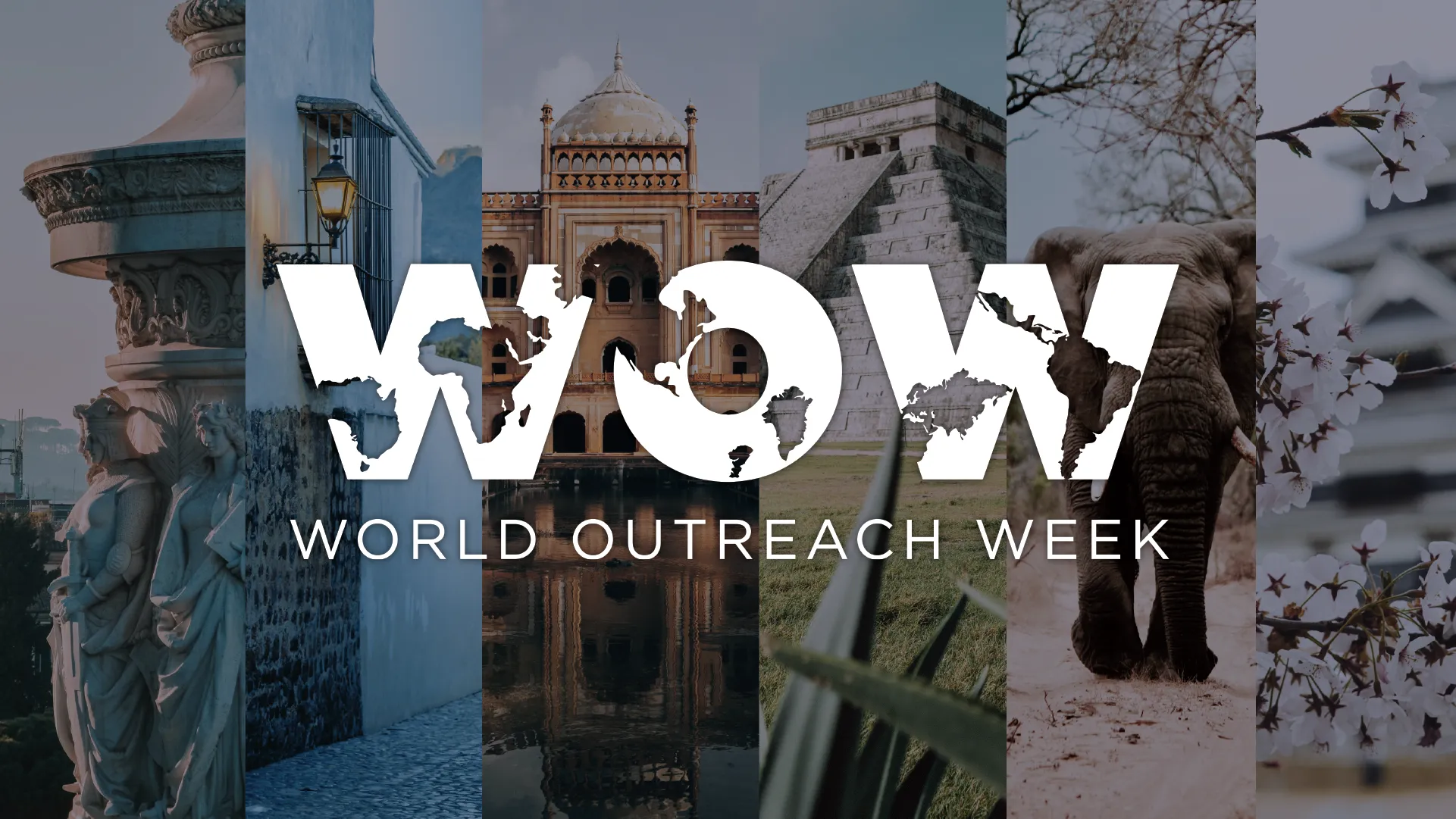
Well welcome again to wow world outreach week. Are you guys stoked to be here today? I am. Honestly, this is probably my 3rd favorite weekend of the year after Easter and Christmas. It's like number one is Easter, number two is Christmas, but following closely after that is world outreach week. I just love this. If you are new to Twin Lakes Church, like you just started coming the last couple months, maybe this is your first weekend here, you're going, what is going on here?
This is our annual celebration week. We do it on the same weekend every single year, the weekend before the Super Bowl, because we know nobody's got anything to do this weekend. And why do we do this? You may not know this, but listen to this: at least 10% of everything that comes into the general fund through offerings here at Twin Lakes Church, we give away. We tie away at least 10% to our global partners, and once a year we celebrate what God has done through them because we do not want to be a self-centered church. We want outreach to be part of our church culture, addressing needs all over the world. Are you guys into that? Do you agree with that priority? I think that's really important for that to be part of the DNA of this church.
Now I just want to address something. A lot of you, when we call them global partners, we call it world outreach week, but kind of the old name for this was the missionary conference, right? Missionary week. And we've got to talk about something here because a lot of people have this old school idea of missionaries as guys in pith helmets, colonialists, cultural imperialists. This idea of missionaries has been repeated in movies and books like "Mosquito Coast," "Poisonwood Bible," and "At Play in the Fields of the Lord." Where does this idea come from? Bullheaded arrogance? Culturally destructive people? Well, I mean, over the course of 2000 years, some missionaries have actually been like that, and that's not good.
But there is a great passage that was written 2000 years ago in the Bible that is a complete antidote to that picture of what a missionary should be like. Grab your message notes. I call this message, "What We're Here For." What is our purpose on Earth? What has God put you on this planet for? I'm just going to give you some brief thoughts about the way God sees the work of global outreach, and it's not, you know, cultural imperialists in pith helmets. Then what we're going to do is we're going to premiere a 20-minute documentary that our church video director, Jamie Ramm, produced about three of our global partners.
So let's look real quickly at 2 Corinthians 5, starting in verse 18. It says, "Therefore, if anyone is in Christ, the new creation has come: the old is gone, the new is here." Amen. That's our message. "All this is from God, who reconciled us to himself through Christ and then gave us the ministry of reconciliation." That God was reconciling the world to himself in Christ, not counting people's sins against them. And he has committed to us the message of reconciliation. We are therefore Christ's ambassadors, as though God were making his appeal through us. We implore you on Christ's behalf: be reconciled to God.
Now five times in four verses, one word appears. I think God's trying to make a point. What word is it? The word is reconciliation or reconcile. Five times. I think God wants to make a point here because reconcile means to bring together, to build a bridge, to make peace. Let me just ask you a question. Does our nation today need this? Does our world today need some of this? Does your neighborhood need this? Does your family need this? This is so important because in our human nature, our tendency is to divide. Divide into tribes. And that's the nature of Christians too, right? We want to get into our little Christian tribe, and we want to just kind of be happy and talk about how the world is bad and we're good, and God has blessed us, and let's just kind of stay focused on God and our little cocoon. But that's not what these verses tell us to do.
I want to focus on just one verse here in 2 Corinthians 5:19 because I think if we Christians get what the Bible really says here about how to do outreach, we are going to not be the colonialists in white pith helmets. We're going to be gentle and wise and sensitive and compassionate and bridge-building people. But if we do not understand this one crucial verse, then by human nature, we are going to become offensive and aggressive and defensive and oversensitive. And we live in a world right now where so many people are offensive, aggressive, defensive, and oversensitive. And so we need to fight against this.
So jot down these three important truths. This is mind-spinning stuff. Number one, reconciliation is what God desires. Reconciliation is what God desires. It says all of this is from who? From God. It's from God. God is the initiator. This is what God wants. This is really important because sometimes you hear people talk about the God of the Bible like, "I can't believe in the Bible. I can't believe in a God who seems to enjoy sending people to hell and judging and condemning people." Right? You've heard people say that. Well, that's not the kind of God Jesus talked about.
You might know that there were a group of people called the Pharisees who were actually the religious leaders in Jesus' day, and they were constantly on his case because Jesus spent most of his time with people that they thought of as the riff-raff, the sinners, the morally compromised and corrupt, the tax collectors, the prostitutes, the criminals. And they thought, "Jesus, you claim to be the Messiah, but if you're really sent from God, then what you would be doing is you'd be judging these dirty people, not befriending these dirty people." And so in the 15th chapter of Luke, Jesus does something he never does anywhere else in the Bible. He tells three stories right in a row, and they're all making the same point.
He looks at these Pharisees and says, "You guys really don't get it, do you? Let me tell you three stories. Story one: there was a shepherd who lost a sheep, and he left the 99 and he searched for it. And then when he found his lost sheep, he didn't beat it up. He put it on his shoulders and he took care of it and he brought it home and he called all his friends together. He actually threw a party because he found a sheep. And he said, that shepherd is a picture of God, and we are like his lost lambs.
Story two: a woman loses a coin and she searches and searches all over for it. And then she finds her treasure, this gold coin, and she throws a party because she found it. And he says, that woman is a picture of God because we're his treasure, his treasure. And so he seeks us relentlessly until he finds us again. And then he tells story three, and it's probably the most famous short story anyone ever told. It's a story about a rotten kid who wants his inheritance from his dad so bad that he basically says to his dad, "You know what? You're not dying fast enough for me." He says, "I want my inheritance now. I want you to liquidate so I can get half of what's coming. You have two sons, give me my half right now." And the father does it.
The son takes it, spends it all on prostitutes and partying and a wild life, ends up in a dump feeding pigs and eating their scraps. And he comes to his senses there and he decides to go crawling back, get this, to ask for a position at the family farm, to ask for a job from the same dad that he just basically punched in the mouth and took half his money from. Now, if you were that dad, how would you respond to that kid? Well, here's what happens. The father sees him coming from a distance and he runs toward him and he throws his arms around him and he kisses him and he puts a ring on his finger and shoes on his feet and a robe on his shoulders, and he throws a huge festival-level party. And Jesus says that father is a picture of God.
Wow. God is not a reluctant reconciler. God wants this embrace with everybody in the whole world. God doesn't look at us. He would have every right to, but he doesn't look at us as thugs and criminals and rebels. He looks at us as his lost but beloved son or daughter or grandson. For example, our two-month-old grandson, Danny, just kind of as a visual aid here, I want you to see the kind of thing that I'm talking about. Don't you love this? I think we need to see it again. He's not smiling and then he's smiling. I love that. But you know the emotion that you see when you look at a little kid like this? Danny has not done anything to earn our love. In fact, all he does is spit up and poop. That's all he does. That's all he does. He hasn't earned anything, and yet we love him unconditionally. This is how God feels, and this is exactly why Jesus came.
You know, next weekend we're going to start a new series. We call it 77, and there's a very deep reason, just kind of metaphorical reason that we call it 77. You know why? There are exactly 77 days between Super Bowl Sunday and Easter. So we're going to call this 77. And in this series, we're going on a journey through the life and ministry of Jesus so that Easter doesn't hit you from out of the blue. You're going to be like emotionally ready for it. And next weekend as we kick it off, I hope you're here because we're going to see how Jesus from day one saw himself as savior of the whole world, not just one corner of the world, the whole world. Because reconciliation is God's great desire.
And number two, reconciliation is what God does. It's what God does. We actually don't do it; God does it. Paul says, "All this is from God, who reconciled us to himself through Christ." Listen, this is huge. Don't miss this because this is exactly what so many people, including many Christians, get wrong about Christianity. Some of you know that my career before I was a pastor was I was a broadcaster and did radio commercials and announcing and that sort of thing. And in fact, I was one day many years ago, I was down in the production studios of our local news talk station, KSCO, recording some liners for them. They still use them to this day, 20 years later, "Tune it in and lock it in. KSCO," that sort of thing, right? Still use them to this day. That was the best 50 bucks they ever spent.
Anyway, so while I was recording these things, I'm in the production studio, and I would record a liner, and the production director there at the time is just needling me constantly like after every liner. "Yeah, good job. So you're a pastor, it's all a crock." Next line two. And I kind of do the next line, and he'd go, "Yeah, religion is bogus." Line three. And finally, I stopped him and I said, "It sounds like there's a story behind your antipathy toward the church." And he says, "Yeah, there is, and I'll tell you." He said, "I grew up going to Sunday school, and every week it was the same message: 'Try harder to be a good boy.'" He said, "We had the Ten Commandments posted in our Sunday school room, and the teacher pointed to those and basically told us, 'Keep those and you'll go to heaven. Don't keep those and you won't go to heaven.'" And he said, "What a burden that is for a little kid to bear."
He said, "I ended up becoming an alcoholic later in life, and you know what I found? All this church stuff doesn't work. Trying harder doesn't work." He says, "I discovered in 12 steps that all we can do is say basically I can't, my higher power can, so I'm going to turn everything over to him and just let him." And he goes, "What do you think about that?" And I said, "You just summarized the gospel." And he goes, "What?" I said, "If you really look at the words of the Bible and not what people misunderstand it to say, the gospel is not about trying harder. It's about realizing I'm doomed and I'm powerless to save me, but God by his grace can save me, forgive me, and empower me." And eventually he began coming to TLC and in fact loved it until he moved out of the area to another radio station.
But my point is this: we often misunderstand the Bible on this point. We don't reconcile ourselves to God; God reconciles us to him. He is the one who does it. We just receive it. At the cross, Jesus took all the punishment for all the sins of all the people who ever lived so that now we can receive his spotless nature. Is that staggering? We don't have to earn brownie points to get to the good place. Jesus took away all our negative points and he gave us all his positive points. It's what God does. It's what God desires.
And finally, reconciliation is what God directs us to do. It's what God directs. God says, "Here is your mission. Now that you've been reconciled and you're enjoying that conscious contact with God, you're enjoying this new relationship with the Lord that you've got, now go and tell other people how much I want to be reconciled to us." Paul says, "And he gave us the ministry of reconciliation." Now watch this. And in the next verse, he says, "And the message of reconciliation." We have both the message, which is the content of the gospel, right? But it doesn't stop there because, you know, I was going to see a concert at the Shark Tank in San Jose, and outside this concert, I think it might have been Earth, Wind, and Fire, one of those bands. Earth, Wind, and Fire in Chicago, that's what it was.
And outside the concert, there were these people holding up signs that said, "Repent," and telling people to accept Christ, but here's how they were doing it, exactly like this as people were walking into the concert. "Repent! Turn to Jesus and accept him, you're going to hell!" Well, they had the message, but what they didn't have was the ministry of reconciliation. That's the action. That's the way we spread the message about what God has provided for people. This is so crucial. We do not have the ministry of provocation. We have the ministry of reconciliation. And that means we share our faith with humility and compassion and grace, and we listen and we try to understand and we build relationships. We don't share it with cockiness. We don't share it with pride. We don't share it with arrogance.
Paul says, "Think of it like this. It's like you're Christ's ambassadors." Ambassadors. Diplomats. Such a great word picture. We're ambassadors. We're not Christ's judges. We're not Christ's police force. You know, we're not Christ's spy agency. We're His diplomats. And that means we build bridges in our community. It means we reach out just like a diplomat would to people who view our country with suspicion, and we help them understand what the kingdom of God is, and we try to understand them. That's what diplomats do. Now, how do we do that? Well, the way you do it, the way I do it, the way Christians around the world do it, it's as different as people are diverse.
The way you are a diplomat is going to be a little bit different because you're in a different field. You have different skills. You have different life experiences. And that's what World Outreach Week is all about. Among many other ways, check this out, the global partners you have a chance to meet in the lobby today and all week long, they do youth work in Mexico, a school and a clinic in India, camps in South Africa, vocational training in India, leadership training in orphan work in Africa, education and refugee outreach in Jordan, floating hospitals, Bible translation, church planting, camps for families with special needs, and much, much, much more.
In fact, like Paul said, I'd really encourage you to grab one of our prayer calendars so that you can pray for some of these global partners all through the year because we're ambassadors. Now you might be thinking, that's awesome that we're doing that. It's awesome that we tithe to global partners, but I can't go to India. I can't go to Africa. So I guess I can't be an ambassador. Listen, let me tell you the simplest way and maybe the most effective way that every single person who's watching can be an ambassador.
Look at this fascinating social media post from last week. This is a woman who goes to a church in Southern California. She says this: "Almost all of the previously unchurched young people at my church ended up with us because they googled church, and when they showed up on a Sunday morning, someone reached out and was kind to them." She says, "I've been hearing their stories lately, and it's amazing. Just a high." Everybody look at me, wave and say, "Hi." Can you do that every weekend? Then you can be an ambassador. World Outreach Week is about asking everybody to say, "I can do that at every level. I'm in as an ambassador of reconciliation. I'm in to pray. I'm in to go. I'm in to support to be part of this worldwide reconciliation movement that God desires, God does, and God directs. It starts at my doorstep and it goes to the farthest ends of the earth. I'm in. I'm in. It's part of my DNA. It's part of the church's DNA.
With that as a background to explain what we're talking about here, let's premiere our documentary. I want to show you three completely different ways that three of our global partners are doing this work of reconciliation. If you've been with us for a few years, you know that every single year we zero in on a different region of the world. This year we zoom in on Europe and how work in Romania, Ukraine, Italy, and France, and how our partners in France are themselves ministering to parts of Africa. I know this will inspire you. So watch these ambassadors at work.
I fell in love with music as a child. I was raised in a very musical home, so it's been my life. Like hundreds of thousands of Americans, I watched the Dateline NBC special on the plight of the Romanian orphans. I sat in my living room and just sobbed. So many were moved to come and adopt children after that. I was moved in a different way. I wanted to come and heal them in their context. So in 1992, I began coming and doing music therapy in the orphanages. I visited some of the horrific places that I had seen on television. It grabbed my heart in a powerful way, and so I kept coming back.
Both Romania and Ukraine are emerging countries emerging from Soviet and communist regimes. Under communism, you have a highly stratified society, and you have 97% of the opportunities reserved for 3% of the population. Everything is highly competitive, which means there's one winner and all the rest are losers. Music comes in as a collaboration, not as a competition. We want all the children to be winners. We believe passionately that all children are talented, and our job is not to define their talent, but to help them to discover and develop it.
Music camp focuses on children ages 11 to 14. Developmentally, that is an incredibly impactful time. Who do I want to be? What do I want to become? What do I want to do? What's important to me? And how they begin to align the priorities of their life. This is what happens in middle school. The purpose of Music Camp International is social transformation. I work hard to put children from all strata and all situations together. We work with the poor. We work with the orphans. We work with those who are cast aside. We put them all together. And what happens in that week is, first of all, they find out about the humanity of other children.
We have made it intentional to include children that have various disabilities. We include children that are blind, visually impaired, deaf, hearing impaired, cerebral palsy, autism, and Down syndrome. It gives dignity to that child that has never been recognized. You know, a lot of children with Down syndrome and autism spend their entire life in one room. And we put them on stage. And they sing. And they smile. In 1917, with the Russian Revolution, children with special needs were taken away from their parents at birth, put in horrible institutions, lived very short lives, and were not even legally recognized as human beings. That's a hundred-year legacy. And we go in and say, "Now these children are talented." I have seen so many transformations like that. Children who have been so beaten down, children from normal families who are told all the time, if they don't get the highest score on the test, you're not smart. You can't do music. I've seen children who were shy become confident. I've seen children who were told they weren't talented realize that they were. And so many children that we work with have lost hope. Connie believed in me. So that's changed my life. I started to be a musician. Connie taught me, and music can't talk me. We bring them love. We bring them faith in themselves. The children can discover who they are and what they have inside.
Connie introduced us to a whole different way of teaching. The joy of seeing the child going from somewhere where he has not been yet, all of a sudden they realize, "Yes, I can do it." And there's a light in their eyes, and they are happy. At the beginning, no kid believes he could do it. If you treat them differently than they're used to within the school system, they react very differently. And I think it's very important for our country and our system to understand music. It's not something you need to achieve. It's something that you need to enjoy as a process. I learned that my voice is more strong than I thought because in my first day here I was scared. But now I feel more brave than ever. And all the teachers who are here deserve all thanks I can say ever because they learned me I will never must felt I'm useless.
We believe passionately that music feeds the soul. And as the soul is fed, the child grows in a holistic way. It's changing a culture. It's changing children's lives. I have had the highest level sit and cry at my concerts. I was honored to have the First Lady of Ukraine at my concert last week. I was honored to take 40 young people on behalf of Ukraine to sing for the Council of Europe. It has impacted the leaders of Europe where the children sang, "We sing for the children who have no voice. We sing for the children who have no choice. A song of hope and caring, a song of peace. For those too hungry and too weak, those too poor, too sick to speak, we lift our song."
This is Jonathan Finley. This is one of my favorite spots in this whole city. And I'd just like to show you around a little bit, some of the things you already know about Paris and some things you might not know at all. I immigrated to France in 1997. I've worked in new church development, new leader development, and missionary sending in the French-speaking world for the last 20 years. My wife and children have lived their entire lives in France. I moved there to plant churches. Our group has planted 25 churches. Our family has been a part of three of those church plants. France is a mission field. Of course, not many people think of that. They think of it as a tourist destination.
France has a population of nearly 70 million people. Less than 1% would be considered Bible-believing Christians. Imagine that the entire global French-speaking church could fit into one room. Everybody who worships Jesus in the French language in one room. 39 million French-speaking Christians live in sub-Saharan Africa. Less than 2 million are from European descent, which actually puts the missional frontier in the French-speaking world right in French-speaking Europe. France colonized 24 nations in Africa. France was in Africa, and now Africa is in France. There's kind of a reverse flow of people from the south to the north, which means that the Paris region is incredibly diverse, ethnically, culturally.
So an important population in our churches are first, second, third-generation immigrants from Africa. They're multicultural, multi-ethnic, integrated churches. In fact, I really felt the need to have a better understanding of the African influences that I was facing in Paris. And so I had the opportunity to teach in Ivory Coast, and so initially it was just a one-time experience. But when I came back, then there were people from our churches who wanted to go back with me. We started sending short-term teams. We started sending long-term missionaries. There was a desire in those churches to send missionaries to other French-speaking countries from where they had connections. So that initial, what I thought would just be a two-week experience, has turned into 10 years of training and sending missionaries to other French-speaking countries.
I'm excited about a little minority church in the Paris suburbs. You know, you don't hear about it on the news. It's not something that is even going to be on your radar. But I think the way the Lord works is these quiet seeds that are germinating under the ground and capable of impacting a much, much bigger world than our little churches in the Paris region. So I think that's a wonderful thing about the way that the Lord works. Oftentimes invisible, growing slowly and steadily, bringing life in ways that we don't even imagine. Now that's why we do this by faith, because we believe that God is working even through minority churches in a place like Paris, France.
Our two churches, one established here in the city of Casoria, about 100,000 people. And it's a tough area. And our other church is in the city of Melito; it's a really degraded area. And there's about 40,000 people there. There's only two evangelical churches in the city of about 45,000 people. So they're about eight kilometers distance, one from another. But if you were to travel, maybe there's another 180,000 people in the middle, maybe with three or four churches. That's about it. People are skeptical because of what religion has done to them. It's taken everything from them. Mafia, especially down here, has taken everything from them. No one has given anything to them. Italians are so oppressed by their own religion, and everything is you pay for. Economics are terrible here in Italy. Between the ages of 18 and 35, in Napoli, 54% unemployment. It's a seedbed for mafia. You can understand that.
We decided that, well, what if we did something that is culturally relevant, that is family, fun, and non-scary, non-threatening, and invite them? They won't come to the church. We know that. We do these things to break down barriers because they never, they don't know who these evangelicals are. And then there's music. And then there's inflatables. And then there's a bunch of Americans. And they're all dressed differently, and they look differently than they do. They're laughing, and there's music. And the dope addict on the street walks by. Oh, who's that? I'll walk in. Oh, this is nice. And he has his kid jumping on the inflatable. And before you know it, he's sitting down in a chair, and he's watching a mime. And right after the mime, this idiot gets up. And before he even has a chance to think about it, he's like, "Hmm, I never heard about that before." And if the Holy Spirit is touching your heart, and you know this message, and you know you want you to get out of your seat and come forward, those fools do it from a guy that they don't even know.
It's a really amazing experience for Italians to come to the festival because especially in Naples, there's a lot of crime. And in Italy, there's less than 1% Christianity. And there's no hope because there's no job, there's no future for them. So when we come here, our goal is to give them hope. And so the people that come and do all the different games, they stay and they listen. And a lot of them, they give their life to Christ. The fact that Americans come, and they see that they're Christian, and they love Jesus, and they are fun for them, is like, "Oh, I can be a Christian and do all these things." So it's a very big testimony.
It's very, very different. They didn't pay. And it's open; there's no risk. We don't have to do festival, but we gotta do festival. Because we can keep doing what we do, but we can't. There's nobody coming to Christ, and it's so hard. So as long as I got this, and a little bit of this, I'm gonna do it. We look to the future with hope, in spite of what the actual odds are, which are all against us. We have rooms and areas that we want to use for training. And we need gifted men who have time to come over and spend time with us in Bible knowledge training. We don't want to be a thousand meters long or one inch deep. We don't want that.
If there was a missionary over there, a new guy thinking, "Lord, send me, I want to talk to that guy." You're a group. I would like to be in every major city in Romania and Ukraine and throughout Eastern Europe. We are mentoring leaders, we are developing curriculum, we are developing teacher training materials, so that we have those kinds of things ready to take to especially the major cities. When that happens, I believe we will impact public policy. I know we have already impacted public policy here in Cluj. And I believe powerfully that we're making a difference and we can change our world.
When I moved to Paris, I probably didn't even know where Burkina Faso was. If you speak French, it connects you to a global world that you're not as aware of as you are if you only speak English. It shows the kind of natural connections that God has worked into our very small, micron minority churches in the Paris region that have a much bigger global impact. This is what I was born for, Burkina. This is it. Isn't that exciting? I really want you to capture this vision. If you've ever thought to yourself, "I wish my life could have more of an impact." Do you understand that you have been, if you've given a dime to Twin Lakes Church, you have been a part of these ministries.
You are, when we receive the offering here, when you contribute to the life of the church here, you know, it doesn't just go to keep these lights on. You're planting seeds here that are germinating and sprouting up and bearing fruit in Ukraine and in Romania and in Italy and France and Africa and Asia and Latin America and all over the world. So I want to thank you, and I hope you get excited about this. And this morning before you leave, grab a little bowl of ice cream, stroll down here toward the boutique, and on your way between those two places, stop and chat to our global partners. If you just look them in the eye, shake their hands and say, "You know what? Thank you so much for what you're doing. Tell me a highlight of the year." That would bless them. That might encourage them for the next 12 months because they're the people that you're supporting as part of this message, this ministry of reconciliation.
Let's pray together. Would you bow your heads with me? Lord, thank you so much for what we see you doing all over the globe. And we just want to affirm that all that has been accomplished in that video is to your glory. And Father, thank you for the great days together ahead of us at World Outreach Week. Help us each learn how we can be better ambassadors, better diplomats, to reflect your desire to reconcile the world to yourself. In Jesus' name, Amen.
Sermons
Join us this Sunday at Twin Lakes Church for authentic community, powerful worship, and a place to belong.