World Outreach Week 2018
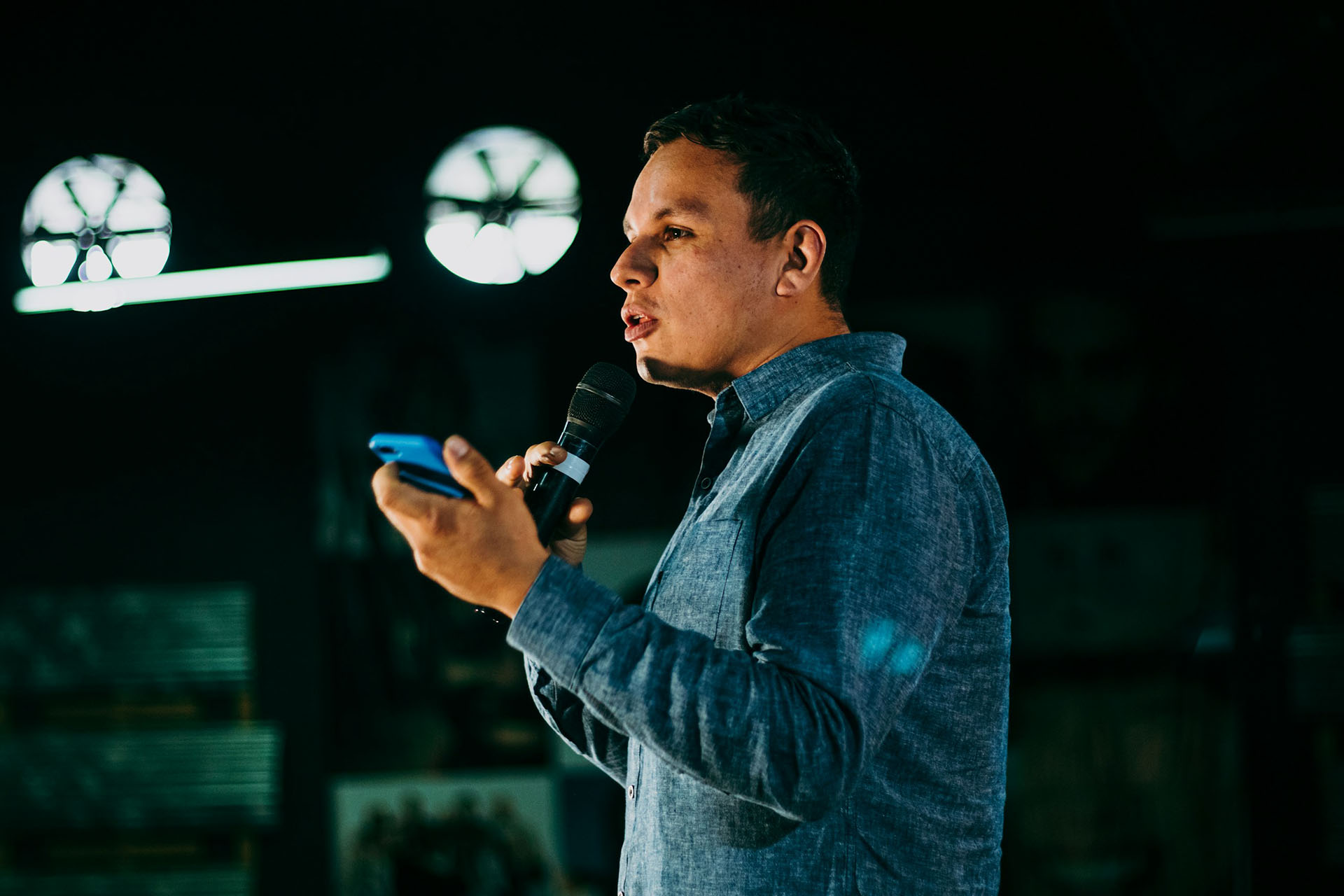
René shares insights on global missions and our role in outreach.
Transcript
This transcript was generated automatically. There may be errors. Refer to the video and/or audio for accuracy.
Thanks again, Josh. And once again, welcome to WOW. That stands for World Outreach Week. My name is René. I'm one of the pastors here. And if you are visiting us for the very first time today, or you're joining us on Facebook Live or watching over in venue, we want to welcome you. And especially if you're new, you have chosen a great week. This is the one week every single year, it's always the week before Super Bowl, every single year, that we celebrate what our global ministry partners are doing all around the world.
Now, why do we do this? Because it is so important to remember that we, here in Aptos, here in Santa Cruz County, are not the center of the universe. Can you assert that with confidence? Say with me out loud together, "I am not the center of the universe." Let's say it together. I am not the center of the universe. Now, point to somebody next to you, look at them and say, "You are not the center of the universe." Ready? Go. You are not the center of the universe. That kind of stings, doesn't it? But there is a whole world out there that God wants to heal and God wants to help.
And He has given us the privilege of being His emissaries in His redemptive plan, His healing plan. And here's the deal. You are already a part of what God is doing all over the world here at Twin Lakes Church. As Paul mentioned, we always give away at least 10% of everything that comes into Twin Lakes Church in our offerings. We give it to over 25 very carefully selected global ministry partners. And they do a variety of things. Some of them are large ministries. Some of them are very small. There are medical missions, orphanages, schools, lots of church planters, pastors, Bible translators.
And so once a year, we take a whole week to celebrate them and to see what God has been doing with those funds, with those resources all around the world. And here is this morning's theme verse. It's Colossians 1:6. Let's read this out loud together. Let me hear you. "The same good news that came to you is going out all over the world. It is bearing fruit everywhere by changing lives just as it changed yours from the day you understood God's wonderful grace." That summarizes our message today. And that's really what we want you to get excited about.
So in this year's WOW! sermon, we thought we'd do something that in the 127-year history of Twin Lakes Church we have never done before. But you're going to see it this morning. And here's what we're going to do. You know, every single year, our outreach pastor, Paul Spurlock, and I go on a quick trip to visit about three of our global ministry partners to see what they're up to, to encourage them. We get to hit about three a year. In that way, about every eight years, we get to see all of our ministry partners.
Now, we do that anyway every single year. And this year, a light bulb went on above our heads. Why don't we take you all along with us on our trip via video? So for most of today's message, you are going to come along with us for the trip that we took about two weeks ago, right after New Year's, and then I'm going to be back with some brief closing comments. So are you ready for a journey? All right. Buckle your seat belts, put your seat backs and tray tables in the full upright position, and check this out. Watch the screen.
Wow. It is O dark 30 in the morning here in the San Jose Airport. Good morning, Paul. Wake up. We are about to go on a whirlwind trip. We're going to take about a week to go to three fascinating places. We're going to go to Guatemala. We're going to go to Easter Island. We're going to go to the Navajo Nation in Arizona. Why? Well, because so many people, Paul, think of missionaries as agents of Western imperialism, don't they?
Yeah, as our cultural destroyer. Exactly. But we're going to go to three places where missionaries are actually working with the indigenous cultures and reviving them and preserving them and most importantly, giving them a spiritual boost through the gospel. So I know you'll love it. Paul, let's go.
We are now on the plane going down to Chile. This is the longest link of our flight. It's going to eventually take us to our first stop, Easter Island.
Well, we finally made it after a lot of travel, Paul. We are here on Easter Island and I cannot wait to introduce these guys to the couple that lives right here in this house.
Yeah, that's Bob and Nancy Weber with Wycliffe Bible Translators literacy experts. They've been here for 40 years.
And they are both UC Santa Cruz graduates and they're doing an amazing job preserving and revitalizing the local Rapa Nui culture. Let's go meet them.
We're Bob and Nancy Weber, members of Wycliffe Bible Translators. We've been working on Easter Island for 40 years, nearing completion of what the Lord has brought us here to do.
Our goal has been the translation of the New Testament into the Rapa Nui language. The Rapa Nui people almost all died out in the 1800s due to deforestation, slave raiders, disease. At one point, there were only 111 left alive. Then the bishop in Tahiti sent missionaries who literally rescued the people from extinction. From 111 then, there are several thousand today. Yet, while the people survived, their culture almost died.
When Bob and Nancy arrived, Rapa Nui was still only a spoken language. There was no alphabet, no way to read it or write it. It wasn't taught in schools. And this time, it was the Rapa Nui language and culture that were in danger of extinction.
About 40 years ago, right before Nancy and Bob arrived, mainland television came in, more outsiders came in, the frequency of flights picked up. So it was like an invasion, and the Rapa Nui language began to lose strength. Many families here didn't even speak it anymore.
And that meant a huge obstacle for Bob and Nancy's goal of translating the Bible. The language itself was dying.
At the time that we arrived, there were many parents who were saying, "You know, I don't even want my kids to learn this language." And that was where we started.
The Webbers wrote the first Rapa Nui dictionary, the first Rapa Nui school books. They sponsored the first writers' workshops for Rapa Nui authors.
So we were asked by Nancy and Bob to help them translate the scriptures into our language. They'd give us passages and ask for our feedback. And we weren't very helpful at first. We'd just say, "Oh, this is fine." What they did not know was we'd go home and have long conversations about what we had just been reading in the Bible. It was coming alive to us. We were beginning to have our eyes opened to what was really in scripture. I saw my own father meditating on it, and this was something totally new to us, and I yearned to learn more.
One of the most important ideas Bob and Nancy spread was you can be Rapa Nui and Christian without having to be European or American first.
Letting them know that it's, in this case here for the Rapa Nui, that it's okay to be Polynesian and Christian. They can adopt the gospel and not lose their Polynesian language and culture.
As part of our translation work, we dubbed a British movie about the gospel of Luke into Rapa Nui with local actors.
This work that Robert and Nancy have done to us is a gift for the island. It's something very valuable to mention. Besides their work as a linguistic work with the language, they also are leaving this great gift for the island, which is our Bible translated to Rapa Nui and hope for the different churches and pastoral churches to use it.
You get that passion of the word of God in you, but at the same time, indirectly, you're getting the idiom.
As we watched Bob and Nancy interact with locals here, it was clear they're very beloved and respected and that maybe the best Bible translation they've done here has been their own lives.
Westerners are so into plans and programs and timeframes. We hear people saying, "We can speed up Bible translation. We can get it done fast." You don't necessarily want it to be done fast. You need to give people time to get to know you. To read your lives, you may be the only scripture they will ever read. So sometimes fast isn't better. You have to be willing to be here for the long run. You have to let people look at your lives. You have to be able to build relationships, and those take time.
I'm not even a pastor, but I'm just a linguist, and Nancy's a linguist. But we've made our home here for all these years and raised our family here. It has been an example to people in the community, and it has opened many doors for us.
If the Webbers hadn't come, we would not to this day know how to read and write our own language, and probably by now, it would be nearly lost.
There is no way to express the value of what the Webbers have done here. There are no words in any language. Words don't cover it.
Well, it's been so amazing hearing about Bob and Nancy Weber. Their amazing work here on Easter Island. But now it's back on board the plane for another red-eye overnight flight. We're going to Guatemala. Come along.
Well, we finally made it here to Guatemala after a very long flight, but we are here to visit with Mark and Brenda Hall, TLC partners. We're doing amazing things, so let's go meet them. The town of Totonicapan, high in the Guatemala mountains, is about 98% Mayan, the indigenous people group here. Yet, even in Guatemala, there is subtle prejudice against Mayans.
And within the highly traditional Mayan culture, there can be additional prejudice against young people who go through a rebellious stage. That's why Mark Hall, who, like the Webbers, is a UC Santa Cruz grad, and his wife Brenda, who is part Mayan herself, reach out to young people here who are, as they put it, "throwaways and runaways."
The subculture that we met, this is after a few years of living here, is basically young people who sometimes don't have a dad at home, they get a little rebellious, they belong to the family church, but by becoming a little rebellious, then they become sort of outcasts within their own church. They're looked at differently, they're treated badly. And so, a lot of the young people are just running away from church because they're not feeling at all welcome there, even in their own family church. So, that basically got our wheels turning, and we met this small group of young people who dressed all in black and had goop in their hair and had kind of cocky attitudes, but the Lord opened a door so that we made friendship with these young people, and that really basically was the birth of Koinonia as a concept.
The Koinonia youth group Mark and Brenda started emphasizes grace and authenticity, and the Bible studies Mark writes are all student-led, verse-by-verse studies through entire books of the Bible. I was amazed at the spiritual depth that I saw among the young people here. Walter Chook is a convicted felon who told me his life was changed.
I met the group 10 years ago, and it really was very different than anything I had experienced. One of the things I liked was the acceptance that we all got in the group, no judgment, simply focusing on God. Before, what I'd been taught was that everything was about our own effort. That was how you reach salvation. But here, I learned that God loves us unconditionally, and it doesn't matter how big your sin is. When we allow God to really live in us, then we begin the process of changing from the inside out.
One thing that happened with girls here is that they are very abused, psychological and physical. When I see that they really understand how much God loves them, those girls change.
My father left when I was eight years old. Before that, he would drink a lot of water, and when I was six, he would go to the bathroom.
Before I started working in a group, I realized I had the wrong idea about God. He was the complete opposite of what I thought. Before the group, the idea of God as love never crossed my mind. Now, in my heart, I know He's my daddy, and I really think that changed my life. And I'm not just saying it with words, but I truly believe it from the bottom of my heart.
Sometimes it just takes incredible amounts of time, and I confess that I've had it times, and how long, how long. What keeps me going, and I'm talking sometimes five years to see a change in a young person, we grow to love them. And so there is no giving up when you love somebody.
Neither of us are from here, and it's a family that God has given us. And so many things, so many stories that we have shared with them, and make us a family. I love them, and I care for them because I know that God loves them.
I was involved in bad things, and I am really thankful to God because it was by His grace that He drew me to Himself. I never would have sought Him on my own. If not for the group, I don't know if I would even be alive. I think I would be the complete opposite of what I am today.
What is really exciting to see is that when young people really come to understand the concept of grace, they get so excited about it that they want to share it with brothers and sisters and friends. And so just in this interesting way, the grace of God, all the way from Aptos, California, is now infiltrating Totonika Pa in Guatemala, and it's just changing lives. It's amazing.
Well, that was an amazing visit we just had with Mark and Brenda Hall here in Guatemala. It was, but now we are headed back on an airplane. We are going to see what John Aldex has been doing in the Navajo Nation. So Paul, let's go.
To get to the Navajo Nation, you have to fly into Flagstaff and then take a long drive to the very remote place to which TLC partner John Aldex helps organize short-term mission trips.
The nature of what we do out here is really provide service to the poor and the elderly. A lot of them fall through the cracks. People don't know it, but there are 200 to 250,000 people live out here, and fewer than half of them have running water and electricity. A few have one or the other. A lot of them have neither one. And so we just help them with handicap ramps, replace windows, help with the, you know, roofing, with the churches. I work with the same churches year after year after year and help meet some of their needs. Right now, we're putting in the very first bathroom at this church, Cebiozil. And hopefully by the end of fall, we will have a functioning bathroom for the very first time.
When I was young and up to my time right now, they really bring a lot of help, re-roof the whole gun, and did a lot of work around here. And it is awesome. They really helped us in every way, not just only building, but also in the spiritual work also.
I'm asked a lot of times, you know, how I reach the Navajo. Well, I don't, because I'm an outsider. Oftentimes, especially with new youth pastors or people that are going to come out with us, ask me, "Are we going to do outreach?" And I say, "Yeah." Now, if you mean by outreach, are we going to pull everybody in a room and preach at them? No, because we don't have the ability to reach them that way. We're just too foreign to that. But outreach could look a lot like shoveling sheet manure for an old couple for five days.
A lot of these Navajos, native, are my people that are around here are traditional. Bringing Christ to them is so hard for them to understand.
Our job really is to live down Christianity's bad reputation and win a good reputation. And we tell people, they say, "Why are you coming out here to do this?" And we say, "Well, we're just following Jesus' example." And they don't believe it until they see it. After 18 years, they start believing it. That's been my big lesson of outreach is just follow Jesus' example and let him take care of the details. It's quiet, it's subtle, but that's usually how God works, does his best stuff when, you know, it seems like nobody's watching out there.
What a whirlwind trip, but so inspiring to see firsthand what three of our many TLC partners have been doing. The key concept we heard again and again was we came not to be served, but to serve. Not just to teach grace, but to show grace. Not to overpower people, but to love people and to stay in it for the long haul. What I saw on this trip was the impact of love shown over many years. That is what brings credibility and receptivity to the gospel message. That's the Jesus way, and that's what changes all our lives.
Isn't that cool? And you are a part of everything that we just saw up there on screen if you've ever given a dollar to Twin Lakes Church. Well, I'm just going to wrap up quickly with three observations, then I want to give you plenty of time to enjoy everything that's out there in the lobby. But I want to just say this, in all of our travels over the years, the ministries that are really effective always have three characteristics. And these three characteristics just make them dynamite.
And if your life and my life and our church also have these three characteristics, your family life, your work life, then you are going to make an impact over the long haul with your life for Christ in a revolutionary way. Now, there's no sermon notes, but memorize these, jot them down in the margin somewhere. First, make sure you are grounded in grace. Grounded in grace. What am I talking about? My wife and I were listening to KGO, the news talk station out of San Francisco the other day, and the host was just going on a rant about us, about Christians. And here's what he said about why he rejected the Christianity of his childhood.
He said, "I got so sick and tired of the way I was raised in church. Behave so you go to heaven. It was all about fear. Or give us your money so you go to heaven. St. Peter's the bouncer, so behave." Now, is this the message in a lot of churches? Sadly, yes. This is exactly the message that people pick up. You know the only people, though, who taught this in the Bible? The Pharisees. And Jesus called them a brood of vipers. The Bible says this, "God saved you by his," what? "His grace when you believed." And you can't take credit for this. It is a gift from God. Salvation is not a reward for your good deeds. It's all just a gift from God.
This is a completely revolutionary theological concept. You just saw Mark and Brenda in the video talking all about grace. What do they see in the young people they serve? Walt thought that they were too bad to be loved by God. When those young people see that God initiates the relationship, that God welcomes them home by his grace, that God made a way through Jesus Christ's sacrificial atonement for us on the cross. He did that for us. It's not about our religious performance to earn his favor. When that grace captures their imaginations, when people see the beauty of this, when they're astonished by this, it changes us from the inside out. Man, I am staking my ministry on that belief. I'm willing to bet the farm on that belief. I will live or die on that belief that God's grace is what changes us.
And then we start loving people. We start gracing people because we've been loved and that's the next principle. Make sure your faith is lived out in love. It's grounded in grace and then it's lived out in love. And this is super important for Christians to focus on right now. New Yorker magazine recently had a drawing of the Incredible Hulk to illustrate one of their articles. You want to know what the headline was? The New Evangelical Moral Minority. In other words, this is how they think of Christians. Angry and seething and kind of stupid. And sadly this is the way a lot of Christians come across. The Incredible Hulk. But you know there was a time when Jesus represented us, not the Hulk. Jesus touching the sick. Jesus healing them. Jesus advancing the kingdom through love.
And this is why here at TLC we support global ministries like the Mercy Ships. You're going to see an amazing documentary about them produced by the National Geographic Channel and Australian television. It's spectacular. I've seen the preview of it. That's going to take place right after the worship night tonight. Tonight's worship night is at 6 and then around 730 or so we're going to be showing this little documentary on the Mercy Ships. This is a hospital ship where Christian doctors and nurses serve people in countries too poor to build hospitals. And what happens is this opens the door for them to pray with these patients. And this raises questions in conversation. Why are you doing this? It's because their faith is lived out in love.
You just saw John Aldex talk about this. Before he could ever preach a word to the Navajo he's worked for years just serving. And of course it's the same thing for you and me. This is why we serve our local community year after year after year. Builds credibility. Like the Apostle Paul says, Galatians 5:6, the only thing that counts is faith expressing itself through love over the long haul. Never giving up. So if you want to make an impact with your life for Christ, I mean this is time-tested. Paul and I have seen this on tough mission fields again and again. Make sure you are grounded in grace, living out your faith in love over the long term.
And finally make sure you're based on the Bible. Make sure your faith is based on the Bible. Not your emotions. Not some faddish teaching. Not something you read on the internet. Because it's the Bible that's going to keep you centered. It's the Bible that's truth. It's the Bible that's truly revolutionary. You just saw Bob and Nancy Weber, two UCSC trained linguists, highly regarded by the way around the world. They go to linguistic conferences. They are linguistic experts. Why would they, with their talents and capabilities, give their lives to translating the Bible into the Rapa Nui language? Because they know that for generations to come knowledge of the Bible will be the key to transformation for the Rapa Nui people.
You know in the Bible there's a book called Acts which tracks the explosive growth of the Jesus movement in the years after Christ's ministry. And everywhere the faith really catches hold. Everywhere it goes viral. Everywhere it really becomes contagious. There's an observation that Luke, the writer of the book of Acts, makes. Let me just show you three verses. See what it is. He says in Acts 6:7, "The Word of God kept on spreading." Acts 13:49, "And the Word of the Lord was being spread." Acts 18:11, Paul settled there a year and a half teaching them the Word of God.
What it's observing is an indispensable element of really contagious, really viral, really transformative Christianity is knowing the Word of God, the Bible. And by the way this is why all through history political and religious tyrants have tried to repress the Bible in the language of the people. It is revolutionary. Just one example like what it says about women. I was thinking the other day about Christ's encounter with a woman at the well. In the Bible she is the first missionary, speaking of missionaries, that Jesus ever chooses. And that was highly revolutionary. Why? First she's a woman and in those days it was forbidden for a man to speak to any woman in public, even his own wife. Jesus doesn't care about that. Second, she is a Samaritan which was a despised race. Their religion was considered a cult. Third, she's been divorced five times and she's currently living with a guy she's not even married to. And so on every conceivable level, ethnic, religious, moral, her gender, she's an outcast. And Jesus chooses her as his first missionary, as her life is transformed. Just revolutionary.
What I'm saying is to continue the revolution that Jesus started, the mission of Jesus Christ. Make sure your faith, your life, my life, this church is grounded in grace, which is lived out in love over the long haul and based on the Bible. That's the DNA of this church, what you're seeing on screen right now. And the cool thing about this week is you have a chance to see a bunch of global ministries that we chose to support because they operate exactly this way. And I also hope that you are inspired today to consider going to the long table in front of the windows and sign up to get more info about a short-term mission trip with one of these global partners and continue in that way to be part of the Jesus revolution during WOW week.
Let's pray together right now. Would you bow your heads with me? Lord, thank you so much for this opportunity this week to celebrate what you're doing all around the world. It's such a blessing to think that we get to be a part of this. And God, may we be inspired that life is not just about us and our problems, that we're not the center of the universe, that we are a part of what you are doing all over the world. I pray that you would just renew that vision for us this week and I pray that everybody might keep their hearts open to the idea that maybe, just maybe, God may be calling them to a global ministry too. In Jesus' name we pray, amen.
Sermons
Join us this Sunday at Twin Lakes Church for authentic community, powerful worship, and a place to belong.