Going Global
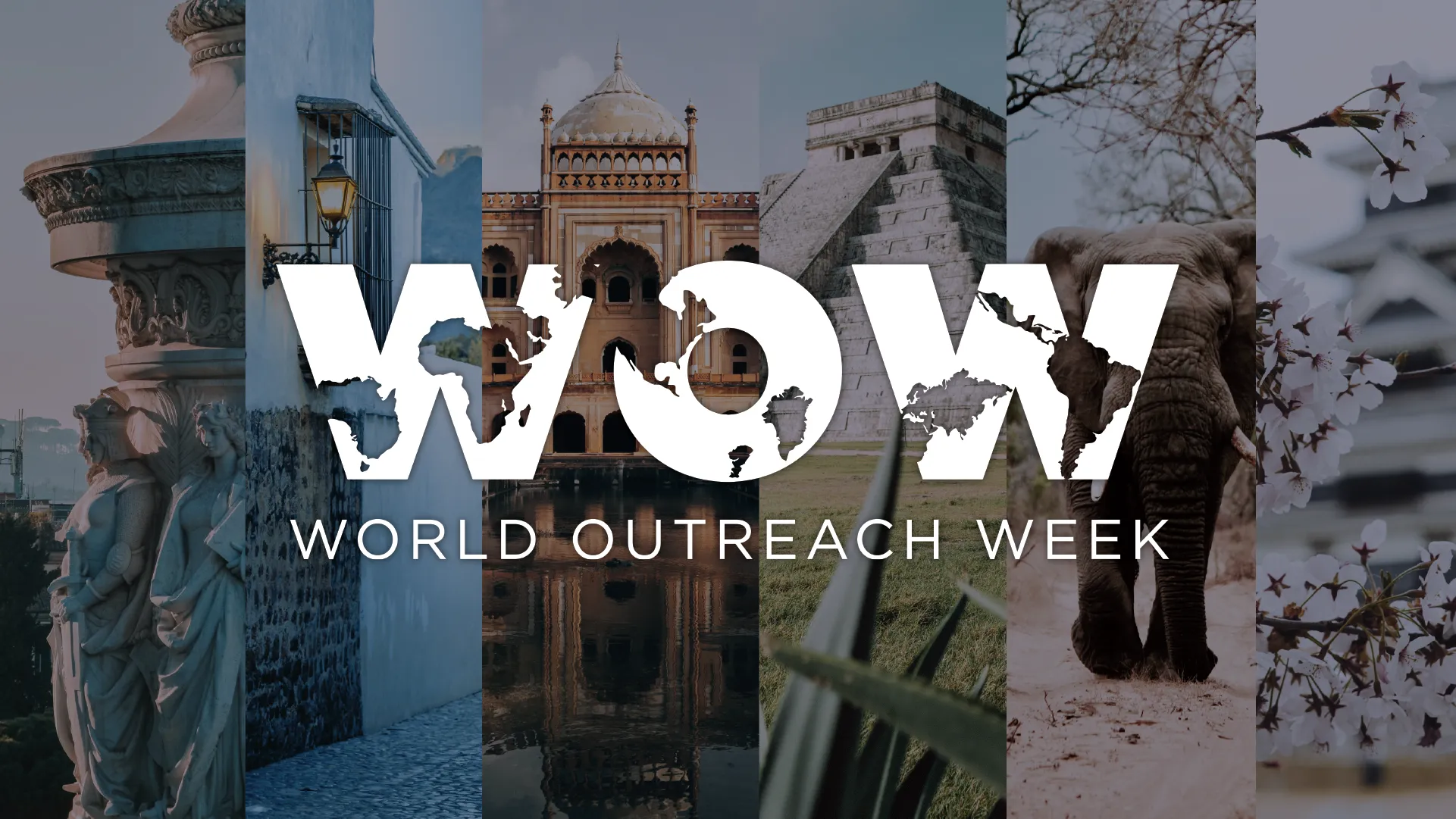
René shares the importance of global outreach and our mission.
Transcript
This transcript was generated automatically. There may be errors. Refer to the video and/or audio for accuracy.
My name is René, I'm one of the pastors here at Twin Lakes Church. Welcome to World Outreach Week. If you are a first-time guest here today, I think you chose a great weekend to be here because what we do, as you picked up probably this weekend, is it. Once a year, we feature our international partners in ministry here at Twin Lakes Church and we see what God is doing all around the world. It is one of my favorite weekends of the year. I think I even like it better than next weekend, which is what? Super Bowl weekend, two great football fans here today, but this is my favorite! World Outreach Week.
And I want to invite you to grab the message notes that are inside the bulletins. Those programs that you were handed by the ushers as you came in, those will help you follow along with the message just a little bit. Speaking of the Super Bowl, how many of you plan to be watching the Super Bowl next weekend? Can I see a show of hands? Many of you, many of you. All right, of those of you who raised your hands, how many of you would agree with me that there have been years, there have been years when the game has not been as interesting as the commercials? Would you agree with me on that sometimes?
It has gotten to the point where not only do companies spend tens of millions of dollars on Super Bowl commercials, but there's actually a national poll put out by USA Today that makes headlines every year where they ask people what was the best Super Bowl commercial of them all. Now some years it's kind of neck and neck. There's kind of a controversy. But last year there was one commercial that won hands down. There was no controversy. Like 99% of the voters chose this one commercial and it was this. Watch the screen. Everybody just say "ah" with me out loud. "Ah, what a cute commercial, right? So good." By the way, can anybody tell me what that was a commercial for? Yeah, beer. And they never showed it one time in the whole commercial.
Why not? Because 60 seconds of a guy drinking beer would not have made you go, "Ah." Right? Now what was it about that commercial just kind of strikes us, you know, just resonates with us? You know what I think? I think every single one of us knows what it is like to feel like a lost puppy, right? We identify with that. And every single one of us also wants to help find the other lost puppies out there. This is a plot line that resonates with human beings no matter who they are, no matter in what culture. I want you to just think of how many times this plot line is in fairy tales, in movies. There's a lost puppet, Pinocchio. There's a lost fish—finding Nemo. There's a lost alien, E.T. And we could come up with a hundred examples.
I think God has imprinted this on our DNA because not only were we once lost, we want to be part of a team that seeks and saves the lost because that is part of the mission we were made for. How did Jesus describe his own ministry on earth? He said, "The Son of Man came to seek and save the," what? "The lost." The lost. And how did he describe the ministry we are to have to the world? He said to his disciples, "Go into all the world and proclaim the gospel." And by the way, what is gospel? What does that word mean? Good news for lost puppies, right? By God's grace, you're saved. Proclaim the gospel to the whole creation.
Now, if you have your notes out, you have a pencil or a pen, I want you to take that pencil or pen and circle that phrase, "Whole creation." Because sometimes we forget that from the very beginning, the movement that we're a part of, or most of us probably hear are a part of Christianity, it's been an international movement. It's about going to the whole world to lost puppies everywhere and telling them that good news is God loves you so much that you've been found. And I was lost and have been found either. We proclaim the gospel to all of creation.
Somebody said, "You can't spell gospel without go." You can't spell God without go. You can't spell good news without go. That also is part of the DNA in our faith. The problem is sometimes our ardor for going out into all the world and seeking the lost, sometimes it dies down a little bit. Sometimes we get a little self-centered, or sometimes we get a little scared, or sometimes we get a little cynical. And so what I want to do this morning is have us rediscover some passion for that part of the DNA of our faith. We were made to go global to the lost everywhere.
But why go global? Why do I have to think about the lost in all these other countries? Well, the Bible talks about four very, very cool things about going global. And I hope if you resonate with some of the verses I'm going to share, it just reignites a passion for this in your own heart. So jot these down if you've got a pencil or a pen with you on those message notes. And the very first thing is this. Going global is a chance to be part of history. It's a chance to be part of making history. I really love what Paul says in Romans 15. And this is a verse that you probably don't associate with missions. Maybe if you've been going to church your whole life, how many of you have kind of been going to church, a church of some kind, your whole life since you've been born? Many of us here, you probably have never seen this verse associated with world missions, but I love it.
This is from the message translation Romans 15 starting in verse 9. Paul says, "Just think of all the scriptures that will come true in what we do." This is what the psalmist meant when he wrote, and I want you to read those next words out loud with me. Let me hear you. "People of all nations celebrate God. All colors and races give hearty praise." Circle the phrase "all colors and races." We are at a point in our cultural conversation right now here in America and in Europe where race is once again a hot topic, and it should be. But you know, the very first international movement that was all about going beyond racial barriers was the Christian church. And it was radical, and it even caused a lot of conflict in the early Christian churches.
People, as it dawned on them, that part of our mission is to go to all colors and all races and all countries. It was ahead of its time. It was historic. And the job's not done. But here's the amazing part. God has chosen you to be a part of this mission, to be in on making history. And listen, it is not mission impossible. In fact, it's more like mission inevitable. Because the Bible says, this is really good news, it's going to happen. Certainly it'll happen in heaven, and that's the second point. When I go global, it's a peek into heaven. It's kind of a little peek into what will happen and what is happening now in heaven.
You know, next weekend, not only is it Super Bowl weekend, but also I am going to start a new series in the book of Revelation for seven weeks, picking up where I left off last November. We call this series Rev, "Glimpses of Heaven, the Future, and God's Plan for the World." And a lot of times, when we think of the most amazing visions in the book of Revelation, people think of, like, you know, the weirds of the beast that came out of the sea, and the dragons, and the antichrist, and so on. But you want to know what my favorite visions are. Four times in the book of Revelation, heaven is described in this way. And here's the first time John gets to have this rare glimpse of heaven, and he says this. Watch this. "After this I looked, and there before me was a great multitude that no one could count." And read the bold letters on the screen out loud. From what? "Every nation, tribe, people, and language standing before the throne and before the Lamb."
You know, this shows me a couple of things that are so cool. First is this. Heaven is going to be the most diverse place you and I could possibly imagine. Because when John's in heaven, and these are all, these glorified saints in heaven, John looks at them and within an instant he's able to tell that they are from every people, and race, and tribe, and color, and language. Now how did he know that? The angel didn't tell him that. There was something about these people. Maybe it was the color of their skin, or the way they were dressed, or the way they were acting, or the acts that they spoke with, or the language they spoke, or something. There was something about them that John, in heaven, he goes, "Look at the Africans, look at the Europeans, look at the Asians, and they're all worshipping God together."
And this shows me that there's something about your ethnic identity that is not an accident. God made that as part of your DNA, and he loves it. And he's going to preserve that in heaven. And it shows me God is against racism of any kind because he's preserving that. No bigotry in heaven. But there's a second thing that shows me, when I'm engaged in something that looks a little bit like that, then it is a peek into heaven that I'm providing for myself, and for the people who are seeing it. And when we go global, when we hear stories from some of the missionaries that we're supporting, and we hear them talk about this kind of a scene on earth, it's a peek into heaven now.
One time, my wife and I, several years ago now, we're in Kenya, and I got to speak at a conference for Christian leaders that were throughout Kenya, and many of them working for Africa Inland Mission, and there were doctors, there were pastors, there were church planters, there were teachers, all kinds of people, and they were from all kinds of different races. There were people there from Brazil, from Korea, from Ireland, from Australia, from Africa, all over the place, all kinds of different races and colors and ethnic identities, and all kinds of different languages, and all kinds of different church denominations. Like every denomination you can almost imagine, and they're all together at this one conference, because in Africa, they don't have a lot of conferences, so they don't have the conferences that are so niched out like we've got here, so they're all at the same conference.
And I got to be honest, at first I'm thinking to myself, when we start worshipping, how's this going to work? Because here in the States sometimes we have what worship pastors refer to as worship wars, you know, where people are like, that's not exactly the kind of worship that I like, so how's this going to work with this group? So here's what happens. The first note of the first song, the group that's there from Brazil that are Brazilian Pentecostals, and let me tell you, that is a passionate mixture right there, Brazilian Pentecostals. First note, they're on their feet, they're raising their hands like, "God, I surrender to you!" like this, they're just totally into it, right? And next to them there is a group of Swedish Lutherans who introduced themselves to me jokingly at the dinner of the night before as "de frozen, chosen." This is how they refer to themselves. "Yeah, the Lord just wants us to be frozen," and they were just like worshipping kind of like this, you know?
And then next to them is one guy from Korea who's a Korean charismatic, and he's weeping, tears are streaming down his face, and he's rocking back and forth, and he's speaking to the Lord, praying out loud in Korean, and the Pentecostal Brazilians are trying to interpret because they think it's tongues, and so there's all this crazy thing happening. And next to him are these Canadian Mennonites. I mean, long black dresses, hair up in buns, and those were the men. No, just kidding about that. But so what was the upshot of all of that? It was awesome as all these people came together and they are all so engaged in missions on such tough fields that they were there to just focus on the lamb and the throne and God, and they were just worshipping together, and I'm crying just thinking about it, but I was really crying when I was there in the moment.
It was time for me to speak. I thought, how am I even going to say a word? Because I just had a peek into heaven, and when you go, there's these short-term mission cards all around in the lobby, and you just take one little two- or three-week peek into Zambia or Sri Lanka or Mexico, exotic places like India, San Francisco. That's crazy. As you go to these different places, you'll get a peek into heaven too, and then third, not only is this going to be my future identity, but it's a part of my identity right now, part of our identity, not just in heaven, but right now.
Watch this. The Apostle Peter is writing to the first-century church like the middle of the first century, and by that time, 20 or 30 years after Christ, they had already become so diverse, the church is full of Jewish people like Peter, but also Greeks, also Latin-speaking Romans, also Africans, Ethiopians, Arabians, all kinds of people, Asians, who were there already as part of the church then. And Peter is writing to these people, have you ever seen this verse? He says, "Once you were not a people, but now you are the people of God." You're all one people. Now, do you get how huge this is? Let me just demonstrate with just a little show of hands poll, and we've had some interesting results in the last couple of services, but just by a quick show of hands, how many of you were not born in California? Can I see that show of hands? Raise your hands up. Let me see them. Leave them up. And all you California natives look around the room right now. These are all the people who were not born here, but they got here as quickly as they possibly could.
All right? All right. How many of you were not born in the United States of America, or you're a citizen of another country? How many of you? Raise your hand. How many of you speak a language other than English? Can I see a show of hands right there? Wow, a lot of you. A lot of you. Look around the room. All right. Let me ask some questions about spiritual background. How many of you were not raised in a home where mom and dad told you about Jesus? Religion church was not part of your identity growing up. Wow, a lot of people. We've had a surprising number in every service. How many of you grew up in a home where mom and dad did talk to you about Jesus, but it came a point where that wasn't your faith? And you sort of drifted away a little bit, maybe partied a little bit too much, and then eventually came back kind of trying to find your own way. Raise your hand if that's your story. Look at that. A lot of you.
How many of you came to Christ after you were 20 years old? Can I see a show of hands? How many of you after you were 30? 40? 50 years old? I'm going to ask one more set of questions, and don't raise your hand unless you feel comfortable with talking about this, but how many of you came to Christ and there's been a drug or alcohol abuse in your background? Can I see that show of hands? A lot of people here. Some of you are going, "René, my children are with me. This is very awkward." But still, I appreciate that, honestly. Now, how many of you came from the opposite, a legalistic religious background, and your journey to faith looked like coming from religion to an understanding of the gospel of grace? Can I see that show of hands?
Now, picture this. There was all kinds of diversity here in this room. Imagine asking those questions of the globe. There would be even more diversity, but my point is there's this myth that a lot of people have that there's a certain kind of person who becomes a Christian. And in our culture, we assume you've got to grow up in a home like Ned Flanders' house and The Simpsons, right? You know, it's this kind of white-bred, weird, super conservative thing, right? But obviously, here there's not. And I could ask more. If I asked questions about your education or your political affiliation, there'd be even more diversity.
Now, my question is, how is that supposed to work? Because what I just described to you is a recipe for just disaster and chaos. I mean, I have, you know, kind of taken in my breath, even in small groups, when I know some of the backgrounds of the people there. And there you've got the woman who came to Christ in Teen Challenge in Monterey. And she's got drug and alcohol abuse, and she was a prostitute for a little while, and she's died to have a cigarette because she hasn't kicked that habit yet. And she's sitting in a small group next to the woman who grew up in a legalistic religious background who has never even wanted to try a cigarette, not even mention all that other stuff. And she's confessing to the group because she feels like God doesn't love her anymore, and she feels so guilty because the other night, she watched Lethal Weapon 3 on Netflix. Former prostitutes going, "Oh, brother!" And next to them is a guy who moved here from Guatemala, and his background's so conservative, he thinks both of them are off the wall. How are we supposed to all get along?
Well, God says, first, "Well, it's a miracle." And he says, "Secondly, it's because you're all related by blood." Not the blood of your ancestry, not the blood of your DNA, not the blood of your race, but by the blood of Jesus Christ, who cleanses us from all sin. We're bound together by blood. I'll never forget being in Guatemala on one of these short-term trips, and we plunged into the jungle with a missionary we were supporting there, and there were thatched-roofed huts, and we went to church service with some indigenous people. They were speaking an Indian language. I couldn't understand a word they were saying. Didn't know what was going on until the end of the service when they passed the communion tray. And we all took the broken bread representing the body of Christ and the cup, the shed blood of Christ, and suddenly there was this amazing sense of unity because we were speaking our language together in that moment, the language of the shed blood of Jesus Christ, by which we are all made one people.
I mean, we could stop right there. It's part of our identity. It's a peek into heaven. It's a part of making history. But there's one more reason that I think is pretty cool. Why go global? Well, it's a blessing to society. It is a blessing to society. And I want you to stay on page one for just a second because I want to explore this. Look at this verse. Jesus says, "You are the salt, salt of the earth." Now, when we look at this, we think of it as a flavor additive, right? Is that what Jesus meant? One more quick audience poll. How many of you have more than one refrigerator? Don't be shy. Just raise your hand up. You got that one in the garage. That's okay. You got the deep freeze out there. A lot of us, right? Back in that time, they did not have that technology to refrigerate food, to preserve it. They couldn't do that. So how did they do it? They salted it. They salted the meat to keep it from spoiling.
And I believe when Jesus is saying, "You're the salt of the earth," what he's saying is, "You keep it fresh. You're preserving the good things in your culture and in your society. You're guarding it against going bad." And churches do that. Did you know that there's a brand-new study statistically when there's a church in the neighborhood, crime drops? Why? It's what we do. We're the salt of the earth. And I always want to talk about this at World Outreach Week because there is a thread in our society's discussion that sort of poo-poo's missionary efforts that looks at all missionaries and says they're destructive and they're cultural imperialists and they do bad things. And we think of missionaries making people in the tropics wear black suits and ties and long black dresses. And there are missionaries who did do bad stuff, and nobody will admit that sooner than other missionaries because they give everybody else a bad name.
But when we do missions the way, when we go global the way Jesus said to, man, there's incredible things that I want to show you. Nicholas Christophe is a writer for the New York Times. And he often, once a year at least, he writes an op-ed piece about how much he loves missionaries. And what makes this unique is he is self-described as a progressive atheist. Here's what he wrote a few months ago. He says, "Today, among urban Americans and Europeans, evangelical Christian constitutes one of the few groups that it's safe to mock openly." But I've been truly awed by those I've seen in so many remote places combating illiteracy and warlords, famine and disease, humbly struggling to do the Lord's work as they see fit. He says, "A disproportionate share of the aid workers I've met in the wildest places over the years, long after anyone sensible had evacuated, have been Christians." Why? It's what we do with the salt of the earth.
So you have these four things the Bible talks about, and there's more, but these four that just pump me up about going global. But if it's possible to do missions destructively, then how do we do it positively? How do we do these things the way that Jesus did it? That's page two, what we call the peace plan, P-E-A-C-E. Now, this is not an acronym that's original to us. We saw this first at Saddleback Church down in Orange County and really resonated with this. And so now everything we do, every booth you'll see out today during World Outreach Week falls into one of these five categories. This is how to do missions in a healthy way. You don't just drop in out of the sky and you do an evangelistic sermon and have people raise their hands to accept Christ, and then you just leave, because that's not the way the Bible says to do it.
We see all these things reflected in the ministry of Christ. The P, for example, stands for plant and grow churches. Plant and grow churches, because while Christian faith is personal, it's not meant to be experienced alone. We're called into a community of faith. This is why Jesus said that He would build His church, and the gates of Hades would not overcome it. And this also means that when we go out on short-term or long-term missions as much as possible, we want to work with the churches, through the churches that are already there. And then E stands for equip servant leaders, and the key word there being servant. Why? Would you agree with this? So many of the problems of the world today and throughout history are traced to corrupt leadership, right? In the church, in civilization at large. In fact, corrupt leadership is the bottleneck that stymies so much of what we want to do to help out the poor and the victimized around the world.
This is why Jesus said in Luke 22, "The kings of the Gentiles lorded over them." But you are not to be like that. Instead, the greatest among you should be like the youngest in that culture that meant the one with the least honor. And the one who rules, like the one who serves. Circle one who serves. This has huge implications for us as we go out globally, short-term or long-term. That means we don't go as know-it-alls. We don't go as dictators. Really, you could say we don't even go as partners. We go as servants. Because the lord of all, our lord Jesus, came as the servant of all. And then that's what he wants to do too.
And then A stands for assist the poor and the victimized. Again, Jesus did this and he told us invite the poor, the crippled, the lame, the blind. And then at the resurrection of the godly, God will reward you for inviting those who could not repay you. And poor and victimized doesn't just mean economically poor. It means people who are going through difficulty emotionally. It means people who are refugees. It means people who are being rescued from human trafficking and much, much more. And you know what? Just a real quick plug. Our boutique over in the corner that Paul and Mark talked about. This is why we really want to give a hand up, not a hand out as the saying goes. And the jewelry that's being made by some of the poor women in the village of Kondamangalam, India, or the women in India who are being rescued from sex trafficking. And they're given a business. And they organize co-ops so that they sell jewelry or sell scarves they make in the case of the refugees in Jordan. When we help them, we're not throwing money at a problem. We're encouraging a solution to the problem. And that's what we mean by assisting the poor and the victimized in a global way.
Then C stands for care for the sick. And again, what did Jesus do? Matthew 4:23 says, "Jesus healed people who had every kind of sickness and disease." And he says, "That's one thing he'll ask if we did at the end of all time." My wife just got back with our dental team. Every year we send a dental team out to Little Flock Children's Home in India. That's just one of the ways that we want to care for the sick. And then E stands for educate the next generation. Again, a major part of Christ's ministry. He taught every week in the synagogue. And Jesus said, "Let the little," what? "Children come to me for the kingdom of heaven belongs to such as these." This is behind our whole 2020 Vision Initiative. Building our children's building here. Building this building over in India at Little Flock at the same time. A classroom building, a medical dental clinic. Because we're interested in the next generation.
And this all, P-E-A-C-E, this all is part of what it means to live like Jesus, to live globally. And for the last part of this message, I want to interview just a few people who are doing these five things right now. These are people who see God's global reach in distinctly different ways in their ministries. And you may not realize this, but these are people you've been supporting if you have given a dollar to TLC ever. At least 10% of every dollar that comes in here we give to our global partners in ministry. So Bob Robertson and Marty Shaw and Ken and Julie Vaughn, let's welcome them as they come on up to the stage.
I love seeing these guys up here, and I'm going to start with Bob. Bob, you are in Amman, Jordan. And you and Suzanne have seen some amazing things happen in your church. Now, you're a seminary teacher there. You teach in Arabic, and you teach these church planners and pastors. And your church has experienced something interesting in a global way, really. What happened?
René keeps pumping up my creds. And I love academics. I've done this. I've been in the seminary. But where I really thrive, I'm a street rat for Jesus. Put me in an Arab city where it's teeming with people, the sounds, the smells, the mosque, all that. That's where I thrive. Find me an Arab Muslim anywhere, and I'll leave anything, and go sit with them and talk to them. Even my wife. Talk to her about that. Two points. Fleeing ISIS, finding Jesus. You've all watched this television program where they flip houses, you know, flip houses. The one we like when we're here, we watch it, this charming couple down in Texas, they're believers, and, you know, they flip houses, and somebody signs on, and they tell them what they're going to do, and they don't see it again until it's ready, and they put this big screen, if you've seen that, and then they open the screen, and they see the house, they say, "Wow! What has happened?"
Now, they've signed on for this, thanks. Our church that we work with in the middle of the capital, Amman, if you would have looked at it eight months ago, and then looked at it after that, you know, six or seven months, you wouldn't recognize the church. The building's the same. If you look inside, it has flipped, flipped, totally. God is a God of flipping things, miraculous, that we don't even expect. I mean, I didn't expect that. In the '60s, I was an atheist with an attitude at Cal Berkeley. I mean, God flipped my life upside down, and He does that every day, continually, if you're a believer. That's His great plan for it.
Well, how did this happen? Here we are, you know, we're a church, and to get church growth ordinarily, I mean, it's a... You claw your way, you know, with your nails and your teeth to get growth in a church. I mean, can you imagine this church six months, and you've got maybe twice the number you have here? I mean, incredible. And you haven't done anything to do it, you know? You haven't gone out there to win these people. They're just there. Well, go back to the second century, one of the first areas of the world that signed on for Christianity was present-day Iraq. Go up to Mosul. These are the ancient Chaldeans, these ferocious people in the Old Testament, Chaldeans. These people, we would call them, they come from the traditional liturgical Chaldean, they're Chaldean Christians, they call them. Now, go back to June 1914. ISIS, terrorists come in there to your capital, and they earmark who are the Christians, they come to you and they say you have three choices. You either convert to a slam, pay a heavy tax and live under our rule. Who wants that? Cover your women, you know. By the way, why aren't your women covered here, René? Or die. That's your choice. Massive exodus out of Mosul. People who for generations have been there, Christians, people who have businesses, doctors, businessmen, engineers, suddenly they have nothing. It's not like a natural disaster. Imagine if a group of people, religious people, came through Santa Cruz and displaced you all just because they're religious, and you have nothing. You're out there just hanging.
So where do they come? Jordan, the historical place of refuge. For our piece of the pie, our church, and we have about a million and a half Syrian refugees, most of them Muslims, but these Chaldean Christians came in, a lot of them into our neighborhood, which traditionally refugees also, Palestinian and Muslim refugees way back. And our church opens their arms and their hearts and everything to these people, and they come in. They know little or nothing about the Scriptures. Imagine that. One of the oldest churches in the world. They don't know what it means to be born again. Suddenly our church is overflowing with these people, learning about Christ, coming to Christ, singing for the first time, and really singing, not chanting, singing. Lovely, people being discipled, people studying the Scriptures, some of them even reaching out with us now to other Iraqis. I mean, something, you know, in this promise back in the book of Habakkuk, I will do an amazing thing in your day that you wouldn't believe. Who would have thought? What a flip job. I mean, who would have thought this? And yes, we have still people in precarious situations. We hear stories every week that you would not believe, makes you weep. But they have been driven out of their homeland and they would say, "You meant it for evil, but God meant it for good." Amen. Because we have been thrown into the arms of the eternal Savior. Great stories. Amen. Thank you so much, Bob. That's inspiring.
Now, Bob has seen the global cross-border thing happening because all these refugees are coming into his church there in Jordan. Marty sees it in another way as one of the vice presidents of WorldVenture. Marty, you travel all over the globe and you see some amazing things. Tell us one story.
One of the things that we recognize is that, as René mentioned, if we're going to see people in Heaven that are from every nation and tribe and people and language, someone's got to go tell them. And people will tell us that there are approximately two billion out of the seven billion people in the world today who have never heard the name of Jesus Christ. And so one of our challenges that we're trying to do as we go around the world is we've identified 25 of these people groups who, what they call them, the "uns," the unreached or unengaged for the gospel and take the gospel to them. And how are we going to do that? And my wife and I had the privilege this past September to be in a West African country where we drove about seven hours north of the Capitol and found ourselves at the end of the road and then took a 45-minute hike up into a village of one of these people groups. And in this village, there's no known believers, the entire people. A tribe has probably 14,000 people in it. There could be 30 to 40 believers total.
And as I looked over, they talked to us about the darkness that's there, what the religion is that they follow, and quite dark places we couldn't go outside the village where we were at because that's where they go to worship and we're outsiders and we couldn't go there. And as I was looking at the scene that you can see on the screen behind me, I saw a row of women probably 10 women or so coming out of the jungle. And I asked about them. I said, "Are they coming back from the field or where are they coming from?" And they said, "No, the women in this village, besides the other things that they do, the women in this village go into their own place in the jungle and they worship a python." And there's no hope in that. And so as we wound our way back down the hiking trail and I was walking with the only pastor among that whole group and he said to me, "Would you like to preach tomorrow at our church?" And I said, "Sure, that would be a great privilege." And so the next morning as we, about an hour to get over to a different village where this little building is and I stood there, I preached in English, he translated and it was a great time. At the end of the services sat down, we were sitting in the front of the church and they introduced the visitors who had come that morning, there were two women. And the second one, in addition to giving her name and all that said, "I want to believe in Jesus Christ." And so there in front of everybody, the only other believers among that whole tribe, the pastor shared with her and prayed with her and then she prayed.
And the unique thing was to realize some of the spiritual battles that are going on is that as she said, "Amen," and we opened up our eyes to look out there, all the people in the congregation were pointing right above us where we were sitting and as we looked up, we could see there was a white snake that was slowly about to drop on top of us in there. It was a poisonous snake and coincidence maybe, but the pastor who had seen many of those things said, "No, it wasn't." And challenged her to say that, "Remember this as you walk with God, there may be challenges." So two billion people, we're going after them one by one, and sometimes village by village. Awesome. Thanks, Marty, for what you do out there.
I see several of you looking nervously up for the snake here in this room, but it's not there. We're good. But Ken and Julie, I've known these guys for many, many years. Julie, her little brother and I are about the same age, and way back when we were, her brother and I were like 12, 13, 14 years old. Poor Julie, who was a few years older, had to drive us around because she was the only one of our group of friends that had a driver's license. So I just want to apologize and say thank you, Julie. And Julie and her husband Ken are retiring this year from their posts. They have been teachers and administrators at international academies, most recently Dakar Academy in Senegal, West Africa, before that the Ivory Coast Academy. And the way they've seen God go global is God has brought the world to this school, Dakar Academy was started thinking this is going to be a missionary school to like the kids of American missionaries.
And then God did something that nobody expected. Dakar became an international business center, and all these international business people and diplomats started saying, hey, we've heard good things about that school. We want to put our kids in that school. And something very unusual erupted at that place. Right now currently, this current school year, how many different nationalities, different languages are going to school there? We have kids from 37 different passport countries, including a lot of restricted access countries and Islamic republics at this Christian school. These kiddos can speak fluently, 60 different languages. Absolutely amazing. And what happens is these kids hear about Jesus and become followers of Christ, and then they go out globally. Ken, tell us where some of your students have become leaders.
Yes, out of this little mission school, God is producing men and women that are doing great things in the kingdom of God. We have over 150 of our students who are full-time missionaries around the world this very day. They're doing things, they're doctors, they're well-diggers, they are famine relief workers. The director of Compassion International came from our school. We have two of our students who are now Dons at Oxford University. We have one that became an astronaut. And we have one girl who was from Cameroon who became the first woman in Africa to be nominated as a presidential candidate for her country. It's remarkable what God is doing at the car. I've had a privilege to be there a couple of times, and it was like a preview of heaven.
And I want to pray for these guys and for God to bless them during their retirement, and I'll have us all stand up and pray in a minute. But I just want to wrap up with this. Where do you want to go with this? That peace acronym? Get it off the page and into your heart. I challenge you to really get it into your heart so that you see the opportunities to do these five things all around you and to support people who are doing these five things as well. You'll have a chance to thank some of them in the lobby today. But then secondly, when you do these things, please never do it out of guilt or a sense of obligation. The Bible says we love because he first loved us. This is what Jesus did for you. And so what we do out of gratitude for his grace is we take that good news to the other lost puppies.
Why don't we stand together? Would you stand with me and let's pray for these missionaries that are visiting us this week, and specifically just for Ken and Julie. Heavenly Father, how thankful I am for the ministry of Ken and for the ministry of Julie over these years. It's been such a privilege for this church to be along with them for this amazing ride. And God, I pray that you would give them the pleasure that some people never have in their retirement of seeing and hearing about the fruit of their labors. For years to come, I pray they'd know that this next generation that they've been training has gone on to serve you all over the place in amazing ways. And God, for all the missionaries who are visiting, Lord, I know that being a global minister in some far corner of the world, it's not easy. And a lot of times it's a thankless job. People go unappreciated and even unloved. And I pray that this week while they're here, they would know we love them so much. Just so much.
And Lord, I just pray that you would help them have the sense that Twin Lakes is their second home because the things that they do are so tough. And yet so much a part of our DNA from the very first moment of Christ starting His church. We just love these people so much. And God, I pray that all over this room, all of us would be inspired by them and that in our hearts we would just say, "God, yes, use me. However you want to use me, whether it's in this part of the world, you're going to bring the world to me and I'm going to be used by sponsoring somebody or by sharing my faith with somebody here who's a student or a visitor or whether you want me to go. God, just use me however you want me to be used." And Lord, we thank you again for these missionaries. In Jesus' name, amen. Would you just put your hands together before your seat and let's thank these wonderful servants of God and all the missionaries that are with us all week long. Amen. Amen. And you can be seated.
Sermons
Join us this Sunday at Twin Lakes Church for authentic community, powerful worship, and a place to belong.